
Blog
Strategies for Personal Support Workers
Published
Updated
Written by Lee Grunberg, M.B.A. — President & CEO
Reviewed by Bethel McMaster, BScN, RN — Director of Business Development
On this page12 sections
Key Takeaways
- A Personal Support Worker (PSW) is a trained caregiver who assists with personal care, daily activities, mobility, companionship, and other non-medical support to help people live safely at home.
- Compassion, patience, and clear communication are essential for high-quality in-home Dementia care.
- Strong care plans, safety measures, and professional boundaries help protect both clients and families.
- Ongoing training and Dementia-specific education give PSWs the confidence to handle complex situations.
- Families do not have to carry the full burden alone. Premium, attentive home care can make daily life much easier.
When a loved one is living with Dementia or Alzheimer’s disease, everything can start to feel heavier. You might be trying to manage appointments, medication, safety concerns, and emotional changes, all while wondering if you’re doing enough. It is exhausting, and it can be heartbreaking.
Supporting Seniors Living with Dementia at Home
You don’t have to carry that weight alone.
Professional Personal Support Workers (PSWs) work face-to-face with individuals affected by these complex conditions every day. At Integracare, we provide high-quality in-home care for seniors in Toronto and Mississauga, with specialized Dementia care that helps families feel supported rather than overwhelmed. Our approach is built on careful attention to detail, deep compassion, and the kind of steady, reassuring presence families can trust.
Canada’s national dementia strategy also emphasizes person‑centred care, evidence‑informed practices, and better support for families caring for someone at home, which aligns closely with how Integracare approaches Dementia care planning.
As more seniors choose to age at home, our goal is to bring security and ease to both Clients and their families. We offer expert Dementia care and PSW support 24 hours a day, seven days a week, so you are never left trying to manage everything on your own.
What Is Dementia?
Dementia describes a group of symptoms that affect memory, thinking, and social abilities, and can severely impact a person’s daily life.
Common signs and symptoms include:
- Memory loss and confusion
- Difficulty communicating or finding words
- Problems with problem-solving and judgment
- Depression, anxiety, or personality changes
- Paranoia or hallucinations
Because Dementia often progresses over time, it is important to start thinking about a long‑term care plan early, especially if your loved one wants to remain at home. National guidance on dementia in community settings shows that many seniors with Dementia in Canada live at home and rely on home and community supports to stay safe and connected.
What Services Can a PSW Provide?
Integracare is committed to helping Clients maintain independence and experience joyful living at home. One way we do that is through our highly trained PSWs.
We are Toronto’s only home health care provider that educates 100% of our PSWs in all four facets of Dementia care from the Alzheimer’s Society of Toronto. That means every PSW who comes to your door is prepared with strong, Dementia-specific knowledge.
Among other services, PSWs can assist with:
- Bathing, grooming, and dressing
- Feeding support and meal preparation
- Medication reminders
- Light housekeeping and laundry
- Companionship and social engagement
Our PSWs are compassionate, knowledgeable, and dependable. Caregivers are carefully selected, thoroughly trained, screened with police clearances, and always carry photo identification, so you can feel confident about who is entering your home.
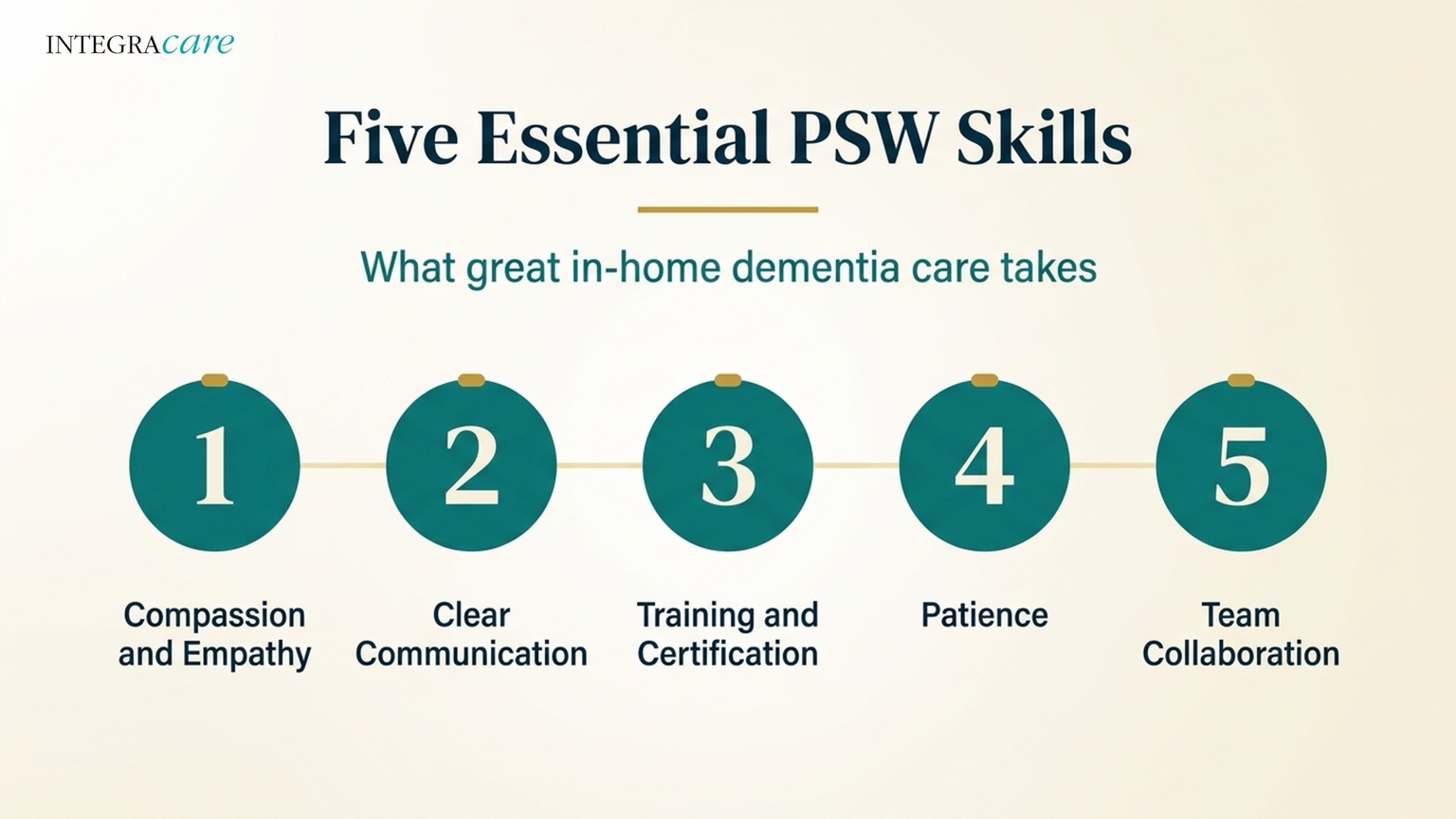
Essential Personal Support Worker Skills
Personal support workers are responsible for the comfort, care, and dignity of your loved one. Certain skills are especially important when supporting someone with Dementia.
1. Compassion and Empathy
Compassion sits at the heart of high-quality home care. PSWs need to truly see the person behind the diagnosis and understand their unique needs, history, and personality. Empathy helps them respond gently during challenging moments and also supports their own self-care, so they can show up at their best day after day.
2. Effective Communication
Clear, respectful communication is one of the most valuable PSW skills. PSWs must be able to:
- Explain care in a calm, simple way to Clients
- Share observations and updates with Families
- Coordinate with nurse supervisors and other health professionals
By keeping families informed and working closely with the broader care team, they help ensure care remains consistent, reassuring, and responsive to changing needs. This is especially important for people living with dementia, where a calm approach and simple communication can make daily routines feel less overwhelming. Building on these strategies with additional approaches for senior care can further enhance the support clients receive at home.
3. Strong Training and Certification
PSWs in Ontario complete recognized training programs that include clinical placements and real-world experience in health care settings. Provincial PSW standards outline core competencies, vocational outcomes, and expectations for safe practice within an interprofessional team.
Integracare builds on this foundation by providing ongoing Dementia care education through their partnership with the Alzheimer Society of Toronto, so PSWs are prepared for the realities of in-home support.
4. Patience
Dementia can bring irregular behaviour, confusion, and emotional ups and downs. Patience is critical. A calm PSW who does not rush, argue, or take things personally can help diffuse difficult situations and protect the Client’s sense of safety.
5. Collaboration
PSWs rarely work alone. They collaborate with nurse supervisors, physicians, physiotherapists, and families to deliver coordinated, person-centred care that reflects each client's changing needs. By sharing observations and communicating regularly with the broader care team, they help ensure concerns are identified early and care remains consistent across every stage of the journey.
This collaborative approach also gives families greater confidence, knowing everyone is working toward the same goals while keeping their loved one's comfort, safety, and well-being at the centre of every decision. Building a strong foundation in caregiving basics can further strengthen communication and coordination, helping everyone involved provide more thoughtful, consistent support at home.
How PSWs Support Daily Life at Home
Living with dementia can gradually make familiar routines feel more challenging, both for the person receiving care and for the family supporting them. As needs change, having compassionate, consistent support can help preserve independence, reduce stress, and bring greater peace of mind. Personal Support Workers (PSWs) provide thoughtful assistance that helps older adults continue living safely, comfortably, and with dignity in the place they know and love.
Personal Care and Daily Living Support
As Dementia progresses, everyday tasks become more difficult. PSWs gently support Clients with:
- Bathing, grooming, and dressing
- Toileting and personal hygiene
- Feeding support and meal preparation
- Light housekeeping and grocery shopping
These tasks might sound basic, but they are essential for comfort, dignity, and routine. When handled with care, they help your loved one continue living at home while feeling clean, nourished, and respected.
Health Monitoring and Emotional Well‑Being
A thoughtful PSW keeps an eye on changes in the Client’s health and mood, and offers emotional support when anxiety or confusion appear. Their role often includes:
- Observing and reporting changes to the care team
- Offering companionship and conversation
- Providing gentle reassurance during difficult moments
- Supporting comfort-focused, end‑of‑life and palliative care as guided by the care plan
This attention to detail helps the broader team respond earlier, which can improve safety and overall outcomes. Data on dementia care trends reinforce how vital this ongoing monitoring is when seniors remain in their own homes.
Safety First: Keeping Home Life Secure
As Dementia advances, changes in memory, judgment, and communication can make everyday tasks riskier. PSWs help put practical safety measures in place so your loved one can remain at home as safely as possible.
Examples include:
- Keeping toxic substances safely stored and out of sight
- Watching for fall risks, such as loose rugs or cluttered walkways
- Ensuring emergency contacts and important documents are easy to find
- Supporting routines that reduce confusion and agitation
At Integracare, PSWs also have access to Registered Nursing Coordinators on a 24/7 basis. If something feels concerning or unclear, they can reach out for guidance, so you’re not relying on one person’s judgment alone.
Emerging guidance on dementia-inclusive care in home and community settings also emphasizes safety, predictable routines, and tailored support to reduce confusion and distress for people living with Dementia.
Staying Calm and Being a Steady Companion
Dementia can cause personality changes that are painful for Families to witness. Someone who was once gentle may become irritable or withdrawn. It’s important to remember: this is the illness, not the person you love.
Our PSWs are trained to:
- Stay calm when behaviour changes
- Use a gentle tone and avoid arguing or correcting harshly
- Offer reassurance that the Client is safe and not alone
- Provide genuine companionship, not just task-based care
We don’t see PSWs as distant employees. We see them as trusted companions who help Clients feel known, cared for, and less alone in the day‑to‑day reality of living with Dementia.
Professional Boundaries and Ethical Care
Warm, compassionate care must still be professional. Strong boundaries keep everyone safe.
PSWs:
- Support Clients emotionally without becoming personally entangled in finances or private matters
- Respect client autonomy and family decisions
- Work from a clear care plan and stay within their scope of practice
- Collaborate with nurse supervisors and other regulated professionals
They avoid diagnosing, making medical decisions, or performing tasks outside their training. These limits are part of ethical home care and help protect both the Client and the PSW. Provincial PSW standards explicitly emphasize scope of practice, client safety, and working within an interprofessional team.
How Integracare Supports You and Your Family
Finding the right care for someone you love is one of the most important decisions you'll make. You want to know they're safe, respected, and receiving the kind of thoughtful support that helps them continue living comfortably at home while giving your family greater peace of mind.
With Integracare, our PSWs are backed by a carefully supervised, premium home care team. We focus on attentive, detail-oriented care where your loved one is treated with dignity, small changes are noticed, and support is tailored to their unique needs and routines. While dementia care is one important part of what they do, PSWs also provide compassionate support for many people with a wide range of health conditions, recovery needs, and changing levels of independence.
Ready to Talk About Support for Your Loved One?
Talk to us about PSW support and Dementia care at home
If you’re wondering whether it’s time to bring in extra help, we’re here to listen, not judge. A simple conversation can help you understand what kind of PSW support might ease your day, improve safety, and bring more comfort and confidence to life at home for your loved one.

Frequently Asked Questions
What are the best strategies for personal support workers?
The most effective PSW strategies include following the client’s care plan carefully, communicating clearly with Families and the health care team, respecting professional boundaries, and protecting dignity and independence during daily care. In Dementia support especially, PSWs also need to stay calm during difficult moments, observe and report changes early, and keep learning through ongoing training so care remains safe, person‑centred, and evidence‑informed.
Why is communication so important in Dementia care?
Communication is crucial because Dementia affects memory, processing, and understanding. PSWs who use short sentences, one idea at a time, and a gentle tone help reduce confusion and anxiety. Clear communication also ensures important observations are shared with Families and regulated health professionals, which supports better care planning, safety, and comfort for the client over time.
How can a PSW support someone living with Dementia at home?
A PSW can support a person with Dementia by keeping routines predictable, offering simple, step‑by‑step guidance, and responding with patience rather than frustration. They assist with personal care, meals, mobility, and safety while providing companionship and reassurance. A strong PSW also watches for changes in mood, behaviour, or functioning and reports them promptly, helping the care team adjust support before small issues become bigger problems.
What should a PSW do if a client becomes confused or agitated?
When a client becomes confused or agitated, the PSW should stay calm, speak softly, and avoid arguing or correcting harshly. Reducing noise, offering one instruction at a time, and allowing extra time to respond can ease distress. If agitation persists or patterns change, the PSW should document what they see and report it to the supervising nurse or care team so safety plans and care strategies can be updated appropriately.
Why are professional boundaries important for PSWs?
Professional boundaries keep care safe, ethical, and focused on the client’s well‑being. They prevent PSWs from becoming involved in finances, private decision‑making, or medical tasks outside their scope. Clear limits help protect client autonomy and privacy while supporting the PSW’s own mental health and work‑life balance. In Canada, training standards emphasize boundaries as a core part of safe, person‑centred home care practice.
How does ongoing training improve PSW care?
Ongoing training helps PSWs stay current with best practices in Dementia care, safety, infection prevention and control, and communication. It turns classroom knowledge into practical skills and builds confidence in challenging situations. Canadian guidelines highlight education and training as essential to improving quality of care for people living with Dementia, because better‑prepared staff can respond earlier, reduce risk, and provide more respectful, effective support at home.
Free In-Home Assessment
The Care Your Family Deserves Starts Here
Speak with our team about a personalized care plan. Book a free, no-obligation in-home assessment and we will help you find the right support for your loved one.
About the Author: Lee Grunberg

President & CEO, M.B.A.
Lee joined Integracare as President & CEO on August 2, 2016 after an approximately 20 year career in Private Equity and Investment Banking. Lee brings tremendous operational knowledge and governance experience along with an incredible passion and energy to Integracare.