
Blog
Understanding Sundowning: A Guide for Dementia Caregivers
Published
Updated
Written by Lee Grunberg, M.B.A. — President & CEO
Reviewed by Bethel McMaster, BScN, RN — Director of Business Development
On this page16 sections
Key Takeaways
- Sundowning leads to increased confusion and anxiety in the late afternoon and evening.
- Factors like light changes, fatigue, and medication can worsen symptoms.
- Symptoms include restlessness, emotional outbursts, and wandering.
- Structured routines and calm environments help reduce sundowning effects.
- Professional in-home care offers vital support and eases caregiver stress.
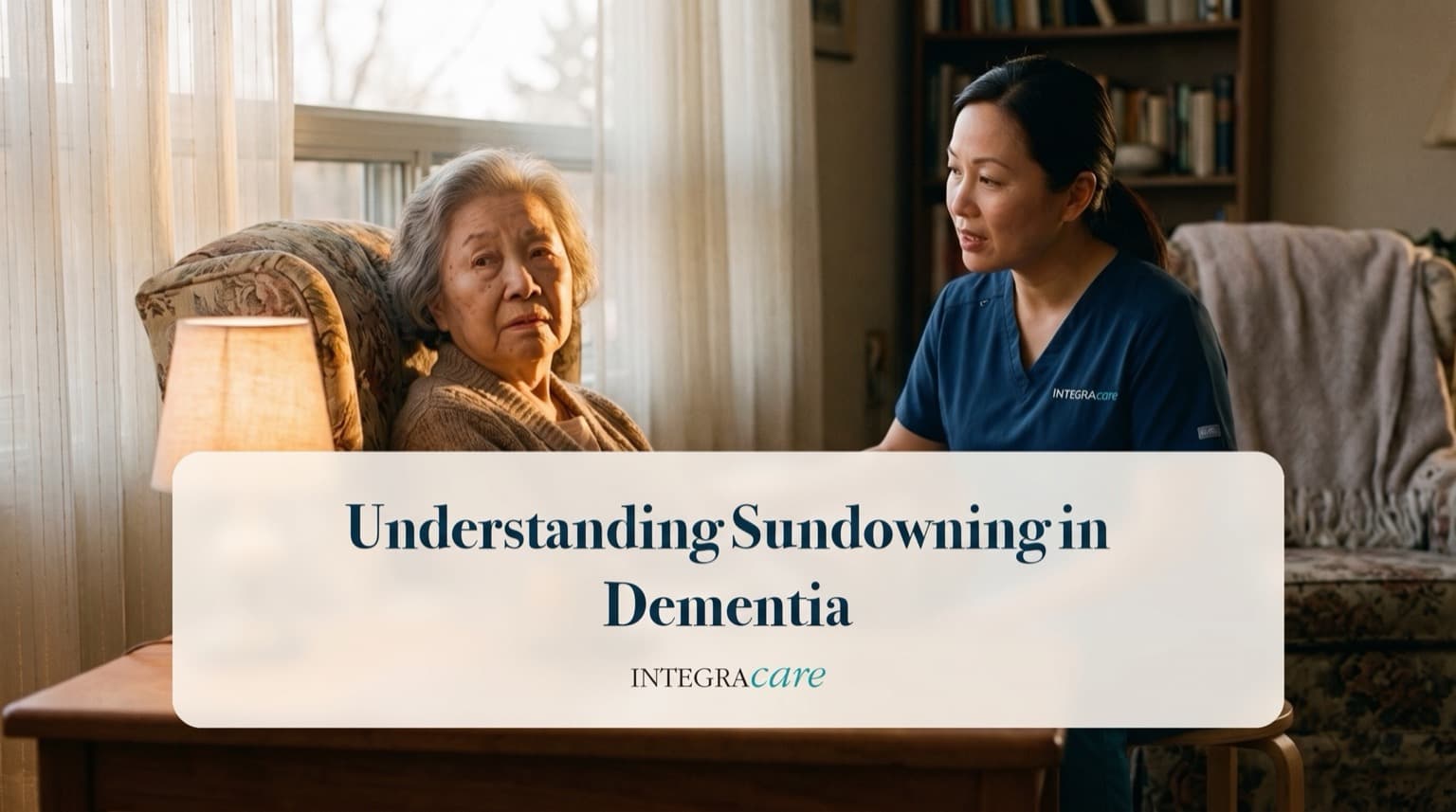
As the afternoon shifts to evening, witnessing the aggravation, disorientation, or irritability of a loved one living with dementia can be unsettling. The term sundowning describes this phenomenon wherein late-day tiredness and the absence of daylight cause an individual’s brain to react differently to their environment. These symptoms may present differently with each individual.
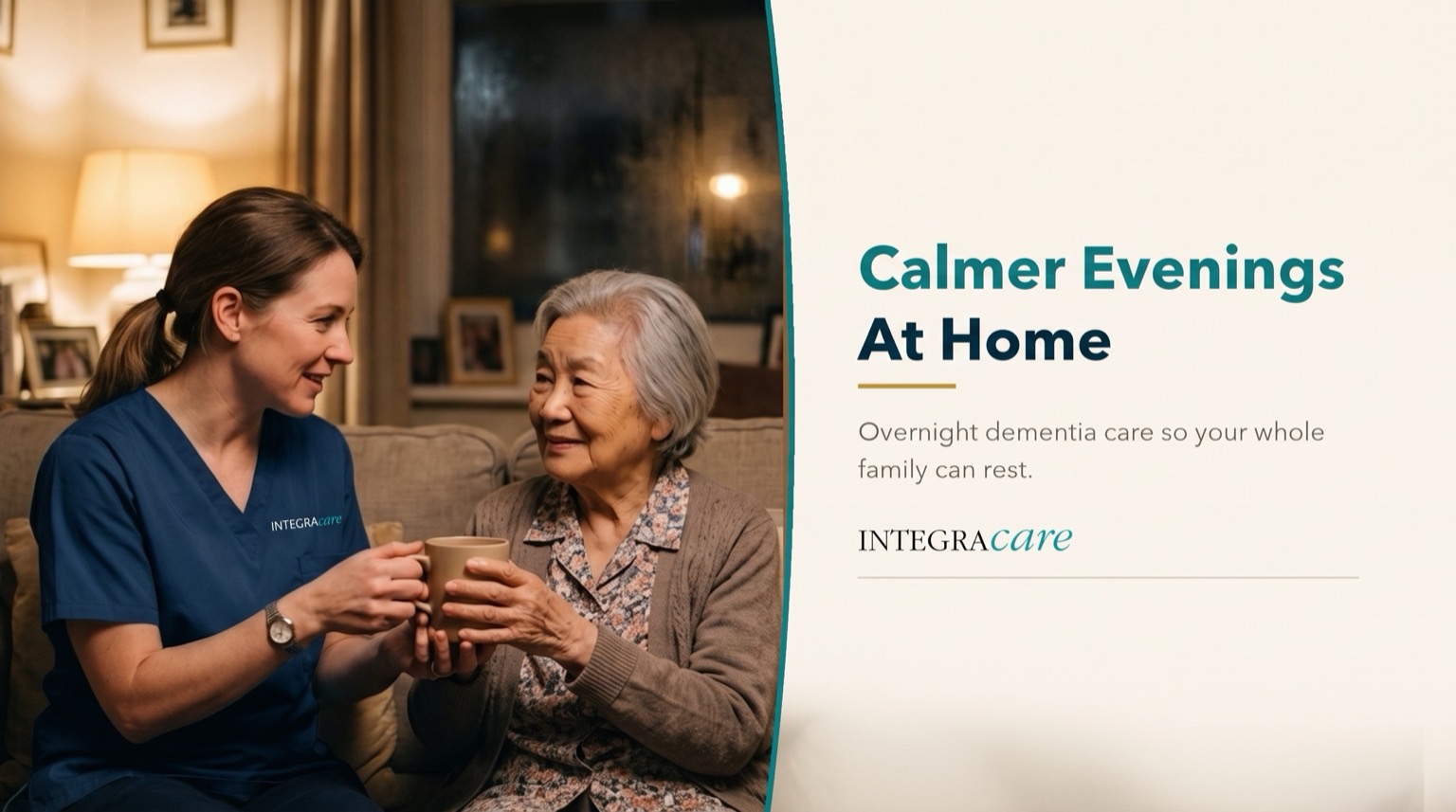
When it’s no longer possible to manage these late-day troubles alone, Dementia Care in Toronto and Mississauga from Integracare provides you with seasoned professional caregivers who create a calm, soothing evening routine. Our caregivers at Integracare are trained to recognize the specific afternoon or early evening triggers. They implement a strategy to ease your loved one into a routine that makes them feel comfortable and safe, while allowing your family much-needed relief.
Learning the early signs of Dementia is the first step on the journey of coping with a dementia diagnosis of a loved one. Knowing the pattern behaviours of sundowning allows you to recognize when your loved one is becoming irritable or overstimulated and how to appropriately provide a safe environment for them to calm down.
These late-day behavioural changes after a diagnosis may seem overwhelming at first, but realizing they are occurring is the biggest step to making day-to-day life much more manageable. Our caregivers are well-trained in how to deal with these late evening situations.
What Is Sundowning?
Sundowning means a person’s tendency to experience worsening symptoms of Alzheimer’s or Dementia in the late afternoon, i.e. when the sun starts coming down. These sundowning dementia symptoms typically include increased confusion, wandering, hallucinations, and anxiety. Up to two out of every three people with Dementia experience sundowning syndrome.
What Causes Sundowning?
Sundowning in dementia often seems triggered by the fading light, because as the cognitive deficit progresses, there is damage to the sleep cycle part of the brain that is able to differentiate night from day. The diminished light affects the way information is processed, which can cause confusion of visuals, leading to agitation or even hallucinations.
People who experience sundowning may also experience fatigue by the end of the day, with the inability to regulate their emotions under stress. From this lack of energy, they become overstimulating, leading to agitation or aggressive behaviour. Proper support from Integracare will help you manage the effects of sundowning, creating a more peaceful environment for you and your loved one.
Why Dementia Affects Those Living with Dementia Behaviourally
Understanding why your loved one has a sudden change in their mood can eliminate a lot of fear and frustration during your evening routine. It helps to know that dementia physically changes the brain. These changes directly cause your loved one to become anxious, confused, or restless, making them act in ways that seem completely out of character.
Dementia is an umbrella term for a series of chronic diseases that cause progressive damage to the brain, causing neurons and their connections to die. Behavioural change happens when the person’s frontal, parietal and temporal lobes sustain damage like this. These are the areas of the brain that are collectively responsible for thinking and memory, hearing, learning, emotion, language comprehension and behaviour.
As different symptoms begin to present, people living with Dementia may no longer act like themselves. Many will internalize frustration at their inability to follow conversations or situations. They may also mirror the behaviours of those around them. For this reason, it’s essential to remain calm and collected when you’re in the company of someone who’s living with Dementia. Becoming upset or frustrated yourself can cause them to experience greater distress.
A sudden flare of agitation at the end of the day can often be simply a sign that your loved one is experiencing physical discomfort.
You may see increased irritability in your loved one if they have underlying medical conditions, such as an undiagnosed infection, and cannot find the words to tell you what is bothering them. An increase in agitation due to pain or an infection may also be triggered by starting a new medication or because they are simply exhausted from dealing with ongoing issues with their sleeping patterns.
Behavioural Symptoms of Sundowning and Dementia
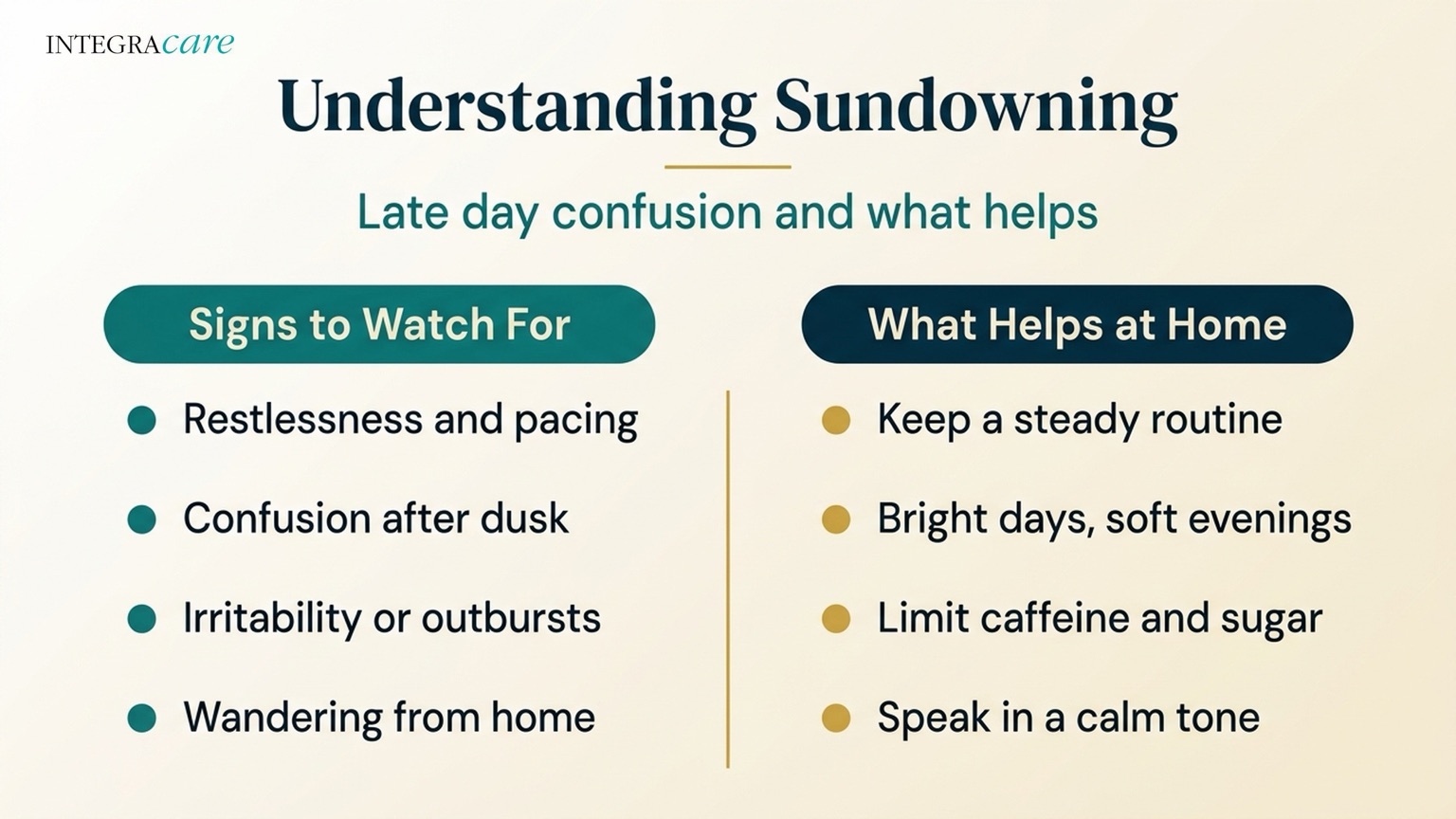
It can feel overwhelming to navigate changing behaviours, but knowing what to look for makes it much easier to support your loved one with confidence. Some of the behavioural changes that may come with Dementia include:
- Irritability: getting upset, agitated, angry or overstimulated more easily and readily.
- Hallucinations and imagining things that aren’t real.
- Depression and apathy.
- Physical and verbal outbursts.
- Leaving home in a state of confusion or without a real cause, often referred to as wandering syndrome.
Dementia sundowning is a term used to describe a combination of some of these behavioural symptoms, but uniquely, at a specific time of day.
Understanding the particulars of this behavioural shift and its consequential personality swings can help you support your loved one much better. Let’s explore Dementia sundowning syndrome further.
What Are the Most Common Signs of Sundowning?
The most commonly seen signs of those experiencing sundowning include:
- Agitation.
- Restlessness.
- Suspicion and paranoia.
- Disorientation and confusion.
- Irritability.
- Shouting or yelling.
- Pacing.
- They may also experience visual and auditory hallucinations.
Each of these behaviours can cause the person to leave their bed and wander, putting them at risk.
Vascular Dementia Sundowning
Learning about how different diagnoses affect the brain can give you a lot of clarity and help you better understand what your loved one is going through. Vascular Dementia is one of several types of Dementia, and it has many overlapping symptoms with other forms of the condition. Vascular Dementia is generally caused by heart disease, stroke, or atherosclerosis (a hardening of the arteries). However, people with vascular Dementia tend to experience slower thinking and problem-solving than memory, and this difference can be reflected when they experience sundowning syndrome.
In What Stage of Dementia Is Sundowning Most Common?
Sundowning in Dementia can appear at any stage; however, Dementia affects people living with the illness differently and at different times. However, those caring for someone living with the disease report that sundowning is experienced during the middle stage and that it reduces in frequency as the late-stage symptoms present themselves.
When your loved one’s late-day anxiety keeps everyone awake at night, the loss of sleep and constant worry can leave you completely exhausted. Bringing in live-in, overnight support from Integracare can change everything. Our high-quality home health care services in Toronto provide a compassionate professional to safely guide your loved one through a calm evening routine, finally letting you get the peaceful, uninterrupted rest you need.
Why Do Some People Experience Sundowning in Dementia?
Although the reason why sundowning occurs is still unknown, there has been an assumption that it’s tied to a person’s internal clock. Damage to the brain from dementia can lead the person to struggle to identify day from night.
Other events that have been attributed to causing sundowning include:
- Exhaustion: This can stem from sundowning itself, which may keep the person up at night, from pain or discomfort from a disease like arthritis, from an underlying medical condition, or from a sleep disorder.
- Overstimulation: Less physical and mental activity can lead to heightened agitation later in the day.
- Motivation: Seniors may struggle with motivation due to depression and anxiety.
- Physical Challenges: Dementia-related symptoms can make movement more difficult.
- Changes in Light: The darkness that comes with an early evening can cause people to experience hallucinations and confusion.
- Unmet Needs: Hunger, thirst, or other unmet needs can cause the person to feel restless and irritable.
- Pain or Discomfort: Physical discomfort can contribute to increased agitation and restlessness.
- Medication Side Effects: Certain medications may lead to symptoms that exacerbate anxiety or confusion.
- Hormonal Disruptions: Hormonal fluctuations throughout the day can affect mood and behaviour.
These symptoms and behaviours can be exacerbated by the changing of seasons in fall and winter, when the days are shorter and by the twice-annual changing of the clocks.
Some Strategies for Managing Sundowning and Dementia
If your loved one is experiencing sundowning, finding a system or strategy that works best for them could take some time. But know that with some trial and error, it’s possible to find a way to reduce and manage the effects.
Creating a steady and consistent routine that includes a combination of some of the following strategies at a set time each day can help:
- Keep your loved one busier during the day. Gentle physical and mental exercise and reduced napping (or shorter naps) are great places to begin. Exercises like light gardening, meal preparation or an accompanied walk to the end of the road are all safe forms of activity for people living with Dementia.
- Distraction at strategic times. If you’ve noticed a pattern and that sundowning occurs at the same time each day, try to distract your loved one at this time. Offer a light snack, put on a favourite upbeat television show, record, or audiobook, or complete a simple household chore. These are all great distraction methods.
- Create a relaxing and calming atmosphere. Soothing music or a visit from a loved one can offer comfort, but it can also be a form of distraction. Reducing outside noise by closing windows and doors can also help to lessen stress and irritation.
- Manage light levels throughout the day. Let bright daylight in during regular waking hours and turn on soft lamps in the evening, making sure to close the curtains or blinds to minimize shadows, which can sometimes be distressing.
- Reduce sugary foods and drinks later in the day and remove the availability of caffeine and alcohol.
- Monitor your loved one’s diet. If you notice certain foods or drinks potentially worsen their behaviours in the evening, try paring them back or offering them at different times.
If your loved one starts getting anxious or restless towards the end of the day, you can immediately relieve their stress by taking an appropriate action. The trick lies in knowing how to gently communicate with people living with Dementia by leaning into their reality rather than trying to correct them. If you find your loved one growing agitated during the evenings, speak to them with calmness in your tone to soothe them. Gently stepping away from correcting or challenging their view of things takes away the frustration, preventing tense arguments and helping everyone feel a lot safer and more connected.
Setting up safety nets in case your loved one leaves their bed in response to agitation or confusion is essential. Minimizing clutter, putting night lights in hallways and bathrooms, and hiding house and car keys are all good places to begin. You can also install a bell on the front door, just in case you’re worried about your loved one wandering outdoors.
What Should You Do If Sundowning Symptoms Escalate?
When it comes to sundowning and Dementia, it’s always easier with professional help. If you find that sundowning is escalating for your loved one, it’s important to seek medical advice to rule out any medical issues, such as a side effect of a current medication, pain, infection, sleep disorder, or other matters.
What Are the Early Signs of Sundowners?
Early signs of sundowning syndrome include mood changes, confusion, agitation, and irritability occurring in the late afternoon or early evening, which can also reflect patterns seen in the 7 A’s of Dementia. When sundowning first appears, the symptoms may be inconsistent and harder to notice. Symptoms may progress into more extreme agitation, hallucinations, paranoia, and emotional outbursts.
If you notice an uptick in your loved one’s Dementia symptoms at this time of day, it’s frequently referred to as sundowning syndrome. This is not a separate condition but a common occurrence related to Alzheimer’s and Dementia.
When to Seek Professional Help
The strategies you may already have could work for coping with sundowning, but medical assistance is sometimes necessary for the person you're caring for. If the confusion or agitation gets extreme or puts the person at risk for injury, seek help right away.
Ask for medical assistance if
- There is a change in your loved one's symptoms or behaviour that is not explainable.
- A sudden change in mood, behaviour or functioning could mean a number of things, from infection to pain to a change in medication.
- There are physical signs of infection, illness or pain (fever, increased confusion, pain with urinating).
- Sleeping problems or wandering create an unsafe environment for your loved one or they go missing.
- Your strategies stop working quickly or symptoms suddenly worsen.
- You as a caregiver feel at your limit.
Who can help
- Family doctor or Nurse Practitioner or Primary care provider: These individuals can identify possible medical causes of sundowning, help re-evaluate the person’s current medications and outline subsequent treatment options.
- Geriatrician or Geriatric psychiatrist or Dementia specialist: If possible these clinicians are the ideal people to seek help from to understand and manage sundowning symptoms that are causing issues or are particularly severe.
What to expect from a medical assessment
- The doctor will discuss a list of questions regarding symptoms, daily habits, current activities and changes.
- They will look for possible causes including infection, pain, dehydration, sleep problems or adverse drug reactions.
- Possible causes, such as sleep patterns will be discussed.
- When appropriate, non-drug solutions may be recommended.
- If medically indicated after a careful assessment, other approaches like melatonin or medication might be discussed.
Support for Caregivers
Taking care of a person with dementia and sundowning has its limits. As the caregiver it is essential to ensure you receive proper support for your own mental well-being and care of your loved one. Taking a break, dividing responsibilities and respite support can make this task more sustainable and lessen burnout.
Tips for coping with caring for someone with dementia who has sundowning
- Take breaks and respite whenever possible.
- Share care with family, friends or hire professional support services.
- Find a support group for caregivers from a local Alzheimer Society or community organization.
- Maintain your own health through consistent meals, sleep and medical appointments.
- Create calming routines, keep evenings softly and evenly lit with lamps and night lights, and use familiar activities.
- Seek help from a physician or counsellor if you become overstressed, depressed or anxious.
Resources for Supporting Caregivers
- Home care, respite care and personal support services might be accessible through your province or community-based programs.
- Alzheimer Society chapters has offered support groups, caregiver education and resources.
- Many communities also offer helplines, workshops and caregiver navigation programs.
You are doing an amazing job. Asking for help is a sign of strength, not a weakness. Taking care of yourself is taking the best possible care of your loved one.
Talk to Us About Live-In Care
Seeing a friend, beloved neighbour, or partner’s personality and behaviours changing in unexpected and unpredictable ways can be incredibly challenging and upsetting. Over time, it takes a toll on caregivers and family members when they experience the behaviour caused by sundowning.
Understanding sundowning and Dementia, its nuances, symptoms, and effects, can go a long way towards helping your loved one as you navigate the different stages of the disease and their mental, physical, and behavioural patterns.
It will likely become increasingly more challenging for you and your family to manage your lives with your loved one’s needs, especially in the mid to late stages when challenges like sundowning can begin. Taking on too much at once may lead to burning out, which causes everyone's needs to go unmet.
There’s no easy solution when a loved one is diagnosed with Dementia. However, we believe that with professional help, the process will be much more manageable and less overwhelming for you and your family.
How We Help
Integracare Home Care offers a series of Care services, including at-home and around-the-clock care. We match our Clients with highly trained, licensed and qualified Caregivers based on the Client’s needs and on their personality. We have over 30 years of experience offering Seniors and their families high-quality care that takes the pressure off family members and provides a joyful way of life for our Seniors.
We have an exclusive partnership with the Alzheimer’s Society of Toronto. Through this partnership, every Integracare Home Care Caregiver and Personal Support Worker (PSW) is receiving education and training on all facets of Dementia Care. We are also a recent recipient of the 2023 Canadian Business Excellence Awards for Private Businesses, an exclusive award given to businesses that have excelled in three performance areas: Delighted Customers, Engaged Employees, and Innovation.
You are not alone! Let us work with you in creating a Dementia Care Plan that works best for you and your loved one. Connect with us at Integracare Home Care today to learn more about our services and how we can support you and your family member during this difficult time, all from the comfort of their own home.
Frequently Asked Questions About Sundowning
What is sundowning in Dementia?
Sundowning is a behavioural pattern where symptoms like confusion, agitation, and anxiety worsen in the late afternoon and evening. It commonly affects people living with Alzheimer’s and other forms of Dementia as the day transitions into night.
What causes sundowning symptoms to worsen in the evening?
While there is no single confirmed cause, factors like fatigue, reduced lighting, disruptions to the internal body clock, and overstimulation during the day can all contribute. Unmet needs such as hunger, discomfort, or medication side effects may also play a role.
How long does sundowning typically last each day?
Sundowning episodes often follow a predictable pattern and can last for several hours, typically beginning in the late afternoon and continuing into the evening. The duration and intensity can vary depending on the individual and their stage of Dementia.
What are the most common signs of sundowning?
Common signs include restlessness, irritability, confusion, pacing, hallucinations, and emotional outbursts. In some cases, individuals may also wander or become suspicious or fearful without a clear reason.
How can caregivers help manage sundowning symptoms?
Caregivers can help by maintaining a consistent daily routine, encouraging daytime activity, and creating a calm, well-lit environment in the evening. Speaking in a reassuring tone and avoiding correction or confrontation can also help reduce agitation and distress.
Free In-Home Assessment
The Care Your Family Deserves Starts Here
Speak with our team about a personalized care plan. Book a free, no-obligation in-home assessment and we will help you find the right support for your loved one.
About the Author: Lee Grunberg

President & CEO, M.B.A.
Lee joined Integracare as President & CEO on August 2, 2016 after an approximately 20 year career in Private Equity and Investment Banking. Lee brings tremendous operational knowledge and governance experience along with an incredible passion and energy to Integracare.