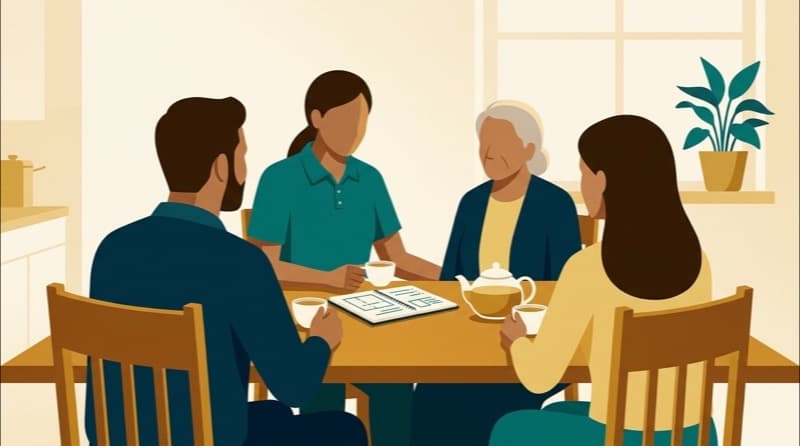
Pain & Symptom Management
Monitoring and caregiver-assisted comfort measures for chronic pain, nausea, fatigue, and breathlessness, guided by our Registered Nurses.
Private home care · Toronto & Mississauga
Comfort and Dignity, Every Step of the Way
Personalized palliative home care helps your loved one remain comfortable at home while giving your family the confidence that every detail is thoughtfully managed.
Free in-home assessment. No obligation.
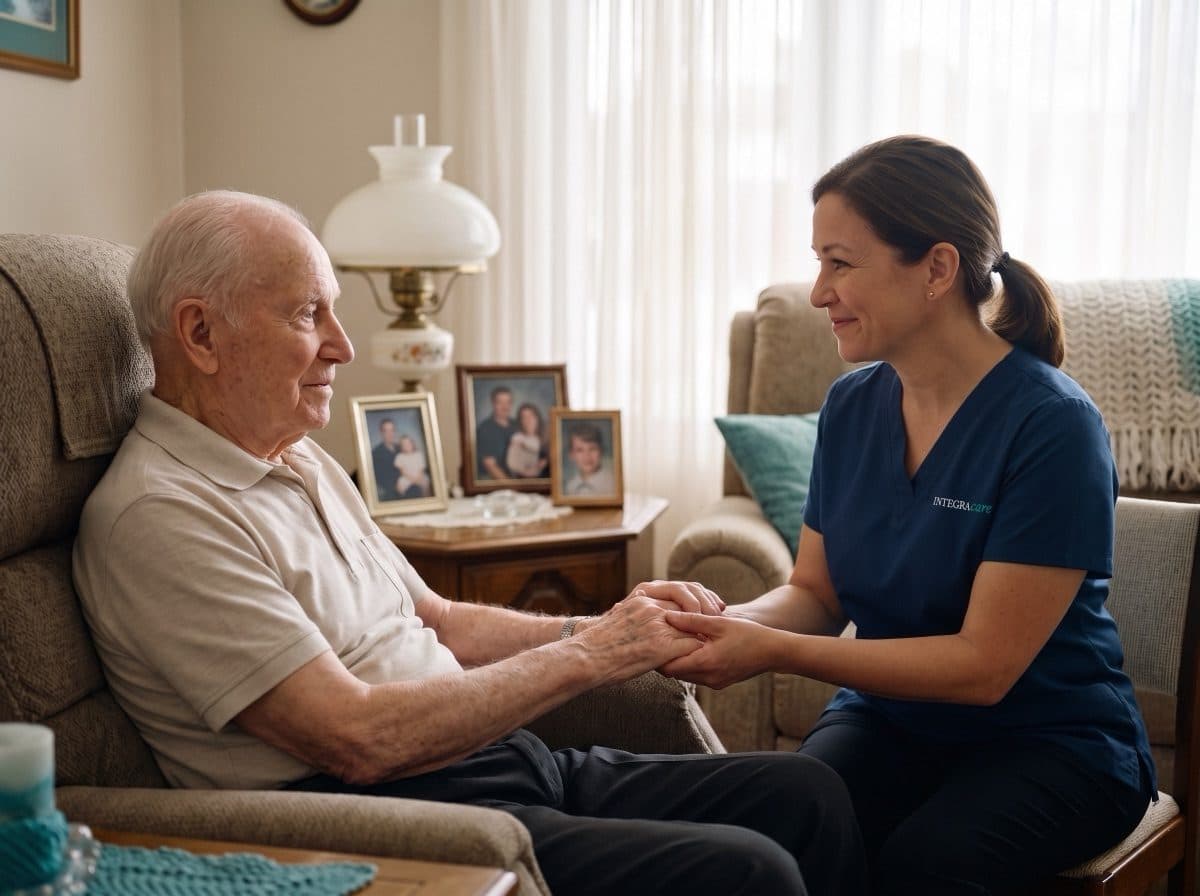
Personalized Palliative Care
When someone you love is facing a serious illness, every moment together becomes precious. At Integracare, we understand the weight of that journey and the deep desire to keep your loved one comfortable, safe, and surrounded by the warmth of home.
For over 30 years, Toronto and Mississauga families have trusted our palliative home care services to provide medical expertise with the kind of attentive, personalized support that transforms the experience of serious illness into one of comfort, connection, and peace.
Watch: Care in Action
Experience how our team focuses on preserving dignity and enhancing quality of life for those facing serious illness, with expert care delivered in the comfort of home.
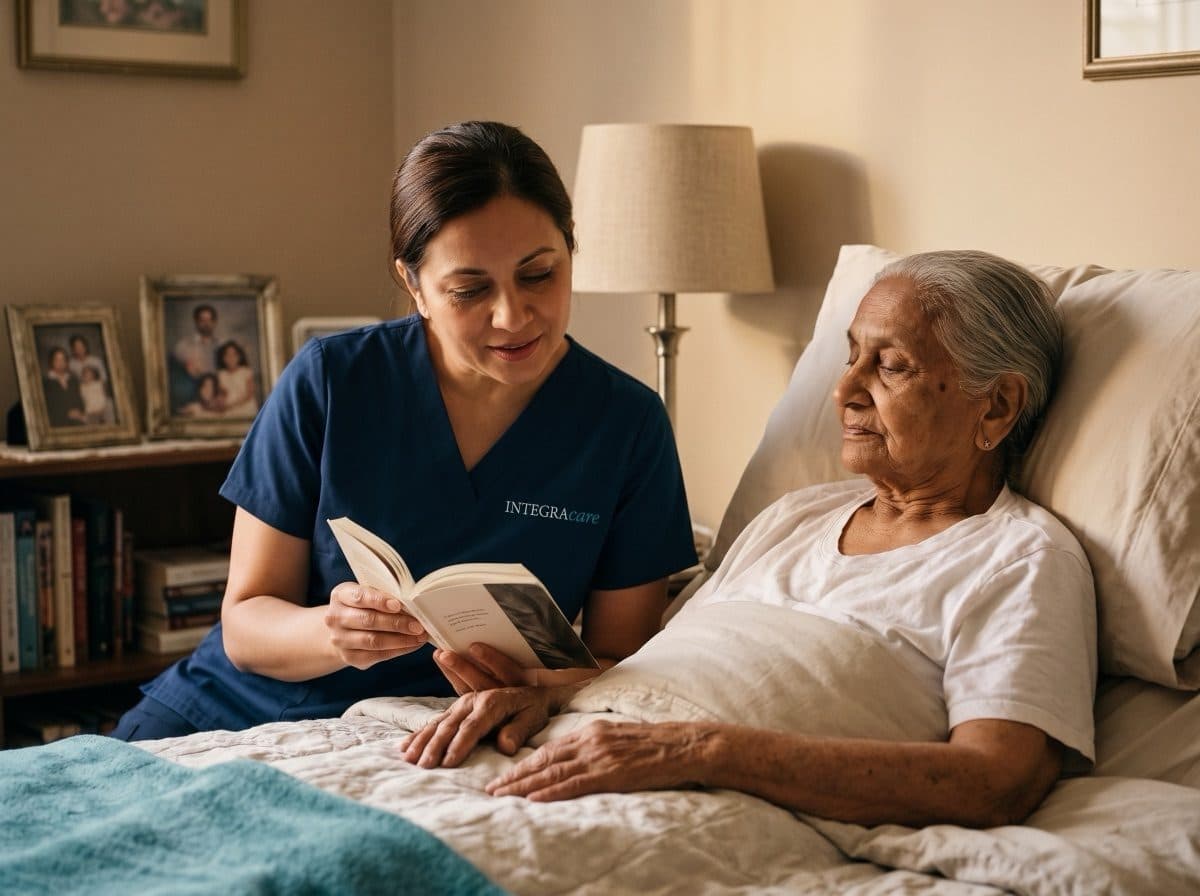
What At-Home Palliative Care Means
At-home palliative care is specialized support for people living with a serious or life-threatening illness. It focuses on relieving pain, managing symptoms, and improving quality of life in the comfort of your own home. This type of care can begin at any stage of illness and does not replace primary treatment; it works alongside it.
Palliative care at home typically involves personal support, medication and pain management, emotional support, and help with daily tasks like bathing, dressing, and meal preparation. Our compassionate caregivers also provide companionship and help with communication between clients and their medical team, while family members receive guidance and respite support so no one has to navigate this journey alone.
Watch
A short introduction to how our team supports comfort, dignity and family through palliative care.
What Care Includes
Managing a loved one's symptoms while coordinating between healthcare providers can take its toll on any family. Let our experienced team shoulder that burden, with Registered Nursing Coordinators overseeing every detail and compassionate caregivers providing hands-on support that brings peace of mind.
Monitoring and caregiver-assisted comfort measures for chronic pain, nausea, fatigue, and breathlessness, guided by our Registered Nurses.

Compassionate, dignified support focused on comfort, respect, and helping clients remain at peace in familiar surroundings.
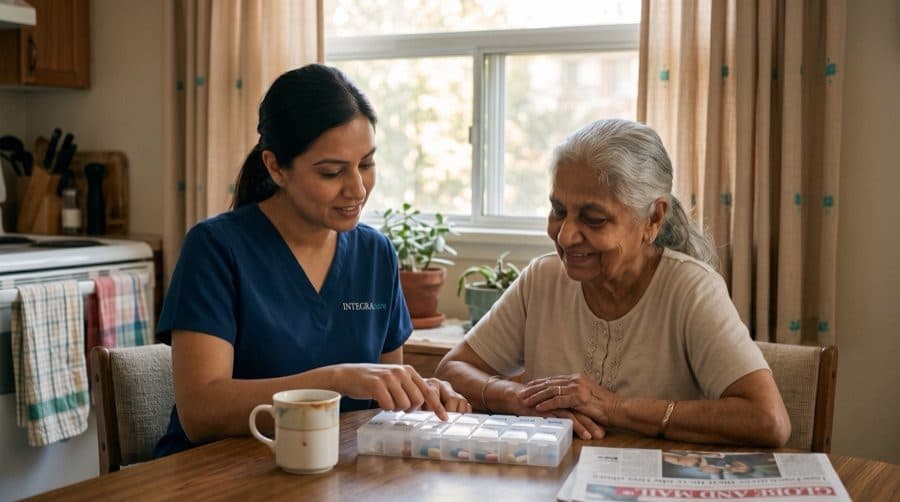
Our nurses administer medications and monitor your loved one for any side effects or changes in condition.

Healing takes time, consistency, and expertise. Our nurses provide critical wound care that supports recovery and promotes healing.
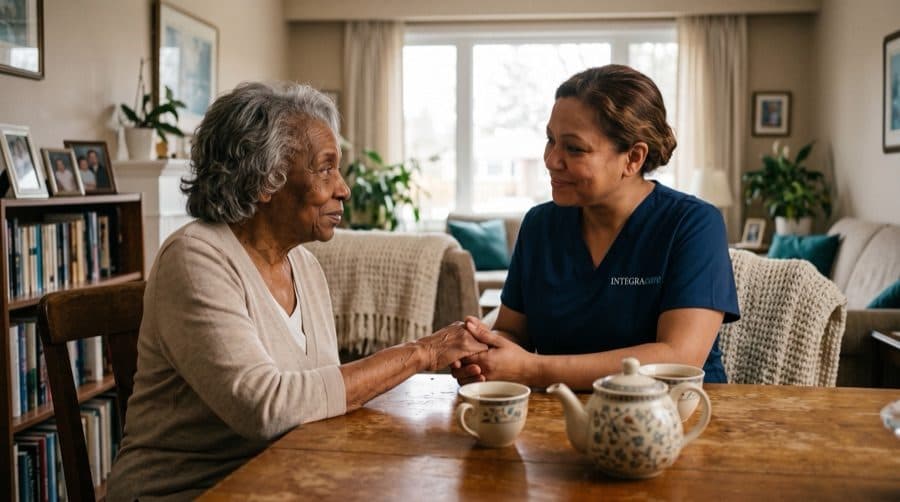
A comforting presence, meaningful conversation, and emotional support that create moments of dignity and connection at home.

We help lighten the day-to-day demands of caregiving, so families can focus on spending meaningful time with their loved one.
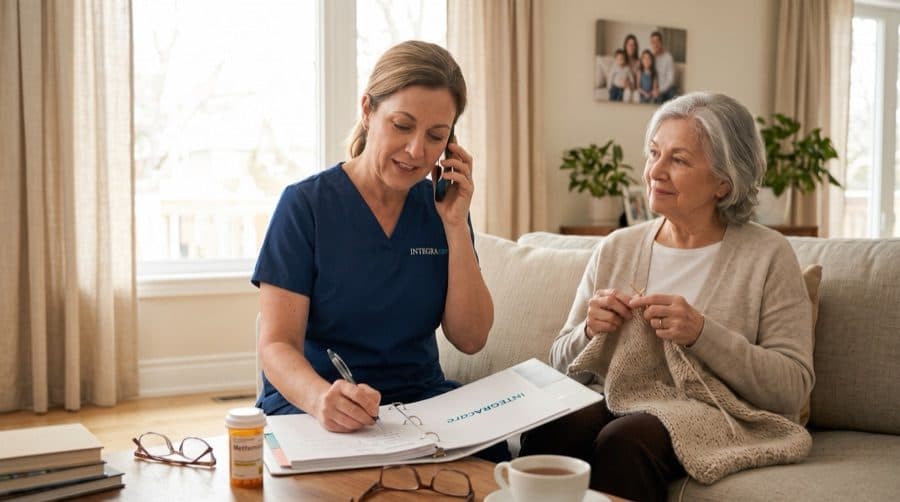
Our RNs advocate for your loved one's needs while fostering clear, compassionate communication between families, physicians, and the healthcare team.
When It's Time
Knowing when to ask for help isn't always easy. Palliative home care gives your family trusted support at any stage of illness, helping your loved one stay comfortable, respected, and cared for at home. Whether you're managing a diagnosis of cancer, Parkinson's, Alzheimer's, or another serious illness, Integracare brings the guidance and peace of mind families need most.
You're balancing work, family, and caregiving. We provide expert support so you can spend more meaningful time as a son or daughter, not only a caregiver.
Providing daily care for someone you love can be exhausting. Our team helps share the responsibility, giving you trusted support and peace of mind.
When everything feels uncertain, an experienced care team by your side makes the path forward feel less overwhelming.
If your loved one wishes to remain in familiar surroundings, our nurse-supervised care helps them stay safe and comfortable at home.
You don't have to carry every responsibility alone. We step in with compassionate care so you can rest, recharge, and be present.
We help ensure a smooth transition with coordinated care, symptom monitoring, and ongoing support after a hospital stay.
Palliative care works alongside your loved one's doctors, providing in-home support that complements ongoing treatment.
Whether cancer, Parkinson’s, ALS, COPD, heart failure, or dementia, our care adapts as needs change while prioritizing comfort and dignity.
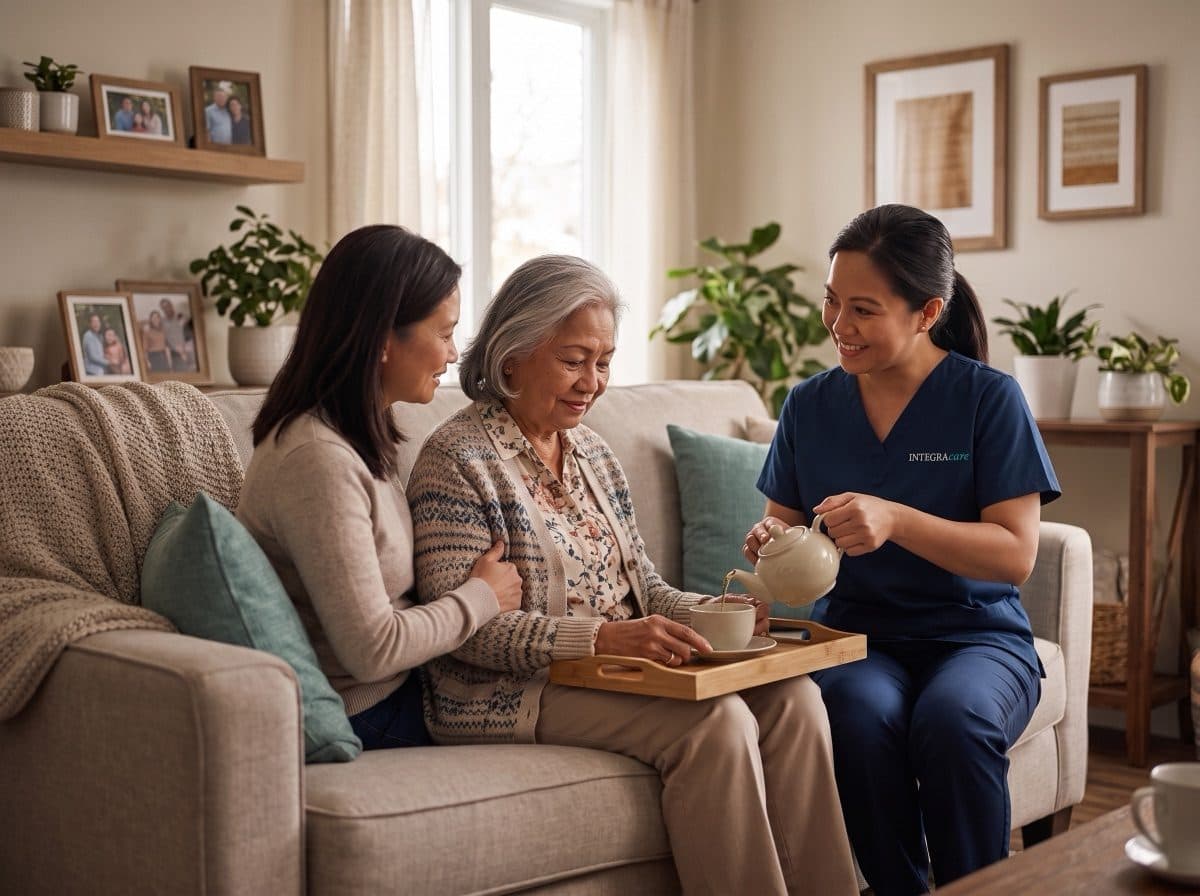
A Steady Hand
Watching your loved one struggle with pain and discomfort from a serious illness can leave you feeling helpless. Let Integracare's experienced team shoulder that burden for you, with Registered Nursing Coordinators overseeing every detail and compassionate caregivers providing hands-on support that brings peace of mind.
Our approach encompasses specialized pain management, gentle personal care that preserves dignity, medication oversight to ensure safety, wound care for pressure sores, and patient advocacy to support communication with medical teams.
Compare Care Options
When a loved one is facing a serious illness, the conversation naturally turns to where they feel safest and most at peace. Understanding how palliative care and hospice care differ helps families make confident decisions that honour their loved one's wishes.
Scroll the table sideways to compare care options.
| Factor | Palliative Care | Hospice Care |
|---|---|---|
| Main Goal | Relieves symptoms, stress, and suffering while improving quality of life throughout a serious illness. | Focuses on comfort and quality of life during the final stages of life. |
| When It Can Start | At any stage of a serious illness, including at diagnosis. | Typically when treatment is no longer the focus and end-of-life care is appropriate. |
| Treatment Alongside Care | Yes. It can be provided alongside curative or life-prolonging treatment. | No. Hospice care generally focuses on comfort rather than curative treatment. |
| Who It Is For | People living with a serious, chronic, or life-limiting illness who need symptom management and supportive care. | People with a terminal illness who are approaching the end of life. |
| Scope of Support | Physical, emotional, social, and spiritual support, plus care coordination. | Comfort care, caregiver support, grief support, and symptom management. |
| Care Setting | Home, hospital, outpatient clinic, or long-term care. | Home, hospice residence, nursing home, or hospital. |
| Care Team | Multidisciplinary team of physicians, nurses, personal support workers, therapists, and specialists. | Interdisciplinary hospice team including physicians, nurses, social workers, aides, and spiritual care providers. |
| Length of Care | Continues for as long as symptom management and supportive care are needed. | Continues while the person meets hospice eligibility and requires end-of-life care. |
How Families Benefit
Choosing palliative care at home offers meaningful benefits for both clients and their loved ones: more time together, greater comfort, and the reassurance of a trusted team by your side.
Professional care eases the day-to-day responsibilities, giving families more time to share meaningful moments with the people they love.
Our caregivers and nurses provide attentive, personalized care that helps your loved one remain as comfortable as possible at every stage.
Knowing your loved one is receiving compassionate, attentive care allows families to focus on being present instead of carrying every responsibility alone.
Our Registered Nurses advocate for your loved one's needs, helping ensure their wishes and changing needs remain at the centre of every decision.
Every care plan is tailored to your loved one's preferences, routines, and goals, preserving dignity while respecting how they want to live each day.
Sometimes the greatest comfort is knowing someone is there. Our caregivers provide reassurance, companionship, and emotional support so no one faces this journey alone. When you are focused on protecting a loved one's quality of life, clarity is your greatest source of comfort. Our team helps you feel prepared and supported as your loved one's needs change.
How It Works
Getting started is simple. From your first conversation to ongoing, nurse-supervised support, our team makes each step clear and reassuring so your family always knows what comes next.
A Registered Nursing Coordinator meets with you and your family to understand your loved one's condition, symptoms, and goals, then answers your questions and recommends the right level of support.
We build a care plan around your loved one’s medical needs and preferences, and match them with a caregiver whose skills and personality complement their care, often on short notice.
Compassionate caregivers deliver hands-on support while Registered Nursing Coordinators supervise 24/7, adjusting care as needs change so every stage feels seamless.
Our experienced team is here to answer your questions, understand your family's needs, and create a personalized care plan that supports every stage of care.
Related Services
Palliative care rarely stands alone. Our related in-home services complement your loved one's care plan, adding comfort, mobility, and specialized support wherever it's needed most.
Structured routines, personal care, safety monitoring, and compassionate companionship for clients living with Alzheimer’s and other forms of dementia.
Experienced PSWs assist with personal care, mobility, meals, and daily routines while helping clients remain comfortable at home.
Gentle, therapeutic massage helps relieve muscle tension, reduce discomfort, and promote relaxation during palliative care.
Personalized physiotherapy helps improve strength, mobility, and comfort, making everyday activities safer and easier at home.

Equipment & Supplies
Families frequently struggle with acquiring the right equipment and supplies. We help you obtain the assistive devices and medical equipment needed to make the transition to in-home care, such as:
Gloves
Wound care supplies
Incontinence pads
Wound care dressings
Walkers
Bath seats
Commodes
Wheelchairs
Diabetic supplies
Hospital beds
Hoyer lifts
The Integracare Difference
Compassionate palliative care begins with a team you can trust. With more than 30+ years of experience, Integracare brings together dedicated caregivers and healthcare professionals to deliver personalized support families can rely on at home.
Every client is thoughtfully matched with a caregiver whose skills, personality, and experience complement their individual care needs and preferences.
Registered Nursing Coordinators provide ongoing supervision, conduct in-home visits, and remain available 24 hours a day to support clients, families, and caregivers.
Every caregiver is carefully screened, employed, trained, and supervised directly by Integracare, ensuring consistent, high-quality care without relying on third-party agencies.
Consistent caregivers build trusted relationships, creating comfort, familiarity, and reassurance throughout every stage of care.
Family Stories
Discover the heartfelt testimonials of families who have found peace and comfort through our services.
Excellent service. Kristine was extremely kind, caring and reassuring. I was stressed out with the state of my apartment and she put me completely at ease. Highly recommend this company!
Integracare supported my mom with her return home from a hospitalization, which was difficult given her dementia. They did an excellent job. And their caregiver was top notch. Thank you.
Thank you. Excellent care and service. I would recommend your service to anyone in need. 100%. Thanks again, Joan.
Where We Care
In-home palliative care services are available to families across Toronto and Mississauga, delivering exceptional support that prioritizes dignity and peace of mind for your loved one.
Articles & Resources
Questions & Answers
Clear answers to help families navigate palliative care with confidence.
Palliative care means a person with a serious illness is receiving support focused on comfort, symptom relief, and quality of life. It is not the same as giving up on treatment. Palliative care can begin at any stage of illness and works alongside curative or life-prolonging treatment. The goal is to reduce pain, manage symptoms like nausea and fatigue, and support the emotional well-being of both the client and their family.
Hospital-based palliative care is provided by a specialized team of doctors, nurses, and social workers who focus on symptom management and comfort for patients with serious illness. It typically involves pain control, emotional support, and help with treatment decisions. However, hospital palliative care is not continuous and ends at discharge. Many families transition to in-home palliative care to maintain that level of support after leaving the hospital.
Palliative home care is professional support for people living with serious illness, delivered in their own home. It involves pain and symptom management, personal care, medication reminders, emotional support, and companionship. Care is coordinated by Registered Nursing Coordinators and carried out by trained caregivers. It may also include physiotherapy, massage therapy, wound care, and help acquiring medical equipment, all within a single coordinated care plan.
Anyone living with a serious or life-threatening illness may qualify for in-home palliative care. Common qualifying conditions include cancer, congestive heart failure, COPD, ALS, Parkinson's disease, kidney failure, and Alzheimer's disease. A terminal diagnosis is not required. If symptoms like chronic pain, fatigue, breathlessness, or anxiety are affecting daily life, in-home palliative care is likely appropriate. A free in-home assessment can help determine the right level of support.
In-home palliative care can begin at any stage of illness and supports clients who are still pursuing active treatment. Hospice care is typically reserved for people whose doctor has certified a life expectancy of six months or less, and curative treatment is no longer the focus. In-home palliative care does not require a terminal diagnosis and can continue for months or years alongside primary medical treatment.
Getting started is straightforward. Contact Integracare by phone or through the online form to schedule a free in-home assessment. A Registered Nursing Coordinator will meet with you and your family to assess your loved one's care needs, answer questions, and recommend a care plan. From there, Integracare matches your loved one with a caregiver suited to their medical needs and personal preferences. Care can often begin quickly, including on short notice.
The cost of palliative home care depends on the level of care required, the number of hours per day, and whether live-in or visiting care is needed. Visiting care is billed at an hourly rate, while live-in care is typically billed at a daily rate. Integracare provides a detailed breakdown of costs following a free in-home assessment. Many clients use a combination of private funding, insurance benefits, and government programs to cover the cost of care.
In-home palliative care may be partially or fully covered depending on your private insurance plan, employee benefits, or veterans' benefits. Some government-funded programs through Ontario Health at Home may also contribute to the cost of care. Integracare can help you understand your coverage options and navigate the funding process. We recommend contacting your insurance provider directly to confirm what is included in your plan before starting care.
Integracare's palliative care team includes Personal Support Workers, Registered Practical Nurses, Registered Massage Therapists, and Physiotherapists. All caregivers are certified, screened, and trained specifically for palliative care. Every caregiver is employed and supervised directly by Integracare, not placed through a third-party agency. Registered Nursing Coordinators oversee all care plans, conduct on-site visits, and are available 24 hours a day, 7 days a week to respond to changes in a client's condition.
Families who choose in-home palliative care typically see improvement in their loved one's comfort, pain levels, and emotional well-being. Clients are better able to communicate their needs to their medical team and experience fewer unnecessary hospital visits. Family caregivers report reduced burnout and greater peace of mind. While palliative care does not treat the underlying illness, it significantly improves quality of life for both the client and the people supporting them at home.
A common misconception is that palliative care is only received closer to the end of a person's life. In fact, this care can be received at any stage of illness to improve the physical and emotional well-being of an individual undergoing treatment. It works alongside curative care and focuses on comfort and quality of life throughout the course of a serious illness.
In many cases, yes. Integracare understands that the need for palliative home care can arise quickly, and we are structured to respond without long wait times. Once you contact us, we aim to call you back within one business day to arrange a free assessment. Following the assessment, care can often begin within days. If your situation is urgent, let us know when you call, and we will do everything we can to prioritize your family's needs.
Free In-Home Assessment
Tell us what you need. A nurse will contact you within one business day.
Serving Toronto & Mississauga, care delivered in the comfort of home
Prefer to talk?
Toronto(416) 421-4243 ↗Mississauga(905) 916-5454 ↗