
Blog
Tips for Families Requiring Palliative Care
Published
Updated
Written by Lee Grunberg, M.B.A. — President & CEO
Reviewed by Bethel McMaster, BScN, RN — Director of Business Development

On this page12 sections
Key Takeaways
- At-home palliative care maximizes comfort and quality of life.
- Early planning for documents and equipment prevents future crises.
- Open communication ensures everyone's wishes are understood and respected.
- Professional support is available to help you through every challenge.
Someone in your family has just been diagnosed with a life-limiting illness. You might be in shock and are worried about the challenges that lie ahead. It’s perfectly normal to feel this way because of the uncertainty about your family’s future. It’s also unsettling to hear the words “palliative care” because it might insinuate that your loved one is in their final days, and that is a scary reality to accept.
The truth is, this is not going to be an easy time for you or your family. There will be a lot of transition and heartache, and it’s important to be open with one another. It is also important to check in with yourself and to be able to communicate how you’re feeling in these challenging times.
Integracare is a Toronto home health care services provider that has been operating for over 30 years. Amongst others, we offer home healthcare to Seniors who, rather than moving out of their homes to live in an assisted living facility, prefer to remain in their familiar surroundings. Our services are of the highest quality, and bringing joyful living to our Clients is our number one goal. We believe that healthcare is best received within the comforts of home, and people don’t need to be uprooted to get the support that they need. High-quality support and care can come directly to them.
We offer many critical services to Seniors living at home, including live-in caregiving, personal support services, nursing care, wound care, and Palliative Care.
Palliative Care can relieve or reduce the physical and psychological symptoms, as well as the painful side effects that stem from serious illness and the related necessary harsh treatments and medications. It can help to improve your family member’s quality of life, and it’s an extra layer of support for you and your family during a difficult time.
The focus of Palliative Care is to reduce or relieve physical pain, stress, emotional turmoil, and other unwanted symptoms that are a result of chronic illness. It serves as a secondary support system, in addition to any medical treatments that have been prescribed by specialists, such as chemotherapy. We offer compassionate care at home for individuals undergoing Palliative Care. Individuals who are in this stage of life deserve privacy and dignity. Our at-home care services provide just that.
Read on to discover the benefits of including at-home Palliative Care as part of your loved one’s healthcare plan, as well as how you and your family can face this challenging time of life as best as you can together.
Understanding Palliative Care
Palliative care is all about enhancing the quality of life for those facing serious illnesses. For many families in Canada, this care often takes place at home, where loved ones can experience the comfort of familiar surroundings, easing stress and promoting a sense of peace. This approach doesn’t mean giving up; instead, it adds an essential layer of support designed to accompany ongoing treatments.
The primary goal of palliative care is to ease discomfort symptoms such as pain, anxiety, nausea, difficulty breathing, and fatigue, which often accompany serious health conditions. In Canada, this care can be initiated at any stage following a diagnosis, and it can run parallel to other treatments that focus on recovery or management.
What Can You Expect from At-Home Palliative Care?
At-home palliative care is designed to be personal and tailored to your family's needs. Think of it as having a supportive team in your home to help you through some of the toughest times.
- Symptom relief is a priority. The goal is to help reduce discomfort, allowing your loved one to stay at home comfortably.
- Expert support is available, with access to skilled caregivers, nurses, and care coordinators who will assist you in organizing and managing care. They can help ensure that your loved one's needs are met.
- Emotional backing is crucial. Both the individual and family members will receive emotional support during this challenging journey, providing a safe space to express feelings and cope with stress.
- Companionship is important too. Simple activities, like cooking together, playing games, or just sharing quiet moments, can offer comfort and connection when it’s most needed.
At-home palliative care aims to make daily life easier and more manageable. It provides families with essential support without requiring anyone to leave the warmth and dignity of their home. Remember, you don’t have to navigate this path alone. Help is available, and there are compassionate people ready to support you.
Choosing the Right Place for Care
For many families, home is the most comforting place to receive palliative care. A familiar room, a routine, and the presence of loved ones can bring a sense of peace during a challenging time. However, every family's situation is unique, and selecting the right setting depends on individual needs, the level of support available, and what feels manageable day-to-day.
When Deciding Where Care Should Happen, Consider
This decision can be one of the toughest your family faces. It requires balancing what the person wants with what is realistically feasible. Here are some key questions to guide your thought process:
- Does the individual prefer to stay at home, and can home care adequately meet their needs?
- Does the family have enough support to provide daily care without feeling overwhelmed?
- Is there enough space and the necessary equipment at home to ensure safe care?
- Can a coordinated care team respond quickly if symptoms change or worsen?
At Integracare, we recognize that these decisions can be overwhelming. Our dedicated team is here to provide the best compassion, support, and empathy for their final days. We prioritize patient advocacy and offer nurse coordination to adjust care as needs change, ensuring that your loved one receives personalized attention throughout their journey.
Remember that a care plan can evolve, and this flexibility reflects your family's commitment to ensuring comfort and dignity. Focus on making choices that prioritize your loved one's well-being, knowing that you’re not alone in this journey.
Compassionate Toronto Home Health Care Services
Watching a loved one face a serious illness is incredibly difficult, and trying to coordinate their changing medical needs on your own can feel completely overwhelming. We handle those complex logistics for you by providing premier Toronto home health care services tailored specifically to your family's routine. Our highly trained Caregivers work hand-in-hand with your loved one’s doctors and external healthcare team to create a personalized care plan focused entirely on comfort and quality of life. Because health needs naturally shift over time, we regularly reassess these priorities so your family always has the right level of support, giving you total peace of mind without having to manage it alone.
We also offer specialized Palliative Care services. Our team of fully certified Registered Massage Therapists (RMTs) provides gentle, therapeutic massage therapy to Clients at home. Massage therapy is beneficial to individuals with life-limiting illnesses because it brings warmth during a dark and lonely time. It provides relaxation and restores a sense of well-being and belonging.
Your loved one deserves to feel completely at ease, especially during life's most challenging moments. Our palliative care in Toronto brings compassionate support right to your home, easing not just physical pain but the emotional weight that families carry, so you can simply be together. We focus on creating moments of comfort and dignity, allowing your family to cherish quality time without the stress of managing care alone.
Keep Communication Open
Open communication can transform palliative care from a confusing experience into a more manageable one for everyone involved. It creates a supportive environment where the person receiving care, their family, and the care team are all aligned. Honest conversations can reduce the fear of the unknown and make difficult days feel a little less daunting.
Families should start discussing wishes, concerns, and practical needs as early as possible. While these conversations might be uncomfortable, they can prevent stress down the line. Think of it as creating a roadmap together to navigate the challenges ahead.
Key Topics to Discuss
- What type of care does the person desire at home?
- Who will serve as the decision-maker if medical choices need to be made?
- What can each family member realistically contribute to daily care?
- Which concerns feel hardest to manage alone?
A solid care plan relies on clear communication with the healthcare team. There needs to be a conversation about everything from the medical treatments your loved one wants to what their opinion is on life support. The fewer surprises, the better.
Caregivers, nurses, and care coordinators are there to help families understand what’s happening and what to expect next. Having someone explain things in simple terms can change the experience from feeling lost to feeling empowered and prepared. Keeping communication open not only fosters understanding but also strengthens the support system for your loved one during this critical time.
What Family Caregivers Often Handle
Family caregivers play a crucial role in supporting their loved ones, managing various aspects of daily life. They may assist with meals, medications, personal hygiene, transportation, and household chores, all while providing emotional support. It’s a significant responsibility, and it’s perfectly okay to acknowledge the weight of it all.
As illness progresses, the demands of caregiving can increase. Your loved one may require more direct assistance, supervision, and patience throughout the day. It’s common to feel exhausted, and recognizing that is important.
Common Responsibilities for Caregivers May Include
- Assisting with bathing, toileting, dressing, and other personal care needs.
- Monitoring changes in pain levels, breathing patterns, appetite, or confusion.
- Supporting medication schedules and adhering to care instructions.
- Creating a calm and comfortable home environment.
It’s essential to remember that caregivers also need support, rest, and encouragement. You don’t have to shoulder this burden alone, especially during such an emotionally challenging time. Needing help doesn’t mean you’re failing; it simply means you’re human.
Caregivers often provide companionship and comfort through simple activities like preparing meals, doing puzzles, or enjoying quiet time together. These small moments of connection can be incredibly meaningful; sometimes, it’s those quiet times that resonate the most. Prioritizing your well-being is just as important as the care you provide. Taking care of yourself allows you to give your loved one the best support possible.
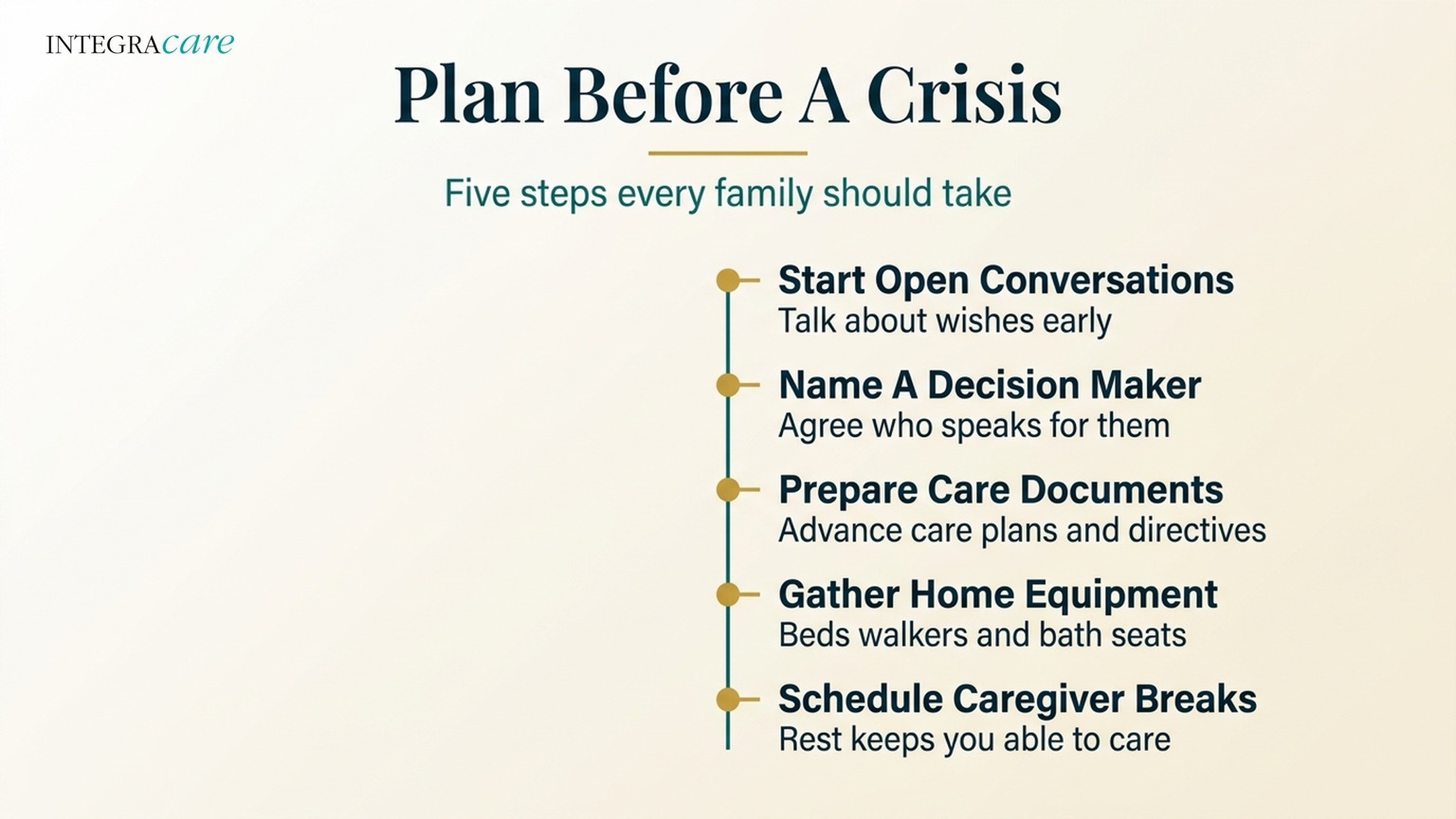
Plan Before Urgent Problems Arise
Planning can alleviate anxiety and help families feel more equipped when needs change. It allows the care team to implement the right support before a crisis occurs. By preparing early, you're not just bracing for the worst. You’re also creating peace of mind for yourself and your loved ones.
Having conversations with the healthcare team about what to expect if symptoms become more difficult to manage is crucial. Knowing who to contact for help can truly make a difference during stressful times. Just having that one phone number on hand can feel like a lifeline amidst the chaos.
Remember to Schedule Caregiving Breaks
It's equally important to plan for caregiving breaks. Even the most dedicated caregivers need time to rest, recharge, and attend to their own responsibilities. Taking a break doesn't mean you're abandoning your role; rather, it’s a vital step in preserving your ability to provide care effectively.
Prepare Important Documents Early
Speak with your loved one when they reach a certain age or as soon as a life-limiting diagnosis has been made. It’s essential to prepare important documents while the person can still clearly express their wishes and values (for example, a living will or a Do-Not-Resuscitate Order) when your family member is still of a clear mind.
It might not be an easy conversation to have, as it involves logistics that will affect your entire family, but you’ll feel better once everything is done, knowing that when the time comes, your loved one’s wishes will be materialized. Some resources can help you figure it all out.
These might include
- Health care directives (often referred to as Advance Care Plans in most provinces)
- Advance care plans
- In Quebec: living wills (testament médical)
- In some provinces: Representation Agreements or Personal Directives
Gather Equipment and Supplies
Practical planning is key too. Many families find it helpful to gather equipment and supplies such as:
- Hospital beds
- Walkers
- Bath seats
- Commodes
- Wound care supplies
- Gloves
- Incontinent pads
- Hoyer lifts
By securing these items early, you can make at-home care safer and less stressful. Having everything ready means less scrambling when you need these essential tools the most. Being proactive not only eases the caregiving process but also ensures your loved one receives the best possible care when they need it.
Where Families Can Find Support in Canada
You don't have to navigate palliative care alone. Support is available to make this journey feel manageable and less overwhelming. Help can come from healthcare professionals like nurses and social workers who explain your options, care coordinators who supervise daily support, and financial aid programs like the Canada Caregiver Credit and provincial subsidies that ease household costs. Sometimes, just a phone call with a professional who says "you're doing the right thing" can provide the reassurance you need.
When Care Feels Emotionally Overwhelming
It's normal to experience a mix of emotions during palliative care, including sadness, guilt, relief, or exhaustion. None of these feelings make you a bad person. The hardest moments often come when your loved one becomes less responsive, triggering grief that feels real even when you understand it's part of the illness. Practical challenges like helping with intimate care, managing confusion, or making constant decisions can feel equally heavy, but these struggles don't mean you're failing. They mean the situation is difficult and you deserve support.
You Don’t Have to Carry This Alone
Palliative care can bring some of the toughest moments for a family, but it’s also a chance to foster closeness and find meaningful support. Remember, it’s perfectly natural to seek help and take breaks when you need them.
Finding the right care plan involves understanding your loved one’s needs and considering what feels manageable for your family. Staying flexible and keeping the conversation going can truly ease the journey ahead.
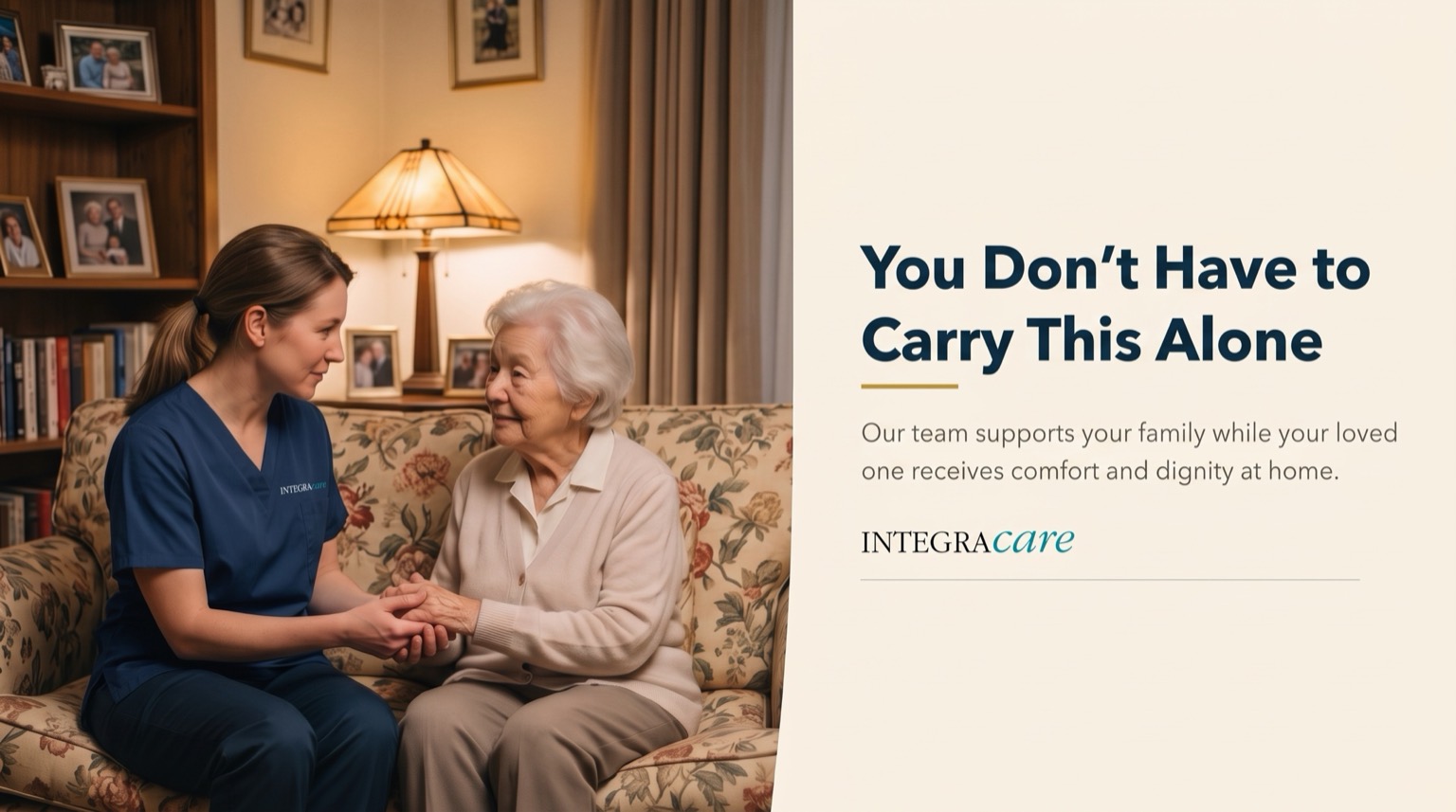
At Integracare, we’re here for you. Our compassionate team is dedicated to providing the support you need while ensuring your loved one receives comfort and dignity in their care. Let us be a part of your journey. Call us for more information about how we can help.
We’re there for you every single step of the way.
Frequently Asked Questions About Palliative Care for Families
Can palliative care be provided at home?
Yes. Palliative care can be delivered at home, where familiar surroundings ease stress and bring a sense of peace. Home-based care provides symptom relief, emotional support and companionship without your loved one having to leave the comfort of their home.
Does starting palliative care mean giving up on treatment?
No. Palliative care adds an extra layer of support and can run alongside treatments prescribed by specialists, such as chemotherapy. In Canada, it can begin at any stage after a diagnosis.
What should families discuss when planning palliative care?
Talk early about the type of care your loved one wants at home, who will make medical decisions, what each family member can realistically contribute, and their wishes on treatments and life support. Preparing documents such as a living will while your loved one can clearly express their wishes prevents stress later.
How can family caregivers avoid burnout during palliative care?
Schedule regular caregiving breaks and accept help when you need it. Needing support does not mean you are failing. Taking care of yourself allows you to give your loved one the best support possible, and professional caregivers can step in when the load becomes too heavy.
How does Integracare support families needing palliative care at home?
Integracare has provided home care for over 30 years. Our caregivers work with your loved one’s doctors and healthcare team to create a personalized care plan focused on comfort and quality of life. Registered Nursing Coordinators are available to clients and caregivers 24/7, and fully certified Registered Massage Therapists provide gentle therapy at home.
Free In-Home Assessment
The Care Your Family Deserves Starts Here
Speak with our team about a personalized care plan. Book a free, no-obligation in-home assessment and we will help you find the right support for your loved one.
About the Author: Lee Grunberg

President & CEO, M.B.A.
Lee joined Integracare as President & CEO on August 2, 2016 after an approximately 20 year career in Private Equity and Investment Banking. Lee brings tremendous operational knowledge and governance experience along with an incredible passion and energy to Integracare.