
Blog
Compassionate Palliative Health Care at Home
Published
Updated
Written by Lee Grunberg, M.B.A. — President & CEO
Reviewed by Bethel McMaster, BScN, RN — Director of Business Development

On this page15 sections
Key Takeaways
- Palliative care enhances quality of life by managing physical and emotional symptoms of serious illnesses.
- A team approach addresses medical, social, emotional, and spiritual needs for holistic support.
- In-home care provides comfort and familiarity, reducing stress and improving well-being.
- Early palliative care integration helps manage pain and offers continuous support for patients and families.
- Care plans may include massage therapy, counselling, and nursing support to address both physical and emotional needs.
In the late 1950s, Dr. Cicely Saunders decided to devote a significant portion of her practice toward individuals suffering from chronic and life-threatening diseases based on careful observation of her patients. She advocated that only a specialized, interdisciplinary team could relieve the “total pain” of a patient. This team concept is still at the very core of Palliative care.
In 1969, the Swiss-American psychiatrist Elisabeth Kübler-Ross wrote the groundbreaking book On Death and Dying, which outlined the five stages of grief. It also outlined ways to treat individuals with life-threatening illnesses with dignity, respect, and compassion.
Palliative medicine is the continuation of accepting life on its own terms, openly and honestly. It has been an ongoing study since Dr. Cicely Saunders decided to work closely with her terminally ill patients. Much has evolved from the initial studies from the 1950s, but the premise of compassionate teamwork remains the same.
Learning that a loved one needs specialized medical support brings up so many difficult emotions, and trying to handle all their daily medical needs on your own can quickly leave you feeling exhausted and overwhelmed. Opting for Palliative home care brings a dedicated team of professionals right into the family home, ensuring your parent never has to face the stress or confusion of moving into a cold, institutional facility. Instead, they get to stay exactly where they feel safest and most comfortable, surrounded by their own things, their regular routines, and the spaces they love.
To help families find the best path forward, Ontario offers public care coordinators to help assess baseline needs, while private services provide continuous, personalized support tailored to your schedule. You shouldn't have to scramble to manage complex medical tracking and round-the-clock physical demands during such an important time with your family. Integracare steps in as a trusted partner, specializing in compassionate, premium in-home health care in Toronto and Mississauga.
All Integracare Caregivers are certified or registered and are the most compassionate, dependable and knowledgeable support workers in the industry. We treat your family with deep respect and kindness, taking care of the medical logistics so you can step back from being a full-time caregiver.
Roles of Palliative Care Providers
Palliative care at home is most effective when it is backed by a compassionate, attentive team. If you are caring for someone with a serious illness, it can often feel isolating but remember, you are not alone. A committed team is here to lighten your load and support every step of your loved one’s journey.
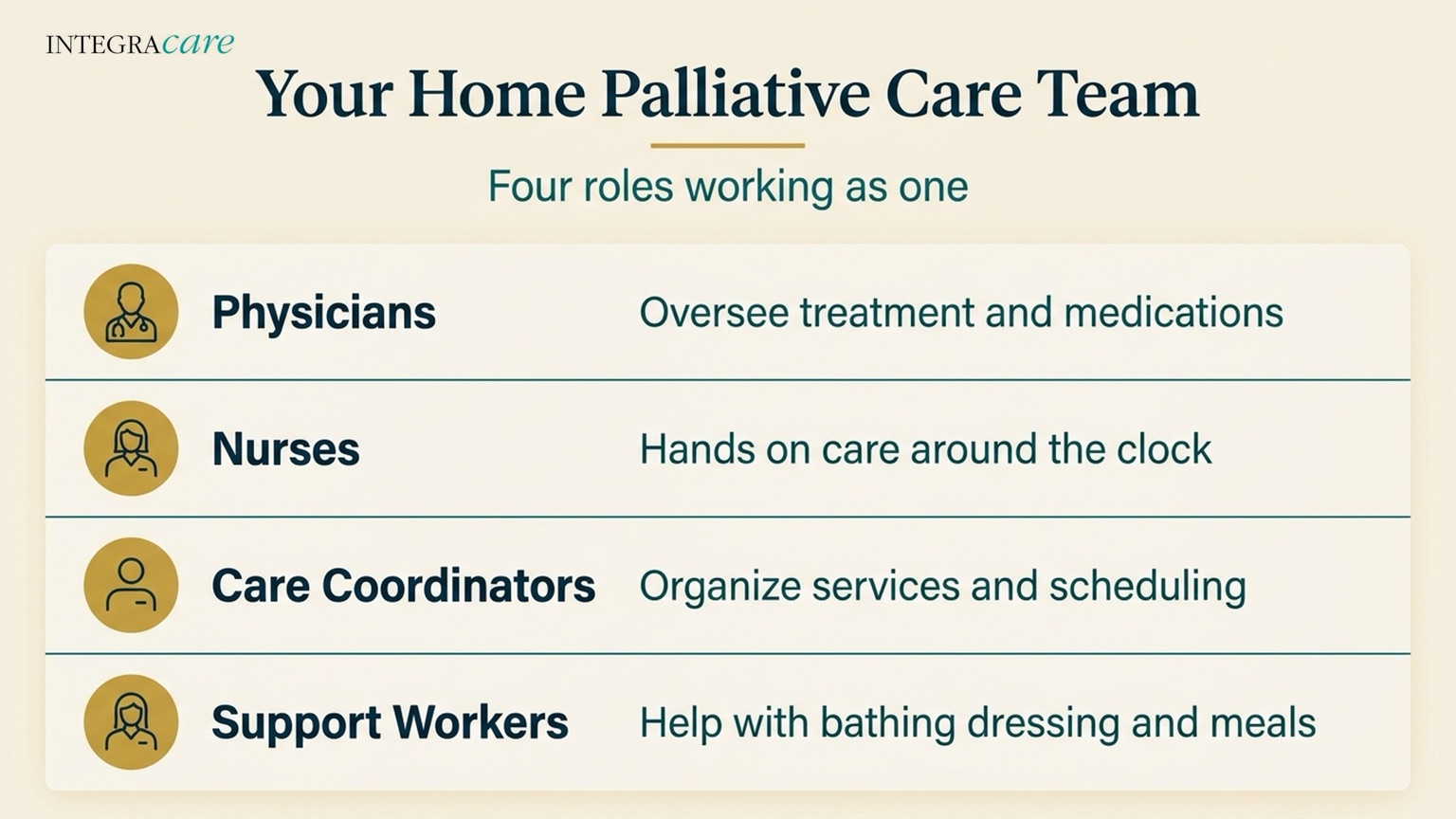
Here is a look at the different professionals who come together to create a comprehensive care experience:
- Physicians: They oversee medical treatments and prescribe medications aimed at managing pain and other symptoms, ensuring your loved one receives the best possible care.
- Nurses: Available around the clock, nurses provide hands-on care, monitor changing symptoms, and offer guidance to help you navigate the complexities of your loved one’s health needs.
- Care Coordinators: These professionals are the backbone of your care team, organizing services, scheduling appointments, and ensuring everything runs smoothly so that you can focus on what matters most: being there for your loved one.
- Personal Support Workers (PSWs): PSWs assist with daily tasks such as bathing, dressing, and meal preparation, allowing your loved one to maintain their dignity and comfort at home.
Some members of this team specialize in pain management and symptom relief, providing the comfort your loved one deserves. Others facilitate advance care planning, help with clear communication, and manage the practical aspects of daily care at home. These details can easily become overwhelming, especially when you are already stretched thin. Their support might also include assistance with necessary equipment, home support services, and referrals to additional resources when needed.
A well-rounded palliative care team does more than simply address symptoms; it ensures both the patient and family feel informed, supported, and less burdened by the changes that come with serious illness. You want your loved one to find peace, and you deserve to feel confident in the care you are providing. With this dedicated team by your side, you can achieve both with compassion and expertise.
When Is a Good Time to Consider Palliative Care?
Palliative Care treats the symptoms that occur during a life-threatening condition or a serious illness, including emotional, physical, and psychological symptoms, as well as side effects of primary treatment. Whereas primary treatment focuses on curing the illness or extending life, Palliative Care is about improving quality of life during treatment.
Palliative care is recommended to help alleviate pain and stress from:
- Cancer
- Congestive Heart Failure
- Alzheimer’s disease and other dementias
- Kidney failure
- Liver failure
- ALS and Lou Gehrig’s disease
- Parkinson’s disease
If you’re concerned with the quality of life of someone you love, consider initiating a Palliative care program alongside additional health care treatment plans. Palliative care works best when it runs in conjunction with other medical plans to treat illnesses, such as chemotherapy.
The idea of Palliative care is to improve your loved one’s life by engaging them with resources such as massage therapy, physiotherapy, and potentially live-in nursing care. It serves as a necessary extension to keep patients emotionally healthy and to help alleviate painful symptoms from drugs and medical procedures.
The Goals of Palliative Care
The main goal of in-home Palliative care is to increase patients’ quality of life by providing support emotionally, socially, and physically. In order to be as effective as possible, it should be introduced as early as possible because the sooner Palliative care is part of a person’s care plan, the more help they will receive.
When you make a firm commitment to in-home Palliative care when a diagnosis is first declared, you will reduce immense stress and worry. You will never have to face this challenging part of life alone, knowing that there is a plan in action for your family member or friend with a team of professional in-home Palliative Caregivers. To get answers to challenging questions about Palliative care, make sure you visit our blog, which has helpful articles for you and your family. In the meantime, consider the goals of Palliative care and why it’s so important for you and your loved one’s life.
To Keep Pain to a Minimum
Integracare aims to increase the quality of life for your loved one by reducing pain caused by medicines, procedures, and symptoms from illness. To do this, our team of Personal Support Workers (PSWs) and Registered Practical Nurses (RPNs) always discuss a three-step pain management plan with your loved one at the beginning of treatment.
This involves:
- Identifying the challenge: our team works compassionately and diligently to address the type of pain Clients experience, where it originates from, and what solutions can be applied.
- Establish goals with Clients: the effective relief of pain depends mainly on a comprehensive assessment to identify the different physical, psychological, social, and spiritual aspects that are specific to each patient and optimally intercede on a multidisciplinary level.
- A step-by-step approach to the assessment of pain: this is when pharmaceutical and non-pharmaceutical pain management tools are discussed.
Massage Therapy for Palliative Care
Integracare offers in-home massage therapy for Palliative Care patients. Our staff is composed of professional Registered Massage Therapists (RMTs) who are highly trained to practice on Seniors with sore muscles and joints.
Our RMTs adapt their techniques to suit the Client’s current state of health and any presenting symptoms to achieve the desired outcome. They use gentle strokes to accommodate whatever the Client’s needs may be. For example, if an individual is unable to lie face-down on the massage table, there are other positioning options, such as lying on their side or sitting in a recliner.
Palliative care massage addresses symptom issues, the harsh side effects of various treatments, and the psychological, social, and emotional consequences of living with a life-threatening illness. The sense of touch promotes a great sense of humanity and compassion for Clients. For someone experiencing a great deal of pain, both physical and emotional, even a hand massage can do wonders for their overall well-being.
To Improve Emotional Well-being through Social Interaction, Counselling, and More
Palliative care promotes both physical and mental health. It can feel emotionally draining for a patient who has been diagnosed with a life-threatening illness. It’s important for Clients to work with individuals such as counsellors and Caregivers to express concerns and expectations about the care and support they’re receiving.
In-home care provides one-on-one support. Clients can discuss health matters freely and have 24-hour access to private Caregivers, RPNs, and more. It’s vital for patients to feel sincere connections with others during this difficult time and to know that they’re not alone. Even if family and friends are present, an objective set of ears can be extremely beneficial because, often, clients don’t want to burden those who are close to them with serious health matters and would rather discuss personal issues with health professionals.
Adapting Care to Evolving Needs at Home
Research shows that 90% of people prefer to spend their final days at home, surrounded by loved ones. At Integracare, our approach to palliative care focuses on providing comprehensive, evolving support that enables your loved one to stay in the comfort of their own home while receiving the care they need.
As circumstances shift, our dedicated care team is committed to continually assessing and adapting our services to meet your loved one’s changing needs. Our caregivers are highly trained in palliative care and work under the supervision of Registered Nursing Coordinators, ensuring that each client receives tailored support that aligns with their specific requirements.
Comprehensive Home Care Services
Integracare offers a wide variety of services that can be seamlessly integrated into your loved one’s at-home palliative care plan, including:
- Physiotherapy Services: To help maintain mobility and strength, physiotherapy can be adjusted based on your loved one’s physical condition and capabilities.
- Massage Therapy: Specialized massage techniques focused on reducing stress, alleviating pain, and enhancing overall well-being.
- Wound Care: Our skilled caregivers are equipped to manage wound care needs effectively, ensuring that safety and comfort are prioritized.
- Dementia Care: We provide compassionate support tailored for clients with dementia, focusing on maintaining dignity and enhancing quality of life.
These services can be adapted as needs evolve, helping to ensure that your loved one experiences the best possible quality of life throughout their care journey.
Support for Families and Caregivers
Palliative care at home is designed not just for the patient but also for family members and caregivers who often feel exhausted, uncertain, or emotionally stretched. You might be grappling with questions like: Am I doing enough? Will I be okay? These feelings are completely valid, and it’s important to know that palliative care is here to support you as well.
This type of care encompasses a variety of resources aimed at making your journey easier:
- Respite Support: Sometimes, you just need a break to recharge. Respite care provides temporary relief, allowing you time to rest and rejuvenate.
- Education: Knowledge is empowering. We offer resources and training to help you feel prepared and confident in your caregiving role, so you can tackle challenges with greater ease.
- Counselling: When emotions become overwhelming, talking to someone who understands can make a huge difference. Counselling services provide you with emotional support to help you cope during tough times.
- Emotional Support: Trained professionals are available to listen and offer comfort, validating your feelings and experiences as a caregiver.
- Community Resources: We can connect you with local services and organizations that provide additional support, ensuring you have the help you need when you need it.
- Volunteer Support: Sometimes an extra pair of hands can lighten your load. Volunteers can assist with various tasks, offering you some much-needed relief.
- Guidance During Difficult Decisions: Making care decisions can feel daunting. We are here to guide you through these choices, helping you navigate options with clarity and confidence.
These support systems are crucial for family members balancing caregiving with work, daily responsibilities, and their own health. You are not alone in this journey. Sharing the responsibility can greatly alleviate stress and bring peace of mind.
Families may also experience challenges before and after a loss. Bereavement support is available to help you navigate this difficult time, offering a safe space to process your feelings and connect with others who understand. Grief can feel incredibly heavy, and having someone there to support you through it can make all the difference. You don’t have to face this alone.
Ongoing Monitoring and Adaptation of Care
Palliative care needs can change over time, sometimes gradually and sometimes quite suddenly. That’s why ongoing monitoring is a crucial part of home-based care. It’s important to be prepared for shifts in symptoms or changes in routines so that you’re not caught off guard.
A care coordinator or another member of the care team will check in regularly and adjust the care plan based on the current situation. These regular check-ins typically include:
- Monitoring Changes in Symptoms or Pain Levels: Keeping a close eye on how your loved one is feeling allows the team to respond promptly to any emerging needs.
- Adjusting Medications or Treatment Approaches: As circumstances evolve, medications may need to be modified to ensure optimal comfort and effectiveness.
- Reviewing Daily Routines: Ensuring that daily activities still align with your loved one’s needs helps maintain a sense of normalcy.
- Updating Goals of Care: As your loved one’s wishes evolve, it’s essential to adjust the goals of care accordingly to stay aligned with their values.
- Addressing Family Concerns Early: Open lines of communication allow families to voice new concerns before they escalate into crises, ensuring everyone feels heard and supported.
This proactive approach ensures that care remains focused on your loved one's values and wishes, rather than just their medical needs. You want your loved one to feel like themselves, not merely a patient, and regular check-ins help keep their humanity at the forefront.
Additionally, consistent follow-up provides families with an opportunity to express concerns early on. When the care team stays connected, it becomes easier to adapt symptom management, daily care, and family involvement before challenges arise. You already have so much on your plate; the last thing you need is an unexpected crisis. Regular communication and monitoring can help prevent stress and ensure everyone feels supported during this journey.
Compassionate Care Benefits in Canada
Providing the essentials of palliative care to a loved one is an emotionally and physically stressful time. Integracare plays a pivotal role in providing compassionate care for Seniors in their own homes, but family caregivers often want to be there and provide support.
One way that they can make the time to do this is through the Compassionate Care Benefit. The Compassionate Care Benefit is provided through Employment Insurance (EI) to allow people to be away from work to provide care and support for a member who has a significant risk of death within six months. You can take a maximum of 26 weeks away from work and receive compassionate care benefits. Please consult the website for eligibility requirements.
Principles of Compassionate Care
Compassionate care is a way of providing palliative care that focuses on stress reduction and creating better interpersonal bonds. According to the Arnold P. Gold Foundation, compassionate nursing care includes attributes such as integrity, altruism, respect, empathy, service, and excellence. These are principles that we bring to compassionate home care.
Focus on Quality of Life
The key to successful at-home palliative care lies in coordination and communication. Our caregivers regularly communicate with each other and with family members to monitor changes in health status and adjust care plans as necessary. This proactive approach allows us to address potential issues before they escalate, providing reassurance to families and ensuring that your loved one feels supported at all times.
Your Partner in Home Care
With Integracare, you’re not just getting a service; you’re gaining a partner in navigating this journey. Our team is here to help ensure that your loved one can remain comfortably at home, living as fully and richly as possible, even as their needs change.
If you're ready to explore at-home palliative care options in Toronto or Mississauga, please call us for more information. Together, we’ll create a customized care plan that evolves with your loved one’s needs, maximizing quality of life every step of the way.
Frequently Asked Questions about Palliative Care
What is palliative care, and how does it help?
Palliative care is specialized medical support that focuses on relieving pain, symptoms, and stress associated with serious or life-threatening illnesses. It improves quality of life by addressing physical, emotional, and psychological needs alongside ongoing medical treatment.
When should someone start palliative care?
Palliative care can begin at any stage of a serious illness, not just at the end of life. Starting early allows for better symptom management, reduced stress, and stronger support for both patients and their families.
What are the benefits of in-home palliative care?
In-home palliative care allows patients to receive support in a familiar, comfortable environment, which can reduce anxiety and improve emotional well-being. It also provides personalized, one-on-one care tailored to the patient’s specific needs and preferences.
What services are included in palliative home care?
Palliative home care typically includes pain and symptom management, nursing care, counselling, and supportive therapies like physiotherapy or massage therapy. These services work together to support the patient’s physical comfort and emotional health.
Are there financial support options for family caregivers in Canada?
Yes, eligible caregivers in Canada can access the Compassionate Care Benefit through Employment Insurance. This program provides up to 26 weeks of financial support so caregivers can take time off work to care for a loved one at home. Please consult this Government of Canada page for eligibility information.
Free In-Home Assessment
The Care Your Family Deserves Starts Here
Speak with our team about a personalized care plan. Book a free, no-obligation in-home assessment and we will help you find the right support for your loved one.
About the Author: Lee Grunberg

President & CEO, M.B.A.
Lee joined Integracare as President & CEO on August 2, 2016 after an approximately 20 year career in Private Equity and Investment Banking. Lee brings tremendous operational knowledge and governance experience along with an incredible passion and energy to Integracare.