
Blog
Understanding the Essentials of Palliative Care
Published
Updated
Written by Lee Grunberg, M.B.A. — President & CEO
Reviewed by Bethel McMaster, BScN, RN — Director of Business Development

On this page17 sections
Key Takeaways
- Palliative care improves comfort and quality of life for people with serious illnesses.
- It can begin at diagnosis and continue alongside treatment.
- Care addresses physical, emotional, social, and spiritual needs.
- Support is available at home, in hospitals, care homes, and hospices.
- Personalized care helps patients and families navigate difficult times.
To see someone dear to you face the end of life is always challenging. Figuring out health care options can feel confusing and overwhelming, and when you’re grappling with difficult choices and trying to maintain stability in your own life during a time of crisis, it can feel nearly impossible to find time to just sit down and breathe.
Palliative care is a holistic approach to specialized medical care for people with life-limiting illnesses. It is meant to create comfort and increase the quality of life for people who are no longer able to care for themselves.
Palliative care is often confused with hospice, which means the end of life. While both concentrate on providing comfort to patients, there is a difference. Hospice care is given after treatment for an illness has already begun, and it ends when it is clear that the person is not going to survive the illness, whereas Palliative care can begin at the time of diagnosis.
Facing a serious diagnosis is an incredibly heavy emotional journey, and it is natural to feel completely overwhelmed. We specialize in providing compassionate Palliative care at home in Toronto, bringing expert symptom management and pain relief right to your loved one’s bedside. By handling the complex clinical details, we lift the medical burden off your shoulders so your family can simply focus on sharing peaceful, meaningful time.
When Is Palliative Care Appropriate?
For individuals with a serious or life-threatening disease, Palliative care provides medical and related treatment that helps an individual live as fully and well as possible. Healthcare professionals embrace the values, goals, and wishes of patients when considering disease management and relief from fear, anxiety, and pain.
When a loved one is facing a difficult diagnosis, managing their pain and anxiety becomes your top priority. It can be hard to think clearly in times like this, but reviewing key questions to ask a palliative care team ensures you get the exact clarity and personalized support your family needs moving forward.
Understanding the framework of palliative care can be incredibly helpful during these challenging moments. The National Consensus Project on Palliative Care describes it this way: “Palliative care is both a philosophy of care and an organized, highly structured system for delivering care. The goal of Palliative care is to prevent and relieve suffering and to support the best possible quality of life for patients and their families, regardless of the stage of the disease or the need for other therapies.”
The most common health conditions addressed in Palliative care are:
- Cancer
- Kidney failure
- Liver failure
- Congestive Heart Failure (CHF)
- Alzheimer’s disease and other Dementias
- Spinal cord injuries
- Brain diseases such as stroke, ALS, or Parkinson’s
- HIV/AIDS
- Multiple sclerosis (MS)
When patients begin Palliative care, there is a formal assessment of their health early in the process. Symptoms most commonly addressed include:
- Discomfort or pain
- Fatigue
- Shortness of breath
- Depression
- Anxiety
- A lack of appetite
- Constipation
- Nausea
- Sleep issues
Our palliative approach looks at the whole picture of your life, going far beyond just managing physical symptoms. We are here to gently guide you through the side effects of complex treatments while holding space for the real emotional, physical, and financial strains that come with a serious illness. Through it all, our absolute priority is preserving your loved one’s dignity and making sure they feel deeply safe, respected, and cared for every single day.
Palliative care is highly likely to be recommended when:
- There are three or more visits to a hospital with the same symptoms within a year
- Frequent emergency room visits
- Eating and digestive problems due to serious illness
- Serious side effects from treatments such as chemotherapy
What matters most during a serious illness is ensuring your loved one feels completely wrapped in comfort, dignity, and a sense of normalcy. At Integracare, we bring that peace of mind right to your doorstep. Rather than relying on rigid, one-size-fits-all routines, we design a customized health plan that adapts entirely to your family's needs.
By bringing together specialized nursing, gentle pain management, and compassionate personal support, we actively ease difficult symptoms like nausea, fatigue, and physical discomfort. But we also know that quality of life is about the small things, too. Our caregivers are there to help with daily chores, prepare favourite meals, manage medications, and provide genuine companionship, reducing the heavy burdens of stress, anxiety, and depression so you can simply focus on being a family again.
What does Palliative Care Entail?
Palliative care works best when you start it as soon as you need it during the treatment process. Patients who receive palliative care alongside other treatments for illnesses and conditions typically have less severe symptoms, are more satisfied with treatments, and report a higher quality of life. For many families, this level of support is best delivered through compassionate palliative home care, where comfort and familiarity play a meaningful role in overall well-being.
There are four major Palliative care types that are available to patients. These include: social, emotional, spiritual, and physical.
Essentials of Palliative Care: Socializing
When an individual has been diagnosed with a life-threatening illness or serious condition, to say the least, it can feel overwhelming. Often, patients might not want to discuss health matters with their family or friends for fear of burdening them.
Integracare provides private home care in Toronto to patients who choose to stay at home during this phase of life. Our highly qualified and experienced Registered Practical Nurses (RPNs) and Personal Support Workers (PSWs) not only deliver excellent medical and health support, but they also offer compassionate and engaging care for Clients.
We like to think that our in-home RPNs and PSWs are an extension of your family and friends. Integracare RPNs and PSWs develop strong bonds with Clients. There is a level of understanding that unfolds between the two that is difficult to truly comprehend. They sometimes spend up to 12 hours together, and the moments shared between a Client and RPN or PSW can be difficult, but the wisdom that is felt by both can also be beautiful and profound.
Often, Clients receiving palliative care request to speak with a social worker or a therapist. This can be extremely beneficial because although RPNs and PSWs are always there for your loved one, sometimes another professional opinion can help to facilitate certain situations, such as coordinating a family meeting.
Essentials of Palliative Care: Emotional Well-Being
When a patient is diagnosed with a critical illness, many emotions are triggered. Feelings of depression, anxiety, stress, and anger, these are all real emotions that can too easily be brushed aside. The truth is, these are real feelings, and they can hinder a person’s well-being.
Our RPNs and PSWs provide emotional support to Clients every step of the way. They are there to listen and help with daily tasks such as making a bed or preparing a meal, which the Client may not always feel up to doing.
Our Caregivers can offer coping strategies for quality of life during this sensitive time to help your loved ones understand these difficult feelings.
We will also work with your loved one’s health team to ensure the best possible care. Our staff advocates for your family and friends, and if they believe a psychologist is needed, they will discuss this with both your loved one’s health team and you and your family.
Essentials of Palliative Care: Spirituality
Having a life-threatening illness can bring up a lot of questions, including those related to spirituality. A patient might wonder how and why this is happening to them, and they might be thinking about how they can best come to terms with what is taking place.
Our staff of experienced and compassionate Caregivers listens to all of your loved ones’ needs. We can reach out to those in various communities who might be able to help provide spiritual support.
Available Services & Resources
When someone you love is facing a serious illness, it's natural to wonder what help is out there and where to even begin. Palliative care exists to make life a little easier. It's about comfort, reducing stress, and making sure both your loved one and your family feel truly supported.
Where Can You Receive Care?
Palliative care meets you where you are. Depending on your needs and what's available nearby, care can happen at:
- Home, where familiar surroundings bring the most comfort.
- Hospitals, when more intensive medical support is needed.
- Long-term care homes or residential facilities (varies by province/territory).
- Hospices, where the focus shifts entirely to comfort and quality of life.
What Support Looks Like
Palliative care goes far beyond medical treatment. It can include:
- Managing symptoms like pain, nausea, fatigue, or sleep troubles.
- Emotional support for you and your loved ones.
- Spiritual care, if that's meaningful to you.
- Practical help with day-to-day concerns.
- Connections to social workers, therapists, volunteers, and community programs.
A Team That Truly Listens
At Integracare, we believe palliative care at home is about preserving your loved one’s dignity, keeping them comfortable, and honouring their personal wishes. We know how exhausting it is to manage a serious illness, which is why our dedicated team truly listens and puts your family first. By bringing specialized pain management and gentle clinical support right to the bedside, we take the medical burden off your shoulders so you can focus entirely on sharing peaceful, meaningful moments at home.
Other Essential Components of Palliative Care: Massage Therapy and Dementia Care
At Integracare, we believe in supporting every part of your loved one’s well-being, going far beyond standard medical tasks to bring genuine comfort to their daily life. We know how overwhelming it is to manage complex health needs, which is why we seamlessly blend soothing massage therapy and specialized Dementia care directly into our personalized plans.
Our memory care approaches gently reduce late-day anxiety by creating a calm, predictable routine at home. To ease physical discomfort, our compassionate Registered Massage Therapists (RMTs) use exceptionally light techniques to naturally soothe stiff muscles and relieve the aches associated with illness or intensive treatments.
Palliative Care Essentials: Breaking Down Myths About Palliative Care
One of the biggest myths about palliative care is that it is the same as end-of-life or hospice care. Palliative care does not necessarily mean that treatment options have been exhausted, unlike these other types of care.
There are types of palliative care that focus on alleviating pain and providing the best possible quality of life after primary treatment has ended, but this is not the only type of palliative care available.
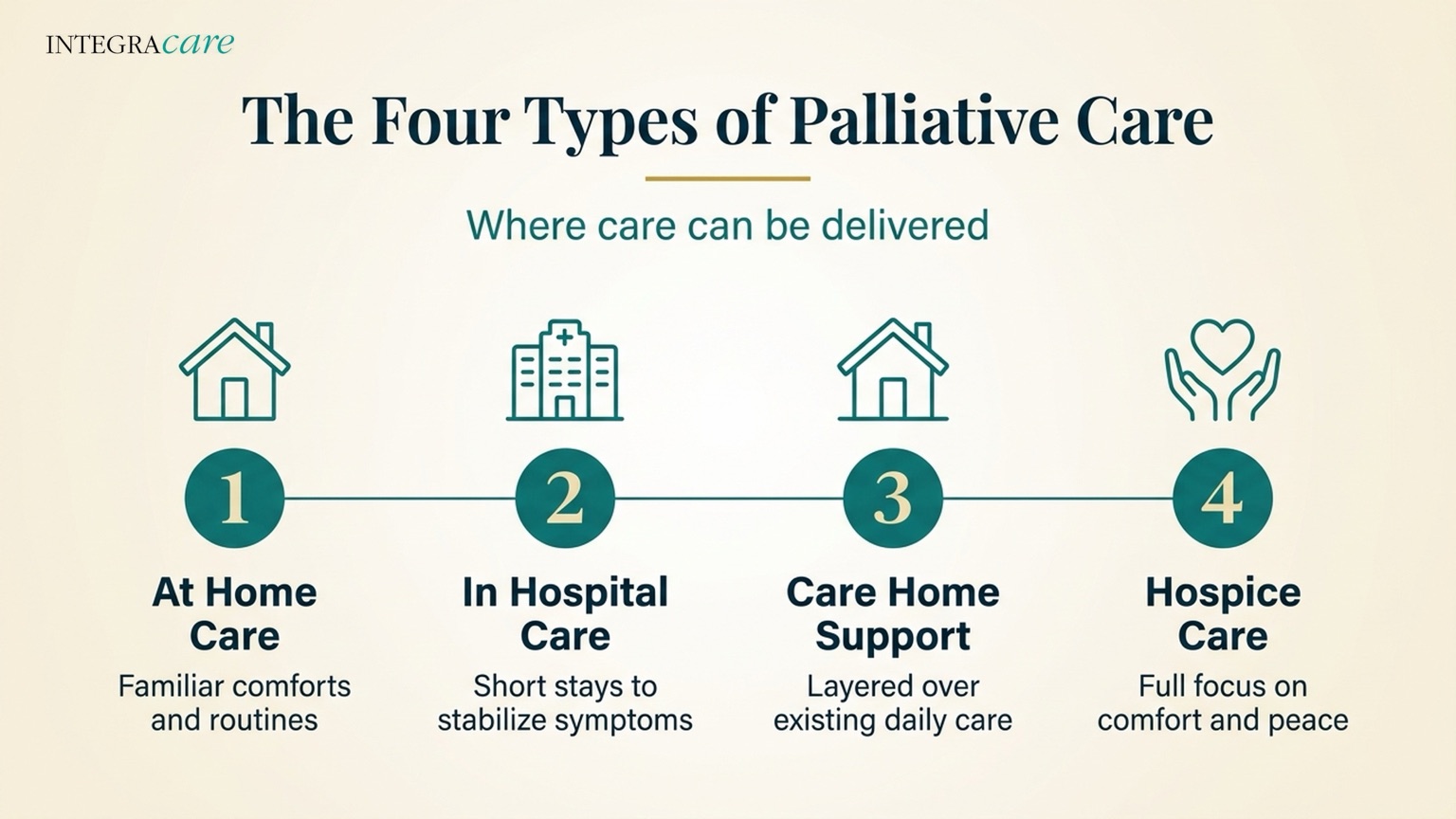
What Are the 4 Types of Palliative Care
Palliative care begins to make so much more sense when we look at the four different ways it can support your family. No matter where your loved one is, the goal remains the same: to surround them with comfort, dignity, and relief.
#1 At Home Palliative Care
This is the heart of what we do at Integracare. We bring specialized medical support and gentle care right into the familiarity of your own home. It allows your loved one to stay surrounded by their favourite comforts and family memories, making it a beautiful option for managing a life-limiting illness or finding peace during recovery.
#2 In Hospital Palliative Care
Sometimes a sudden medical change or a complex surgery requires a short-term hospital stay. In these moments, hospital teams can step in to quickly stabilize severe symptoms. Once things are manageable, many families choose to transition back to the peace of home.
#3 Care Home Palliative Care
If your loved one already resides in a long-term care facility or senior community, you don't have to move them to a hospital to get extra comfort. Palliative services can layer right over their existing daily routine, adding an extra blanket of specialized pain management and emotional support exactly where they live.
#4 Hospice Care
It is incredibly common to confuse palliative care with hospice, but hospice is actually just one specific path. It gently steps in when curative treatments are no longer the focus, shifting 100% of the energy toward absolute comfort, emotional closure, and a peaceful quality of life.
The Benefits of At-Home Palliative Care
Palliative care isn't about giving up. It's about living as well as possible, right where you feel most comfortable. Here's what Integracare's at-home support can offer:
Symptom Relief for Pain, Fatigue, Anxiety, Nausea, and Sleep Difficulties
Imagine waking up with less pain weighing you down, or finally getting a full night's rest because someone helped manage your discomfort. When symptoms are under control, you have more energy for the moments and people that matter most.
Massage Therapy to Ease Muscle Tension, Improve Circulation, and Reduce Stress
Gentle, therapeutic touch can work wonders for bodies that spend long hours in bed or chairs. It soothes aching muscles, stimulates circulation to prevent stiffness, and triggers your body's natural relaxation response, bringing both physical relief and emotional calm when you need it most.
Physiotherapy and Wound Care to Maintain Mobility and Comfort
Staying mobile, even in small ways, helps you maintain independence and dignity. Physiotherapy keeps your body functioning as well as possible, while expert wound care prevents complications and spares you unnecessary pain, so you can focus on living, not just managing.
Patient Advocacy to Improve Communication With Your Healthcare Providers
When you're unwell, keeping track of medications, appointments, and treatment options can feel impossible. An advocate ensures your voice is heard, your questions get answered, and your care team truly understands what you need, taking that mental burden off your shoulders.
Companionship and Engagement Through Conversation, Games, Puzzles, and Activities
Illness can feel isolating. Having someone there to share a laugh, listen to your stories, or simply sit with you brings warmth to difficult days and reminds you that you're not alone in this.
Practical Daily Support, Like Meal Preparation and Personal Care
There's something deeply comforting about a warm, home-cooked meal or a refreshing bath when you're not feeling your best. These small acts of daily care preserve your dignity and free your family to simply be with you as loved ones, not caregivers.
Help Acquiring Medical Equipment
From hospital beds to walkers to wound care supplies, navigating what equipment you need and where to find it is exhausting. We handle the logistics, delivery, and setup, ensuring you have everything necessary for safe, comfortable care without the headache of figuring it out yourself.
Support for Your Whole Family During Challenging Times
When someone you love is ill, the whole family feels it. We're here to guide your loved ones through this journey, offering practical help and emotional support so they can care for you without burning out.
Choosing Comfort Without Giving Up Hope
Opting for palliative care at home is a way of choosing to get comfort and honour in surroundings you know, not surrendering to the situation. It means living fully while getting the support you need.
Most people would prefer to receive care at home, but families often feel overwhelmed by the logistics. That's where having professional support makes all the difference. And if you're feeling mixed emotions about starting this journey? That's completely normal. We're here for that too.
Quick Tip: Jot down your questions, symptoms, and concerns before we meet. It helps us understand how to best support you from day one.
The Palliative Care Team: Working Together for You
No one should have to face a serious illness alone. Palliative care is built on teamwork, bringing together a group of caring professionals and loved ones who are all focused on your well-being. You won't be in this alone. Integracare uses dedicated and compassionate care providers with a focus on your comfort and well-being:
- Home care providers offer services like personal grooming, companionship, and food preparation.
- RN Coordinators available 24 hours a day to oversee care and make sure your needs are met.
- Massage therapists specializing in palliative care techniques.
- Physiotherapists who will help you retain your mobility and functionality.
- Patient advocates to assist you in communicating with your doctors and nurses.
Everyone works together with a person-centred approach, ensuring your care reflects your unique needs and wishes.
When To Begin Care?
The short answer is: As soon as you feel that you may benefit from added support.
Palliative care services can be started at any stage of the illness and at any time, including right after a diagnosis. You don't have to wait for your symptoms to become difficult to manage in order to start. Beginning care earlier is helpful to provide a seamless management of your symptoms, better coordinate your care providers, and plan for the future in a manner that suits your needs and comfort level.
Palliative care is not limited to cancer care. It is for individuals experiencing many different illnesses and diseases, such as Alzheimer's, dementia, Parkinson's, CHF, kidney failure, arthritis, ALS, and many other terminal illnesses.
There is no minimum length of care; you will receive the care you need for as long as it is appropriate and beneficial to you. The services will be customized to your changing needs.
How to Begin
- Arrange for a free in-home consultation: We will come to your home to discuss your unique needs and how our services can provide the support you require.
- Feel free to bring a loved one to this meeting with you; it is often helpful and comforting.
- Share what matters to you: Tell us what you hope to achieve, your typical daily activities and what level of assistance you need.
- Let us worry about the details: We can manage everything, from staffing the appropriate caregiver to helping arrange for the medical equipment you may require.
Final Thoughts
There are many myths surrounding Palliative care, but the most important thing to know is that this extra layer of support is available to anyone facing a serious illness, right from the day of diagnosis. It is never about giving up; it is about choosing absolute comfort, relief, and peace of mind when your family needs it most.
When our team steps into your home, we focus entirely on helping your loved one feel deeply rested, comfortable, and safe. And as a caregiver, you gain the beautiful reassurance that they are. By letting a dedicated team handle the complex medical and daily details, you can step away from the overwhelming role of a full-time caregiver and finally take a deep breath, knowing they are safe and well cared for.
Frequently Asked Questions About Palliative Care Essentials
What is palliative care, and who is it for?
Palliative care is specialized medical support focused on improving the quality of life for people with serious or life-limiting illnesses. It is appropriate for individuals at any stage of illness who need help managing symptoms, stress, and overall well-being.
When should palliative care begin?
Palliative care can begin as early as the time of diagnosis and continue alongside curative or life-prolonging treatments. Starting early often leads to better symptom management, improved comfort, and more informed care decisions.
What’s the difference between palliative care and hospice care?
Palliative care can be provided at any stage of a serious illness and does not require stopping treatment. Hospice care, on the other hand, is typically reserved for end-of-life situations when curative treatment is no longer being pursued.
What services are included in palliative care at home?
Palliative home care typically includes pain and symptom management, emotional and psychological support, assistance with daily activities, and coordination with healthcare providers. It may also involve spiritual care, therapy services, and support for family members.
What conditions commonly require palliative care?
Palliative care is commonly used for conditions such as cancer, heart failure, kidney disease, dementia, and neurological disorders like Parkinson’s or ALS. It is also beneficial for individuals experiencing complex symptoms or frequent hospital visits related to chronic illness.
Free In-Home Assessment
The Care Your Family Deserves Starts Here
Speak with our team about a personalized care plan. Book a free, no-obligation in-home assessment and we will help you find the right support for your loved one.
About the Author: Lee Grunberg

President & CEO, M.B.A.
Lee joined Integracare as President & CEO on August 2, 2016 after an approximately 20 year career in Private Equity and Investment Banking. Lee brings tremendous operational knowledge and governance experience along with an incredible passion and energy to Integracare.