
Blog
The Hidden Danger of a Delayed Hospital Stay in Winnipeg
Published
Written by Dennis Fancy
On this page7 sections
It often starts with something small: a fall at home, a hip fracture, a bout of pneumonia. The ambulance comes, the hospital stabilizes things, and the family breathes a sigh of relief. Then the days stretch on. The medical crisis is over, but your parent is still in a hospital bed, waiting for somewhere safe to go. For families in Winnipeg, this wait is not just frustrating. It can be the most dangerous part of the whole ordeal.
What Happens When a Hospital Stay Gets "Stuck"
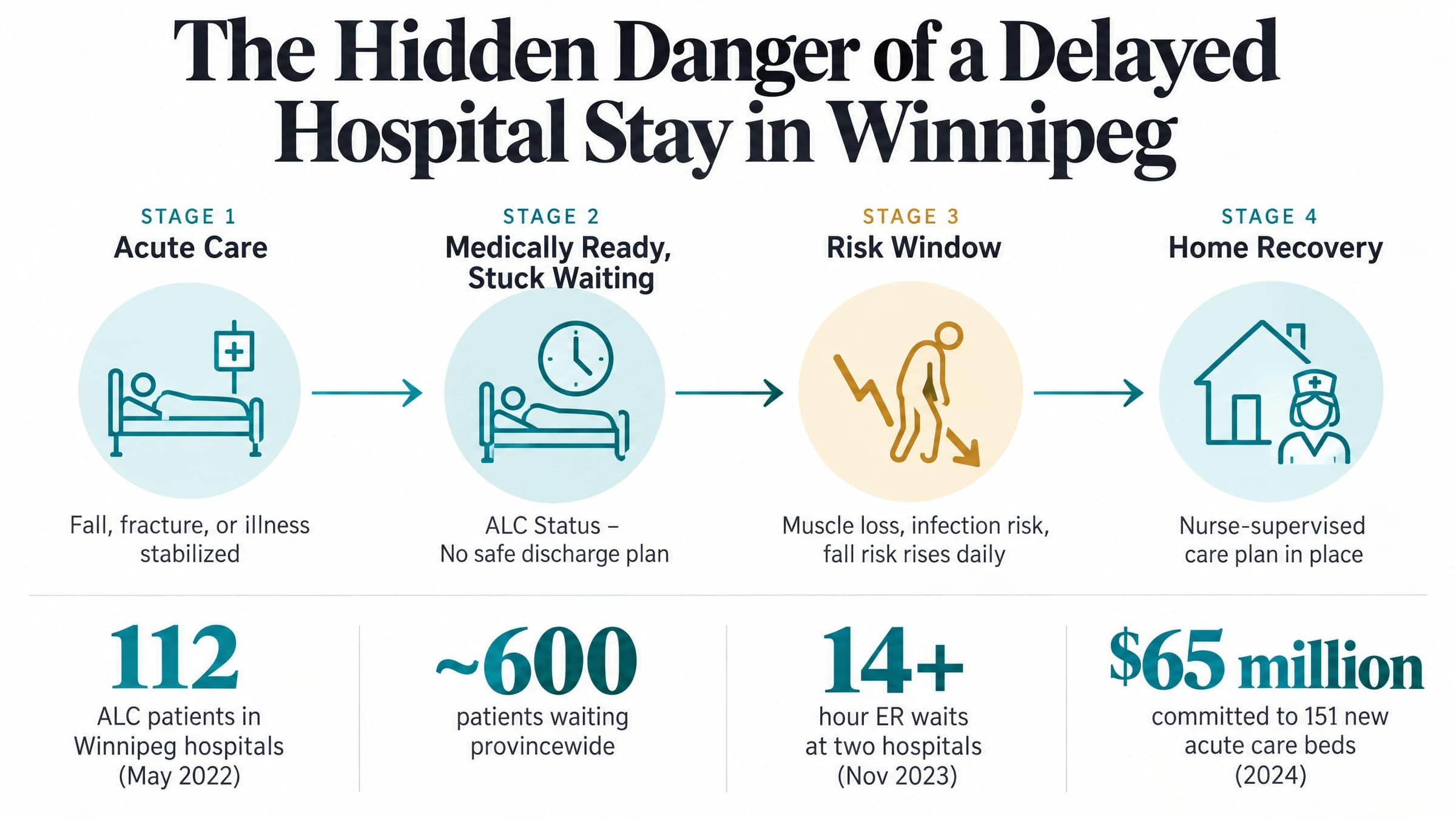
In hospital language, a person who no longer needs acute medical care but can't yet be discharged is designated as an alternate level of care (ALC) patient. They're well enough to leave, but there's no home care plan in place, no bed available in a personal care home, or no safe way for them to manage at home alone. The Winnipeg Regional Health Authority reported 112 ALC patients in Winnipeg hospitals on a single day in May 2022, down from a daily average of 151 the month before, and each of those beds was unavailable for someone arriving through emergency (WRHA, 2022). Provincially, the Manitoba government has said roughly 600 patients at any given time no longer need emergency care but are waiting for long-term treatment, housing, or community supports (CTV News).
Why Longer Stays Are Riskier for Seniors
A hospital is built for acute illness, not for recovery over weeks. The longer an older adult stays in a hospital bed after they're medically ready to leave, the greater the risk. A Canadian evidence review found that ALC patients face higher risk of adverse events, hospital-acquired infections, physical and mental decline, and mortality (NCBI Bookshelf). For someone recovering from a hip fracture, this matters enormously: muscle strength and balance decline quickly with bed rest, which raises the risk of a second fall. In practice, we often see families underestimate how much ground an older parent can lose in just ten extra days in a hospital bed, strength, appetite, even the confidence to walk to the bathroom unassisted.
Manitoba data also shows this burden isn't shared equally. Patients outside Winnipeg tend to have longer ALC stays than those in urban areas, meaning rural Manitoba families often face even longer waits for a safe discharge plan (NCBI Bookshelf).
Winnipeg's Emergency Rooms Are Already Stretched
The knock-on effect reaches far beyond the person waiting to be discharged. When hospital beds are occupied by patients who are medically ready to leave, new patients arriving through emergency have nowhere to go. Winnipeg Regional Health Authority data showed emergency department waits climbing through 2023, with the longest waits at Grace and St. Boniface hospitals stretching past 14 hours in November 2023, affecting about 10 per cent of patients at those two sites (CBC News). By December 2023, average waits to see a doctor or nurse across Winnipeg's emergency departments and urgent care centres hit a high of four hours, and between March 2024 and March 2025, 14 to 17 per cent of patients left without being seen by a physician at all (CBC News). A St. Boniface Hospital emergency physician has described this "access block", the inability to move admitted patients out because there's nowhere for them to go, as the leading cause of excessive ER wait times in the city (CBC News).
What Manitoba Is Doing About It
The province has acknowledged the problem. Manitoba's 2024 budget allocated more than $65 million to reduce emergency room wait times, including funding for 151 new acute care beds across the province, specifically because bed shortages were found to worsen emergency department overcrowding (Manitoba government). More beds help, but they don't solve the underlying issue for an individual family: someone still needs a safe, supported place to recover once they're discharged, and that planning often has to happen fast.
How Home Care Helps Families Avoid the Delay
This is where arranging care in advance makes a real difference. Integracare provides nurse-led care at home, which means a plan for your parent's recovery, from personal support to dementia care or palliative care, can often be put in place before a hospital discharge becomes urgent. A hospital social worker is far more comfortable approving a discharge when there's a documented home care plan waiting, rather than a family promising to "figure it out."
For a hip fracture recovery specifically, a caregiver will typically help with safe mobility, medication reminders, meal preparation, and the kind of consistent supervision that prevents a second fall in the first fragile weeks at home. Every Integracare client's plan is built around registered nurse supervision, 24/7, so changes in condition are caught early rather than missed until the next appointment. Families managing a more intensive recovery sometimes need live-in care or 24-hour home care in the first weeks, then step down to daytime visits as strength returns.
Practical Steps Families Can Take
- Ask the hospital's discharge planner or social worker what, specifically, needs to be in place before your parent can leave (equipment, home support hours, follow-up appointments).
- Start exploring home care options as soon as admission happens, not after the discharge date is set. In practice, a care plan arranged a few days ahead moves much faster than one started the morning of discharge.
- Ask about the full range of home care services available, including short-term recovery support and longer-term related care services like light housekeeping or transportation.
- Confirm your parent's home is actually safe for their level of mobility: stairs, bathroom grab bars, and lighting all matter more after a hip fracture.
- If cost is a concern, ask your care coordinator for current hourly rates and what a realistic weekly plan looks like, since private home care pricing varies by service and hours needed.
A delayed discharge is stressful for everyone involved, but it doesn't have to mean your parent sits in a hospital bed longer than necessary. Contact us about home care in Winnipeg to talk through what a safe discharge and recovery plan could look like for your family.
Frequently Asked Questions
What does ALC mean in a Winnipeg hospital?
ALC stands for alternate level of care. It describes a patient who no longer needs acute hospital treatment but is waiting for a safe discharge destination, such as a personal care home bed or a home care plan. Manitoba data shows this has affected well over 100 patients in Winnipeg hospitals on a given day (WRHA).
Why is a long hospital stay risky after a hip fracture?
Extended bed rest after a hip fracture leads to rapid loss of muscle strength and balance, raising the risk of a second fall. Research also links longer ALC stays to higher rates of hospital-acquired infection and overall decline (NCBI Bookshelf). Always follow your care team's specific mobility and rehabilitation instructions.
How soon should we start arranging home care before a hospital discharge?
As early as possible, ideally within the first day or two of admission. A documented home care plan makes it easier for hospital staff to approve discharge, and it gives your family time to prepare the home itself for a safe recovery.
Can home care really speed up a hospital discharge?
It can. When a hospital social worker knows a client will have consistent, nurse-supervised support at home, including help with mobility, medication, and meals, they can often move the discharge date forward rather than waiting for a long-term care bed.
What is the difference between home care and a personal care home in Manitoba?
Home care supports someone living in their own home or a family member's home, with visits ranging from a few hours a week to live-in support. A personal care home (PCH) is a licensed long-term care facility for people who need round-the-clock supervised care that can't be safely provided at home. A care coordinator can help your family weigh which option fits your parent's needs.
Free In-Home Assessment
The Care Your Family Deserves Starts Here
Speak with our team about a personalized care plan. Book a free, no-obligation in-home assessment and we will help you find the right support for your loved one.