
Getting up and ready
Gentle guidance with toileting, washing, and dressing, while encouraging what your loved one can still do.
Private home care · Winnipeg
Dementia can change how your loved one communicates, responds, and moves through the day. Our dementia-educated Health Care Aides adapt their approach to ease distress and support the abilities still there.
Free in-home assessment. No obligation.
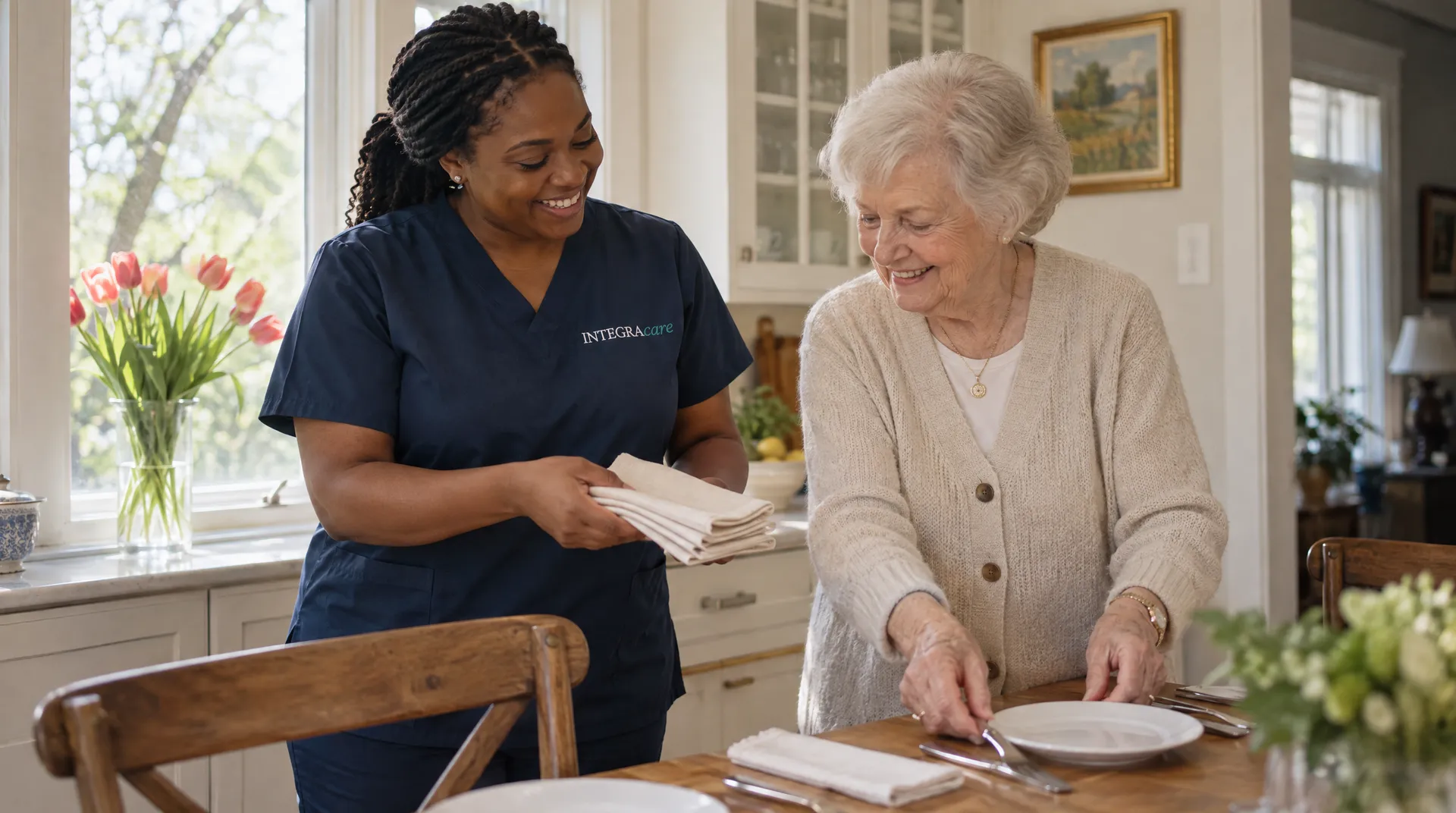
First Signs
A stove left on, a bill paid twice, or getting lost on a familiar walk can be easy to dismiss at first. As these moments become more frequent, Families may start wondering if their loved one can still manage safely at home.
Dementia can slowly change the relationship you have with someone you love. Days become filled with reminders, personal care, repeated questions, difficult moments, and watching closely for what might happen next.
Our Winnipeg team can share that responsibility. Dementia-educated Health Care Aides know how to adapt communication, encourage the abilities your loved one still has, and provide personal care with dignity, with a Registered Nurse guiding the care plan as needs change.
More than 20,300 Manitobans live with Alzheimer's disease or another dementia, with nine more diagnosed each day (Alzheimer Society of Manitoba, from a 2022 Alzheimer Society of Canada study). Behind those numbers are Families adjusting to many of the same changes at home.
Talk through your optionsDaily Routines
Familiar routines can make the day easier to follow. Your loved one's care plan guides each visit while leaving room to adjust to how they are feeling that day.
Gentle guidance with toileting, washing, and dressing, while encouraging what your loved one can still do.
Familiar foods, help when needed, and regular drink reminders when hunger or thirst cues are easily missed.
Calm reminders from a pharmacy-filled blister pack, with refusals or concerns shared with the nurse.
A steadying arm, help between bed and chair, and a walker or cane kept close when needed.
One step at a time, with privacy, reassurance, and time to try again later if your loved one becomes distressed.
A quieter pace, familiar music or a snack when confusion or restlessness begins to increase later in the day.
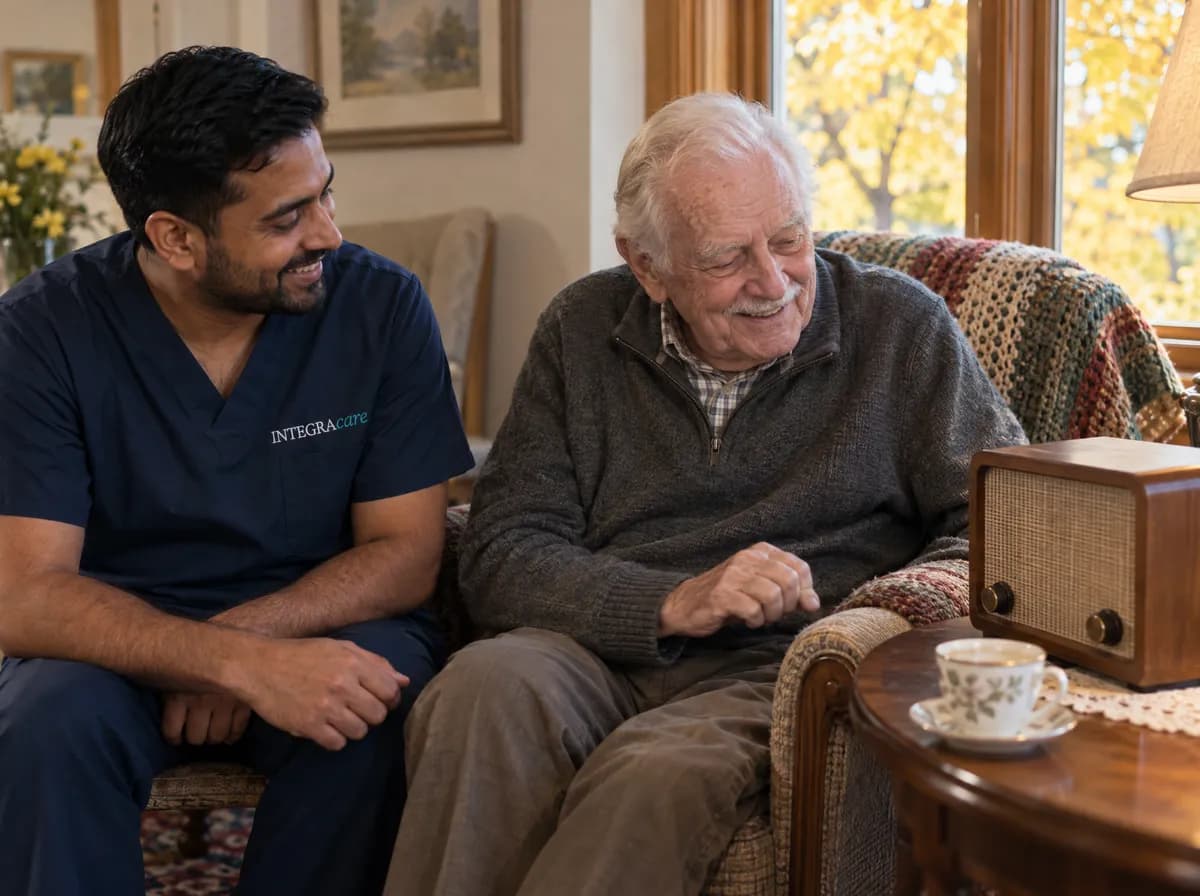
Activities at Home
A favourite song, an old Family photo or a familiar story can bring joy and spark conversation. Dementia-educated Health Care Aides listen, encourage your loved one to share, and make time for the interests and hobbies they enjoy.
Tell us about their work, hobbies, faith, favourite music, and Family memories. Their Health Care Aide can draw on what they know and love to keep them engaged, connected, and as independent as possible.
Staying Safe
Small changes around the home can make everyday routines easier and reduce risks as dementia progresses. During the in-home assessment, your nurse can walk through these areas with you.
Check stove knobs, kettles, sharp knives, and food that may be forgotten in the fridge.
Add grab bars, non-slip surfaces, and a raised toilet seat where needed, and check the hot water temperature.
Clear loose rugs, cords, and clutter, and light the path between the bedroom and bathroom at night.
Pay attention to exits your loved one uses after dark and whether a door chime could alert you if they leave.
Keep Family contacts, the Family doctor, and Integracare's 24/7 number somewhere easy to find.
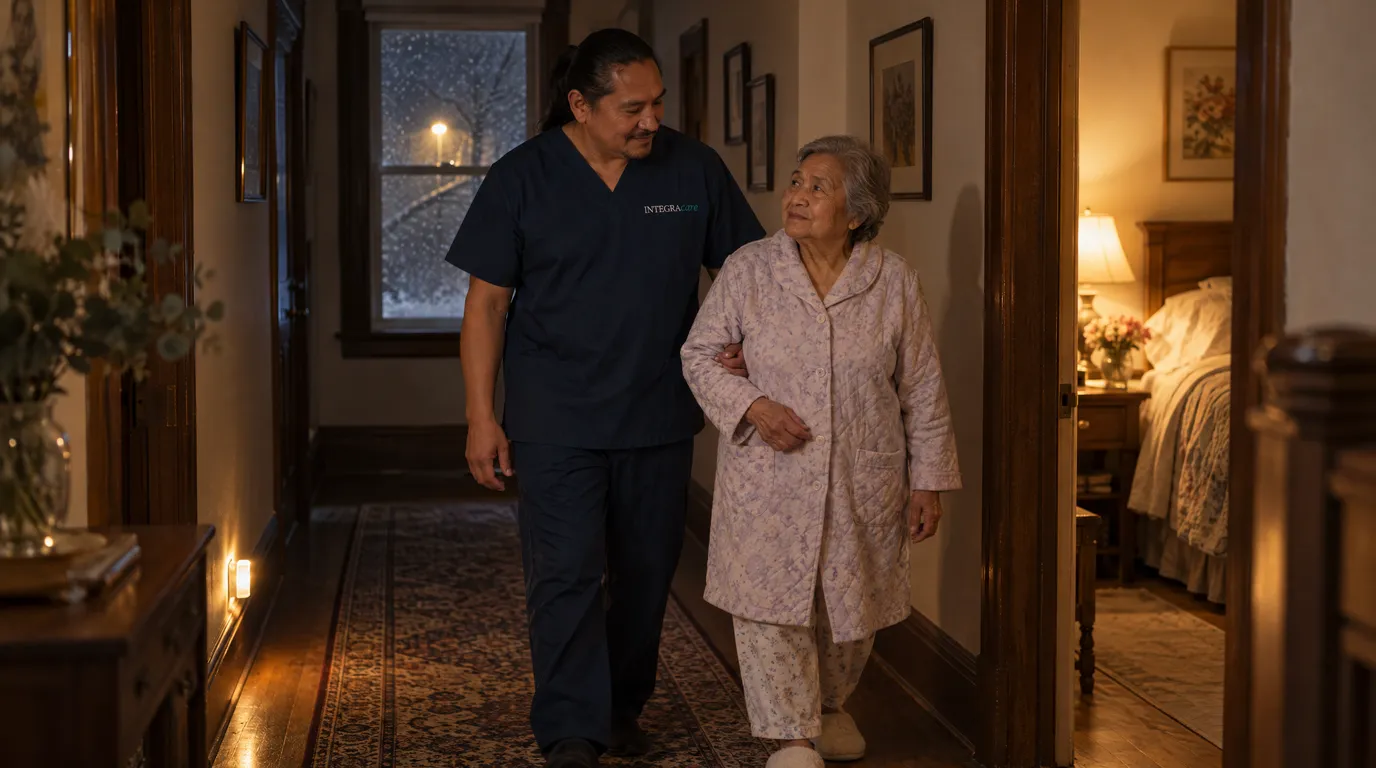
Nights and Wandering
Dementia can change sleep patterns. Your loved one may sleep through much of the afternoon, then wake at 3 a.m. convinced it is morning or time to leave for work. If they head for the door, a cold Winnipeg night can quickly become dangerous.
When nights become difficult, an HCA can stay awake in the home, offer reassurance when your loved one wakes, and gently guide them back to bed. For Families who need someone awake and available throughout the night, 24-hour home care can provide that coverage. If your loved one sleeps through most nights, live-in care may suit them, because the Health Care Aide who lives in the home has a set sleep period.
As Dementia Progresses
Dementia does not follow the same path for everyone. As your loved one's memory, communication, mobility, or personal care needs change, their nurse can review the care plan and adjust the level of care they receive at home.
A few visits a week may offer companionship, errands, appointments, and gentle reminders, while your loved one manages most of the day independently.
Daily visits may help with dressing, bathing, and meals. Health Care Aides simplify choices and adjust their approach when your loved one becomes confused or distressed.
Care may include hands-on help with eating, personal care and mobility, plus overnight support when needed. Palliative care can follow as comfort needs change.
If home is no longer the right fit, a personal care home, Manitoba's term for long-term care, may be worth exploring. The Winnipeg Regional Health Authority (WRHA) manages the application process, known as paneling, through its Long Term Care Access Centre at (204) 940-8670. Private care can continue while your loved one waits for placement.
For Family Caregivers
Day-to-day dementia care often falls to one relative. When an Integracare Health Care Aide steps in, they can take on personal care, meals, difficult moments, and the repetition dementia can bring.
Arrange a few hours, a weekend, or regular respite care while your loved one remains cared for at home.
Integracare's online portal, where invited relatives anywhere can check when the HCA is due and what the latest visit notes say.
The Alzheimer Society of Manitoba runs online classes for families and a 6-part in-person series. It also holds support groups for care partners, the people who give someone day-to-day help.
Caregiver Burnout
Caring for someone with dementia can be exhausting in ways other people may not see. It is answering the same question again and again, being awake when your loved one is restless at night, or trying not to take it personally when confusion turns into anger or an accusation.
Over time, being constantly alert to what might happen next can wear down even the most devoted Family Caregiver. Integracare can share that responsibility with dementia-educated Health Care Aides who understand these changes and know how to respond. Bringing in professional care earlier can give you room to be a daughter, son, or spouse again, not the person responsible for every part of the day.
Book a free in-home assessment with a Registered Nurse. We'll get to know your loved one, answer your questions, and discuss the care that could make daily life easier at home.
Manitoba Resources
Dementia brings new questions as your loved one's needs change. Other organizations run these programs, and each sets its own rules.
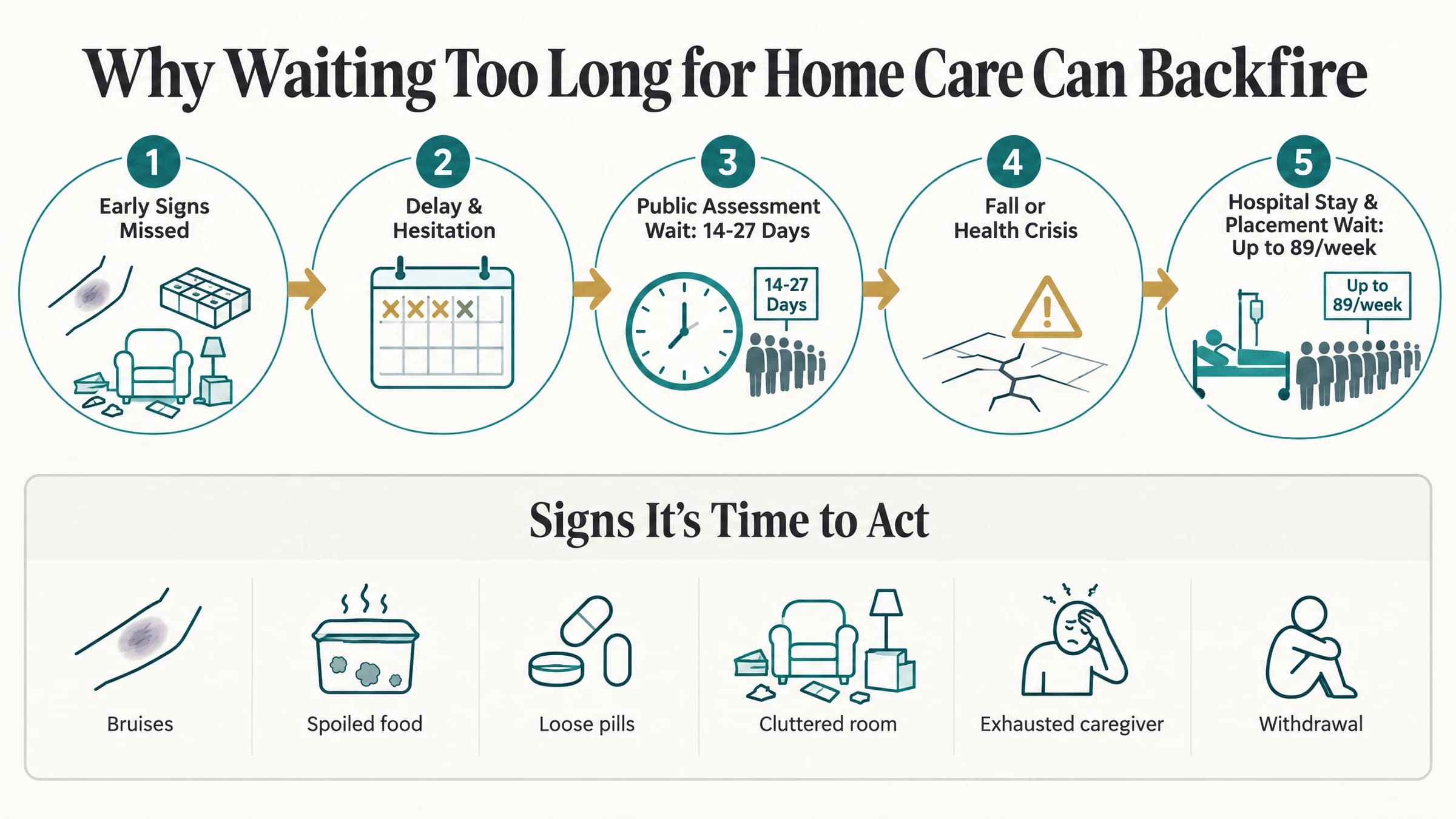
Many Winnipeg families delay arranging care until a crisis forces the issue. Here's why that wait is riskier than it looks, and how to act sooner.

An expired-food-filled fridge or a stack of unopened mail can say more than a reassuring phone call. Here's how Winnipeg families can read the quiet signs and find the right support.
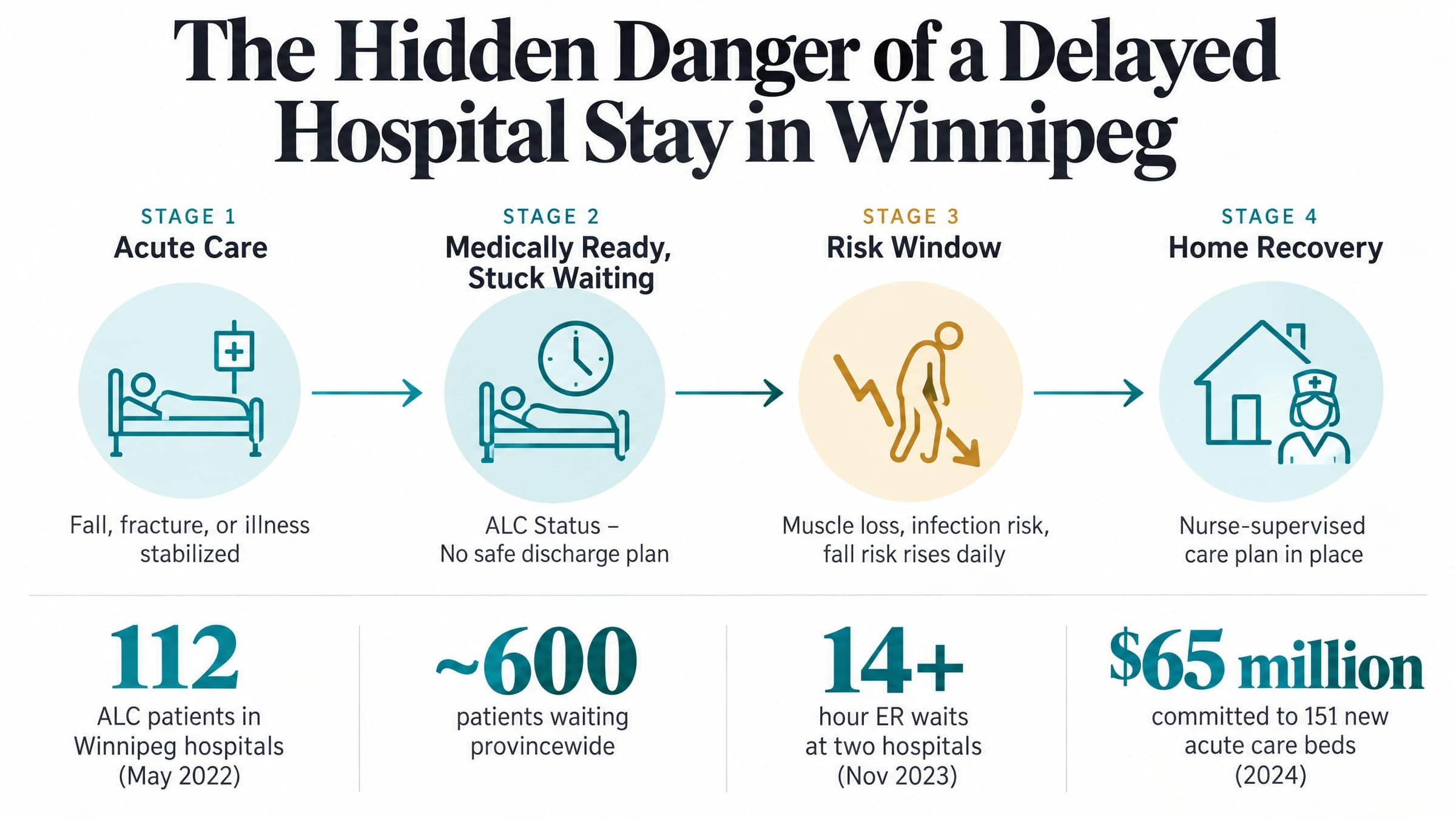
A short hospital stay for a hip fracture or infection can stretch into weeks when a safe discharge plan isn't ready. Here's why that delay is risky, and how home care can help families avoid it.
Common Questions
Yes. Many Families use private care alongside the Manitoba Home Care Program. Integracare can add care around your loved one's WRHA schedule, whether they need additional hours, more continuity with their Health Care Aide, or care at times not covered by their public services.
Integracare Health Care Aides and Registered Nurses receive specialized dementia education. They learn how to adapt communication, respond to confusion or distress, recognize changes in behaviour, and encourage the abilities your loved one has. A Registered Nurse guides the care plan and can adjust the approach as the Client's needs change.
For many people, home can remain an option as dementia progresses when the right care and safety measures are in place. If your loved one begins needing continuous supervision, frequently tries to leave home or develops needs that become difficult to manage safely, it may be time to consider a personal care home. Our team can talk through what is happening at home and the level of care your loved one now needs.
Other Services
We also provide dementia care in Greater Toronto and dementia care in Ottawa.
Free In-Home Assessment
Tell us a little about your loved one and what has been changing at home. Our team will be in touch within one business day to arrange an in-home visit with a Registered Nurse.
Prefer to talk?
Winnipeg(204) 977-7575 ↗Toll-free1 (800) 891-4197 ↗We serve families across Greater Winnipeg. See the areas we cover
Clinically reviewed by Bethel McMaster, BScN, RN ·