
Blog
Bedsores in Seniors: How to Prevent Pressure Injuries at Home and When to Call a Nurse
Published
Written by Lee Grunberg, M.B.A. — President & CEO
Reviewed by Bethel McMaster, BScN, RN — Director of Business Development
On this page8 sections
Key Takeaways
- Pressure injuries often start with subtle skin changes, making early detection essential.
- Older adults with limited mobility are at the highest risk, but many pressure injuries can be prevented.
- Daily habits like repositioning, skin checks, and proper nutrition help protect skin and reduce risk.
- Prompt assessment and treatment can prevent complications and support faster healing.
- Professional nursing and home care can help families prevent and manage pressure injuries at home.
As mobility changes with age, everyday activities often change too. Spending longer periods sitting, resting in bed, or recovering after surgery can place continuous pressure on certain parts of the body. Without regular movement, healthy blood flow slows, leaving the skin and underlying tissue more vulnerable to damage.
Pressure injuries usually begin with subtle changes that are easy to overlook. A patch of skin may stay red after someone gets out of bed, feel warmer than the surrounding area, or become tender when touched. These early warning signs are the body’s way of telling us that too much pressure has been placed on one area for too long.
For seniors recovering from illness, spending more time in bed, or relying on a wheelchair, paying attention to these small changes can help prevent a minor concern from becoming a serious wound. Knowing what causes them, recognizing the earliest warning signs, and building a few simple habits into everyday care can make a meaningful difference.
What Are Bedsores or Pressure Injuries?
Pressure injuries, also known as bedsores, pressure sores, or pressure ulcers, are areas of skin and underlying tissue damage caused by prolonged pressure that reduces blood flow. They most often develop over bony areas of the body, such as the hips, heels, tailbone, elbows, and shoulders, where constant pressure limits circulation and prevents the skin from getting the oxygen and nutrients it needs to stay healthy.
Pressure injuries are most common in older adults and people with limited mobility who spend long periods in bed, sitting in a chair, or using a wheelchair. In addition to prolonged pressure, friction from rubbing against bedding or clothing, moisture from perspiration or incontinence, and shear (when the skin moves in one direction while the body moves in another, such as sliding down in bed) can all weaken the skin and increase the risk of injury.
Many of these risk factors can be managed with the right daily care. Because prevention depends on consistent daily care, many families choose professional home health care to help with mobility, personal care, and skin monitoring.
Why Early Recognition and Prevention Matter
Without early intervention, what may begin as mild redness or skin irritation can quickly progress into an open wound. These wounds can be painful, slow to heal, and more vulnerable to serious complications, including bacterial infections. Most pressure injuries are preventable with regular repositioning, attentive skin care, professional wound care , proper nutrition, and early recognition of warning signs. For families caring for an aging loved one at home, understanding what causes pressure injuries is an important first step toward protecting their comfort, health, and independence.
Why Seniors Are More Likely to Develop Pressure Injuries
While anyone with limited mobility can develop a pressure injury , older adults often face several age-related changes that increase their risk. Thinner skin, chronic health conditions, reduced circulation, and changes in nutrition can all make it more difficult for the body to tolerate pressure and heal when damage occurs. Understanding these risk factors can help families recognize when extra support or preventive care may be needed.
Chronic Health Conditions and Poor Circulation
Many older adults live with chronic conditions that affect blood flow and slow the body’s natural healing process. Conditions such as diabetes, heart disease, and peripheral vascular disease can reduce circulation, meaning the skin and underlying tissues receive less oxygen and fewer nutrients. As a result, even minor pressure on one area for an extended period may lead to skin breakdown more quickly than it would in a healthy adult.
Some medications may also affect circulation, hydration, or skin health, making regular skin checks and conversations with healthcare providers an important part of ongoing care.
Fragile Skin and Poor Nutrition
As we age, our skin naturally becomes thinner, drier, and less elastic. It bruises more easily and is more vulnerable to friction and pressure, causing bed sores . Good nutrition also plays an important role in keeping skin healthy and supporting healing. Without enough protein, fluids, vitamins, and minerals, the body has fewer resources to repair damaged tissue and maintain healthy skin.
Smoking can further increase risk by reducing blood flow and slowing wound healing, making prevention even more important.
Higher-Risk Situations That Require Extra Attention
Some situations or accidents make pressure injuries much more likely to develop. Seniors recovering from surgery, living with advanced dementia, or managing conditions that limit movement may need help changing positions regularly throughout the day. People who use a wheelchair for long periods are also at greater risk because of continuous pressure on areas such as the tailbone, hips, and thighs.
Other factors, including incontinence, excessive moisture, cognitive changes, or the use of certain medical equipment, can also increase the likelihood of skin breakdown. Recognizing these higher-risk situations early allows families and caregivers to put preventive strategies in place before a pressure injury develops.
How Pressure Injuries Are Diagnosed
Spotting a pressure injury early gives it the best chance to heal and helps prevent further damage. While some pressure injuries are easy to recognize, others can develop beneath the surface before obvious changes appear. That’s why a professional assessment is important whenever there are concerns about skin breakdown.
During an assessment, a healthcare provider looks at far more than the wound itself. They consider the person’s overall health, mobility, circulation, nutrition, medical history, and ability to change positions independently. These factors all influence how well the skin can heal and whether additional pressure injuries are likely to develop.
Understanding the Staging System
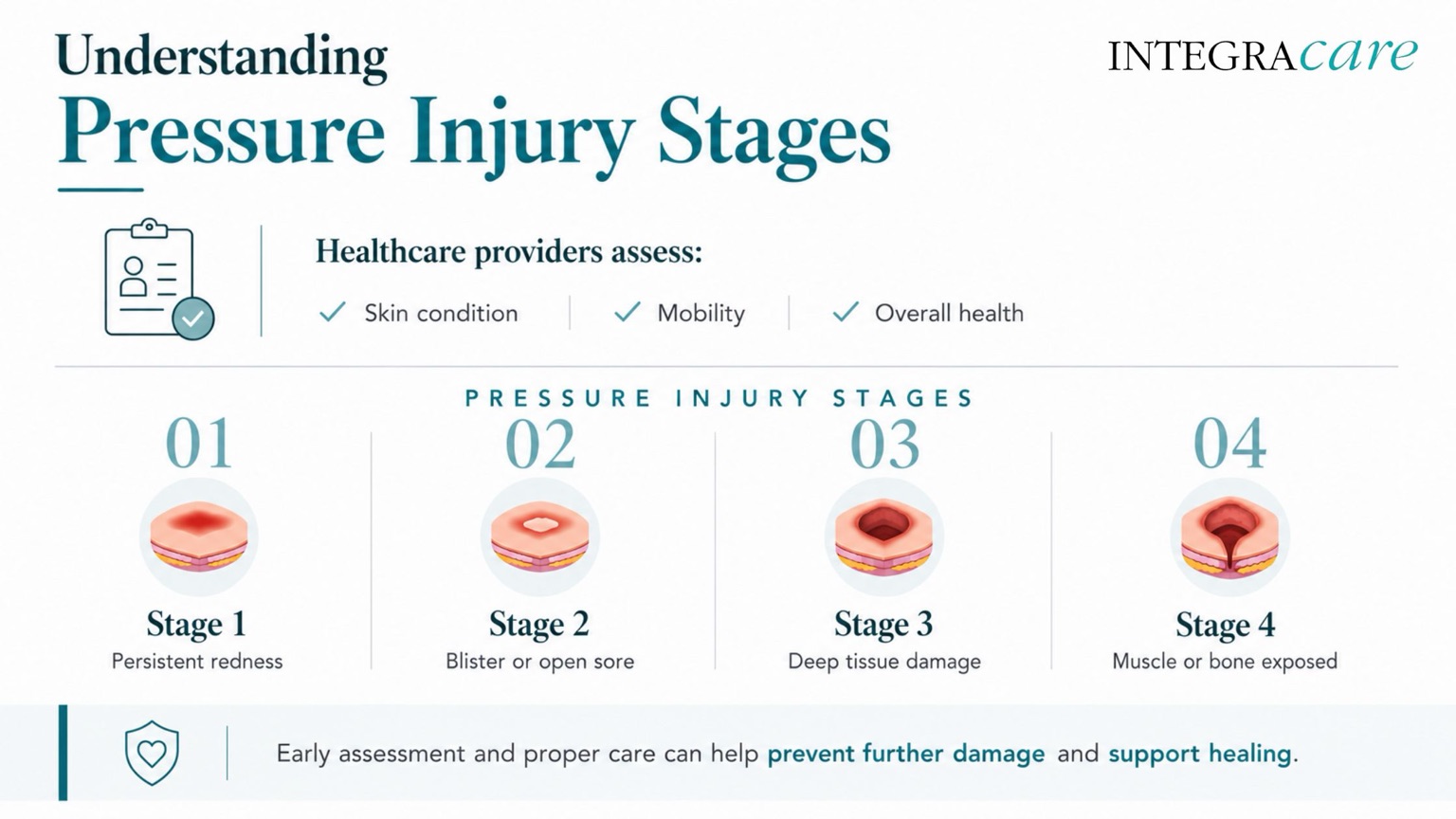
Healthcare professionals use an internationally recognized staging system to describe how much tissue has been affected. Rather than measuring how painful a wound is, staging helps guide treatment and monitor healing over time.
Stage 1
Skin remains intact, but persistent redness or discoloration does not fade after pressure is removed.
Stage 2
The outer layer of skin has broken down, often appearing as a blister, abrasion, or shallow open sore.
Stage 3
Damage extends deeper into the fatty tissue beneath the skin.
Stage 4
Extensive tissue damage reaches muscle, tendon, or bone and requires urgent medical care.
- Unstageable pressure injuries: Dead tissue (slough or eschar) covers the wound, making its full depth impossible to determine until it is removed.
- Deep tissue pressure injuries: Damage begins beneath the surface, often appearing as a dark purple or maroon area before the skin opens.
Signs of Infection and Serious Complications
When pressure injuries become infected, they pose serious health risks. Signs of infection include increased pain, redness beyond the wound edges, foul odour, thick yellow or green drainage, warmth around the wound, and fever. If left untreated, infections can lead to serious complications such as cellulitis (bacterial skin infection), osteomyelitis (bone infection), septic arthritis (joint infection), or even sepsis (life-threatening body-wide infection). These complications are particularly dangerous for seniors whose immune systems may already be compromised.
Throughout treatment, Registered Nurses, physicians, dietitians, physiotherapists , and wound specialists often work together to monitor healing and adjust the care plan as recovery progresses.
How to Help Prevent Pressure Injuries at Home
Preventing pressure injuries doesn’t have to feel overwhelming. In most cases, it’s the small, consistent habits that make the biggest difference. Building these simple steps into everyday routines can help protect skin, improve comfort, and lower the risk of pressure injuries before they have a chance to develop.
Change Positions Regularly
Changing positions throughout the day helps relieve pressure on areas that spend the most time against a bed or chair. For someone spending most of the day in bed, this often means repositioning at least every two hours. If they use a wheelchair, small weight shifts every 15 to 30 minutes can help reduce pressure. Many caregivers find it easier to stay consistent by linking repositioning to familiar routines, such as mealtimes or medication schedules.
Keep Skin Clean and Well Cared For
Healthy skin is more resilient and better able to withstand everyday pressure. Gently cleanse the skin after episodes of incontinence, pat it dry instead of rubbing, and apply moisturizer regularly to help prevent dryness and irritation. Taking a few moments each day to check the skin also makes it easier to notice early changes before they become more serious.
Reduce Friction and Moisture
Too much moisture, along with friction from sliding across bedding or clothing, can weaken the skin over time. Changing damp clothing or linens promptly, using breathable bedding, and lifting rather than dragging someone during repositioning can help protect delicate skin and reduce unnecessary irritation.
Use Pressure-Relieving Equipment When Needed
Supportive equipment can make a meaningful difference for people who spend long periods sitting or lying down. Pressure-relieving mattresses, wheelchair cushions, and other specialized support surfaces help distribute weight more evenly and reduce constant pressure on vulnerable areas. Choosing the right equipment should always reflect the person’s individual needs and level of mobility.
Support Skin Health From the Inside Out
Good nutrition and hydration are just as important as external skin care. Protein, vitamins, calories, and adequate fluids all help the body maintain healthy skin and repair damaged tissue. If eating full meals has become difficult, smaller nutrient-rich meals and regular fluids throughout the day can still provide valuable support.
Make Prevention Part of the Daily Routine
The most effective prevention plans are often the simplest. Looking at the skin while helping someone get dressed, encouraging regular position changes, checking that bedding is smooth, or keeping the head of the bed at a gentle incline can all become natural parts of the day. These small routines often provide the greatest protection while helping a loved one remain comfortable, safe, and well cared for at home.
Small Daily Habits Are Easier With the Right Support
Many of the most effective ways to prevent pressure injuries happen throughout the day, not during a medical appointment. Regular movement, attentive personal care , healthy meals, hydration, and routine skin checks all work together to keep skin healthy and reduce the risk of breakdown.
For families who could use an extra helping hand, Integracare’s Personal Support Workers provide thoughtful assistance with everyday routines, while our Registered Nurses offer expert wound assessments, clinical care, and ongoing monitoring when more specialized support is needed. Together, they help older adults stay comfortable at home while giving families added confidence that prevention remains part of everyday care.
How Pressure Injuries Are Diagnosed
When assessing a potential pressure injury, healthcare providers examine the affected area carefully, noting the size, depth, and appearance of any wound. They check for non-blanchable redness, blisters, broken skin, or exposed tissue. The provider will also assess the surrounding skin for signs of infection or additional developing pressure points. For patients with limited mobility, a thorough examination of all common pressure points is essential, as multiple pressure injuries may be present in various stages of development.
Staging, Photographs, and Wound Monitoring
Accurate staging is crucial for determining treatment approach and monitoring progress. Healthcare providers use standardized staging systems to classify pressure injuries based on depth of tissue damage. Many care teams photograph pressure injuries initially and throughout treatment to track healing progress objectively. These images become part of the patient’s medical record and help all team members monitor changes over time. Wound measurements are regularly recorded, noting length, width, and depth, as well as any tunnelling or undermining (tissue loss beneath the wound edges).
Tests for Infection and When a Wound Specialist Is Needed
If infection is suspected, healthcare providers may order laboratory tests to check for elevated white blood cell counts or other markers of infection. In some cases, they might take a wound culture to identify specific bacteria and determine the most effective antibiotics. For complex, non-healing, or severe pressure injuries, consultation with a wound care specialist is often recommended. These specialists have advanced training in wound management and can provide expertise on specialized dressings, advanced treatments, and when surgical intervention might be necessary.
Free In-Home Assessment
The Care Your Family Deserves Starts Here
Speak with our team about a personalized care plan. Book a free, no-obligation in-home assessment and we will help you find the right support for your loved one.
About the Author: Lee Grunberg

President & CEO, M.B.A.
Lee joined Integracare as President & CEO on August 2, 2016 after an approximately 20 year career in Private Equity and Investment Banking. Lee brings tremendous operational knowledge and governance experience along with an incredible passion and energy to Integracare.