
Blog
Common Questions About Dementia & Alzheimer’s Answered
Published
Updated
Written by Lee Grunberg, M.B.A. — President & CEO
Reviewed by Bethel McMaster, BScN, RN — Director of Business Development
On this page8 sections
Almost 48 million people worldwide have Dementia, and more than one in nine people over the age of 65 currently live with Alzheimer’s disease. Many people are either unaware of or confused by the two terms: Dementia and Alzheimer’s. Did you know that there’s a difference between the two illnesses?
Both occur in the brain and impact memory and cognitive abilities. While there are many similarities between the two illnesses, there are also pertinent differences. Essentially, Alzheimer’s Disease is the most common, but not only form, of Dementia. Knowing the differences between Dementia and Alzheimer’s and understanding the individual warning signs is crucial to finding health care and support for someone in need. Understanding the complexities of each disease can empower people living with Dementia and Alzheimer’s and those around them because it provides critical knowledge for seeking necessary medical advice.
We’re Integracare, the leading home nursing and healthcare agency specializing in at-home Dementia Care for Seniors. We provide at-home Dementia Care services in Toronto and Mississauga plus the surrounding Greater Toronto Area (GTA). For nearly 30 years, we’ve committed to providing high-quality and compassionate services to Clients right in the comfort of wherever they call home.
Within the last few years, we’ve been the exclusive partner of the Alzheimer’s Society of Toronto, a local organization promoting Dementia and Alzheimer’s disease research. They also provide Dementia programming, events, education, and information sessions to people living with and curious about Alzheimer’s and Dementia.
Dementia Questions to Ask: Knowing the Facts
We’re incredibly proud of our collaboration with this organization because it allows Integracare, as a healthcare provider, to educate, train, and teach our specialized Dementia Caregivers who diligently and compassionately work with our Clients living with these illnesses. It also allows us to share more information about Dementia with our Clients and their friends and family.
Education is an essential component to understanding Dementia because it can help you understand the disease’s challenges and complexities. It can help you learn to care for your loved one with love and tenderness.
Are you concerned about a family member or a friend? Has someone close to you recently been diagnosed with either Alzheimer’s or Dementia, and you’re looking for answers? These are the most important Dementia questions that you need to ask your family member, their doctor, and their support team.
What Is Dementia?
One of the first Dementia questions to ask is what the disease really is.
Dementia is a general term referring to mental decline; an over-arching umbrella term to describe a person’s symptoms, such as memory loss, behavioural changes, and problem-solving skills. “Dementia” is caused by progressive damage to brain cells, and it’s typically caused by cerebral cortex degeneration, which is the part of the brain responsible for memories, thoughts, personality, and actions.
The death and damage of brain cells in this region leads to cognitive impairments that describe the many types of Dementia.
What Are the Different Types of Dementia?
There are several Dementia types, and the most common is Alzheimer’s disease — accounting for 60-80% of all Dementia cases. Other common types include:
- Vascular Dementia
- Creutzfeldt-Jakob disease
- Lewy Body Dementia
- Huntington’s Disease
- Frontotemporal Dementia
- Parkinson’s Disease Dementia
- Mixed Dementia
- Posterior Cortical Atrophy
- Korsakoff Syndrome
- Normal Pressure Hydrocephalus
Let’s look at two common types and explore their early warning signs and symptoms.
Vascular Dementia
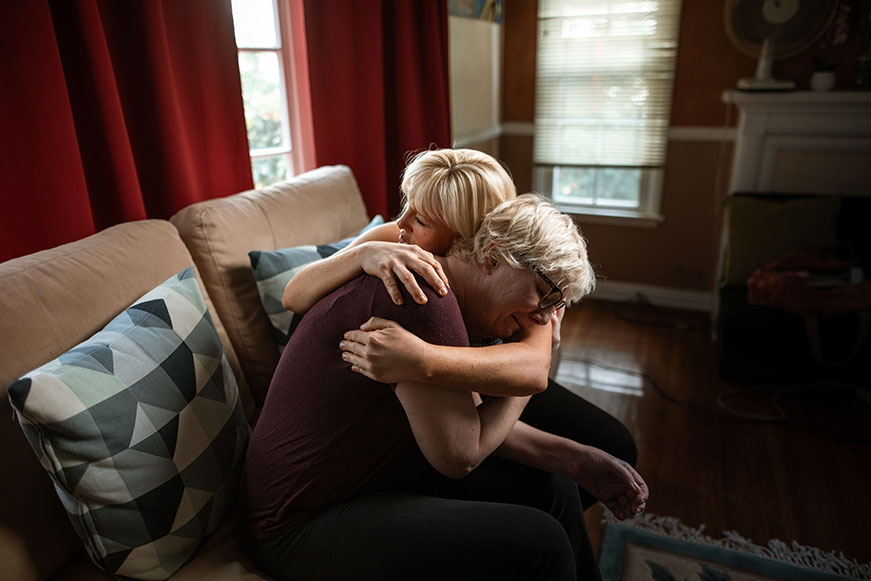
The second most common type of Dementia is Vascular Dementia, after Alzheimer’s disease, and it occurs when there is damage to the vessels that supply blood to the brain. When there’s damage to the brain’s vessels, blood stops reaching brain cells, and inevitably those cells will die. The death of these blood cells will also lead to cognitive health issues — from memory decline to hallucinations and confusion.
Credit: RODNAE Productions via Pexels
Vascular Dementia’s Signs and Symptoms
One thing to note about Vascular Dementia is that the signs and symptoms don’t happen at once. Symptoms can vary and continue to be mild for months, even years, and slowly change over time. Symptoms can also suddenly increase or worsen without warning, so knowing how to spot them is crucial. If you’re worried about someone you love, it’s essential to be observant of any early signs of Dementia and any unusual changes in their cognitive behaviour.
Watch for the following symptoms:
- Short-term Memory Loss
- Aimless Wandering (and getting lost often)
- Loss of Bladder or Bowel Control
- Trouble Managing Finances (such as monthly bills)
- Laughing or Crying at Inappropriate Times
- Difficulty Concentrating
- Experiencing Hallucinations or Delusions
If you notice any of the above symptoms in your family member or friend, talk to your loved one’s doctor immediately.
Lewy Body Dementia
Another common type of Dementia is Lewy Body Dementia (LBD), and like Vascular Dementia, it significantly affects a person’s memory and concentration abilities.
LBD accounts for about five to ten percent of Dementia cases worldwide. It’s a progressive illness that leads to a drastic decline in thinking, reasoning, and the ability to live an independent lifestyle. In LBD, microscopic irregular protein deposits develop in nerve cells in the brain, causing damage to regions in the brain responsible for memory, thinking, and motor control.
People with LBD can experience visual hallucinations and changes in attention and alertness. They can also develop unusual body movements — experiencing rigid muscles, difficulty initiating movement, hunched posture, and trouble walking. Other symptoms include:
- Confusion
- Trouble Sleeping
- Memory Loss
- Well-formed Visual Delusions and Hallucinations
- Slowness and Gait Imbalance
- Noticeable Changes in Problem-Solving and Reasoning
Currently, there isn’t a test or medical system that can determine whether someone has LBD or not. Specialists and doctors term the illness “clinical,” meaning doctors will use their best judgment to diagnose and treat a patient based on warning signs and symptoms.
To say that the brain is complex would be an understatement, but science has provided a wealth of knowledge about cognitive diseases, such as LBD and other Dementia types, over the last few decades. For example, we now know that many people with LBD also have overlapping symptoms of Alzheimer’s disease, such as memory loss.
Dementia Assessment Questions
You now know a little bit more about Dementia and its many types and symptoms, but what about Alzheimer’s? In the most basic of terms, Alzheimer’s disease is the most common type of Dementia. Like LBD and Vascular Dementia, Alzheimer’s is a group of symptoms that falls under the umbrella of Dementia.
It’s a degenerative illness caused by intricate changes in the brain and cell damage, and (like all types of Dementia) it can be a devastating and life-altering disease for the affected person and those around them, especially if untreated and without professional assistance.

Credit: Tristan Le via Pexels
Here are the ten most common early warning signs and symptoms of Alzheimer’s:
- Memory loss that disrupts daily life.
- Trouble completing familiar tasks, such as driving or brushing teeth.
- Trouble problem-solving.
- Challenges understanding spatial or visual relationships, such as determining the colour of something or interpreting shapes.
- Confusion with space and time — for example, forgetting what year it is.
- Frequently misplacing belongings and losing the ability to retrace previous steps.
- Developing speaking or writing problems and forgetting words.
- Developing drastic personality or mood changes — for example, becoming withdrawn or angry.
- Exhibiting poor judgment in public situations, such as saying inappropriate things or acting out of character.
- Becoming withdrawn or depressed.
Do any of these early warnings and symptoms sound familiar? Have you noticed your loved one forgetting things, such as your name or where they live, on more than one occasion? If so, your friend or family member may be in the early stages of Alzheimer’s.
Alzheimer’s Seven Stages
Alzheimer’s disease generally progresses in seven stages, including:
- Stage One: No Impairment
- Stage Two: Very Mild Cognitive Decline
- Stage Three: Mild Cognitive Decline
- Stage Four: Moderate Cognitive Decline
- Stage Five: Moderately Severe Cognitive Decline
- Stage Six: Severe Cognitive Decline
- Stage Seven: Very Severe Cognitive Decline
In the early stages, Alzheimer’s can be hard to detect. While there typically are seven advancing stages, the symptoms don’t always fit neatly into boxes. However, Alzheimer’s cognitive decline will worsen with time, starting from mild cognitive decline — trouble concentrating or experiencing daily memory loss — to severe cognitive decline, which could include losing the ability to speak, walk, or eat.
Be mindful of your loved one’s actions and learn to recognize increasing Alzheimer’s symptoms so you can gauge which stage of the disease they’re in. There’s no cure for Alzheimer’s, so knowing where they’re at will help you know what to expect and how to meet your loved one’s needs.
Common Dementia Questions and Answers
Is Dementia Genetic?
Children and grandchildren don’t inherit the majority of Dementia. Some rarer types of Dementia may have a strong genetic link, but overall, these are a small proportion of Dementia cases. For example, Frontotemporal Dementia (FTD) is hereditary in nearly 40% to 50% of cases. Mutations within five genes are responsible for FTD in families, with the inheritance of these genes leading to FTD in all cases — and this means it’s genetic.
If you’re concerned about your family’s history with a specific type of Dementia, ask your doctor about whether or not it’s hereditary. Most are not, but speaking with your healthcare professional may ease some of your concerns.
What about Alzheimer’s Disease?
While having a family history of Alzheimer’s isn’t necessary for a person to develop the disease, research studies have shown that if you have a parent or sibling with Alzheimer’s, your chances of eventually living with the disease increase compared to those who don’t. If this resonates with you, always be mindful of your cognitive health and watch for any early warning symptoms.
Credit: Kampus Production via Pexels
How Can I Reduce My Risk of Getting Dementia?
No recipe will magically prevent Dementia or Alzheimer’s. But here are a few tips doctors suggest to keep cognitive health in line:
- Maintain good brain health: read, conduct puzzles, challenge yourself by learning new skills.
- Stay active. Move your body and participate in 20-minute physical activity every day.
- Keep in touch with friends and loved ones to stay social and engaged.
- Consider incorporating Omega-3-heavy foods in your diet, such as salmon and walnuts, to boost your brain’s oxygen levels.
It’s important to remember that while these tips may encourage good cognitive health, there’s no sure-fire, 100% proven way to prevent Dementia. Most doctors agree on staying as healthy as you can, but also remember that Dementia and Alzheimer’s are complicated diseases.
If someone close to you develops Dementia, the best thing that you can do right now is to support them through a challenging time. Fortunately, there’s help.
How Do I Find Support?
Educating yourself is the first step in approaching this new chapter in your life and providing the right kind of support to your loved one. As you read more about the disease, you’ll learn that coping with Dementia and Alzheimer’s isn’t always simple, but it’s achievable. Read as much as you can, talk to health professionals, and most importantly, talk to your friend or family loved one. Let them know that you’re there for them and ask them what they need.
Your Home Healthcare Provider of Choice
Dementia isn’t a disease that anyone should experience alone. Getting as much support as possible, as quickly as possible, is crucial. At Integracare, we provide award-winning home care services in Toronto and the GTA for Clients living with Dementia and Alzheimer’s. Since the vast majority of Seniors prefer aging at home to moving into assisted living facilities, we deliver our healthcare services straight to the source: our Clients’ homes and residences.
Our fully-trained, experienced, and compassionate Dementia Nurses and Caregivers will come directly to wherever your loved one calls home. Staying at home provides familiarity and comfort. Our Caregivers will make life a little easier by providing medical assistance and support, such as:
- Personal Support Services
- Nursing
- Meal Preparation
- Light Housework
- Prescription Medication Management
- Toileting and Personal Care
- Medical Equipment Assistance
- Companionship
- And much more
We also have Registered Massage Therapists (RMTs), and Physiotherapists on staff who offer Massage Therapy and Physio exercises for Clients at home. Often, living with Dementia or Alzheimer’s disease can cause discomfort — both physically and emotionally — and Massage Therapy and Physiotherapy can help alleviate such pain.
Our RMTs and Physiotherapists are all trained to work with Seniors, so they’ll use gentle strokes and movements to help your loved one feel comfortable and calm.
Questions to Ask Dementia Caregivers
Once you’ve decided to work with great Dementia Caregivers, you will want to know how they are going to provide the high quality care you expect. These are some of the most important questions to ask Dementia Caregivers so that you are informed and knowledgeable about their care:
- What are their philosophies around Dementia care?
- How do you create care plans for your Client?
- Who do you consult to create care plans for your Client?
- Do you have memory care training, such as knowing memory questions for Dementia?
- What is your plan in an emergency?
To know more about our services, and the differences between Dementia and Alzheimer’s, call our office at any time. We want you to know that you’re not alone in this, and we’ll be there to hold your hand every step of the way. If you have more Dementia questions, just let us know.
Free In-Home Assessment
The Care Your Family Deserves Starts Here
Speak with our team about a personalized care plan. Book a free, no-obligation in-home assessment and we will help you find the right support for your loved one.
About the Author: Lee Grunberg

President & CEO, M.B.A.
Lee joined Integracare as President & CEO on August 2, 2016 after an approximately 20 year career in Private Equity and Investment Banking. Lee brings tremendous operational knowledge and governance experience along with an incredible passion and energy to Integracare.