
Blog
The Benefits of Choosing Home Health Care
Published
Updated
Written by Lee Grunberg, M.B.A. — President & CEO
Reviewed by Bethel McMaster, BScN, RN — Director of Business Development

On this page18 sections
Key Takeaways
- Home health care helps seniors stay independent, comfortable, and safe at home.
- Personalized care plans can improve quality of life while reducing stress for families.
- Integracare’s Toronto and Mississauga care model includes nursing, PSWs, physiotherapy, dementia care, and more.
- Home care can be more cost-effective than nursing homes or repeated hospital stays.
- The right support system can make aging in place a realistic, dignified choice.
Getting older comes with real challenges: changes in mobility, health concerns, and questions that can feel impossible to sort out on your own. If you're weighing home health care in Toronto for a parent or spouse, you're probably also carrying a quieter worry underneath it all: is this the right decision, and will they really be okay?
With the right home care for seniors, your loved one can keep living in the home they know, surrounded by their own routines, neighbours, and memories, without the upheaval of packing up and moving into an assisted living facility or nursing home. Whether your loved one needs occasional assistance, specialized dementia care, professional nursing services, or more comprehensive daily support, understanding the benefits of home health care can help you make a confident decision about what comes next.
At Integracare, we offer personalized, compassionate home health care, everything from daily help with personal care to expert nursing and specialized dementia support, all designed to make life easier and better for seniors at home.
What Is Home Health Care?
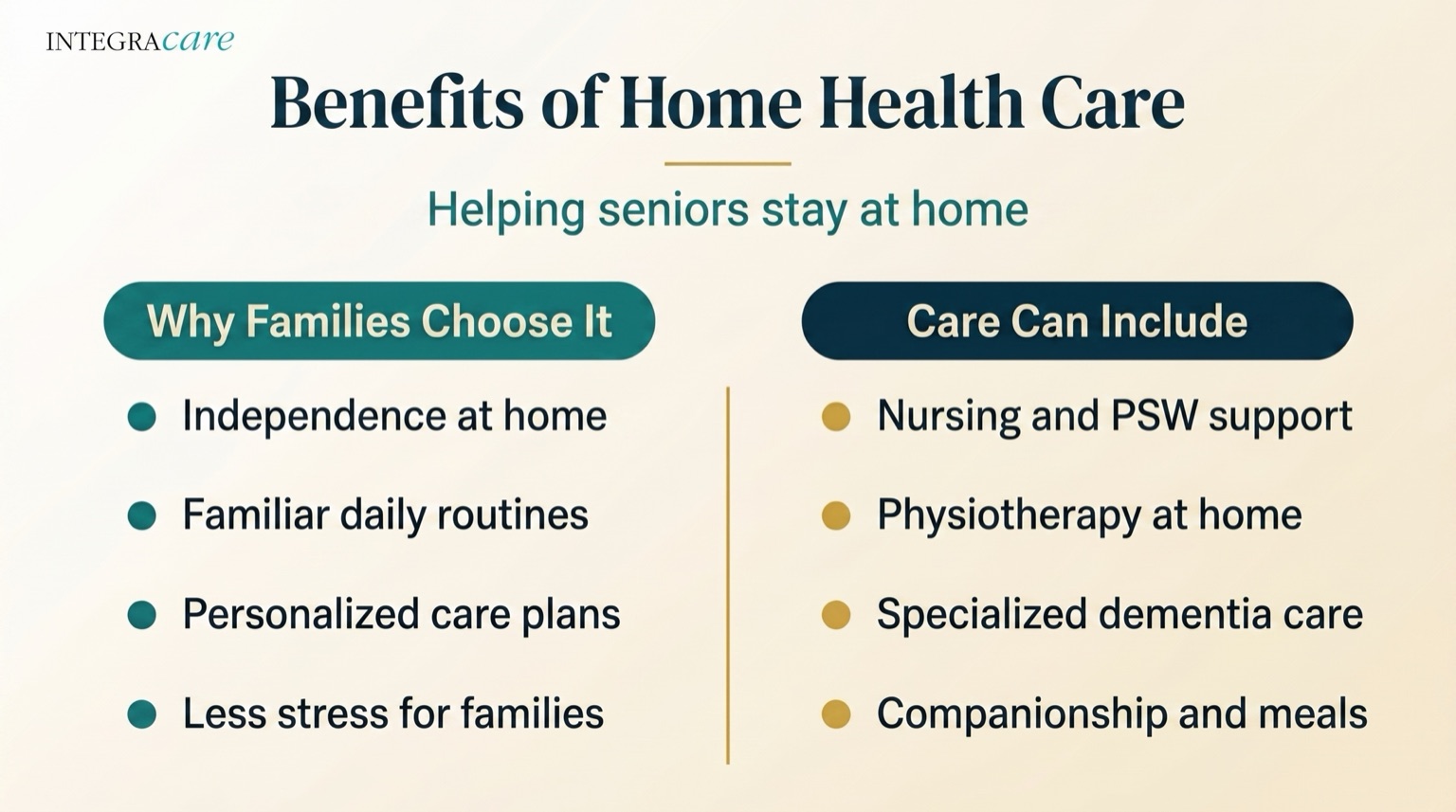
Home health care provides professional medical and personal support services in the comfort of your own home. It helps older adults live safely and independently by bringing care directly to them instead of requiring a move to a nursing home or assisted living residence.
Services may include personal care, nursing, medication management, dementia care, companionship, and assistance with everyday activities like bathing, dressing, meal preparation, and mobility support.
Care That Fits Your Needs
Every senior's needs are different, which is why home health care is personalized. Whether someone is recovering after surgery, managing a chronic condition, living with dementia, or simply needs extra support at home, care plans can be adjusted as needs change.
Supporting Independence at Home
One of the greatest benefits of home health care is that it allows seniors to age in place. Remaining in familiar surroundings helps many older adults maintain their routines, independence, and quality of life while receiving the professional care they need.
Trusted Home Health Care in Toronto and Mississauga
For over 30 years, Integracare has provided personalized home health care across Toronto and Mississauga. Our experienced Personal Support Workers (PSWs), Registered Nurses (RNs), Registered Practical Nurses (RPNs), and specialized dementia caregivers deliver compassionate, person-centred care that helps seniors continue living safely and confidently at home.
Why More Ontario Families Are Choosing Home Health Care
As Canada's aging population continues to grow, more families are exploring alternatives to institutional care that enable loved ones to remain where they feel most comfortable.
Home health care has become an increasingly preferred option because it combines professional clinical support with the familiarity of home. Instead of adjusting to unfamiliar schedules or relocating away from established communities, seniors can continue enjoying their daily routines while receiving assistance that fits naturally into their lives.
The Ontario Ministry of Health’s Home and Community Care resources emphasize that organized in-home support is specifically designed to help seniors and people with complex medical needs live safely and independently right in their own neighbourhoods. This patient-centred approach often supports better emotional well-being while allowing families to remain actively involved in their loved one's care journey. It also provides flexibility that many assisted living facilities cannot offer, with care plans that can increase or decrease as circumstances change.
For many older adults, aging in place isn't simply a preference; it's an important part of maintaining independence and preserving overall quality of life.
Professional and Specialized Care at Home
Home health care can include much more than help around the house. Depending on the Client’s needs, home care providers and community programs may offer services such as:
- Personal care and assistance with activities of daily living.
- Medication management and nursing care from trained staff.
- Oversight and guidance from registered nursing specialists.
- Specialized Dementia Care with structured routines and supportive strategies.
- Palliative care focused on comfort during serious illness.
- Physical therapy and occupational therapy to support mobility and function.
- Targeted therapeutic exercises designed around recovery goals.
- Coordination and physician oversight with other health professionals.
Integracare’s own team provides personal support workers, nurses, physiotherapists, and Registered Massage Therapists under Registered Nurse coordination; other services can be arranged through community and public programs. A customized care plan helps ensure that each service has a clear purpose and fits the person’s situation. For some people, the focus may be recovery after surgery. For others, it may be managing a chronic condition, maintaining mobility, or receiving comfort‑focused care during a serious illness.
When appropriate, physician oversight and ongoing communication between care professionals keep everyone working toward the same goals, so nursing care, personal care, therapy, and palliative support all align around the Client’s needs and preferences.
Independence and Aging in Place
One of the strongest reasons families choose home care is independence. Many older adults worry that a move to assisted living or a nursing home will mean losing control over daily routines, personal preferences, and familiar surroundings.
Home care services support autonomy by helping with activities of daily living while still allowing the client to make decisions about meals, routines, sleep, social time, and personal comfort. That balance matters because independence is not just a preference; it is closely tied to confidence, dignity, and overall quality of life.
For many seniors, aging in place also preserves the social connections that help them feel grounded. Staying in the same neighbourhood can keep relationships with neighbours, friends, and community support intact, which is especially valuable as daily needs change.
Flexibility and Convenience of In‑Home Care
When a loved one starts experiencing changes in health or mobility, it can feel like your options are limited to rigid schedules or a stressful move to an assisted living facility. It’s easy to worry that supporting them means disrupting everything about your family’s routine. In reality, home health care can be an accessible solution that fits around your life instead of the other way around. Whether support expands to include nursing care, physiotherapy, massage therapy, dementia care, or additional daily assistance, our personalized care plans continue to reflect the individual's changing needs while helping them remain safe, comfortable, and living well at home.
A truly supportive home care model is built on a flexible, patient‑centric approach. Rather than locking you into a fixed, long‑term arrangement, care plans use an adaptable approach and adaptive strategies to match support to real‑time needs. For some families, that might mean a few hours of companion visits each week. For others, it could gradually expand to more comprehensive daily assistance or live‑in care when continuous support becomes necessary.
Because care can scale up or down, families benefit from genuine versatility:
- Care can begin with lighter support and grow as mobility issues or chronic conditions evolve.
- Schedules can be tailored around existing daily routines, medical appointments, and family commitments.
- Support can be adjusted without immediately disrupting the person’s home environment or sense of autonomy.
A plan might start with a few hours of companionship and household support, then gradually expand to include physiotherapy, massage therapy, personal support workers, live-in care, or additional nursing care.
Integracare’s coordinated team works closely with families and health professionals to review the care plan regularly, recommend adaptive strategies, and ensure support remains appropriate at every stage. When helpful, in‑home visits can be combined with virtual care options and mobile health teams offered through a client’s broader healthcare providers, creating a convenient, accessible solution that preserves autonomy while keeping life structured, comfortable, and familiar.
Personalized Care Built Around Your Loved One
One of the greatest strengths of home health care is that it can be built around the individual rather than a standard routine. Instead of asking someone to fit into a fixed schedule, care is shaped to match their life, their preferences, and their goals. Care can scale seamlessly from a few hours of companion visits a week to comprehensive 24/7 support.
A personalized care plan considers:
- The person’s medical condition and any chronic conditions.
- Their lifestyle, culture, preferences, and personal routines.
- Short‑term goals for recovery.
- Long‑term goals for safety, independence, and quality of life.
- Family involvement and the existing support system, leading to collaborative care plans.
This person‑centred approach allows Caregivers to provide genuine one‑on‑one attention. Someone recovering from surgery may need temporary personal care and therapeutic exercises. A person living with Dementia may benefit from a predictable routine, adaptive strategies, and specialized Dementia Care. Another Client may require ongoing nursing care or medication management to remain stable at home.
Care Adapting to Your Changing Needs
Because care is custom‑tailored, it can evolve as needs change. A plan might start with a few hours of companionship and household support, then gradually expand to include physiotherapy, massage therapy, occupational therapy, or additional nursing support. This flexible, individualized approach offers a more cost‑effective alternative to unnecessary moves or higher levels of institutional care. By directing resources toward the services that matter most, families support a more holistic healing experience centred on comfort, independence, and long‑term quality of life.
As needs continue to evolve, Integracare's coordinated healthcare team works closely with families and healthcare professionals to review the care plan, recommend adaptive strategies, and ensure support remains appropriate at every stage.
Companionship and Emotional Support
There is a quiet challenge that many seniors face as they age, one that isn't always visible on a medical chart but can deeply affect their physical health. That challenge is loneliness.
When older adults begin to spend more time alone, the transition can be incredibly tough. At Integracare, we believe that nurturing a senior's spirit is just as critical as managing their physical health.
Understanding the Impact of Loneliness and Isolation
Loneliness and isolation are far more than just emotional hurdles; they are significant risk factors for loneliness-induced physical decline, often leading directly to increased anxiety, depression, and high blood pressure.
To combat this, we focus heavily on supporting the overall emotional well-being of our clients. True health care should always address the whole person, ensuring that mental health and emotional comfort are never treated as afterthoughts.
Engaging Companionship Tailored to Daily Routines
Our Personal Support Workers (PSWs) do so much more than assist with physical tasks; they bring a warm, friendly presence into the home. By designing companionship for socialization and activities, they make sure your loved one stays active and engaged.
Our caregivers build deep, trusting relationships by:
- Integrating social connection seamlessly into their clients' daily routines.
- Enjoying meaningful conversation over a morning cup of tea or coffee.
- Encouraging mentally stimulating hobbies, like playing a favourite board game, assembling puzzles, or sharing family stories.
This dedicated, personalized attention helps seniors feel truly heard and valued, all while they remain in the comfort of their own familiar surroundings.
Supporting Comfort, Health, and Recovery at Home
Home is often where older adults feel most at ease. The comfort and familiarity of their own rooms, routines, and belongings can ease worry and make changes in health feel less overwhelming.
Home care can assist with activities of daily living, nutritious meals, medication routines, mobility, and personal care. These practical supports add convenience to daily life and make it easier to focus on recovery and overall emotional well‑being.
After surgery or illness, a patient‑centred approach may also include physical therapy, therapeutic exercises, and regular health monitoring. Receiving care at home can support faster recovery by making it easier to follow treatment plans without repeated travel or long hours in waiting rooms.
Family involvement can remain a central part of the process, while professional Caregivers handle tasks that require more time, strength, or clinical knowledge. This shared approach respects dignity and helps prevent burnout in relatives.
Taken together, this blend of comfort and familiarity, personalized care plans, and professional support can improve quality of life, enhance safety, and reduce stress and anxiety for both the Client and the family.
Reducing Avoidable Hospital Visits
Repeated hospital stays can be difficult for older adults and exhausting for families. One important benefit of home health care is the continuity of care it can provide after an illness, surgery, or hospital discharge.
Home health nurses and Caregivers see the person regularly and can notice small changes that may otherwise be missed. Swelling, confusion, shortness of breath, changes in appetite, or difficulty managing medications may be signs that something needs attention.
Consistent support at home often includes:
- Regular monitoring to track symptoms and progress.
- Medication management to keep doses accurate and on schedule.
- Timely communication with health providers for early intervention.
This kind of preventive care may help reduce hospital readmissions and improve overall safety at home. Remaining at home can also mean lower exposure to hospital‑acquired infections, which is especially important for older adults living with chronic conditions or weakened immune systems.
Nursing care at home allows for timely interventions and personalized attention, helping older adults recover more safely in familiar surroundings while reducing the need for avoidable trips to the hospital.
Helping Families Balance Care and Cost
When families begin exploring care options, cost is often one of the first concerns. Home health care can be a cost-effective alternative to institutional care, particularly when an older adult does not need around-the-clock support in a nursing home or assisted living facility.
Instead of paying for accommodation, meals, and care as one facility package, families can arrange support around the hours and services their loved one actually needs. This may reduce accommodation expenses, transportation expenses, and other out-of-pocket expenses while helping someone remain in a home where they already feel comfortable.
Within Canada’s public health care system, private home care can also complement publicly funded services. The right support may help prevent avoidable hospital stays, ease pressure on healthcare budgets, and delay or avoid an early move into institutional care.
Home care may be especially helpful when:
- Your loved one already feels safe and settled at home.
- They need support at certain times rather than full-time facility care.
- Your family is balancing independence, safety, and long-term financial planning.
- You want to avoid the emotional and financial strain of an unnecessary move.
Every situation is different, but the flexibility of home care can create meaningful cost savings while keeping support centred on the person.
Caring for the Whole Family: Emotional Support & Specialized Teams
Family members often step into caregiving gradually. At first, it may mean helping with groceries or appointments. Over time, it can grow into medication reminders, personal care, household tasks, and constant concern about what might happen when no one is there.
Caregiver burnout is not a sign that someone is not doing enough. It usually means one person has been carrying too much for too long. Providing regular, reliable care offers vital emotional support for caregivers, giving family members the peace of mind they need to rest, work, or simply return to being a daughter, son, or spouse.
For families navigating more complex health chapters, our support goes even deeper. We coordinate with specialized palliative care teams and help families connect with supportive counselling to manage stress, process difficult diagnoses, and navigate life transitions together with dignity and grace.
Support For Your Loved One
When a loved one begins to experience changes in their health or mobility, it’s easy to feel like you’ve been pushed into a corner. You might worry that your only options are committing to a rigid schedule of outside help or coordinating a stressful, disruptive move to an assisted living facility. But care doesn't have to mean compromising on your family's routine.
Truly supportive home care is designed to wrap around your life, not the other way around. By focusing on flexibility and convenience, families can access an accessible solution that preserves their loved one’s autonomy while keeping daily life structured, comfortable, and familiar.
When Is Home Care the Right Choice?
It's often the little things that signal someone could use extra support. It often begins with everyday tasks becoming more difficult, preparing meals, keeping up with housekeeping, or recovering after an illness or fall. When routine tasks become more challenging, home health care offers flexible, personalized assistance that helps seniors continue living at home with confidence while adapting to their changing needs.
Home health care is an excellent option for seniors who:
- Wish to remain in their own home as they age. This is often the number one priority for seniors. The desire to "age in place" is deeply tied to comfort, memories, and a sense of self. Home care makes this possible by bringing the support directly to them, respecting their connection to their home and community.
- Need assistance with daily activities but don't require 24/7 medical supervision. If your loved one finds tasks like bathing, dressing, meal preparation, or light housekeeping challenging, a Personal Support Worker can provide dedicated help. This support fills the gaps without the disruptive and often unnecessary move to a facility.
- Are recovering from surgery, illness, or injury. The comfort and familiarity of home can significantly speed up recovery. Studies consistently show that patients heal faster and with less stress in their own environment. Our caregivers can assist with mobility, medication reminders, and follow-through on post-operative instructions, ensuring a safer and more comfortable recovery journey.
- Have chronic conditions that require regular monitoring. For conditions like diabetes, heart disease, or COPD, consistent monitoring is key to preventing complications. Our trained professionals can help with medication management, track vital signs, and notice subtle changes in health, providing early intervention that can prevent emergency room visits or hospital readmissions.
- Are living with early to mid-stage dementia. The familiar routines and surroundings of home are incredibly beneficial for those with dementia, reducing confusion and anxiety. Our specialized caregivers, trained by the Alzheimer's Society of Toronto, provide structured support that evolves with the disease, creating a safe and comforting environment that promotes well-being.
- Feel isolated and would benefit from companionship. Loneliness can have a profound impact on a senior's health, sometimes as much as a physical ailment. A caregiver provides consistent social interaction, engaging conversation, and a friendly presence. This engaging companionship is a powerful antidote to loneliness and isolation, directly improving emotional well-being and cognitive function.
- Have family members who work or live far away. It's difficult to be a long-distance caregiver. Home care provides peace of mind, knowing that a compassionate professional is there to provide support, offer companionship, and be your eyes and ears when you can't be. It bridges the distance and ensures your loved one is never truly alone.
Recognizing the right time for help is a sign of strength and love. It's about ensuring your family member has the support they need to continue living their best life, safely and joyfully at home.
Care That Supports Today and Prepares for Tomorrow
Some families begin planning after a diagnosis. Others start looking for support when everyday routines become harder than they used to be. Wherever you are in that journey, we'll take the time to understand your loved one's needs, answer your questions, and help you explore care that's built around their life. Contact us to discover what personalized home care could look like for your family.
Frequently Asked Questions
Is home health care more affordable than a nursing home?
Home health care can be a more cost-effective option than institutional care such as nursing homes or assisted living facilities, especially for Canada’s aging population. Instead of paying ongoing accommodation expenses and bundled facility fees, families pay for the specific services and hours they need. This can reduce out‑of‑pocket expenses, transportation expenses, and avoid some extended hospital stays, while complementing the public health care system and easing pressure on healthcare budgets.
How does home care help with loneliness and emotional well‑being?
Home health care addresses loneliness and isolation by providing engaging companionship, meaningful conversation, and support with daily routines in familiar surroundings. Caregivers offer companionship for socialization and activities, such as walks, games, or shared hobbies, and provide personalized attention that respects the person’s personality and preferences. This kind of connection supports emotional well‑being and can reduce risk factors for loneliness, while also offering gentle emotional support for caregivers in the family.
Can home care support family caregivers who feel overwhelmed?
Yes. Home health care offers professional support and respite for family caregivers, helping reduce caregiver burnout. Care teams can provide household chores assistance, medication reminders, and personal care, while also offering follow‑up care education after hospital stays. Families may also access counselling and medical social workers through community and public programs, along with training and guidance to navigate decisions. With a clear personalized care plan, relatives gain structure and peace of mind, knowing they are not carrying the entire responsibility alone.
How flexible can a home care schedule be?
Home care is designed as an accessible solution with a highly adaptable approach. Support can start with light assistance and increase as chronic conditions or mobility issues evolve, without disrupting established daily routines. Care plans can work alongside virtual care options or mobile health teams offered by a client's other healthcare providers, and a patient‑centric approach that respects autonomy and family schedules. This versatility allows families to adjust the care plan over time, ensuring the right level of support at each stage of the health journey.
What health and comfort benefits does home care offer?
Home care supports activities of daily living in the comfort of home, where comfort and familiarity reduce stress. A patient‑centred approach and personalized care plans make daily life more convenient while respecting dignity. Practical help with meals, medication, and mobility can lead to faster recovery and better safety. With family involvement, home care supports emotional well‑being, improves quality of life, and helps lower stress and anxiety for both the individual and their loved ones.
How personalized are Integracare’s care plans?
Care plans are deeply person-centred and built around individual needs, lifestyle, and medical condition. Through collaborative care plans with clients, families, and health professionals, Integracare creates a custom‑tailored plan that reflects goals for recovery and long‑term quality of life. This can include personalized treatment plans, one‑on‑one attention, and services that evolve. The result is a more holistic healing experience and improved cost‑effectiveness, because families pay for precisely the support their loved one requires.
What professional and specialized services can be provided at home?
Home health care can include a full range of professional and specialized services, such as nursing care, personal care, and medication management. Clients may receive support from registered nursing specialists, physical therapy and occupational therapy, therapeutic exercises, and palliative care for comfort during serious illness. For those living with cognitive changes, specialized dementia care is available. All of this is guided by a customized care plan and physician oversight, ensuring services work together smoothly.
Can home care really help my loved one stay independent?
Yes. Home care supports aging in place by assisting with activities of daily living while preserving autonomy, personal routines, and an active lifestyle where possible. Caregivers help with self‑care tasks like bathing, dressing, and meals, while encouraging the person to stay involved in their own decision‑making and health journey. This balance allows many older adults to maintain independent living, strengthen their support system, and protect overall quality of life for as long as safely possible.
How does home care reduce avoidable hospital visits?
Home health care can lower hospital readmissions through strong continuity of care and regular check‑ins. Home health nurses and Caregivers provide regular monitoring, medication management, and individualized attention, spotting issues early for timely interventions. This kind of preventive care reduces the risk of complications and lowers exposure to hospital‑acquired infections. When needed, remote monitoring tools and telehealth platforms that families choose to add can support ongoing communication between visits, helping many older adults remain stable and safer at home.
How do I choose between home care and an assisted living facility?
The choice between home care and an assisted living facility or other institutional care depends on your loved one’s needs, preferences, and finances. Home care is often more cost‑effective for those who can safely remain at home with tailored support, reducing accommodation expenses, transportation expenses, and some out‑of‑pocket expenses. For an aging population wanting to stay rooted in familiar surroundings, home care can offer strong cost savings while complementing the public health care system and delaying or avoiding a move into a nursing home.
How does home care support both physical and emotional well‑being?
Home health care brings together physical support and emotional care. Practical help with activities of daily living, medication, and mobility improves safety and comfort. At the same time, engaging companionship, meaningful conversation, and attention to daily routines support emotional well‑being. With family involvement and coordinated palliative care teams when needed, clients receive personalized attention that protects dignity, strengthens relationships, and enhances long‑term quality of life.
Will home care still work if my loved one’s needs keep changing?
Yes. Home care is designed with an adaptable approach so the care plan can adjust as chronic conditions change or mobility issues increase. Integracare uses adaptive strategies and a patient‑centric approach to increase or reduce visits and add services like therapy or nursing, coordinating with any virtual care or mobile health teams when helpful. This versatility means you don’t have to restart from scratch each time something changes; support evolves alongside your loved one’s needs, while preserving autonomy and routine.
Free In-Home Assessment
The Care Your Family Deserves Starts Here
Speak with our team about a personalized care plan. Book a free, no-obligation in-home assessment and we will help you find the right support for your loved one.
About the Author: Lee Grunberg

President & CEO, M.B.A.
Lee joined Integracare as President & CEO on August 2, 2016 after an approximately 20 year career in Private Equity and Investment Banking. Lee brings tremendous operational knowledge and governance experience along with an incredible passion and energy to Integracare.