
Blog
Senior Loneliness Is a Silent Epidemic: Here’s How to Actually Fix It
Published
Updated
Written by Lee Grunberg, M.B.A. — President & CEO
Reviewed by Bethel McMaster, BScN, RN — Director of Business Development
On this page17 sections
Key Takeaways
- Senior loneliness is often caused by major life changes, not just being alone.
- Early intervention matters because loneliness can quietly turn into depression, anxiety, or emotional withdrawal.
- Practical routines, community support, and compassionate home care can make a real difference.
- Technology helps, but human connection still matters most.
- Families do not have to solve loneliness alone; the right support system can help.
Loneliness doesn’t knock on the door. It doesn’t always announce itself with sadness or visible decline. Often, it’s silent. Gradual. It creeps into the daily rhythms of a senior’s life until routines are replaced with isolation, and conversations become memories instead of moments.
In Canada and beyond, senior loneliness is becoming one of the most urgent and overlooked public health issues of our time. And unlike physical ailments, loneliness doesn’t have a quick prescription. It needs connection, compassion, and consistent human care. It needs real solutions, starting in the places our seniors call home.
The Hidden Health Impact of Loneliness
Loneliness is more than feeling alone. Ongoing social isolation can affect both physical and mental health, especially when meaningful relationships become less frequent over time. Because these changes often happen gradually, they're easy to overlook until they begin affecting everyday life.
How Loneliness Affects Health
Research has linked prolonged loneliness with a higher risk of depression, anxiety, cognitive decline, cognitive impairment, dementia, cardiovascular disease, heart disease, stroke, diabetes, functional decline, and even early death. While loneliness does not directly cause these conditions, it can contribute to poorer overall health and quality of life.
Recognizing the Early Signs
Changes in mood, motivation, appetite, sleep, or interest in favourite activities may be early signs that someone is becoming socially isolated. Some older adults also experience mood disorders or turn to unhealthy coping behaviours, including addiction, when loneliness persists. Family members, caregivers, and a trusted primary care provider can often recognize these changes before they become more serious.
Why Early Action Matters
Taking a preventive approach can help reduce the long-term health impacts of loneliness. Strengthening social connections, encouraging community engagement, and introducing companionship or home healthcare early can help older adults remain connected, supported, and living well while preserving independence and overall well-being.
Why Loneliness Happens: Understanding the Risk Factors
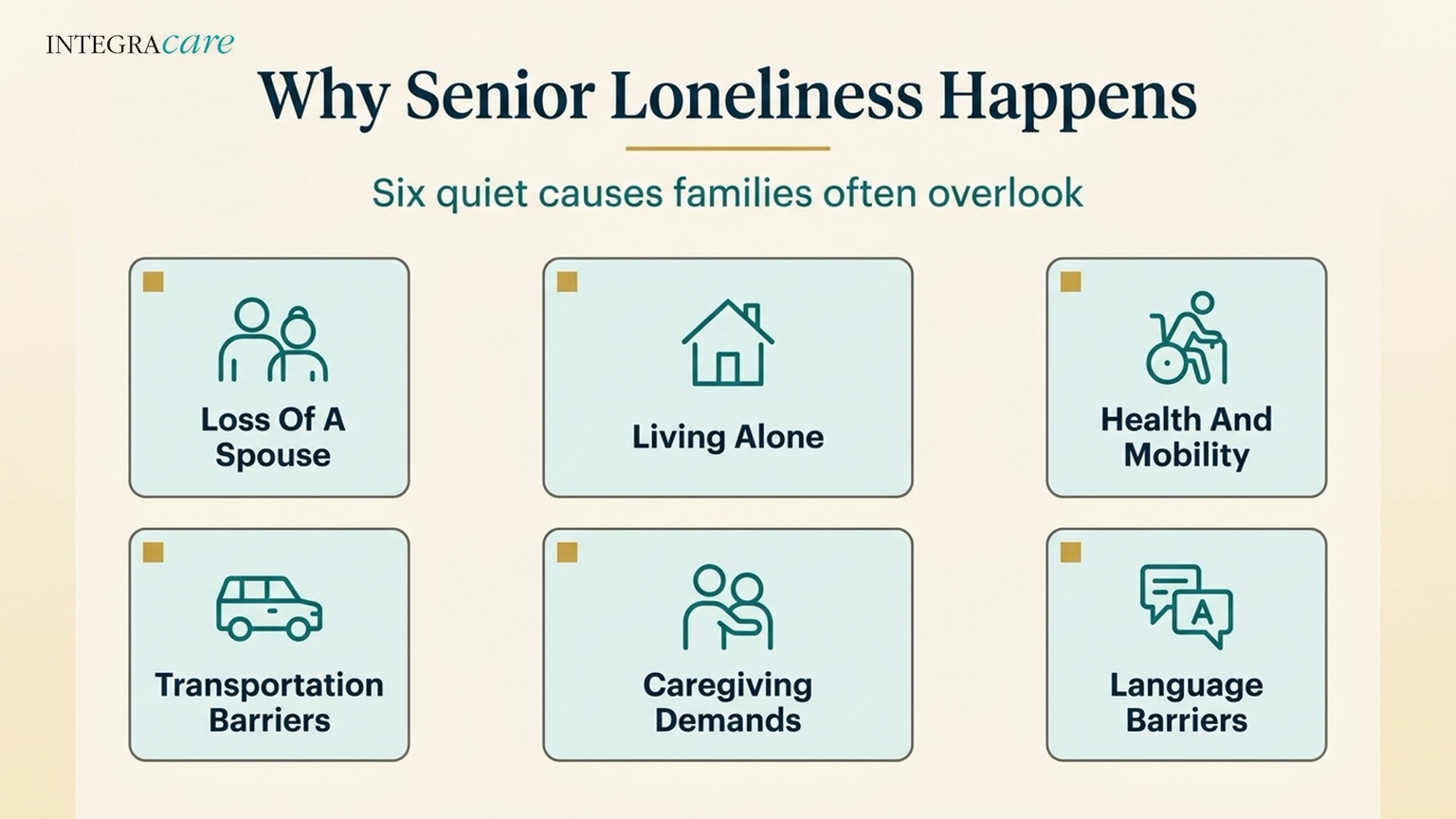
Loneliness rarely has a single cause. For many older adults, it develops gradually as health, relationships, and daily routines change over time. Recognizing these contributing factors is an important first step in helping seniors stay connected, supported, and emotionally well.
- Loss of a spouse or close friend: Grief can leave a lasting sense of emptiness while also changing long-established routines and social connections. Access to grief support can help older adults navigate these life changes.
- Living alone: Spending long periods without regular social interaction can increase the risk of social isolation, particularly after retirement or the loss of a partner.
- Health concerns: Chronic illness, reduced mobility, hearing or vision changes, and other health concerns can make it harder to participate in social activities or maintain relationships.
- Mobility and transportation issues: Limited access to transportation or difficulty leaving home can make staying connected with family, friends, healthcare providers, and community programs much more challenging.
- Caregiving responsibilities: Some older adults spend so much time caring for a spouse or family member that their own social and emotional needs are overlooked.
- Language and cultural factors: Communication barriers or unfamiliar community services can make it more difficult for seniors to build new social connections or access available support.
- Financial pressures: Rising health care costs and low socio-economic status may limit opportunities to participate in activities, programs, or services that encourage social engagement.
- Mental health challenges: Anxiety, depression, and other concerns can both contribute to and result from loneliness. When needed, mental health counselling and community support can play an important role in breaking this cycle.
Loneliness can often be reduced when these challenges are recognized early and addressed with the right combination of social connection, community resources, and personalized support. At Integracare, our caregivers help older adults maintain meaningful routines, encourage companionship, and provide one-on-one care that adapts as physical, emotional, and social needs change. By working closely with families and healthcare professionals, we help create consistent support that allows seniors to remain connected, engaged, and living well at home.
Early Intervention and Prevention
Recognizing the early signs of withdrawal, reduced interest, or routine changes is crucial for preventing chronic loneliness. Unlike physical ailments that show obvious symptoms, social isolation often develops gradually, making it easy to overlook until it becomes severe. Early intervention matters because loneliness can quietly lead to emotional deterioration, depression, anxiety, and even physical health decline.
Primary care providers can play a key role in identifying concerns through routine screenings and conversations about social connections. Assessment tools specifically designed to detect isolation risk can help families and healthcare providers intervene before loneliness becomes entrenched. Grief-support groups, mental health counselling, and supportive check-ins can provide essential support during vulnerable periods.
The Systemic Movement to Address Loneliness
Creating connections and reducing loneliness requires a proactive approach that builds support systems before a crisis develops. Promotion and prevention should work together to create inclusive approaches that address sensory and cultural issues that may complicate connection. In Ontario, initiatives like the "Ending Loneliness Together" movement and community-based programs have demonstrated how early intervention can transform outcomes for seniors experiencing isolation.
Why Social Connection Matters
Meaningful relationships do more than brighten someone's day; they help support social connectedness, emotional well-being, and a better quality of life. Whether it's sharing a conversation, enjoying a favourite activity, or spending time with a trusted caregiver, regular social engagement gives many older adults a greater sense of purpose, confidence, and belonging.
What Canadian Research Shows
Research continues to reinforce the importance of staying connected. Canada’s Quality of Life Framework recognizes social connection, belonging, and community participation as important parts of overall well-being.
The National Seniors Council also highlights how social engagement, meaningful relationships, and community involvement can help reduce loneliness and social isolation among older Canadians. Its guidance points to friendly visits, community programs, and other opportunities for regular connection as practical ways to support quality of life as people age.
Connection Looks Different for Everyone
There is no single path to staying connected. Some older adults enjoy local community resources, volunteer opportunities, or social groups, while others prefer regular family visits, online social activities, or the familiar routine of companionship care at home. What matters most is having meaningful interactions that help older adults feel valued, included, and connected to the people and communities around them.
How Home Care Can Truly Help
A home care provider isn’t just there to assist with meals or medications. When done right, home care goes beyond the basics; it becomes a lifeline for social connection.
From shared activities to daily routines filled with small, meaningful conversations, caregivers help prevent isolation by simply being there. Presence is powerful. And when seniors receive care at home, in their most comfortable environment, they are more likely to engage and reconnect with the world around them.
The Power of Companionship Care
Companionship care for seniors is one of the most effective antidotes to loneliness. Unlike clinical visits that are short and task-oriented, companionship care is relational. It’s designed to build trust, familiarity, and consistency.
This can include reading together, going for light walks, playing music, or helping with hobbies. These aren’t luxuries. They’re powerful tools that reignite purpose and identity in older adults.
At Integracare, companionship care is integrated into every plan, not treated as an optional extra. Because emotional health deserves the same level of attention as physical care.
Live-In Support: A Deeper Layer of Connection
Some seniors need more than a few hours of care per day. For those experiencing profound loneliness or needing consistent support, live-in caregivers take the stress out of daily life.
Having someone live in the home doesn’t just provide safety and practical help. It restores rhythm and structure. It brings a human presence back to the space. Meals feel shared again. Mornings and evenings become opportunities for connection.
Live-in care can be especially comforting for seniors who’ve lost a spouse or who feel disconnected from extended family. It’s one of the most impactful ways to reintroduce consistency and warmth into the home.
The Difference a Caring Presence Can Make
Companionship care is about much more than having someone nearby. It's about building genuine relationships that help older adults feel seen, valued, and connected in everyday life. Through a consistent caring presence, meaningful conversation, and personalized care that reflects each person's interests, routines, and preferences, companionship can help reduce isolation while encouraging confidence and community engagement.
Every person's experience is different. Some enjoy participating in local programs or community-based activities, while others find comfort in sharing stories over a cup of tea, listening to favourite music, or simply knowing someone they trust will visit each week. The most meaningful support is always tailored to the individual, taking an inclusive approach that respects personal backgrounds, cultural traditions, communication styles, and sensory needs. Rather than following a one-size-fits-all approach, thoughtful companionship focuses on what helps each person feel comfortable, included, and like themselves.
Every family's journey is unique, but one theme appears again and again: meaningful relationships have the power to brighten everyday life.
More Than Daily Care
Although every family's circumstances are different, these experiences reflect something we see every day at Integracare. Meaningful companionship isn't measured only by the tasks completed; it's reflected in the confidence that grows through familiar routines, the comfort of seeing a trusted face, and the simple feeling of being heard. While every care plan begins with an assessment of a person's individual needs, it's the relationships built over time that often have the greatest impact on emotional well-being.
Across Canada, growing awareness of senior loneliness has highlighted the importance of social connection as part of healthy aging. Research continues to show that regular companionship, community engagement, and personalized support can help older adults maintain independence, strengthen their sense of belonging, and reduce feelings of isolation. Whether that connection comes through family, friends, community-based programs, or compassionate home care, the goal is the same: helping every older adult feel included, respected, and supported in living a full and meaningful life.

Supportive Interventions and Home Care
Loneliness doesn't always disappear with a single visit or activity. More often, it begins to ease through small, familiar moments that become part of everyday life. A home filled with care is a home where someone takes the time to listen, shares a laugh over morning coffee, remembers a favourite story, or notices when something simply doesn't seem quite right. Those everyday moments remind older adults that they are seen, valued, and never facing the day alone.
How Home Care Helps Build Connection
Thoughtful home health care services support far more than daily routines. They help create opportunities for conversation, companionship, and meaningful relationships that make home feel welcoming and connected.
- Companionship care brings regular conversation, shared interests, friendly visits, and a familiar face that many older adults look forward to seeing.
- Personalized care plans are built around each person's routines, interests, abilities, and goals, helping every visit feel natural and personal.
- Live-in caregivers provide continuous companionship and reassurance for seniors who would benefit from a consistent caring presence throughout the day and night.
- Dementia-friendly environments support comfort, familiarity, and meaningful engagement while helping reduce confusion and anxiety for people living with dementia.
- Cultural sensitivity helps ensure care respects each person's language, traditions, beliefs, and life experiences so they feel understood and included.
- Assessment tools help identify changes in social, emotional, and physical well-being, allowing care to evolve as needs change.
- Mental wellness training helps caregivers recognize when someone may need extra emotional support and communicate concerns with families.
- Caregiver support groups and bereavement support groups offer encouragement and connection for families and older adults adjusting to life's changes.
In some communities, social prescribing programs connect older adults with local activities, volunteer opportunities, and community resources that encourage ongoing social engagement.
The Small Moments Families Remember
The moments that make the biggest difference are rarely the biggest events. They're the familiar routines that give someone a reason to smile and something to look forward to.
- Sharing stories over tea or coffee
- Looking through family photo albums together
- Listening to favourite songs from years gone by
- Taking a short walk through the neighbourhood or garden
- Working on puzzles, knitting, baking, or another favourite hobby
- Starting or ending the day with a friendly conversation
These moments may seem ordinary, but together they help create a home filled with care. Over time, familiar conversations, thoughtful companionship, and genuine relationships can help reduce feelings of loneliness, restore confidence, and remind older adults that home isn't simply where they live; it's where they continue to feel connected, cared for, and part of everyday life.
Tech Can Help, but It Isn’t the Whole Answer
Technology can be a helpful bridge when seniors want to stay connected. Video calls, FaceTime, Zoom, social media, online classes, and music apps can make it easier to keep up with family, friends, and favourite activities, especially when mobility or transportation issues make getting out more difficult. For many older adults, these tools can offer comfort, routine, and a little extra connection throughout the day.
But when it comes to reducing senior loneliness, tech is only one part of the solution. A screen can’t replace a warm conversation, a familiar caregiver, or the comfort of having someone sit beside you. Real connection still comes from human presence, emotional support, and thoughtful daily routines that help seniors feel included, valued, and less alone.
The Role of Routine in Combating Isolation
Loneliness thrives in unstructured time. When days blur together, it becomes harder to stay motivated, engaged, or emotionally present. That’s why routine is such a powerful tool.
A consistent care routine can:
- Anchor the day with meaningful milestones (meals, walks, conversations)
- Reduce anxiety by creating predictability
- Encourage personal hygiene and self-care
- Make space for social moments that feel natural, not forced
Caregivers at Integracare help build these routines around the individual, not on a preset schedule, because one person’s ideal day might be another’s stress.
Loneliness Affects More Than the Person Experiencing It
When an older adult becomes socially isolated, the effects are often felt throughout the family. Adult children, spouses, and other caregivers may worry about a loved one living alone while trying to balance careers, children, and their own responsibilities. Many people in the sandwich generation find themselves caring for aging parents while raising families of their own, which can lead to emotional exhaustion, stress, and feelings of guilt.
Strong social support, regular community engagement, and compassionate home care benefit more than the senior receiving care. They help strengthen familial relationships, reduce caregiver strain, and create opportunities for families to spend meaningful time together rather than focusing solely on caregiving responsibilities. Staying socially connected may also reduce the risk of elder maltreatment, as regular visits from family members, friends, neighbours, and professional caregivers make it more likely that changes in health or well-being will be noticed early.
What Makes a Caregiver Truly Exceptional
Companionship care for seniors is about more than help with daily tasks. The best caregivers notice the little things, remember what brings comfort, and offer steady kindness that helps seniors feel safe and cared for. That kind of presence can make a real difference when someone is living with loneliness.
At Integracare, our caregivers are trained to provide more than support. They bring warmth, consistency, and genuine connection into the home, helping seniors feel seen, respected, and less alone through meaningful companionship, trust, and daily routines.
Personalized Support Builds Trust
There’s no such thing as one-size-fits-all care. Seniors have lived full, complex lives, with preferences, routines, and emotional histories that deserve to be respected, not overlooked. That’s why personalized home care does more than provide support. It strengthens relationships. Whether your loved one enjoys classical music in the mornings or prefers their tea a certain way, these small, specific details matter. They show respect. They build familiarity. And over time, they help foster a deeper bond between caregiver and client, one rooted in trust, not just tasks.
When Connection Becomes Part of Everyday Life
Loneliness doesn't have to become a normal part of aging. With the right support system, caregiving doesn’t have to be overwhelming. With compassionate caregivers, meaningful companionship, and personalized home healthcare, older adults can continue living with confidence, purpose, and a stronger sense of connection.
At Integracare, we believe every senior deserves to feel seen, heard, and valued. By building meaningful relationships, encouraging social engagement, and creating personalized care plans that reflect each person's unique needs, we help transform houses into homes filled with care, places where conversation, comfort, and companionship remain part of everyday life.
Let us help you bring warmth, conversation, and purpose back into your loved one’s everyday life. Because at Integracare, we believe that no one should age alone.
A More Connected Life Begins at Home
Meaningful companionship can change the rhythm of everyday life. Whether your loved one would benefit from friendly visits, ongoing companionship, or personalized home healthcare, Integracare is here to help create a care plan that brings comfort, confidence, and connection back into every day. Speak with our team to learn how compassionate home care can support your family.
Frequently Asked Questions
What causes loneliness in older adults?
Loneliness in older adults often comes from a combination of living alone, loss of a spouse or close friend, caregiving responsibilities, health concerns, and mobility and transportation issues. It can also be shaped by health care costs, low socio-economic status, language and cultural factors, and changes in daily routines. These pressures can lead to social isolation, especially when grief support, mental health counselling, or a strong support system is not easy to access. In many cases, several causes happen at once.
How does senior loneliness affect families?
Senior loneliness affects caregivers, family members, and the sandwich generation as well as the older adult. Over time, emotional exhaustion can build when families try to manage care without enough social support. Loneliness can also strain familial relationships and weaken social harmony at home. In some situations, it may increase the risk of elder maltreatment if caregivers are overwhelmed and not getting the help they need. The lived experience of isolation can be difficult for the whole family.
Why is early intervention so important?
Early intervention matters because loneliness can quietly lead to emotional deterioration before it becomes obvious. A primary care provider, mental health professional, or care team can use assessment tools to identify mental health concerns and social isolation earlier. A preventive approach works best when families focus on creating connections and reducing loneliness before the situation becomes more serious. Inclusive support also matters when sensory and cultural issues make it harder for a senior to reach out or engage.
What health problems are linked to loneliness?
Loneliness and social isolation are connected to several health impacts, including depression, anxiety, mood disorders, cognitive decline, cognitive impairment, dementia, cardiovascular disease, heart disease, stroke, diabetes, functional decline, addiction, and early death. These risks do not mean loneliness causes every condition on its own, but they do show why prevention matters. Regular social support, community engagement, and timely help can protect overall wellbeing and support healthier aging.
How can companionship care help seniors?
Companionship care provides more than help with daily tasks. It offers a consistent caring presence, emotional support, and opportunities for conversation that can reduce isolation and help seniors feel seen. When care is personalized and informed by assessment tools, it can better reflect the person’s routines, cultural issues, and sensory issues. Companionship care can also encourage community engagement and strengthen the support system that helps older adults remain comfortable at home.
What practical steps can reduce loneliness?
Helpful steps include building a daily social routine, joining hobby groups, attending senior centre programs, and using friendly visits to create regular contact. Families can also explore volunteer opportunities, community-based initiatives, community-based projects, social prescribing programs, or help from an area agency on aging. Programs such as the connected companions program or a friendly visitor program may also support structured routines. The most effective plans are usually simple, regular, and realistic.
Can technology help seniors stay connected?
Technology can support connection through video calls, video chatting, FaceTime, Zoom, social media, online classes, and music apps. These tools can be especially useful for seniors with limited mobility or those who live far from loved ones. Still, technology works best when it is part of an inclusive approach that also includes in-person contact. Sensory issues, hearing changes, and cultural issues can affect comfort with devices, so support and patience matter.
What role do home care services play?
Home health care services can reduce loneliness by bringing companionship, routine, and trusted support into the home. Services such as companionship care, live-in caregivers, friendly visits, personalized care plans, caregiver support groups, bereavement support groups, and mental wellness training can all help. When care is shaped with cultural sensitivity and dementia-friendly environments in mind, it can better meet the person’s needs while supporting dignity, stability, and social connection at home.
Why does social connection matter so much?
Social connection supports social connectedness, social engagement, and stronger social support. It helps protect confidence, routine, and quality of life, especially when seniors have access to community engagement, community resources, online social activities, and volunteering. Broader frameworks such as the AARP Global Council on Brain Health Boosters for Joy, the Foundation for Social Connection Action Network, and the Quality of Life Framework for Canada show that connection is an important part of healthy aging, not just a nice extra.
How do public initiatives help address loneliness?
Public initiatives help bring attention to weak social networks and the wider impact of social isolation. Efforts such as the Commission on Social Connection, the World Health Organization, the National Poll on Healthy Aging, the National Institute on Aging 2024 survey, and the Silo Act of 2023 all point to the need for a more preventive approach. They help families, caregivers, and primary care providers understand that loneliness is a real health concern with community-wide effects.
Free In-Home Assessment
The Care Your Family Deserves Starts Here
Speak with our team about a personalized care plan. Book a free, no-obligation in-home assessment and we will help you find the right support for your loved one.
About the Author: Lee Grunberg

President & CEO, M.B.A.
Lee joined Integracare as President & CEO on August 2, 2016 after an approximately 20 year career in Private Equity and Investment Banking. Lee brings tremendous operational knowledge and governance experience along with an incredible passion and energy to Integracare.