
Blog
Hobbies for Seniors
Published
Updated
Written by Lee Grunberg, M.B.A. — President & CEO
Reviewed by Bethel McMaster, BScN, RN — Director of Business Development
On this page8 sections
Key Takeaways
- Hobbies help seniors aging in place stay mentally, physically, and emotionally engaged.
- Home care can support safe, personalized activities that match a senior’s abilities and interests.
- Low-impact options like chair yoga, aquafit, gardening, and brain games can promote wellness at home.
- Social hobbies such as book clubs, community activities, and pet care can reduce loneliness and isolation.
- The best hobbies for seniors are meaningful, adaptable, and easy to enjoy within the comfort of home.
A nutritious diet, positive health choices, and exercise all contribute to helping Seniors feel more energetic and at their best. In fact, healthy longevity requires us to engage in mental and social activity just as much as we participate in physical activity. Mental, social, and physical stimulation are critical to healthy aging.
Leisure activities, hobbies, and a rich social network are essential factors that correlate with avoiding loneliness and isolation as well as living longer.
Integracare is a home healthcare provider that delivers essential home care assistance in Toronto and Mississauga directly to your loved one’s door. Home healthcare is an opportunity for Seniors to age gracefully in their own homes, surrounded by community and familiarity.
When individuals have the opportunity to live and age at home, they can engage in many activities within their homes and communities. Unlike a nursing home or an assisted living facility, there are no restrictive schedules or rules.
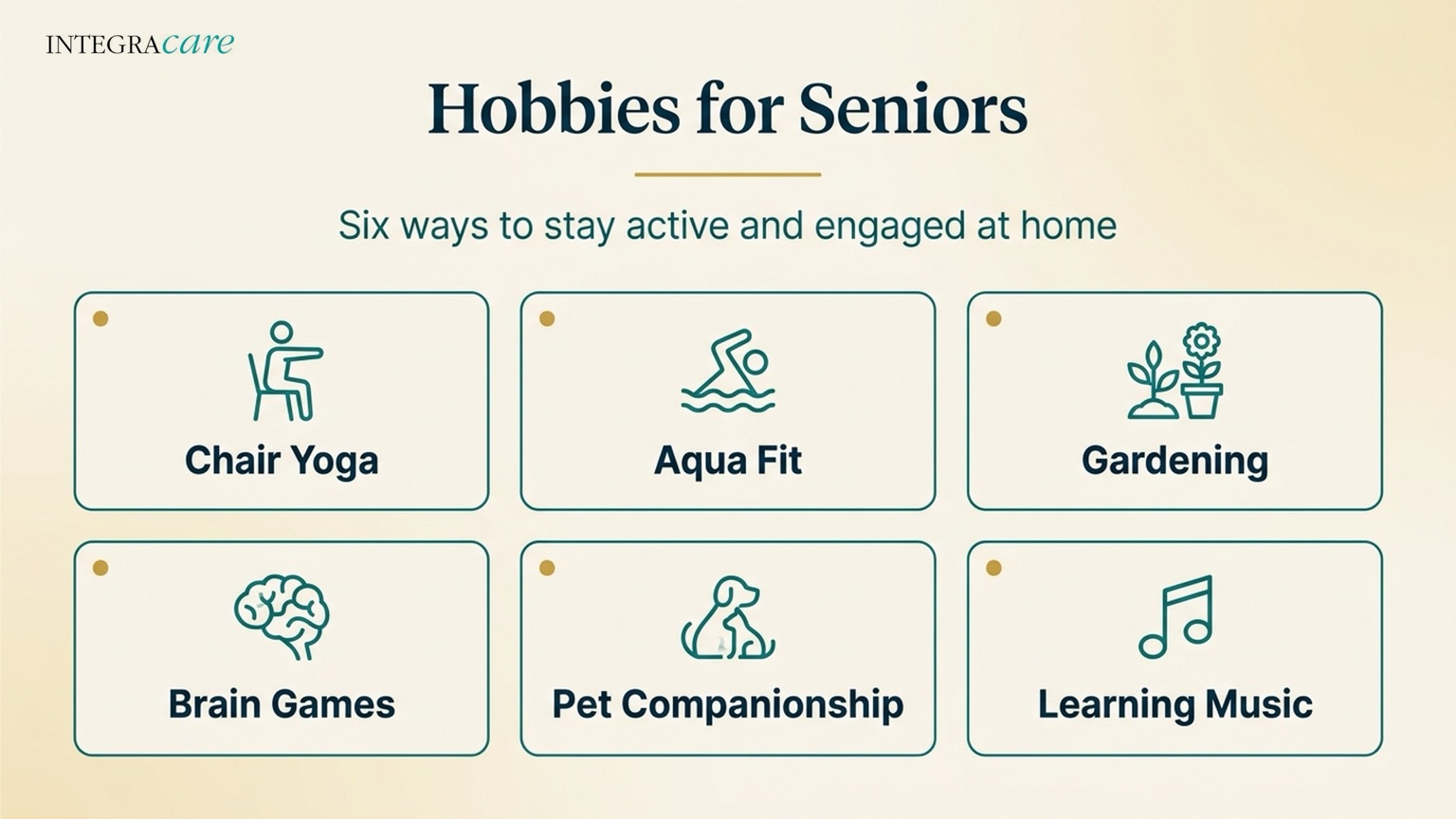
We are strong believers in keeping our Senior Clients active and engaged, both physically and mentally. Consider the following list of fun, interactive, and mentally stimulating hobbies for seniors. Your family member or friend will feel healthier, stronger, and happier.
Great Hobbies for Seniors Seeking Exercise
Getting active is a great way for seniors to stay independent and improve their quality of life. While you may need to look at lower-impact exercises as you age, you can still get a great workout in. Exercise can be incorporated into your life at any age. These healthy activities are even great hobbies for seniors over 80.
Aqua Fit and Water Activities
Aquafit is an effective solution for seniors who wish to avoid the risk of falling or injury while exercising. Being in a controlled environment of water is a powerful way to stay active, especially if there are chronic health conditions to consider, such as joint problems, arthritis, and circulation issues.
Unlike sports that require you to perform on land, aquafit is arthritis-friendly. The buoyancy of the pool’s water supports the weight of the body against gravity’s impact, and this allows you to land easily.
There is a reduced impact on the knees, back, hips, and ankles. This gives aqua fit a protective quality for delicate joints, ligaments, and tendons, which reduces the risk of injuries and damage such as stress fractures, muscle soreness, and even broken bones.
One of the health care agency services that we’re proud to deliver is arranging transportation for Clients to and from activities such as aquafit and other activities. Because we care about your loved one’s physical and mental well-being, our Caregivers are happy to cheer them on and support them in every way possible.
If there are mobility issues present, we may be able to get right into the action with your loved one to assist them in the water or anywhere else.
Our Caregivers are trained to handle individuals with Arthritis and other chronic conditions.
Chair Yoga
Yoga is an excellent way to keep physically active while at the same time maintaining good mental health. The best part about yoga is that you can go at your own pace, and you can even practice while sitting down.
If your loved one is unable to attend yoga classes outside of the home, Integracare Caregivers are trained to practice basic yet critical chair yoga moves with Clients. The benefits of yoga for Seniors are numerous. Some of those include:
- A lowered risk of cardiovascular disease
- Recovery from strokes and surgery
- Managing arthritis, pain, and inflammation
- Managing digestive issues like IBS
- Improving sleep quality
- Managing depression and anxiety
- Fall prevention
Utilizing gentle movements and poses such as the Chair Cat-Cow or Warrior Series, your loved one can benefit greatly from practicing chair yoga for about 20-30 minutes a day.
In addition to at-home palliative care in Toronto, Integracare delivers trusted dementia care in Toronto and Mississauga to Clients who suffer from dementia-related illnesses such as Alzheimer’s disease. We believe that a little bit of yoga and meditation goes a long way for these Clients.
Studies have shown that practicing yoga and meditation can reduce symptoms of Alzheimer’s disease, and these activities can also help Clients and Caregivers communicate and socialize better.
Chronic stress is common among Seniors. Stress hormones can negatively affect brain structures that are important to memory and cognition, such as the hippocampus. Chronic stress is also associated with inflammation in the body and in the central nervous system, which is linked to Alzheimer’s disease.
Yoga can reduce stress hormones and factors related to inflammation, and can teach an individual over time how to effectively cope and protect the body from responding to stress in an aggressive or frightened manner.
The Best Hobbies for Seniors Seeking Companionship
As you age, keeping up an active social life and finding companionship can help combat feelings of isolation and depression and fill your days with a greater sense of purpose. These are some of the best hobbies for seniors who are looking to add more companionship to their lives.
Pet Ownership
If your loved one is of able mind and body, then a pet can provide a senior with endless companionship and a sense of purpose. Depending on whether they’re a cat or a dog person (or any animal), strong bonds can be made between pets and seniors.
One of the great aspects of living at home with support from home healthcare is that Clients can keep pets and look after them. Owning a pet combats feelings of loneliness or boredom, as there is always something to do and “someone” to be around.
With the help of a Caregiver, your loved one can walk and feed their pet as well as take trips to the pet store to purchase toys and winter jackets. Pets become family members. They provide Seniors with loving companionship that is unlike any other type of relationship.
Even the simple act of stroking a pet is believed to reduce the level of stress-related hormones in the blood. For example, a hormone called oxytocin is released while stroking a dog, and this is linked to anxiety relief.
Ask any pet owner what it’s like to have a lovable, furry little friend to take care of. Chances are their faces will light up as soon as they mention their pet’s name.
Activities at Community Centres
Community centres are places for seniors to socialize and interact with other Seniors. They offer recreational, cultural, and learning programs for Seniors to promote health and wellbeing.
Even with a supportive family, aging can trigger feelings of loneliness and isolation. Engaging with people who are of similar age and have similar interests can work wonders for an individual’s mental and emotional health.
Community centres and the activities that are offered also provide participants with independence and a life of their own.
Find a community space that offers stimulating book clubs, ballroom dancing lessons, or art classes; there are unlimited opportunities for your loved one to make new friends, learn a new skill, and boost their confidence.
Outdoor Hobbies for Seniors
Getting outdoors is incredible for your physical and mental health. Enjoying the sun can improve your mood, lift your spirits, and keep you moving and flexible.
Gardening
Our Caregivers are always more than delighted to engage with Clients creatively. A fun and nourishing activity is gardening. Even if your loved one doesn’t have full access to an outdoor space, they can plant flowers and indoor plants within their home or apartment.
The benefits of gardening are both numerous and surprising. Watching something grow that you’ve cultivated and looked after heightens self-esteem. It’s also a great stress-reducer. It’s calming and relaxing to nurture a living thing.
It’s a particularly fun and rewarding activity when shared; your loved one and his or her Caregiver can build something beautiful together.
Hobbies for Seniors At Home
What about those rainy days or days when the winter weather means the garden is asleep or the sidewalks are a bit too risky to brave? There are plenty of hobbies for seniors at home that will help keep your mind sharp.
Brain Games
Playing games that stretch your brain muscles can help improve your memory and maintain your cognitive functions for longer. Games like crosswords, Sudoku, Wordle, and others will keep you guessing and keep you sharp.
More Great Indoor Hobbies for Seniors
There are plenty more activities seniors can do at home, including starting up a book club, knitting, crocheting, and other arts and crafts. The best hobbies depend on where you or your loved one is in life and their personal passions.
Hobbies for Senior Women
In this day and age, there are no gender rules when it comes to hobbies. Whatever you find yourself passionate about is something worth pursuing. But if you’re looking for a suggestion that you can get your friends on board with, consider a card games night or a day trip antiquing.
Hobbies for Senior Men
When it comes to great hobbies for senior men, they can get crafty, too; sometimes, they just call it something different. Woodworking is a great hobby for anyone who still has the dexterity for it and the patience to turn a block of wood into something beautiful.
Hobbies for Seniors with Limited Mobility
There’s no reason to let limited mobility slow you down. There are plenty of ways seniors with limited mobility can enjoy the great outdoors, get some exercise, or stretch their brain muscles.
Learn About Music
Music is something that many people wish they could have learned when they were younger. Now is the best time to pursue a passion. You or your loved one can pursue learning an instrument, or apply themselves to learning about musical history and theory to deepen their understanding of their favourite songs.
Healthy Senior Hobbies for a More Rewarding Life
Maintaining an active social life and engaging in stimulating activities are both crucial factors to a healthy life. Reach out today to learn more about how Integracare can help your loved one find the happiness they deserve. When our Clients share activities with supportive and compassionate Caregivers, they’re living life with vigour and inspiration. Improving the quality of life for all of our Clients is our number one priority.
We’ll help you and your family member or friend discover the right hobby and activity that will bring them joy and keep them busy.
Regardless of age, illness, or mobility issues, there is a hobby for everyone. We’ll help you find that piece of the puzzle that will bring joy and engagement for your loved one.
Frequently Asked Questions
What hobbies are accessible for seniors with limited mobility?
Many seniors worry that health limitations or mobility concerns will end their favourite pastimes, but accessible hobbies can be adapted to different physical abilities. Reading, solving puzzles, painting, and indoor gardening provide enjoyment without requiring extensive movement. Gardening kits with raised beds, group activities like walking clubs, and even video games offer social interaction and mental stimulation. The goal is matching activities to each person’s strengths so they stay engaged, independent, and connected while aging comfortably at home with support from companion care or family members.
How can creative and artistic activities support seniors aging in place?
Creative and artistic activities like drawing and painting, pottery, ceramics, woodworking, and scrapbooking offer meaningful self-expression and cognitive stimulation for seniors aging in place. Music exploration, cooking, gardening, and photography also provide daily purpose and joy. Seniors may enjoy poetry writing, sewing and knitting, or joining choir groups to stay socially connected. These pursuits not only support mental health but also help maintain a sense of identity and pride while living in a familiar, comfortable environment with personalized support from home care professionals.
How can family and intergenerational connections help seniors stay engaged?
Family and intergenerational connections strengthen relationships and reduce loneliness for seniors aging in place. Intergenerational opportunities like shared board games, reading clubs, online classes, and video calls allow grandparents to connect with grandchildren and school groups. Social and recreational activities, memories and conversations, and virtual museum tours create shared experiences even when families live far apart. Community partners and volunteers also play a valuable role, offering visiting programs and digital hobbies that foster meaningful connections across generations while supporting emotional well-being and daily engagement.
What outdoor activities and gardening options suit seniors receiving home care?
Gardening and outdoor activities can be adapted for seniors receiving home care, whether they enjoy gentle movement or contact with nature. Options include gardening, indoor gardening, landscaped grounds, and scenic walks in local parks. Group activities like walking clubs, nature trips, and nursery visits provide social interaction and light exercise. Outdoor hobbies such as pet store trips, craft stations, and relaxing in familiar outdoor spaces also support overall well-being while keeping seniors safely engaged in their own environment with supervision from care partners when needed.
Which indoor and home-based hobbies are best for seniors?
Indoor and home-based hobbies like reading, cooking and baking, and trying new recipes are ideal for seniors who prefer to stay at home. Watching classic movies and documentaries, joining a book club, and taking online classes offer lifelong learning opportunities. Seniors may also enjoy crafts, poetry and prose, virtual museum tours, woodworking club activities, or video calls with friends. These hobbies support mental stimulation, creativity, and social connection, all within the comfort and safety of a familiar living space with support from home care professionals when desired.
How can lifelong learning and education benefit seniors at home?
Lifelong learning and education support curiosity, confidence, and healthy aging for seniors receiving home care. Educational lectures, documentaries, classic movies, and cultural storytelling can spark interest, while health and wellness education, nutrition workshops, and chronic condition management help people stay informed. Learning a new language, exploring technology and digital skills, and attending museum presentations or mindfulness sessions also provide mental stimulation. These activities encourage growth and purpose, helping seniors feel more connected and engaged in their daily lives while maintaining independence and cognitive sharpness at home.
What types of mental stimulation and brain games help seniors stay sharp?
Mental stimulation and brain games like crosswords, sudoku, and puzzles support memory, problem-solving, and pattern recognition for seniors aging in place. Board games, card games, strategy-based games, and video games can also be enjoyable and mentally engaging. Group reading, language learning, and brain games that challenge thinking skills help maintain cognitive health. These activities are especially valuable for seniors receiving home care, providing both entertainment and a gentle way to keep the mind active, focused, and socially connected with family members and care partners.
How can music and musical engagement support seniors receiving home care?
Music and musical engagement can be both enjoyable and therapeutic for seniors at home. Listening to music, singing, joining a choir, or learning to play an instrument may support memory, mood, and relaxation. Music therapy, guided movement, and musical history discussions can also provide sensory stations and tactile activities that stimulate the senses. Whether through audiobook listening, musical theory exploration, or simply enjoying favourite songs, music offers a comforting and meaningful way to enrich daily life and emotional well-being for seniors aging in place with compassionate support.
What physical activities and exercise routines are safe for seniors with varying abilities?
Physical activities and exercise routines can be adapted for different abilities, from chair yoga and gentle yoga to balance exercises and stretching routines. Aqua fit, water activities, and low-impact exercises like resistance band workouts or strength exercises support mobility and overall health. Personalized exercise routines and exercise classes tailored to each person’s needs allow seniors to move safely and confidently. These activities help maintain independence, reduce fall risk, and improve energy levels while aging at home with guidance from health care professionals and supportive family members.
How can social engagement and companionship improve seniors’ quality of life?
Social engagement and companionship play a vital role in emotional well-being for seniors receiving home care. Group activities like art classes, book clubs, card games, and themed dinners create opportunities for connection. Community centre programs, clubs and interest groups, and companion care further reduce isolation. Creative workshops, group outings, volunteering, and even pet ownership can add joy and purpose. These social and recreational opportunities help seniors feel valued, supported, and connected to their community while maintaining meaningful relationships and daily engagement with family and friends.
What role do hobbies play in supporting healthy aging for seniors at home?
Hobbies provide structure, purpose, and enjoyment that support healthy aging for seniors receiving home care. Whether through creative and artistic activities, mental stimulation and brain games, or social engagement and companionship, hobbies help maintain cognitive, emotional, and physical well-being. Engaging in lifelong learning and education, physical activities and exercise, and music and musical engagement also promote independence and confidence. These meaningful pursuits allow seniors to age in place with dignity, joy, and a sense of accomplishment every day while staying connected to their interests and community.
How can families choose the right hobbies for a senior with dementia or mobility challenges?
Choosing the right hobbies starts with understanding a person’s interests, physical abilities, and health limitations. Families may explore accessible hobbies for limited mobility, such as raised beds, gardening kits, puzzles, and painting. Creative and artistic activities like drawing and painting, music, and crafts can be adapted for different stages of dementia. Social and recreational activities, group activities, and intergenerational opportunities also provide meaningful engagement. The goal is to find enjoyable, safe, and familiar activities that support confidence, connection, and daily purpose while aging comfortably at home with compassionate care support.
Free In-Home Assessment
The Care Your Family Deserves Starts Here
Speak with our team about a personalized care plan. Book a free, no-obligation in-home assessment and we will help you find the right support for your loved one.
About the Author: Lee Grunberg

President & CEO, M.B.A.
Lee joined Integracare as President & CEO on August 2, 2016 after an approximately 20 year career in Private Equity and Investment Banking. Lee brings tremendous operational knowledge and governance experience along with an incredible passion and energy to Integracare.