
Blog
How to Keep Seniors Cool Without Turning Into a Worrier
Published
Updated
Written by Lee Grunberg, M.B.A. — President & CEO
Reviewed by Bethel McMaster, BScN, RN — Director of Business Development
On this page24 sections
Key Takeaways
- Keep seniors cool with simple home steps like closing curtains, using fans, and choosing air conditioning when possible.
- Encourage steady hydration throughout the day, since older adults may not always feel thirsty.
- Watch for heat warning signs like dizziness, headache, or nausea, and treat confusion as an emergency: call 911 right away.
- Plan outings and activities for cooler times of day, and avoid peak heat whenever possible.
- Make a heat emergency plan ahead of time, including cooling spots, emergency contacts, and regular check-ins.
When summer turns up the heat, your anxiety doesn’t have to. Yes, seniors are more vulnerable to heat-related illnesses. Yes, dehydration can sneak up fast. But you don’t have to hover with a thermometer and a water bottle 24/7. There’s a smarter, calmer way to keep the people you love safe when the forecast hits its breaking point.
Let’s talk about how to manage heat, hydration, and worry like someone who’s got this under control. Because you do.
Spotting the Subtle Signs of Heat Stress
Aging-related physical changes naturally alter how bodies handle temperature shifts, particularly when managing chronic conditions like diabetes, lung disease, or cardiovascular issues. Common prescription medicines, including a beta blocker for blood pressure, diuretics, or medications for depression, can quietly disrupt fluid balance and diminish the body's self-cooling efficiency. High humidity complicates this further by preventing sweat from evaporating and trapping heat against the skin. A senior might also face independent health vulnerabilities from seasonal lifestyle constraints, including a vitamin D deficiency.
Identifying Heat Illnesses
Instead of constant hovering, family, friends, and neighbours can watch for early warning signs during a heat wave to catch heat-related illnesses before they become hazardous. Keep an eye out for a localized heat rash, ankle swelling known as heat edema, or sudden dizziness called heat syncope. Spotting these subtle shifts early, along with mild dehydration, allows you to step in before things escalate — but confusion or a rapidly rising body temperature is different: call 911 immediately, as these can signal heat stroke. For the milder signs, replenishing electrolytes early prevents minor physiological strain from turning into painful heat cramps, severe heat exhaustion, or a critical heat stroke crisis requiring immediate emergency treatment.
Practical Steps for Safer Summer Days
Timing Your Outings
Protecting your loved one doesn’t mean keeping them locked indoors until autumn. It just takes a little planning ahead to stay ahead of local government weather alerts and heat warnings. Move outdoor activities, like a favourite gardening activity, to the cooler times of day. When heading out for fresh air, seek out deeply shaded areas, choose lightweight clothing, use protective clothing like wide-brimmed hats, and always carry fresh ice water.
Modifying the Home Environment
When a weather-related emergency hits, focus on creating a cool environment. Indoors, use central air conditioning or portable fans, close blinds and curtains during peak sun hours, open windows at night, and dress seniors in breathable natural fabrics. For extra relief, you can introduce cold showers, smooth down cooling cold washcloths, or serve refreshing cool snacks to lower baseline temperatures quickly.
Utilizing Community Support Networks
If your home lacks climate control, look into provincial weatherization assistance, arrange specialized senior transportation or senior living advice, and utilize electronic connections to check on senior housing options. You can also map out local routes to public cooling centres or nearby air-conditioned shelters. Swapping a backyard walk for an indoor pétanque game maintains vital socialization and connection to community senior centres, religious groups, or local seniors' programs without the physical strain of the midday sun. Integrating these small adjustments into your comprehensive heat emergency plan ensures safety, regular check-ins, water days scheduling, and true peace of mind all summer long while keeping emergency contacts close by.
Why Heat Waves Hit Seniors Harder
You know the feeling. The air is thick. The sun is relentless. But for older adults, heat isn’t just uncomfortable. It’s dangerous.
As we age, our bodies don’t regulate temperature the same way. Seniors sweat less, sense thirst less, and cool down more slowly. Add in chronic conditions, medications that affect fluid retention, or limited mobility, and you’ve got a serious risk during high heat.
Conditions like dementia or heart disease make it even harder for seniors to recognize the signs of heat stress. That’s why trusted home care in Toronto becomes more than a nice-to-have. It’s essential.
How Age Affects Thermoregulation
A younger body responds to heat with a predictable set of tools: sweat, thirst, increased circulation. For seniors, those tools don’t work as efficiently.
As we age, the sweat glands become less active. The skin gets thinner. Blood vessels don’t respond to temperature shifts as quickly. And many seniors are on medications that complicate this even further, like diuretics or blood pressure meds.
The result? Seniors don’t always feel the heat until it’s dangerous. Which is why prevention and monitoring matter more than waiting for symptoms to show up.
The Warning Signs You Can’t Ignore
You don’t need a medical degree to recognize when something’s off. What you do need is to pay attention. These are signs that your loved one could be headed toward heat exhaustion or, worse, heat stroke:
- Headaches or dizziness
- Rapid pulse or shallow breathing
- Muscle cramps
- Dry, flushed skin
- Nausea or vomiting
- Confusion or disorientation
If you see confusion, fainting, or any other sign of possible heat stroke, call 911 right away. Do not wait to take a temperature. This is not a wait-and-see situation.
Heat Stroke vs Heat Exhaustion: Know the Difference
Let’s keep it simple.
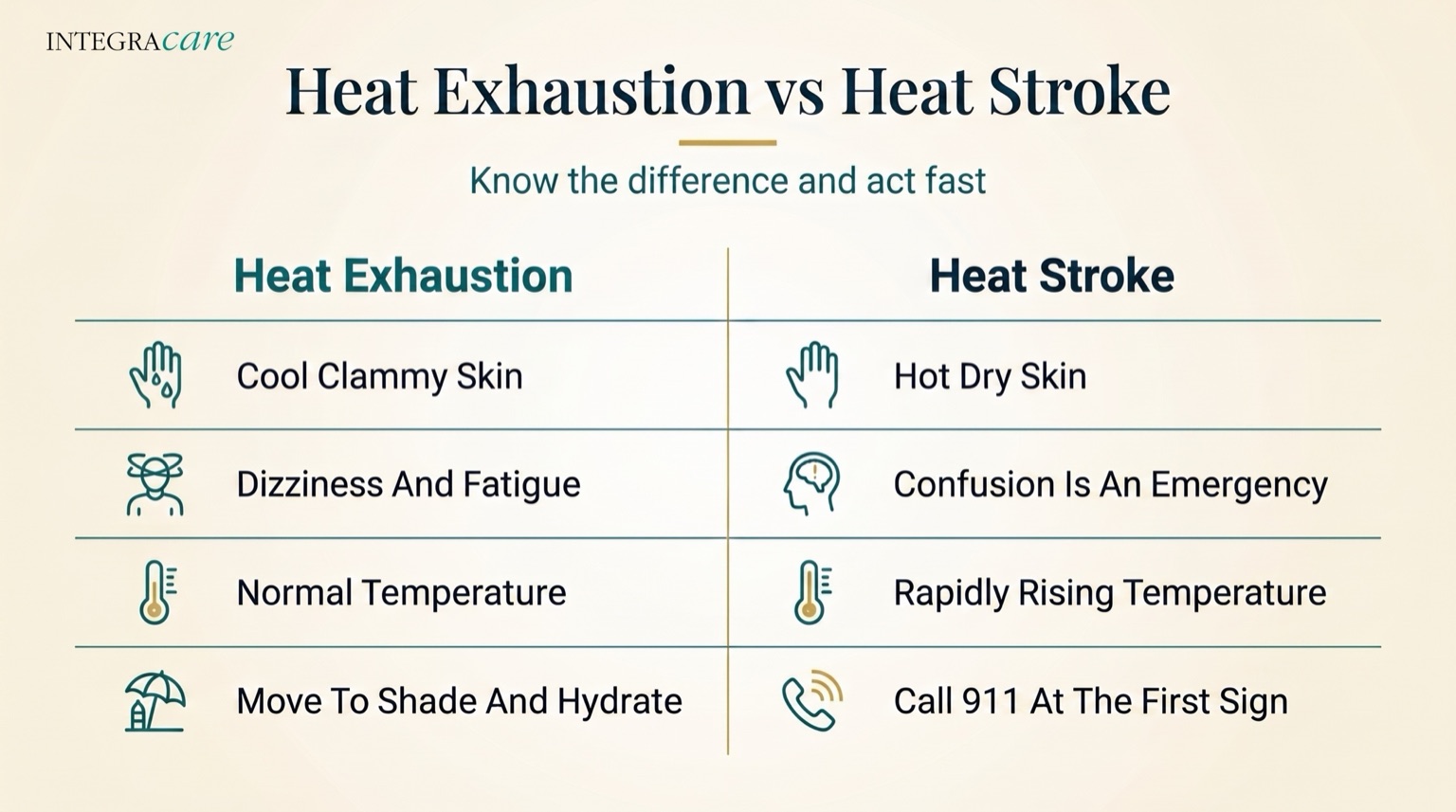
Heat exhaustion causes cool, clammy skin, dizziness, and fatigue under a normal body temperature, requiring immediate shade and hydration. Conversely, heat stroke can bring severe confusion, hot dry skin, and a rapidly rising body temperature. Call 911 immediately if you suspect it, even if the person is still sweating or you have not taken a temperature.
Recognizing the shift from exhaustion to stroke can save a life. If you’re not sure, treat it like an emergency.
Hydration Isn’t a Side Note. It’s the Strategy.
Let’s be clear. Hydration is not optional.
The problem? Many seniors forget to drink. Some avoid fluids to reduce bathroom trips. Others simply don’t feel thirsty. But water isn’t just about thirst; it’s about survival.
Encourage small, consistent sips throughout the day. Make it appealing. Add slices of cucumber, lemon, or mint. Try flavoured electrolyte drinks, but skip the sugar overload.
If your loved one struggles to hydrate, this is where Personal Support Workers who monitor hydration and comfort can make a big difference.
Smart Hydration Products That Make Life Easier
You don’t need high-tech gear to stay hydrated, but it helps.
Try:
- Reusable bottles with timers or measurements
- Flavour infusers for water
- Water reminder apps
- Spill-proof cups for arthritis-friendly handling
- Popsicles made from electrolyte drinks
Integracare’s personal support workers often use these simple tools to keep hydration on track without it feeling forced.
How to Keep a Senior Cool Without Driving Yourself Crazy
No, you don’t have to transform your house into a cryogenic chamber. But you do need a strategy. Try these:
Create a Cool-Down Zone
Designate one room in the house to be the cool haven. Keep it dark during the day. Use blackout curtains. Set up fans or air conditioning with a backup plan in case of power outages.
Use the Right Gear
Think mesh fabrics, cooling towels, misting bottles, and wide-brimmed hats. Encourage lightweight, breathable clothing made of cotton or moisture-wicking materials.
Cold Water Tricks
Cool foot baths and wet washcloths on the neck. A chilled bottle rolled along the wrists. You don’t need a spa, just clever use of water and fabric.
Time It Right
Early mornings and late evenings are safer times for movement. Avoid midday heat unless necessary.
Creating a Cool Environment
Keeping your home cool during summer heat waves is essential for seniors and individuals managing chronic conditions. Use air conditioning when available, and set ceiling fans to rotate counter-clockwise to circulate cool air. Close blinds and curtains during the hottest parts of the day to block direct sunlight, and open windows at night when temperatures drop to create a cross-breeze. Portable fans, shade from trees or awnings, and light-coloured natural fabrics for clothing and bedding help maintain a comfortable indoor temperature. For extra relief, use cold washcloths, ice water, or a cold shower to lower body temperature quickly. Following official federal guidance on upper indoor temperature limits can protect vulnerable seniors from severe heat stress when indoor environments surpass safe thresholds. If home cooling is limited, consider visiting air-conditioned shelters or cooling centres during extreme heat.
Foods That Help Hydrate Without Bloating
Water isn’t the only way to stay hydrated.
Incorporate these foods into meals and snacks:
- Watermelon
- Cucumber
- Celery
- Strawberries
- Oranges
- Smoothies with coconut water
- Yogurt with berries
Avoid salty snacks, caffeinated drinks, and anything heavy that could lead to dehydration or digestive discomfort.
But What If They Forget to Drink?
Here’s where a lot of the worry creeps in. You can’t force someone to drink every 30 minutes. So, you build hydration into the routine.
Try these stealth hydration hacks:
- Set a reminder every hour. Not for them. For you. Gently offer; don’t nag.
- Use fruit with high water content: watermelon, cucumber, oranges.
- Make “hydration stations” around the house with cute cups or bottles.
- Keep a log. Track how much they drink. It’s not obsessive. It’s smart care.
And if memory is a factor? Live-in care for seniors during extreme heat can ensure hydration happens without putting it all on your shoulders.
Summer Routines That Work: Sample Day Plans
You don’t have to wing it. Here’s a loose day plan to inspire consistency:
For Independent Seniors
- 8 AM: Light breakfast + 1 glass of water
- 9 AM: Indoor stretching
- 10 AM: Hobby time with a hydration break
- 12 PM: Hydrating lunch (salad, smoothie)
- 2 PM: Nap or quiet reading in a cool room
- 4 PM: Cold snack + check in with caregiver/family
- 6 PM: Light dinner
- 8 PM: Evening walk (if cool enough) or call a friend
For Seniors with Caregivers
- Regularly scheduled hydration breaks
- Morning health check-ins
- Activities planned in shaded or cooled areas
- Meals adjusted for heat-friendly nutrition
- Monitoring during peak heat hours
Yes, There’s a Right Way to Use Fans
Fans are great, but only if they’re actually cooling the air. In extreme heat, they can backfire by blowing hot air around. To level up your setup:
- Place a bowl of ice in front of the fan for DIY air conditioning
- Use ceiling fans in counter-clockwise mode to push air downward
- Close curtains during the day, open windows at night if it’s cooler outside
Combine this with safe summer activities for seniors that don’t require full sun exposure and you’re building a lifestyle, not just a reaction.
What to Do During a Power Outage
The power goes out. The AC shuts down. The temperature climbs. Don’t panic. Plan.
- Keep battery-powered fans handy
- Store extra bottled water
- Use cold washcloths or cooling towels
- Keep freezer packs on standby
- Move to a public cooling centre if needed
- Have a go-bag packed with medications, water, ID, snacks
Emergency care and planning are included in many of Integracare’s live-in care plans.
Caregivers Aren’t Optional in the Heat
When the temperature spikes, the job of a caregiver goes far beyond helping with meals or medications. It’s about preventing emergencies before they happen.
A trained caregiver will:
- Monitor hydration and fluid intake
- Watch for early signs of heat-related illness
- Adjust routines to prioritize cool times of day
- Encourage movement without overexertion
This isn’t just convenient. It’s protection. And it’s what comprehensive home care services are built for.
Keep Movement Safe (and Cool)
Seniors still need to move, but not outside at noon. Think indoor exercises for seniors like chair yoga, light stretching, or walking laps inside a cool hallway. Movement helps with circulation, mood, and prevents that “cooped-up” restlessness that hot days can bring, which can make sleeping uncomfortable.
How Dementia Complicates Hydration and Cooling
Dementia can make even the simplest routines complicated.
A senior with Alzheimer’s might forget to drink, misinterpret thirst, or remove cooling clothing because it feels unfamiliar. They might wander outside during peak heat hours. They might resist air conditioning altogether.
This is where person-centred care becomes crucial. At Integracare, dementia care is customized to the individual. From cues that encourage drinking to using familiar routines, understanding person-centred dementia care is often the difference between safety and risk.
Planning and Modifying Activities
Planning and modifying daily routines can significantly reduce heat exposure and keep seniors safe during summer. Schedule outdoor activities like walking or gardening during cooler times of day, such as early morning or late evening, and seek shaded areas whenever possible. Modify hobbies by choosing indoor alternatives, like an indoor pétanque game, to maintain socialization without risking heat stress. Families should implement a standard fact sheet for staying healthy in the heat to quickly recognize signs of dehydration or core temperature changes before they escalate into an emergency. Stay informed about heat warnings and weather alerts, and create a heat emergency plan that includes hydration, cooling strategies, and checking on vulnerable family members. By planning and adjusting habits, families can support independence, mental wellness, and safety while reducing heat-related risks for seniors managing COPD, heart disease, or diabetes.
Why Home Care Is Safer Than Seniors Going Out
Let’s talk about what people forget. Driving in a hot car. Walking across a scorching parking lot. Sitting in an overheated waiting room. These are the hidden dangers of summer for seniors who still go to appointments solo.
With in-home services, everything from check-ups to physiotherapy can come to them. The house stays cool. The risk stays low.
This is why so many families choose home care over clinic visits when summer hits hard.
The Role of Massage in Summer Senior Health
You don’t usually think of massage when you think of hydration. But circulation plays a huge role in how well the body regulates temperature.
Massage therapy helps reduce swelling from heat retention, encourages blood flow, and eases stiffness from being indoors more often. It’s calming. Grounding. And in summer, it supports overall wellness in ways you don’t expect.
Checklists for Families: Daily, Weekly, Emergency
Because mental lists don’t work when you’re overwhelmed.
Daily
- Drink 6–8 glasses of fluid
- Check for signs of heat stress
- Dress in cool, breathable fabrics
- Stay in the coolest room of the house
Weekly
- Inspect AC units or fans
- Refresh ice packs
- Wash and rotate cooling clothes
- Stock hydrating snacks
Emergency Prep
- Backup battery fans
- Extra water and electrolytes
- List of emergency contacts
- Access to city-run cooling stations
Stick this in the fridge. Or better yet, have a support worker manage it for you.
When It’s Time to Ask for Help
If the anxiety is creeping in and you’re constantly wondering, am I doing enough? Pause. That’s a sign you don’t have to do it all alone.
This is where the benefits of home health care during the summer months become obvious. Professionals can step in with expertise, structure, and calm, so you don’t have to carry the mental load solo.
Whether it’s physiotherapy support during summer, hydration monitoring, or full live-in care, Integracare has the services that make summers not only safer but more manageable for everyone.
You Don’t Have to Worry to Show You Care
Worry feels like love sometimes, doesn’t it? But care doesn’t have to look like stress. It can look like preparation. Like intention. Like a house with blackout curtains, a fridge full of watermelon, and a phone number for a trusted care team already saved in your favourites.
You’ve got this.
And if you need backup? Integracare Home Care is here to help.
Becoming a Caregiver with Integracare
While this guide focuses on helping families care for their loved ones during heat waves, the truth is, professional caregivers are often the quiet heroes behind the scenes. If you’re someone who’s naturally nurturing, calm under pressure, and passionate about elder care, there’s a place for you.
Integracare is actively hiring for a variety of home care roles. Whether you’re a PSW, nurse, or simply looking for meaningful work, explore job opportunities to see how you can make a difference.
Frequently Asked Questions
How can seniors create a cool and comfortable home environment during extreme heat?
Creating a cool environment starts with consistent temperature control. Use air conditioning when available, supported by portable fans to improve airflow. Keep blinds and curtains closed during peak sun to maintain shade, and open windows during cooler times of day for ventilation. Simple strategies like cold washcloths, ice water, and wearing natural fabrics help regulate body temperature. In Ontario, families should also plan access to air-conditioned shelters or cooling centres during heat warnings.
What are the most effective ways for seniors to stay cool during hot weather?
Seniors can stay cool by combining hydration, clothing, and environmental adjustments. Drink water regularly and include cool snacks to support hydration. Wear lightweight clothing or protective clothing made from natural fabrics. Use air conditioning when possible. Fans help only while indoor air stays cooler than about 35°C; in hotter rooms they can circulate hot air and make things worse, so move to an air-conditioned space or a public cooling centre instead. Cold showers or cool washcloths also help. Keep blinds and curtains closed to block heat and spend time in shaded areas. Public cooling centres and weatherization assistance programs can provide additional relief during prolonged heat.
When should seniors plan outdoor activities during a heat wave?
Outdoor activities should be scheduled during cooler times of day, such as early morning or evening. Planning helps reduce exposure to high humidity and extreme temperatures. Activities like gardening or walks should take place in shaded areas, while midday plans shift indoors. Options such as an indoor pétanque game support safe socialization. Monitoring weather alerts and heat warnings in Ontario ensures seniors can adjust routines and follow a clear heat emergency plan.
What are the warning signs of heat-related illnesses in older adults?
Warning signs often begin subtly and may include dehydration, fatigue, or dizziness. Early symptoms can also involve heat rash, heat cramps, or heat edema, and heat exhaustion or heat syncope can progress to heat stroke. Confusion is different: confusion in the heat is itself a sign of possible heat stroke, so call 911 immediately rather than waiting for other symptoms or a temperature reading. Integracare caregivers are trained to recognize these warning signs early and respond quickly to prevent serious heat-related illnesses.
How can dehydration be prevented in seniors during hot weather?
Preventing dehydration requires regular fluid intake throughout the day. Encourage water, ice water, and beverages with electrolytes when appropriate. Include hydrating foods and cool snacks to maintain fluid balance. Seniors may not feel thirsty, so scheduled hydration is essential. Limit caffeine and alcohol, which can worsen dehydration. Caregivers can provide reminders and monitor intake, reducing the risk of heat-related illnesses and supporting overall well-being during periods of high heat and humidity.
Why are older adults at higher risk during heat waves?
Older adults are more vulnerable due to aging-related physical changes that affect body temperature regulation. Chronic conditions such as diabetes, cardiovascular issues, and lung disease increase sensitivity to heat. Certain prescription medicines, including beta blockers or medications for depression, can impair the body’s response to heat. High humidity further reduces cooling efficiency. These combined risk factors increase the likelihood of heat-related illnesses, making proactive monitoring essential during any weather-related emergency in Ontario.
How can caregivers help seniors manage heat safely at home?
Caregivers support safety by maintaining a cool environment and monitoring health closely. They keep rooms cool with air conditioning where available, using fans only while indoor air stays cooler than about 35°C and moving to a cooling centre when a home cannot stay safely cool. adjust blinds and curtains for shade, and encourage hydration with water and cool snacks. Activities are planned during cooler times of day, with rest periods in shaded areas. Caregivers also watch for warning signs and call 911 immediately if confusion or a rapidly rising body temperature appears, as part of a heat emergency plan.
What community resources are available for seniors during extreme heat in Ontario?
Ontario offers several community resources during heat events, including public cooling centres, air-conditioned shelters, and community senior centres. Your municipality, local public health unit, and 211 Ontario provide updates and help finding cool spaces during heat warnings and weather alerts. Religious groups and senior housing communities may also offer safe, cooled spaces. Access to senior transportation can help seniors reach these locations. Staying informed and connected ensures timely support and reduces risks associated with prolonged exposure to high temperatures.
How important is social support during hot weather for seniors?
Social support plays a vital role in protecting seniors during extreme heat. Regular check-ins from family, friends, and neighbours help identify early warning signs such as dehydration, and mean someone is there to call 911 immediately if confusion appears. Electronic connections allow consistent communication, especially for those living alone. Community senior centres and local organizations encourage safe socialization in cool environments. Keeping emergency contacts updated ensures quick response if conditions worsen, reinforcing a strong safety network during heat waves.
What indoor activities can seniors enjoy safely during heat waves?
Indoor activities help maintain socialization while avoiding heat exposure. Options like an indoor pétanque game, reading groups, or virtual visits through electronic connections support engagement. Community senior centres often provide structured programs in air-conditioned spaces. Planning ensures activities align with cooler times of day and reduce physical strain. These alternatives allow seniors to remain active, connected, and mentally stimulated without increasing the risk of heat-related illnesses.
What should be included in a heat emergency plan for seniors?
A heat emergency plan should include access to air conditioning or cooling centres, a list of emergency contacts, and awareness of local weather alerts and heat warnings. Plan daily routines around cooler times of day and ensure hydration supplies like ice water and electrolytes are available. Identify shaded areas and safe indoor environments. Caregivers and family members should coordinate regular check-ins and know the warning signs of heat-related illnesses to act quickly if needed.
How can homes be prepared in advance for hot weather conditions?
Preparing a home involves improving cooling and reducing heat exposure. Install or service air conditioning, use portable fans, and close blinds and curtains to maintain shade. Open windows during cooler times of day for airflow. Stock essentials like ice water, cool washcloths, and lightweight clothing made from natural fabrics. Explore weatherization assistance if needed. Planning ahead and monitoring weather alerts ensures seniors remain comfortable, safe, and well-supported during periods of extreme heat.
Free In-Home Assessment
The Care Your Family Deserves Starts Here
Speak with our team about a personalized care plan. Book a free, no-obligation in-home assessment and we will help you find the right support for your loved one.
About the Author: Lee Grunberg

President & CEO, M.B.A.
Lee joined Integracare as President & CEO on August 2, 2016 after an approximately 20 year career in Private Equity and Investment Banking. Lee brings tremendous operational knowledge and governance experience along with an incredible passion and energy to Integracare.