
Blog
Integracare Guide to Aging in Place: What is Aging in Place?
Published
Updated
Written by Lee Grunberg, M.B.A. — President & CEO
Reviewed by Bethel McMaster, BScN, RN — Director of Business Development

On this page13 sections
Key Takeaways
- Aging in place works best with early planning, not last-minute decisions.
- Home safety, health support, and finances are the biggest factors to assess.
- Legal and medical documents should be organized before care needs change.
- Technology, transportation, and social support can help maintain independence.
- A written plan makes it easier to age safely at home.
Where do you see your loved one in the future? For most families in the province, the hope is beautifully simple: to have parents and grandparents continue living in the homes they know and love, surrounded by familiar routines, favourite chairs, and cherished memories. Aging in place is about protecting that comfort while ensuring that safety and health remain uncompromised.
A Strong Desire Among Seniors
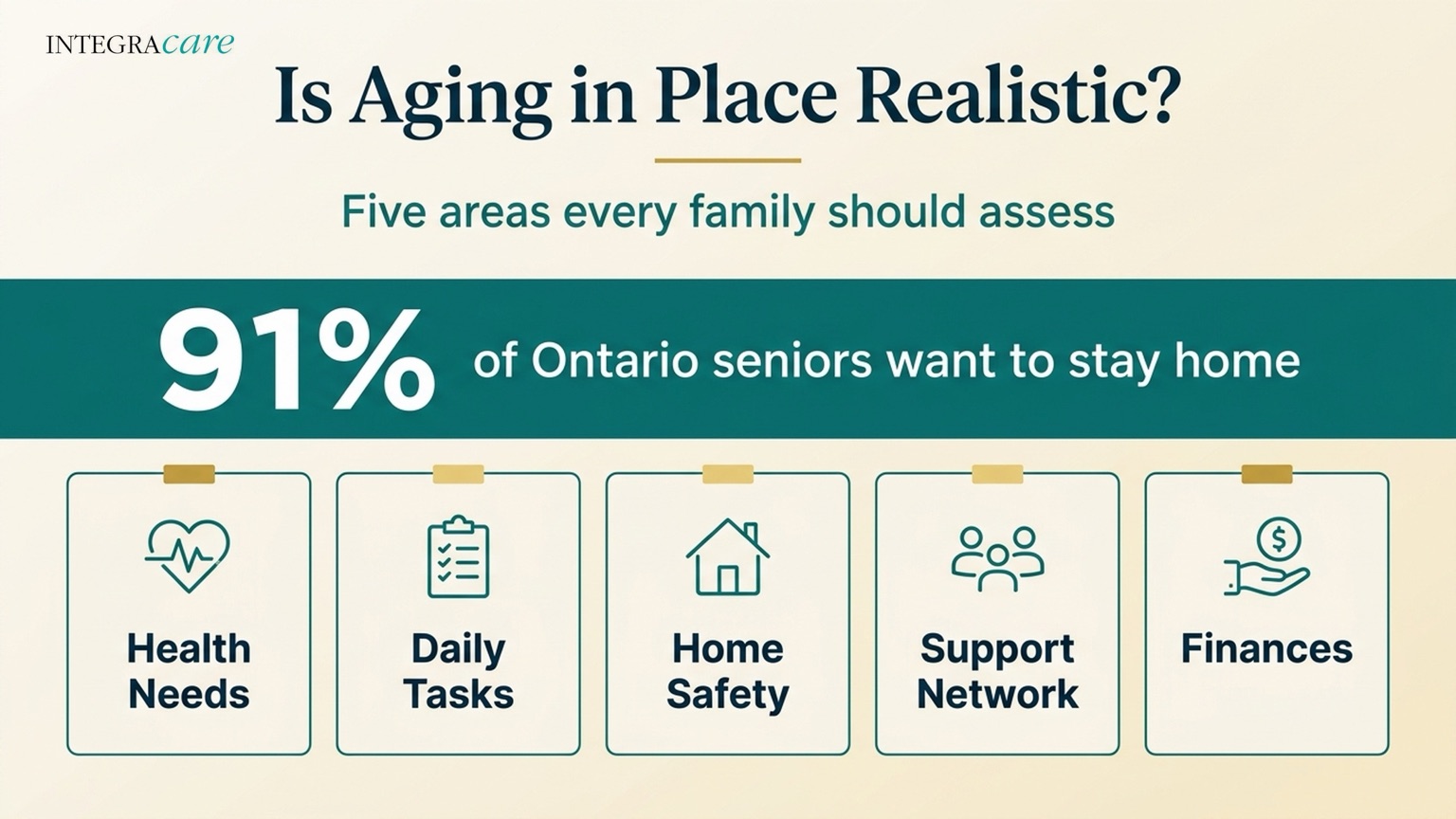
This sentiment resonates deeply among seniors in Ontario. A recent survey conducted on behalf of Home Care Ontario revealed that an impressive 91% of Ontario seniors wish to stay in their homes or apartments for as long as possible. This overwhelming desire highlights the importance of creating supportive environments that allow older adults to thrive at home.
In Canada, the majority of older adults echo this sentiment, valuing the independence that comes with living in their own spaces. At Integracare, we wholeheartedly embrace this philosophy. Our comprehensive approach to care is dedicated to helping seniors age gracefully and joyfully at home, with dignity and comfort. Our highly trained caregivers and Registered Nursing supervision are available 24/7, ensuring that the needs of seniors are met promptly and compassionately. Together, we can create a future where your loved ones can truly feel at home, no matter their age.
What is Aging in Place?
Aging in place is an essential concept that embodies the desire of many older adults to remain in their beloved homes as they grow older. It represents more than just the physical space; it’s about maintaining a sense of belonging, comfort, and independence within familiar surroundings. Living in one's own home and community safely, independently, and comfortably, regardless of age, income, or ability level, is a goal shared by countless families across Ontario.
Why It Matters for Families
Families often begin thinking about aging in place when they start noticing little changes at home: missed medications, increased fatigue, small falls, or growing worry about driving and getting to appointments. It can feel overwhelming, especially when everyone is juggling work, children, and other responsibilities.
If you’re exhausted trying to “do it all” for a loved one, you’re not alone. Many families are in the same position, caring deeply, but worried they might miss something important. With the right plan and the right home care partner, aging in place becomes a shared effort rather than a private burden. Integracare provides professional, compassionate support so that family members can move from crisis‑mode to confident, steady care.
Why So Many Families Choose to Age at Home
Choosing to stay at home is about continuing the routines, relationships, and everyday moments that bring comfort and a sense of normalcy. When extra support becomes necessary, moving out of the home isn't the only option. Live-in home care offers thoughtful, one-on-one support for daily routines that helps make each day feel more comfortable, familiar, and manageable.
Living Life on Your Own Terms
There's comfort in waking up in your own bed, enjoying your morning coffee in a favourite chair, and following the routines that have always felt familiar. With the right support in place, daily life doesn't have to revolve around someone else's schedule. A live-in Personal Support Worker helps with personal care, mobility, meal preparation, and other everyday tasks while encouraging your loved one to continue doing the things they enjoy and can safely manage on their own.
The Comfort of Familiar Surroundings
Home is where memories were made, family traditions began, and everyday life feels familiar. Remaining at home can help reduce stress and make changing health needs feel less overwhelming, particularly for older adults living with dementia or other chronic conditions. Whether it's spending time with a beloved pet, tending to the garden, or relaxing in a favourite room, these familiar comforts can make a meaningful difference every day.
Staying Connected to the People and Places That Matter
Moving away from home can sometimes mean leaving behind neighbours, favourite walking routes, community groups, and long-standing friendships. Aging at home makes it easier to continue enjoying those connections. When family members can't always be there, a live-in PSW provides companionship, encourages meaningful conversation, and can help with outings, appointments, or favourite activities that keep life feeling full and connected.
Thoughtful, One-on-One Care Every Day
One of the biggest differences with live-in care is the consistency of having one dedicated caregiver who gets to know the person behind the care. At Integracare, our Personal Support Workers work alongside Registered Practical Nurses and Registered Nurses when needed to provide personalized support that evolves as needs change. It's an attentive approach to care that helps your loved one feel safe, respected, and genuinely cared for every step of the way.
Care That Adapts to Your Family's Needs
Every family's situation is different, which is why care shouldn't come in a one-size-fits-all package. Live-in home care can often be tailored to provide exactly the level of support that's needed, whether for recovery after a hospital stay, ongoing assistance with daily living, or long-term care at home. A personalized care plan gives families the flexibility to adjust support as circumstances change, making it easier to plan for both today's needs and tomorrow's.
Specialized Dementia Care That Adapts Over Time
A diagnosis of Alzheimer's disease or another form of dementia doesn't automatically mean someone can no longer age in place. With the right support, many people can continue living safely and comfortably at home while maintaining the routines and familiar surroundings that help them feel more secure.
At Integracare, our dementia care is designed to evolve alongside changing needs. Through our ongoing partnership with the Alzheimer Society of Toronto, our Personal Support Workers (PSWs), Registered Practical Nurses (RPNs), and live-in caregivers receive specialized dementia education that helps them provide thoughtful, person-centred care with confidence and compassion.
From Gentle Encouragement to Enhanced Assistance
Support may begin with medication reminders, companionship, and gentle encouragement with daily routines before gradually expanding to include assistance with personal care, mobility, meal preparation, and other activities of daily living. As care needs become more complex, services can be adjusted to include 24/7 live-in care, nursing supervision, or compassionate palliative care, allowing clients to continue receiving the right level of support without leaving the comfort of home.
This flexible approach helps families feel confident knowing care continues to adapt while preserving dignity, comfort, and quality of life at every stage of the journey.
Determining If Aging in Place Is Right for You
Before making a firm decision, it helps to walk through a simple self‑assessment. Think of it as a gentle reality check, not to discourage aging in place, but to shape a plan that fits your situation.
Consider the following areas:
- Health and medical conditions: Are chronic illnesses stable? Are there frequent hospital visits or changes in medication?
- Functional problems: Is it becoming harder to manage bathing, dressing, cooking, shopping, or managing medications?
- Home accessibility: Are there stairs, narrow hallways, or bathrooms that are hard to use safely?
- Support network: Who is realistically available, and how often? Consider family, friends, neighbours, and community resources.
- Financial situation and retirement lifestyle: What income, savings, and benefits are available to pay for home care, home modifications, and technology?
Creating a personal plan of action, written down, not just discussed, turns these questions into decisions. Families can list priorities, assign tasks, and identify which services need to be arranged now versus later.
Checklist: Is Aging in Place Realistic Right Now?
Use this quick checklist to guide your decision:
- Daily routine: Can you (or your loved one) complete most daily tasks safely with little or moderate help?
- Health and mobility: Are there manageable medical conditions, or are there frequent crises and falls?
- Home: Can the home be reasonably modified to address current and future mobility needs?
- Support: Is there a reliable network of family, friends, and professional caregivers to share responsibilities?
- Transportation: Is there a safe way to get to appointments, social activities, and errands without unsafe driving?
- Finances: Is there a clear plan to cover ongoing home care, technology, and home modifications?
If most of these questions can be answered positively, with or without support services, aging in place is likely a realistic choice. If several areas raise concerns, that’s a signal to strengthen the plan rather than abandon the idea.
Organizing Legal and Medical Documents for Aging in Place
When a health issue arises, families often scramble for paperwork: “Where is the power of attorney? Who has the medication list? What did the specialist say last month?” Getting organized before a crisis makes aging in place smoother and safer.
Why Document Organization Matters
Organized legal and medical documents allow trusted decision‑makers, health professionals, and home care providers to act quickly when something changes. It helps avoid delays in treatment, confusion about wishes, and stress during emergencies. It also supports seamless care coordination between hospitals, family doctors, and home health care providers.
Essential Legal Documents
Families should speak to legal professionals for advice, but common planning tools include:
- Will and estate plan
- Power of Attorney for Property, covering financial matters
- Power of Attorney for Personal Care, covering health and care decisions
- Written advance-care wishes to guide your substitute decision-maker
- Incapacity planning documents outlining preferences if decision‑making becomes difficult.
These documents clarify who can make decisions, how finances should be managed, and what kind of care someone wants if they cannot speak for themselves.
Essential Medical Documents
Equally important is a simple, up‑to‑date medical file, including:
- Current list of medications, dosages, and prescribing physicians
- Diagnoses and relevant medical history
- Allergies and adverse reactions
- Contact information for doctors, specialists, and pharmacies
- Insurance information and health card details
- Notes about screening tests, recent hospitalizations, or ongoing treatments
Our professional team of coordinators, Registered Nurses and Personal Support Workers can use this information to support safe medication management, communicate effectively with physicians, and adjust care plans as needs change.
Where to Store and Who Should Have Access
Documents should be stored in a secure, clearly marked place at home, with copies shared (where appropriate) with key family members, legal representatives, and primary care providers. Many families choose a locked file box or digital storage solution with clear instructions. It’s wise to review and update documents after major life events, housing changes, or significant health developments.
Planning Ahead Brings Greater Peace of Mind
One of the most meaningful gifts you can give yourself and your family is a plan. While aging in place is often an emotional decision, taking time to prepare financially and legally can make it much easier to adapt as needs change. Planning helps reduce uncertainty, prevents rushed decisions during a health crisis, and gives families greater confidence about the future.
Building a Budget That Can Grow With You
Every family's situation is different, but a thoughtful plan usually considers both current and future care needs. Budgeting ahead makes it easier to adjust support over time while helping you understand the true cost of aging comfortably at home.
Your plan may include:
- One-time expenses: Home safety modifications, accessibility upgrades, assistive devices, and smart home technology.
- Ongoing costs: Personal care, nursing visits, physiotherapy, medication management, transportation, and housekeeping.
- Future needs: Additional care hours following surgery, illness, or changes in mobility or cognitive health.
Some families may also qualify for financial assistance. In Canada, programs such as the Home Accessibility Tax Credit and provincial credits that may apply in the year you claim can help offset the cost of eligible home modifications and home care expenses, making it easier to afford the changes that keep your loved one safe at home
Protecting Your Wishes for the Future
Legal planning is an important part of preparing to age in place with confidence. Documents such as Powers of Attorney for Property and Personal Care, advance care planning, and a will help ensure someone you trust can make decisions on your behalf if you're ever unable to do so yourself.
You may also wish to discuss retirement income, workplace pensions, trusts, long-term care insurance, or other financial resources with qualified legal and financial professionals. Having these conversations early creates a clear plan for the future, helping your family understand your wishes and make informed decisions if your care needs change over time.
Choosing the Right Support Starts With Understanding Your Needs
Every family's situation is different, and the right care depends on your loved one's health, daily routines, and the level of assistance they need to continue living safely at home. For some, a little extra help each week makes everyday life easier. For others, changing health needs call for more comprehensive support delivered by an experienced home healthcare team.
At Integracare, every care plan is thoughtfully tailored to the individual. As needs change over time, the level of care can change too, helping your loved one remain comfortable, supported, and cared for in the place they know best.
Companion Care
A helping hand and a familiar face can make all the difference. Companion Care provides meaningful conversation, meal preparation, light housekeeping, transportation to appointments, and support with everyday routines, helping older adults stay engaged while making each day feel a little easier.
Personal Care
When everyday activities become more challenging, our compassionate Personal Support Workers (PSWs) provide respectful assistance with bathing, dressing, grooming, toileting, mobility, meal preparation, and other Activities of Daily Living (ADLs). Every visit is centred on preserving dignity, encouraging independence, and helping Clients feel comfortable in their own homes.
Nursing Care
More complex health needs often require professional clinical support. Our Registered Nurses (RNs) and Registered Practical Nurses (RPNs) provide skilled nursing care, including medication management, wound care, health monitoring, and post-hospital recovery, while working closely with families and physicians to support the best possible outcomes.
Physiotherapy and Massage Therapy
Remaining active and comfortable at home plays an important role in overall health and independence. Our physiotherapists and Registered Massage Therapists help improve mobility, reduce pain, restore strength, and support recovery, making everyday movement feel more comfortable and confident.
Personalized Care That Grows With You
Care needs can change gradually or unexpectedly. Whether your loved one begins with companionship, requires personal care, or later benefits from nursing services, Integracare provides a seamless continuum of home healthcare designed around the individual. It's a personalized approach that allows families to feel confident knowing support can evolve alongside changing needs while their loved one continues living safely and comfortably at home.

Staying Connected to the People and Places That Matter
Aging at home means more than remaining in familiar surroundings. It means continuing the routines, relationships, and everyday moments that help life feel meaningful. With the right support, it's often easier to stay involved in the people and activities that bring comfort, purpose, and joy.
Keeping Meaningful Routines Within Reach
Whether it's attending a weekly religious service, visiting family, meeting friends for coffee, or enjoying a favourite walk through the neighbourhood, these familiar routines help older adults stay connected to the life they've built over many years.
As health or mobility changes, getting out of the house can become more challenging. Integracare Caregivers provide transportation assistance and accompany Clients to appointments, errands, and social outings, making it easier to continue enjoying the places and activities that matter most.
Companionship That Brightens Every Day
Meaningful conversation and genuine companionship can have a lasting impact on emotional well-being. Beyond helping with daily tasks, our Caregivers build trusting relationships through shared conversations, favourite activities, walks, games, or simply spending time together.
These everyday moments help reduce feelings of loneliness while creating comfort, consistency, and a reassuring presence families can count on.
Supporting Families Through Every Step
Care is strongest when families and Caregivers work together. Our team keeps families informed, shares important observations, and provides thoughtful support as care needs evolve.
By helping coordinate appointments, encouraging social engagement, and providing dependable day-to-day care, Integracare helps families spend less time worrying about logistics and more time simply enjoying time together.
Helping You Feel More Prepared for What Comes Next
Whether you're beginning to notice small changes or planning for future care needs, exploring your options early gives your family more flexibility and peace of mind. Having the right guidance and support can make each decision feel a little more manageable while helping your loved one remain safe, comfortable, and connected to the life they love. Contact us for personalized care that adapts as needs change, and feel confident knowing your loved one is receiving attentive, compassionate support every step of the way.
Frequently Asked Questions About Aging in Place
What does aging in place mean?
Aging in place means choosing to live in your own home and community as you grow older, while arranging the support you need to stay safe, comfortable, and independent. This can involve home care services, home modifications, transportation support, and help with daily tasks. The goal is to maintain familiar routines and control over decisions, even as health and mobility change.
How do I know if aging in place is right for me or my loved one?
Start with a simple checklist covering health, mobility, home accessibility, support network, finances, and transportation. If daily life can be managed safely with some support, or if services like home care, technology, and community resources can fill the gaps, aging in place is often a good fit. If there are frequent crises, falls, or major safety concerns, it may be a sign that the plan needs more formal support and careful review.
What legal documents should I prepare for aging in place?
Families should consult legal professionals, but in Ontario the common documents are a will, an estate plan, a Power of Attorney for Property for financial matters, and a Power of Attorney for Personal Care for health and care decisions, along with written advance-care wishes recorded to guide the substitute decision-maker. These documents clarify who can make decisions and how care and finances should be managed if someone becomes unable to do so, reducing confusion and stress during emergencies.
What medical documents should I keep organized?
Prepare a clear, up‑to‑date medical file that lists medications, diagnoses, allergies, doctors, and emergency contacts. Include insurance details, test results, and notes about recent hospitalizations or ongoing treatments. Having these medical documents ready makes it easier for family, physicians, and home care providers like Integracare to coordinate care and respond quickly if health changes.
How much does it cost to age in place?
Costs vary widely based on home modifications, the level of caregiving, transportation, and technology. Some Seniors only need occasional support, while others require daily or live‑in care. Building a budget that separates one‑time renovation costs from recurring care and service expenses helps families compare aging in place with retirement residences or long‑term care. Integracare offers personalized quotes to align the care plan with each Client’s needs and resources.
What home modifications are most helpful for safety?
High‑impact modifications often include grab bars, slip‑resistant flooring, accessible lighting, lever handles, and ensuring the main bedroom and bathroom are on the first floor. A home safety assessment can pinpoint specific risks like cluttered walkways or hard‑to‑use showers. The most helpful changes are tailored to the person’s mobility, vision, and functional challenges rather than using a one‑size‑fits‑all checklist.
What technology can help me age in place safely?
Useful technology includes home monitoring systems, medical alert systems with fall detection, personal emergency response devices, voice assistants, smart home devices, smartphones, tablets, and video doorbells. Features like voice‑activated smart lighting and medication reminders can reduce falls and support daily routines. These tools are most effective when chosen to match a person’s comfort level, rather than overwhelming them with too many gadgets.
What support services are available for aging in place?
Support services range from companion care and personal support with ADLs to home health aides, nursing care, telehealth, and day programs. Some people benefit from remote patient monitoring, nutrition plans, and help with medication management, while others need more specialized services like Dementia care or palliative care. Integracare builds customized care plans that can be adjusted as health and independence change over time.
How can I reduce the risk of falls at home?
Preventing falls starts with removing clutter, securing rugs, improving lighting, and installing grab bars in high‑risk areas like bathrooms and stairs. A home safety assessment can identify hazards such as slippery floors or narrow pathways. If balance or strength changes, in‑home assessments and tailored home modifications help keep movement through the house safer and more predictable.
When should I talk to my family about aging in place?
It’s best to start conversations early, ideally before a hospitalization or major health event. Discussing care needs, finances, transportation, and legal documents in advance gives everyone time to think clearly and share preferences. Early planning also makes it easier to agree on schedules, tasks, and roles, so family members and professional caregivers can work together without resentment or confusion.
How do I stay socially connected while aging in place?
Mix in‑person and virtual options: regular visits with friends and family, senior centres, hobby groups, volunteer roles, and outings to parks or coffee shops, combined with video calls, social media, and online community forums. When mobility becomes limited, virtual participation and community support programs can reduce isolation. Integracare caregivers can help facilitate both in‑person outings and digital connections to keep social life active.
What transportation options can support aging in place?
If driving is no longer safe or comfortable, consider public transit, ride‑sharing apps, senior transportation services, volunteer driving programs, carpooling, or help from family and friends. Many Seniors also use online tools to order groceries and medications for delivery. Planning transportation early, before driving becomes risky, helps protect independence and ensures access to medical care and social activities.
Free In-Home Assessment
The Care Your Family Deserves Starts Here
Speak with our team about a personalized care plan. Book a free, no-obligation in-home assessment and we will help you find the right support for your loved one.
About the Author: Lee Grunberg

President & CEO, M.B.A.
Lee joined Integracare as President & CEO on August 2, 2016 after an approximately 20 year career in Private Equity and Investment Banking. Lee brings tremendous operational knowledge and governance experience along with an incredible passion and energy to Integracare.