
Blog
The Benefits of a Live-In Caregiver
Published
Updated
Written by Lee Grunberg, M.B.A. — President & CEO
Reviewed by Bethel McMaster, BScN, RN — Director of Business Development
On this page7 sections
Key Takeaways
- Live-in caregivers provide one-on-one support while helping people stay in their own homes.
- They can help make daily life safer and easier for both clients and families.
- Live-in care can be short-term, ongoing, or adapted as needs change.
- It can support routines, independence, and emotional well-being.
- For some families, live-in care may be a practical alternative to residential care.
Watching someone you love need more help than they used to is never easy. What starts as the occasional forgotten medication, an untouched meal, or needing a hand with household chores can gradually become constant worry. You may find yourself checking in several times a day, rearranging your schedule, or wondering if they're truly safe when you're not there.
Many families reach a point where they realize they simply can't do everything themselves, and that's okay. Wanting the very best for your loved one doesn't mean you have to carry every responsibility alone. Sometimes, asking for help is one of the most caring decisions you can make.
Comfort in Familiarity
For many older adults, there's one thing they want more than anything else: to remain in the comfort of home. Home is where routines feel familiar, treasured memories surround them, and independence feels possible. With the right support, many seniors can continue living safely and confidently in the place they know and love.
Enhancing Safety and Comfort With One-on-One Care
Rather than moving into a retirement residence or long-term care setting before it's necessary, live-in care provides dedicated, one-to-one support tailored to each person's unique needs. Whether someone is recovering after surgery, living with dementia, or simply finding daily tasks more difficult than they once were, home healthcare helps make everyday life safer, more comfortable, and more enjoyable.
Exceptional Care Through Meaningful Relationships
At Integracare, we believe exceptional home care builds meaningful relationships, with caregivers noticing the little changes that matter, and adapting care as needs evolve. Our premium live-in care services provide the attentive, high-quality support your family member deserves, allowing you to return to being their loving child rather than their primary caregiver.
Care That Fits Your Loved One
One reason families value live-in care so much is how it fits more comfortably into daily life. Instead of relying solely on scheduled visits, your loved one has a consistent caregiver who comes to know their routines, preferences, and daily rhythms. This continuity allows for care that feels less clinical and more like the support of a trusted friend.
At Integracare, our person-centred approach means we don't just match skills; we match personalities. Our caregivers take the time to understand your loved one's life story, preferences, and what brings them joy. This deeper connection allows them to provide support that truly honours the individual, not just their medical needs.
For clients with more complex health requirements, our caregivers work seamlessly with Personal Support Workers and Registered Nurses to ensure comprehensive support. The result is a harmonious environment where care feels steady, familiar, and deeply respectful.
Preserving Independence in Familiar Surroundings
For many older adults, home is where they feel most like themselves. A live-in caregiver can help make that possible by supporting bathing and dressing, meal preparation, medication reminders, light housekeeping, and mobility, all while allowing your loved one to maintain their own schedule and preferences. This balance matters deeply. It means they can continue enjoying their morning coffee in their favourite mug, tend to their beloved plants, and sit in their familiar armchair while receiving the support they need. They can stay close to the things that matter to them, whether that is a favourite chair, family photos, or simply the comfort of staying in a place filled with wonderful memories.
For many families, this preservation of autonomy is what makes live-in care so meaningful for aging in place; it supports without taking away, assists without diminishing, and cares while honouring.
Safety and Reassurance Around the Clock
When we ask families what initially prompted them to consider live-in care, safety is almost always at the top of the list. Having someone present around the clock means there's immediate support available if your loved one becomes confused, unsteady, or needs help during the night.
This continuous presence is particularly valuable for individuals living with dementia, including those who may experience sundowning or wandering behaviours. Our specially trained caregivers can provide appropriate supervision, ensure medications are taken at the right times, implement fall prevention strategies, and respond quickly if an emergency arises.
For families, this level of attentive supervision brings a profound sense of comfort. You can finally rest easier knowing that someone is there, alert, attentive, and ready to help at any moment.
When Care Starts to Feel Like Too Much
Sometimes a family wants to keep caring at home, but the load becomes heavier than expected. That is often the point when live-in care starts to make sense.
- A live-in caregiver can help with support throughout the day and overnight.
- They can take on some of the daily care, so family members are not carrying everything alone.
- Caregivers bring more consistency to routines, comfort, and safety.
- Live-in care support can be a good option when home still feels right, but more help is needed.
For many families, this kind of support makes the situation feel more manageable without changing the familiar setting their loved one depends on.
Emotional Support and Companionship
Live-in care fosters a vital human connection that transforms lonely days into vibrant moments filled with warmth and companionship.
With the same caregiver by their side every day, something truly remarkable unfolds. They become a trusted ally who understands your loved one's history, celebrates their daily joys, and offers comfort during challenging times. This bond goes beyond assistance; it thrives on meaningful conversations, shared hobbies, joyful walks, and nurturing those precious community ties that infuse life with purpose.
This relationship serves as a powerful antidote to the isolation many older adults face. For families, it offers profound peace of mind, knowing their loved one is not navigating life alone. It’s this deep human connection that makes live-in care profoundly enriching and invaluable. Finding home care that embraces living with dignity and engaging fully in the richness of life.
Supporting Recovery After Surgery or Illness
The transition from hospital to home after surgery or illness can be particularly challenging. Your loved one may still need significant help with personal hygiene, mobility, meals, wound care, and medication management, exactly when they need to rest and recover.
A live-in caregiver can provide round-the-clock support during this vulnerable period, creating a healing environment where your loved one can recuperate safely and comfortably. This continuous care also helps prevent complications and readmissions, which is especially important for older adults.
For family members who may not be able to provide constant hands-on help themselves, this support provides reassurance during the critical recovery period. In many cases, short-term live-in care is the perfect solution while strength and independence are regained.
Flexible Care That Can Change With You
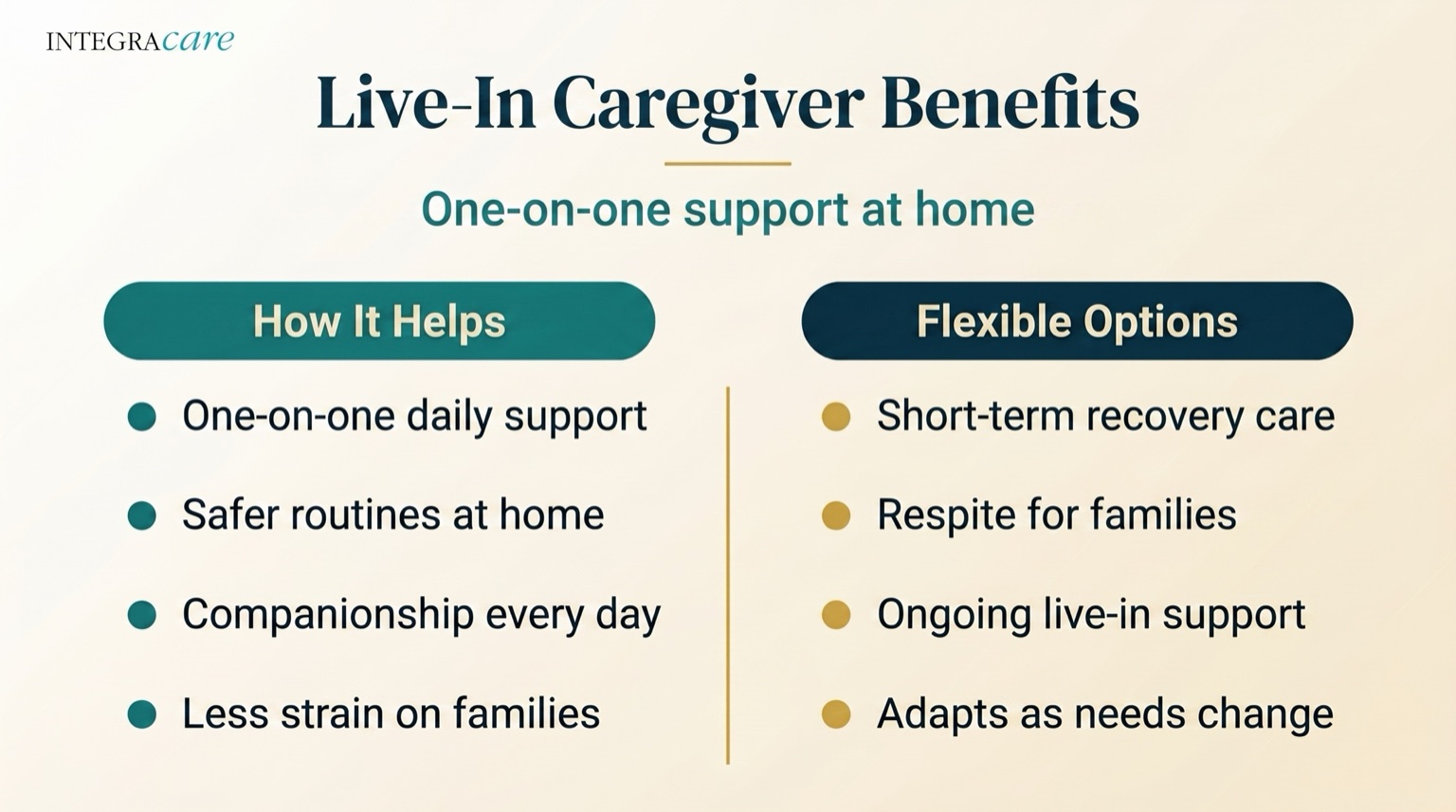
Not every family needs live-in care in the same way, and that is part of why it can be such a helpful option. Some people need short-term support after a hospital stay or surgery. Others need respite care so family caregivers can rest, regroup, and come back with more energy. And for some, live-in care becomes a longer-term part of daily life as needs grow more complex over time.
What matters most is that the care can shift with the person. A good care plan should not stay frozen when health, mobility, or memory changes. At Integracare, that often means adjusting support so it still feels practical, calm, and personal, whether the client needs more help during the day, closer monitoring at night, or a broader team approach with nurses and personal support workers working together.
That kind of flexibility can make a stressful time feel more manageable. It gives families room to respond to what is happening now, instead of feeling like they have to solve everything all at once.
Cost and Planning Ahead
For some families, live-in care can be a practical alternative to assisted living facilities or a residential home. It may also be a good option for couples who want support in the same household.
The cost will depend on the level of care needed, the schedule, and whether additional nursing or specialty support is part of the plan. Many families start with a consultation or in-home assessment so they can understand what is needed and what the options look like.
A few things families often want to think through include:
- Assessing Daily Support Needs: Understanding the level of day-to-day assistance required for your loved one.
- Care Duration and Flexibility: Determining if care will be temporary, ongoing, or subject to change in the future.
- Types of Assistance Required: Identifying whether help is needed with personal care, mobility, memory support, or companionship.
- Future Care Considerations: Considering potential needs for nursing support, dementia care, or palliative care down the line.
- Cost Comparison: Evaluating how live-in care costs stack up against residential homes or assisted living facilities.
- Family Involvement and Responsibilities: Clarifying whether the family is arranging care privately and understands the associated responsibilities.
- Need for Additional Support: Assessing if backup coverage or a broader care team is necessary for complex situations.
If care is being arranged privately, it is also important to understand the responsibilities that come with that choice. A clear plan helps families feel more confident about the care, the cost, and the level of support that will work best at home.
How Families Get Started
Most families begin with an in-home assessment. That gives the care team a chance to understand the person’s health, daily routines, safety concerns, and preferences in a real setting.
From there, a care plan is created, and the family is matched with a caregiver whose experience and personality are a good fit. If the situation is more complex, Integracare may suggest a broader care team so the support feels safe, steady, and well coordinated.
Why Families Turn to Integracare
Integracare’s live-in care services are built around helping people stay comfortable, respected, and supported at home. Care may include live-in support, personal care, nursing, dementia care, palliative care, wound care, physiotherapy, massage therapy, and other home healthcare services.
What families often value is the attention to detail. They are not just looking for someone to complete tasks. They want a team that notices changes, communicates clearly, and treats their loved one with care and consistency.
Ready to Explore Live-In Care for Your Loved One?
If your family is starting to feel the weight of daily care responsibilities, it may be time to explore your options. Integracare can help you understand what kind of support makes the most sense, whether you need short-term assistance, ongoing live-in care, or a more tailored home healthcare plan.
A thoughtful conversation can make the next step feel much less overwhelming and help you move forward with confidence. Contact us today to schedule your complimentary in-home assessment and discover how our premium care can bring comfort to your family.
Frequently Asked Questions
What are the main benefits of live-in caregivers?
Live-in caregivers provide consistent, one-to-one support in the home, which can be especially helpful for people who need help throughout the day and reassurance at night. At Integracare, live-in caregivers assist with meal preparation, personal care, daily living, companionship, and support tailored to the client’s medical needs and preferences. Families often value the peace of mind that comes from knowing support is present in the home, especially when needs change or safety becomes a concern.
How does live-in care help seniors stay independent?
Live-in care helps seniors remain at home by supporting only the tasks they need help with, such as bathing, dressing, meals, mobility, and reminders. Integracare’s approach is designed to support aging in place while preserving routines, comfort, and dignity. That familiar environment can be especially helpful for older adults, including those living with dementia or recovering from illness.
Is live-in care more cost-effective than a residential home or assisted living facility?
It can be, but the answer depends on the level of care needed and the family’s situation. Integracare notes that fees vary depending on services provided, so a free assessment is the best way to understand what live-in care would actually cost for a specific household.
Can live-in caregivers help reduce falls and other safety risks?
Yes, live-in care can help reduce safety risks because someone is present to assist with mobility, routines, and daily oversight. Integracare’s live-in caregivers are matched to the client’s medical needs and personal preferences, and Nursing Coordinators regularly visit to help ensure the care arrangement is working well. For clients with dementia, consistent support can also help with routines and reduce confusion.
What emotional benefits does live-in care provide?
Live-in care can reduce loneliness by providing regular companionship, conversation, and a steady daily presence. Integracare emphasizes personalized care and relationship-building, which can help clients feel more comfortable and supported in their own home. Families also benefit emotionally because they often feel less pressure and more peace of mind when a trusted caregiver is present.
Is live-in care only for long-term or permanent situations?
No. Live-in care can be used for short-term recovery, respite, or ongoing support depending on the client’s needs. Integracare offers flexible home health care services, including live-in care, and the care plan can change as circumstances change. This makes it useful after surgery, during illness, or when a loved one needs more consistent day-to-day support.
What kind of tasks can a live-in caregiver help with day to day?
A live-in caregiver can assist with meal preparation, personal care, light household support, daily living tasks, companionship, and mobility support. At Integracare, caregivers are also matched based on medical needs and preferences, and may work alongside nurses or PSWs when more specialized support is required. The exact tasks depend on the care plan, so services are tailored rather than one-size-fits-all.
How personalized is live-in care, really?
Live-in care is highly personalized when it is properly matched and supervised. Integracare states that caregivers are screened, matched to client needs and preferences, and supported by Nursing Coordinators who visit regularly. That helps the care feel more consistent and relationship-based, rather than rotating or generic.
What is involved in arranging live-in care for a loved one?
The process usually begins with an assessment to understand health needs, routines, preferences, and household expectations. Integracare provides free assessments and then matches clients with caregivers based on medical needs and personal preferences. If the situation is complex, a nurse-led care team may be involved to help coordinate support safely and appropriately.
What should families consider before hiring a live-in caregiver?
Families should think about the client’s care needs, daily routines, personality fit, schedule, and budget. It is also important to ask how the caregiver will be supervised, what backup support is available, and how the care plan can be updated over time. If the family is hiring privately rather than through an agency, they should also understand employer responsibilities under Canadian and provincial employment law. The legal and payroll responsibilities can be significant, which is one reason many families prefer an agency model.
Can live-in care help after a hospital stay or surgery?
Yes. Live-in care can be very helpful during recovery because it supports mobility, meals, personal care, medication reminders, and day-to-day supervision. Integracare’s live-in caregivers can also support clients recovering from illness or injury, and the company offers a range of services that can be combined when needed. This can make the transition home safer and less stressful for both the client and family.
How does live-in care support family relationships, not just the client?
When a live-in caregiver handles daily care tasks, family members can spend more time being present as loved ones rather than acting as full-time coordinators. That can reduce exhaustion, guilt, and conflict while making visits feel more natural and connected. It also helps families focus on quality time, knowing the practical care needs are being handled by a trained professional.
Free In-Home Assessment
The Care Your Family Deserves Starts Here
Speak with our team about a personalized care plan. Book a free, no-obligation in-home assessment and we will help you find the right support for your loved one.
About the Author: Lee Grunberg

President & CEO, M.B.A.
Lee joined Integracare as President & CEO on August 2, 2016 after an approximately 20 year career in Private Equity and Investment Banking. Lee brings tremendous operational knowledge and governance experience along with an incredible passion and energy to Integracare.