
Slow mornings
Mornings can be stiff until the first dose starts to work. The PSW helps with the bathroom, washing and dressing at an unhurried pace, and takes over buttons and zips when fingers are slow.
Private home care · Mississauga
Slower mornings, difficult movements, and restless nights bring new challenges for your loved one. Our Parkinson's Caregivers in Mississauga offer patient, nurse-supervised care that respects their pace and independence.
Free in-home assessment. No obligation.
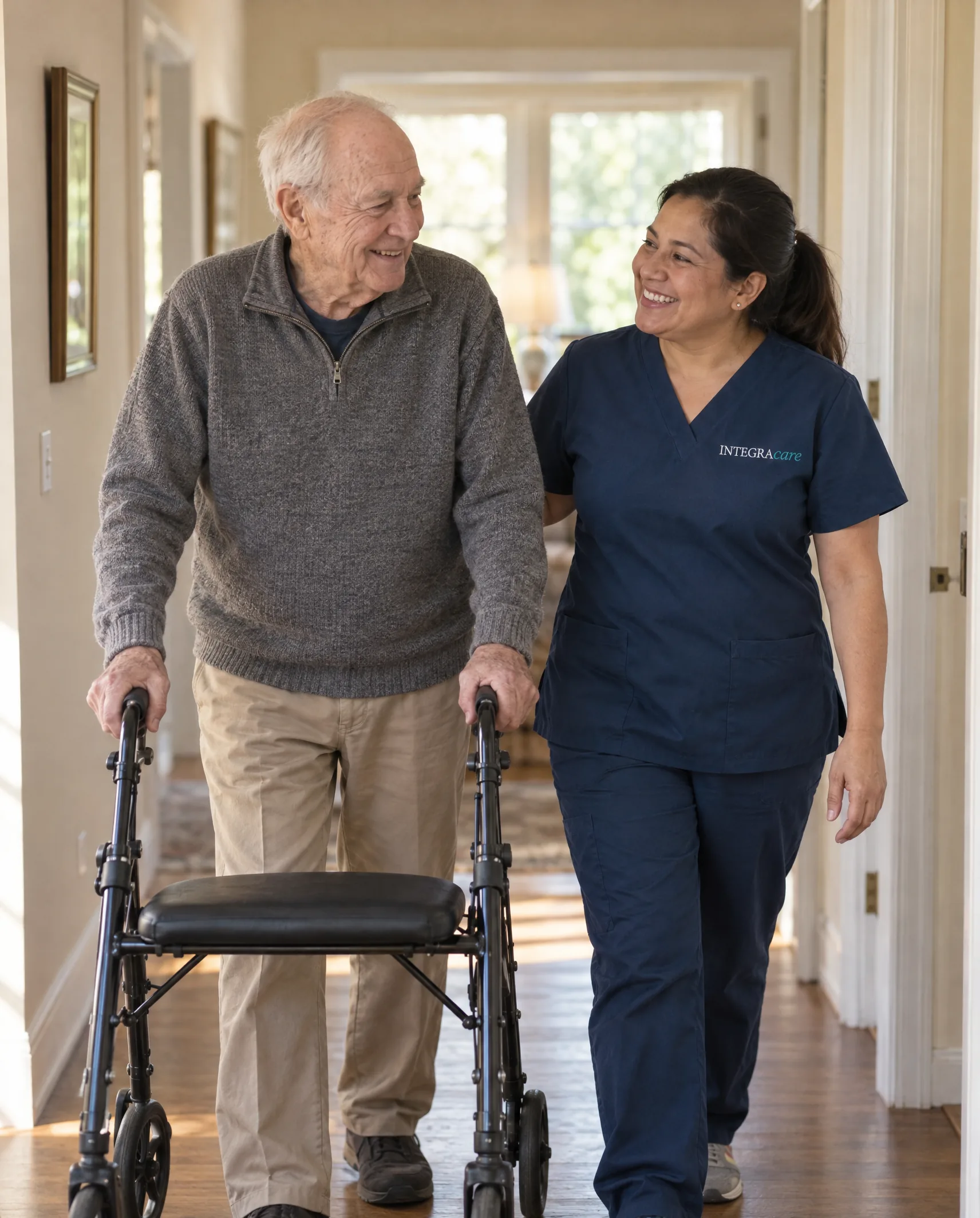
Parkinson's Care in Mississauga
Parkinson's can gradually change how your loved one moves, feels, and manages everyday activities. Getting dressed, preparing meals, or moving safely around the home may become more difficult, particularly as symptoms fluctuate throughout the day.
Integracare provides personalized Parkinson's help at home in Mississauga, with dedicated Caregivers assisting with personal care, mobility, meals, and medication reminders. Care is arranged around your loved one's routines, helping them remain comfortable, confident, and as independent as possible.
Trusted by Ontario Families since 1991, Integracare begins with a free in-home assessment and a personalized care plan developed by a Registered Nurse. Our Mississauga team coordinates visits across Mississauga, Oakville, and Burlington, with nursing guidance available by phone 24/7.
Talk through your options
Medication Times
Many people with Parkinson's have "on" periods, when the medicine is working and moving comes more easily, and "off" periods, when stiffness, slowness, or shaking comes back. Off periods often come as a dose runs out, so one late pill can change the rest of the afternoon.
The RN starts with the prescription. Each dose time goes into the care plan, along with the times of day your loved one moves well and the times that are a struggle, and visits are booked to match. The PSW is there when a dose is due, with a reminder and some water, and keeps an eye on how your loved one is moving.
A missed dose, or an off period that comes early, is passed to the nurse. A new prescription from the neurologist or family doctor means new times: the RN updates the plan, and the visit schedule shifts to fit. It helps to keep a short note of when the off periods come and take it to the next neurology appointment.
On Each Visit
The care plan sets out what each visit covers. Here is what a PSW can take off your Family's hands.
Mornings can be stiff until the first dose starts to work. The PSW helps with the bathroom, washing and dressing at an unhurried pace, and takes over buttons and zips when fingers are slow.
Bathing is booked for an on period, when moving is easier. The PSW lays out the towels and clothes first and follows the care plan for washing and drying.
As Parkinson's moves on, chewing and swallowing can take more effort. The PSW prepares food to the textures in the plan, helps your loved one sit upright, and gives each mouthful time. Coughing at meals, a lot of throat-clearing, a wet or gurgly voice, and weight loss are all reported to the nurse. The nurse then reviews the textures and seating and decides if a swallowing assessment is needed.
The PSW offers drinks throughout the day and helps with toilet trips and continence care. Dizziness on standing, constipation, or a change in bladder habits goes to the nurse.
Parkinson's can affect mood and thinking as well as movement. The PSW makes time for conversation and for the hobbies your loved one enjoys, and lets the nurse know about low days or new confusion. Our Caregivers are dementia-trained, and if memory starts to slip, the RN can add dementia care to the plan.
A Caregiver can go with your loved one to neurology and other appointments, to an exercise class, or out for a walk.
Freezing and Fall Prevention
On the assessment visit, the RN goes through the home with you, room by room. What to change and the moments when the PSW should be close are included in the care plan.
Some people with Parkinson's freeze mid-step, as if the floor were holding their feet, often in a doorway, a narrow hall, or a turn. A cue can get the next step going, such as counting to 3 out loud or a line of tape on the floor to step across. The RN writes your loved one's cue into the plan, so the whole team uses the same one.
Getting up from a chair or bed is a moment to slow down. A steady chair with armrests can make it easier. The PSW stands right beside your loved one until they have their balance and are ready to walk.
Grab bars by the toilet and the tub or shower, a non-slip mat, and a clear floor. The PSW is at your loved one's side for the step in and out.
Night lights along the hall, and a floor kept clear of loose mats, cords, and shoes.
In a townhouse or a split-level home, a short flight of stairs can sit between the kitchen and the bedroom. The RN looks at each set of stairs and notes where the PSW should walk alongside.
The PSW carries the plates, cups, and laundry, so your loved one can keep both hands for the walker or the railing.
More freezing, shorter steps or a new stumble are reported to the nurse, and the RN looks at what should change in the home or the visits.

Staying Active
Many people with Parkinson's find that regular exercise helps them stay stronger and steadier on their feet. If your loved one has a physiotherapist through Ontario Health atHome or a clinic, the PSW can practise the set exercises together on the days in between, counting out loud and keeping an easy pace.
The PSW clears space to move, keeps a steady chair close by, and notes how each session went for the nurse.
Sleep and Nights
Parkinson's can break up sleep. Stiffness makes turning over in bed hard, and bathroom trips and restless spells wake your loved one, and often the person sleeping beside them too.
A visit in the evening can take care of the bedtime routine: teeth, pyjamas, an evening dose if there is one, and help into bed. When most nights are broken, 24-hour home care puts Caregivers on rotating shifts with someone awake all night. If your loved one mostly sleeps through, live-in care may fit: the Caregiver stays in the home and has a set sleep period each night. The RN can help you decide which suits your Family.
As Parkinson's Progresses
Parkinson's changes at a different speed for everyone. Whenever something shifts, such as a hospital stay, a new prescription, or a change your Family notices, the RN reviews the plan, and the visits are adjusted.
A few visits a week at the hardest hours, with help for exercise, outings, and jobs around the house while your loved one does the rest.
Daily visits with more hands-on help bathing, dressing, eating and moving around. We aim to keep a small, consistent team of Caregivers who know your loved one's medication schedule, mobility needs, and freezing episodes.
When a task needs nursing skill, a Registered Practical Nurse (RPN) can visit under the RN's plan.
Help with most of the day's personal care, and Caregivers through the night or around the clock.
Ontario Health atHome handles long-term care applications. Private care at home can carry on while your loved one waits for a place.
In the last months, the care turns to comfort, with palliative care at home and support for the whole Family.
For the Family Caregiver
The caring often falls to a spouse. Over the years, it can take over their own life: alarms for every dose, broken nights, and plans with friends dropped one by one. Booked visits give that Family Caregiver time back for a full night's sleep, a round of golf or an afternoon with the grandchildren. For a longer break, such as a wedding out of town or a week away, respite care covers the whole stretch.
Family members who live farther away, in Toronto or across the country, can follow along through Integracare's Family Room, a private online portal. Invited relatives see the schedule, the care team, and the notes from each visit.
Call or send the form. A Registered Nurse will visit for a free assessment, learn your loved one's dose times and routine, and talk through the options with your Family.
Local Resources
Public programs and charities that Families can contact directly. Each one sets its own rules.
Common Questions
No. Private care needs no referral. Call our Mississauga office at (905) 916-5454 or send the form, and we will book the free in-home assessment with a Registered Nurse on a day that works for your Family.
Yes. After a care coordinator's assessment, Ontario Health atHome decides which public services your loved one receives. Private PSW visits can then cover the dose times, evenings or nights the public schedule leaves open, and our RN plans them around the public visits.
When the discharge is urgent, yes: care can begin the same day. With a little notice, the RN can also plan the first visits around any new medicine times.
The Caregiver reports coughing at meals, a change in voice or weight loss to the nurse, and the RN updates the plan. A speech-language pathologist does the assessment and any therapy. Ontario Health atHome includes speech-language therapy among its services for people who qualify.
The cost follows the number of hours and the kind of care: visits, 24-hour care or live-in care. We go through the rates with you at the free assessment, before anything is booked.
Other Services
We also provide Parkinson's care in Greater Toronto, Parkinson's care in Ottawa and Parkinson's care in Winnipeg.
Free In-Home Assessment
Tell us about your loved one, the dose times, and the hardest parts of the day. Our team will be in touch within one business day to book a visit with a Registered Nurse.
Prefer to talk?
Mississauga(905) 916-5454 ↗We serve families across Mississauga, Oakville and Burlington. See the areas we cover
Clinically reviewed by Bethel McMaster, BScN, RN ·