
Blog
The Healing Power of Massage in Palliative Care
Published
Updated
Written by Lee Grunberg, M.B.A. — President & CEO
Reviewed by Bethel McMaster, BScN, RN — Director of Business Development
On this page14 sections
Key Takeaways
- Massage therapy can help improve comfort, relaxation, and quality of life in palliative care.
- Short, repeated massage sessions may be more helpful than a single longer session.
- Palliative massage should be adapted to the person’s symptoms, mobility, and comfort level.
- For safety precautions, trained massage therapists avoid contraindicated areas and adjust pressure carefully.
- Massage works best as part of broader integrative care strategies, not as a replacement for medical treatment.
When someone is living with a serious illness, care often begins to look a little different. Alongside medical treatment, there is a growing focus on helping the person feel as comfortable as possible, managing symptoms, reducing discomfort, and making each day a little easier to navigate.
Even small improvements can have a meaningful impact. Less pain, easier movement, better sleep, or a quiet moment of relaxation can help someone feel more like themselves while supporting quality of life throughout the palliative care journey.
How Massage Therapy Supports Palliative Care
Massage therapy is a gentle, hands-on therapy that uses skilled techniques to help reduce pain, muscle tension, stiffness, anxiety, and stress. For people receiving palliative care, treatment is carefully adapted to reflect their health, energy level, symptoms, and personal comfort.
Research suggests therapeutic touch may help encourage relaxation through the release of endorphins while also providing a reassuring sense of human connection during a time that can feel physically and emotionally overwhelming. While massage therapy does not treat the underlying illness, it can become an important part of a personalized palliative care plan focused on comfort, dignity, and quality of life.
At Integracare, our Registered Massage Therapists provide personalized in-home treatments that work alongside nursing, personal support, and other palliative care services to help clients remain as comfortable as possible in familiar surroundings.
What to Expect During Your Massage Session
For many families, one of the most common questions is what a palliative massage session actually looks like.
Each session begins with a gentle intake, where the massage therapist asks about symptoms, comfort levels, medical history, and goals for care. This helps guide a personalized approach.
From there, the therapist will adjust positioning options based on the Client’s needs. This may include side-lying positions, seated support, or the use of bolsters and pillows for comfort, especially if lying flat is not possible.
Techniques are intentionally gentle and may include:
- Effleurage and light Swedish massage techniques
- Gentle touch and calming hand or foot massage
- Acupressure or reflexology
- Manual lymphatic drainage when appropriate
- Guided mind and body relaxation practices
Pressure is always reduced, and session length may be shorter depending on fatigue or sensitivity. After the session, the therapist may do a brief reassessment to understand how the Client responded and adjust future care accordingly.
Protecting Sensitive and Fragile Areas
While massage brings immense comfort, the primary goal is always to protect your loved one’s body. Because serious illness can make the skin and tissues highly fragile, the therapist works with strict boundaries to keep them safe. They will completely steer clear of any areas with skin redness, bruising, or open sores. They are also specially trained to navigate around medical equipment, maintaining a careful distance from items like ports, tubes, or catheters so that absolutely nothing is disturbed or pulled.
Listening to the Body’s Signals
Safety also means knowing when the body simply needs uninterrupted rest. If your loved one has a fever, is fighting an infection, or is just feeling exceptionally exhausted, the therapist will postpone the session for the day. By using only the softest, lightest touch, the massage serves as a source of pure comfort rather than an extra strain on their energy. Our massage therapist stays in constant contact with your family and the nursing team, making sure every visit is perfectly timed, entirely safe, and deeply reassuring.
Healing Benefits of Massage Therapy in Palliative Care
The healing and health benefits of massage therapy for Palliative Care are numerous; it provides a unique sense of comfort that is unlike any other type of therapy, particularly if a patient experiences painful symptoms from illnesses or treatments such as chemotherapy.
When curative treatment is no longer appropriate, more significance is placed on measuring comfort for patients, and touch is an excellent way to facilitate communication and enhance physical and psychological well-being.
At Integracare, we have highly trained and certified Registered Massage Therapists (RMTs) who specialize in working with Clients in Palliative Care, among other home care services in Toronto. Our compassionate RMTs customize their practice and techniques to each Client’s specific state of health and current symptoms, such as providing options to those who are unable to lie face-down in a traditional position and using reduced pressure in their massage strokes.
If a loved one or family member receives Palliative Care, consider the benefits of adding in-home massage therapy to their treatment plan.
Palliative Massage Therapy Reduces Pain
Palliative Care is recommended to help alleviate pain and stress during treatment for any of the following illnesses:
- Cancer
- Alzheimer’s and other dementia-related illnesses
- Parkinson’s Disease
- Kidney Failure
- Congestive Heart Failure
- ALS and Lou Gehrig’s Disease
- Arthritis
Pain is a common symptom in all of these illnesses, in some form or another. Illnesses such as Lou Gehrig’s or ALS cause patients to experience severe muscle weakness and atrophy all over the body.
However, with the healing touch of an experienced RMT, patients who suffer from mobility issues experience improved nerve function and circulation where immobility would otherwise cause joint rigidity, shortened muscles, and degeneration.
One of the most common chronic conditions among senior citizens is Arthritis. It can affect literally any part of the body, including fingers, knees, and hips, and it causes swelling, stiffness, and pain.
With regular massage, Arthritis patients experience reduced pain, and their physical function improves. Those who feel the condition in their hands and fingers will find an improved ability to control movements with massage therapy.
Patients with Alzheimer’s can also benefit from the healing power of massage. Studies have shown it greatly reduces agitation among those living with Alzheimer’s Disease. In particular, hand massage aids in relaxation, and it consistently decreases responsive behaviours.
Palliative Massage Therapy Reduces Migraines, Headaches, and Nausea
Treatments that are paired with the illnesses listed above can induce debilitating side effects such as nausea, headaches, and migraines.
Much research has been done over the last several years investigating the relationship between massage therapy and migraine pain. Recently, a small study concluded that regular massage, focusing on the neck, significantly reduced the pain intensity of migraines.
Half of the participants received regular massage therapy, and 71% asserted that there was a great reduction in the severity of their headache pain.
There have also been recent studies that show massage therapy greatly reduces the most common and unpleasant side effects of chemotherapy: nausea and vomiting. Because of the comfort massage therapy brings, it has gained a lot of attention from medical experts within the last few years.
Take a look at this scientific study that came out in 2013. The researchers concluded that massage therapy should be an integral part of cancer patients’ treatment plans alongside chemotherapy because of its substantial pain-relieving side effects. Massage Therapy can help those receiving chemotherapy with the discomfort and exhaustion of the treatment, and it also provides patients with the soothing sensation of touch.
While in Palliative Care, your loved one deserves empathy and compassion, and our RMTs not only provide these through companionship, but they also provide a gentle massage that alleviates pain.
Reducing Symptoms and Emotional Stress with Palliative Care Massage
It is not always easy for an individual to hear the term “palliative care,” and it can feel overwhelming and even frightening for some people. Life-threatening illnesses cause physical debilitation, but they can also trigger devastating emotional and mental issues.
It is common for Seniors to experience isolation, especially if a life-threatening illness is a factor. Feelings of depression and sadness are triggered when individuals are in chronic pain or are perhaps within their last few years of life.
Integracare’s palliative care team is trained to be sympathetic and empathetic to these undeniable concerns, and we make sure to ask about any emotional concerns to be addressed before any treatment.
When our RMTs provide in-home massage therapy, we make it a priority to ask you and your family members about mental health issues, so they can work on alleviating any stress through their massage practice.
Stress can have detrimental effects on the body, from sleep deprivation and depression to appetite loss and physical aches and pains. Having a life-threatening illness is stressful, and there is no doubt that it can take a toll on the body.
When stressed, anxious, or depressed, our muscles tend to become stiff and rigid, which causes discomfort and pain.
Palliative Care Massage Therapy helps to relieve tension in muscles and connective tissues. Massage Therapy promotes relaxation in the body by increasing blood flow. When our bodies relax while tension and strain dissipate, we begin to feel calmer and more comfortable.
Of course, Palliative Care Massage Therapy cannot entirely cure symptoms of stress, but it certainly makes life a lot more enjoyable.
Palliative Care Massage Therapists
Regular visits from our certified RMTs and Palliative Care Massage Therapists to your or your loved one’s home also provide an opportunity for your loved one to socialize. Real and sincere connections develop between our Caregivers and Clients, and our goal is for Clients to feel excited about their massage appointments, something to look forward to.
We hire skilled professionals with years of experience and Palliative Massage Training, and we also only hire individuals who possess compassion and respect and who are flexible, dependable, and professional. Our Palliative Care RMTs’ approach to Palliative Care Massage is a gentle one, and they pay attention to Clients’ needs by listening to them with empathy and kindness.
Sometimes we forget how important touch is; a simple embrace from a loved one can alter your mood in an instant.
Specialized Care for Every Stage of the Journey
Palliative massage therapy is very different from the massage many people associate with a spa or wellness clinic. Every treatment is carefully adapted to reflect the person's health, comfort level, energy, and changing symptoms. Rather than focusing on deeper pressure or treating sports injuries, the emphasis is on gentle techniques that help ease discomfort, reduce muscle tension, encourage relaxation, and support overall well-being.
Because of these unique needs, Registered Massage Therapists providing palliative care require specialized knowledge and experience beyond their foundational massage therapy education. In addition to completing formal massage therapy training, they continue developing their skills through advanced education, mentorship, and hands-on experience caring for people living with complex or life-limiting illnesses.
Experienced palliative massage therapists typically have:
- Registration as a Registered Massage Therapist (RMT) and professional liability insurance.
- Current First Aid and CPR certification.
- Additional education in palliative or oncology massage techniques.
- Experience adapting treatments for people living with cancer, neurological conditions, dementia, reduced mobility, and other complex health needs.
- The clinical judgment to modify positioning, treatment length, pressure, and techniques based on changing symptoms and comfort levels.
At Integracare, our Registered Massage Therapists work closely with the broader home healthcare team of Registered Nurses, Personal Support Workers and caregivers to ensure every treatment complements the client's overall care plan. Whether supporting someone living with cancer, dementia, or another life-limiting illness, each session is thoughtfully adapted to provide comfort, promote relaxation, and help improve quality of life while respecting the individual's preferences and changing needs.
Palliative Massage With Integracare
For those in palliative care who may experience loneliness, physical pain, or stress, the benefits of Massage Therapy are numerous. Massage Therapy may not have the power to cure an illness, but the amount of freedom and joy it provides to patients by alleviating physical and emotional pain makes it a crucial aspect of any palliative care plan.
If you have a family member or loved one in Palliative Care who might benefit from Massage Therapy, read more to learn about the myriad health benefits involved.
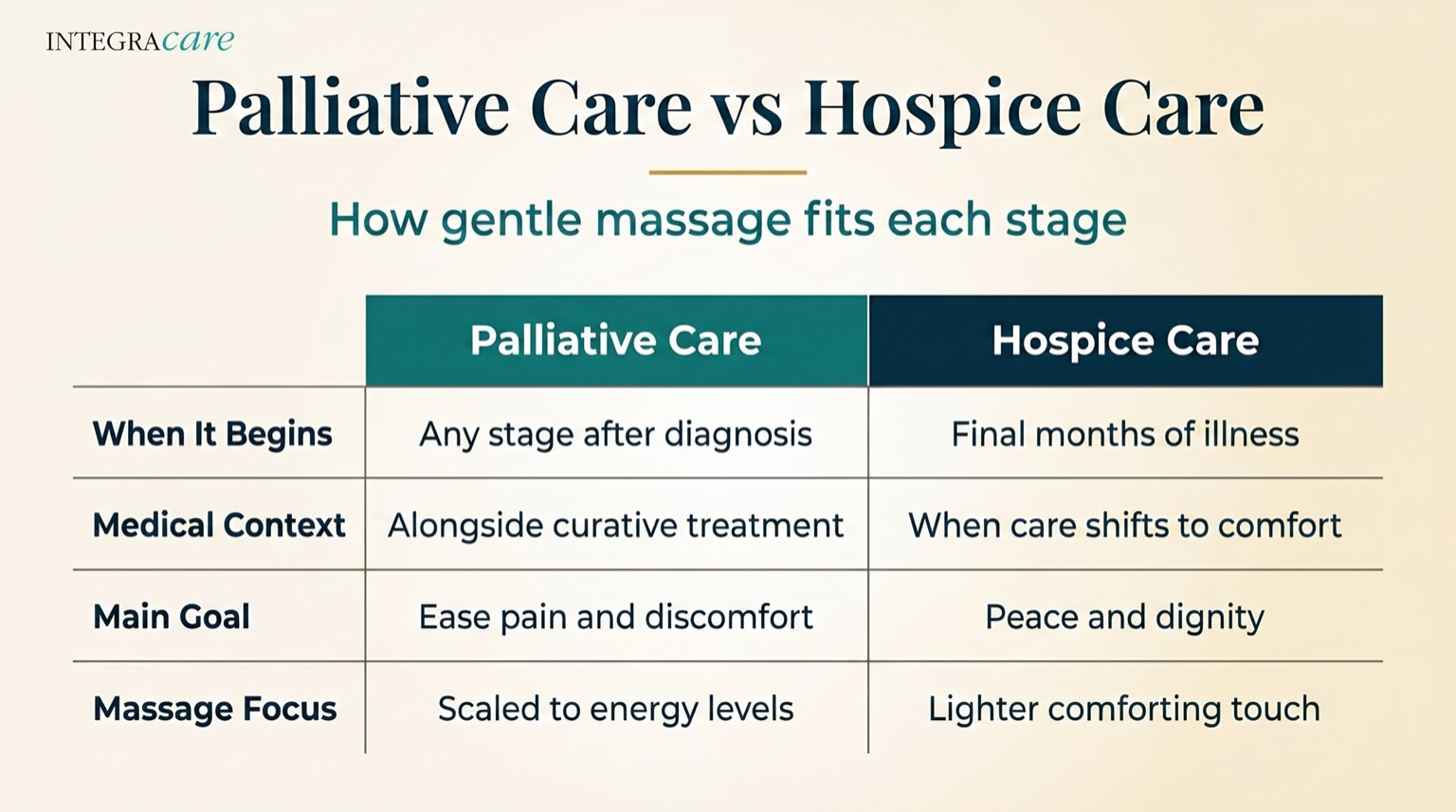
Comparing Palliative Care vs. Hospice Care
| Feature | Palliative Care | Hospice Care |
| Timing & Eligibility | Can begin at any stage of an advanced illness, right from diagnosis. | Typically begins in the final months of a terminal illness; in Canada, timing and eligibility vary by local hospice program. |
| Medical Context | Provided alongside active, curative treatments and therapies. | Focuses on comfort when care goals shift away from curative treatment. |
| Care Goals | Managing daily discomfort, easing physical stress, and providing pain relief. | Maximizing peace, dignity, and specialized end-of-life care. |
| Where it Happens | Delivered in a hospital, a massage therapy clinic, or directly at home. | Delivered primarily at home or within a dedicated residential hospice facility. |
| How Massage Helps | Scaled to your loved one's energy levels to help them cope with ongoing treatments. | Uses a highly comforting, lighter massage focused purely on peace and relaxation. |
In both settings, massage therapy steps away from traditional muscle rehabilitation. Instead, it serves as a gentle, quiet space centred entirely on emotional comfort, anxiety relief, and gentle physical support.
Supporting Care Through Every Visit
Providing massage therapy in palliative care requires both clinical expertise and emotional presence. Every client is different, which means therapists must remain adaptable and flexible, adjusting positioning, pressure, treatment length, and techniques to reflect changing symptoms, energy levels, and comfort. Whether providing home sessions or visiting a medical facility, they also follow strict infection prevention protocols to help minimize infection risk for medically vulnerable clients.
Providing Consistent, Compassionate Care
The physical side of palliative massage can also be demanding. Treatments are often delivered at a slower, more intentional pace, requiring therapists to maintain careful body mechanics throughout each session. Using bolsters and pillows helps support both client comfort and therapist positioning, particularly during longer treatments or when mobility is limited.
Supporting individuals and families through serious illness, and, at times, experiences similar to end-of-life doula work, can also be emotionally draining. At Integracare, our Registered Massage Therapists are supported with ongoing education, collaborative care, professional self-care practices, and clinical resources that help them remain focused, attentive, and fully present for every client. That commitment allows every visit to be delivered with the compassion, consistency, and thoughtful care families have come to expect.
When combined with nursing, personal support, and other palliative care services, massage therapy becomes part of a coordinated care plan focused on comfort, dignity, and quality of life. Contact us for a free in-home assessment and find a caring team ready to help guide this vulnerable journey with dedication and attentiveness.
Frequently Asked Questions
Does massage help with palliative care?
Yes, massage can be a valuable part of integrative care strategies in palliative care because it may support comfort, relaxation, and symptom relief. A trained massage therapist or registered massage therapist (RMT) can use gentle touch to help ease pain, anxiety, stiffness, and the emotional burden that often comes with serious illness. The treatment should always be adapted to the person’s condition, goals, and comfort level, with attention to session length, treatment frequency, and safe dosing.
Can massage spread cancer?
No, massage does not spread cancer. That is a common misconception, and it often causes unnecessary worry for families. A therapist with foundational massage therapy training plus palliative massage training or oncology experience will know how to avoid tumour sites, cancer lesions, suspicious areas, and other sensitive regions. For added reassurance, families can ask for guidance from their oncologist.
Is massage safe for someone receiving palliative care?
Massage can be safe when it is delivered by an experienced therapist who understands contraindications and works carefully around medical devices, sites of radiation, bruising, fever, infection, and other risk factors. In most palliative situations, light pressure is preferred, and the therapist may use reduced pressure, shorter session length, and modified positioning options. Safety also depends on communication with the wider care team, especially when the person is receiving active treatment or has changing symptoms.
How long should a palliative massage session be?
There is no single ideal session length for every person in palliative care. Some people feel best with brief sessions because fatigue, discomfort, or mobility limitations make longer treatments difficult to tolerate. Others may benefit from a slightly longer appointment if they respond well and want more time for relaxation. In palliative massage, therapists often adjust dosing by balancing session length and treatment frequency so the care feels supportive rather than tiring or overwhelming.
How often should massage be given in palliative care?
The best treatment frequency depends on the person’s symptoms, energy level, and care goals. Some people need only occasional support, while others benefit from repeated visits that help manage pain, stress, or tension over time. A good therapist will reassess after each visit and adjust the plan based on how the body responds. This kind of flexible approach is a key part of integrative care strategies and helps prevent massage from becoming another source of strain.
What should families look for in a massage therapist?
Families should look for a massage therapist with strong massage therapy education, a valid first aid certificate, appropriate insurance, and additional experience in palliative or oncology care. It is especially helpful when the therapist has specialized knowledge supported by mentorship and experience in a community-based palliative organization. Many families also feel more confident when the therapist belongs to a professional massage association and can explain how they approach palliative care safely and respectfully.
Can family members give palliative massage?
Yes, family members can offer gentle touch, hand massage, or comforting contact if the person wants it, but that is different from therapeutic massage. A trained professional understands how to work with light pressure, positioning options, and medical considerations such as lymphoedema, bruising, or medical devices. Family touch can be emotionally meaningful, while a therapist provides a more structured and individualized form of care that fits within broader integrative care strategies.
Is insurance coverage available for palliative massage?
Sometimes, but not always. Insurance coverage depends on the plan, the provider, and how massage therapy is billed, so families should check their benefits carefully before booking. In some cases, support may also come through philanthropic avenues, community programs, or referral pathways connected to a community-based health organization. If coverage is limited, asking a therapist or care coordinator about available options can help families find a practical path forward.
What is the difference between palliative massage and regular massage?
Palliative massage is usually gentler, shorter, and more comfort-focused than regular massage in a massage therapy clinic. Instead of deep pressure or muscle correction, the therapist may use gentle touch, effleurage, reflexology, acupressure, manual lymphatic drainage, or Swedish massage techniques adapted to the person’s needs. The goal is to reduce discomfort and support quality of life, not to intensify treatment. This makes palliative massage especially useful for people living with advanced illnesses or terminal illness.
What if the patient has bruising, tubes, or medical devices?
The therapist should avoid bruising, open wounds, medical devices, cancer lesions, tumour sites, and other suspicious areas. If the person has sites of radiation, enlarged lymph nodes, or signs of infection, the therapist may need to modify the session or pause treatment altogether. Careful screening at intake and close communication with the care team are essential. In palliative care, it is always better to use caution than to risk discomfort or harm.
Where can someone find a qualified massage therapist for palliative care?
A good starting point is a provider directory, a referral from the care team, or a trusted professional massage association. Families can also ask whether the therapist is involved with the Association for Massage Therapists in Healthcare or the Society of Oncology Massage, since those connections may indicate relevant experience. It can also help to look for an RMT who has worked in team-based care settings and understands how massage fits into an evidence-based palliative care program.
Why does massage feel so calming in palliative care?
Massage can feel calming because it supports relaxation, slows the stress response, and creates a sense of safety through compassionate touch. For people living with serious illness, that can ease both physical discomfort and emotional tension. In some cases, the calming effect also helps reduce the feeling of being overwhelmed by appointments, symptoms, and daily care needs. That is why massage is often viewed as part of a broader support plan rather than a stand-alone treatment.
How do massage therapists work with the care team?
In palliative care, massage works best when it is part of team-based care. Registered massage therapists (RMTs) may coordinate with interdisciplinary team members during interdisciplinary rounds or clinical update meetings so treatments stay aligned with the person’s changing needs. When possible, EMR/EHR access and mentorship from nurses, doctors, social workers, and respiratory therapists can improve communication and safety. This collaboration helps massage fit naturally within an evidence-based palliative care program.
What should families know about massage therapist training?
A therapist working in this setting should have more than foundational massage therapy training. In Ontario, look for a Registered Massage Therapist (RMT) in good standing with the College of Massage Therapists of Ontario, ideally with palliative massage training, oncology massage experience, a current first aid certificate, and professional liability insurance. Because this is specialized work, mentorship and real-world experience in a community-based palliative organization matter a great deal. There is not usually a formal fellowship for this niche, so practical specialized knowledge becomes especially important.
Is there a difference between palliative care and hospice care?
Yes. Palliative care can begin early in the course of advanced illnesses and may continue alongside treatment, while hospice is generally reserved for end-of-life care when a person has a terminal illness and is nearing the final stage of life. Massage can support both, but the approach may change depending on the setting, such as a hospital, home, or massage therapy clinic. In both cases, the focus is usually on pain relief, comfort, and dignity rather than aggressive treatment.
What is palliative massage like for the therapist?
This work can be emotionally meaningful but also physically and mentally draining. Therapists often move between home sessions and a medical facility, where they must stay adaptable and flexible while managing the physical side of care. Using bolsters and pillows can help with positioning, but the overall pace may still be slow and demanding. Good self-care and access to support resources help therapists stay steady, especially in settings where infection risk and emotionally intense situations are common.
Free In-Home Assessment
The Care Your Family Deserves Starts Here
Speak with our team about a personalized care plan. Book a free, no-obligation in-home assessment and we will help you find the right support for your loved one.
About the Author: Lee Grunberg

President & CEO, M.B.A.
Lee joined Integracare as President & CEO on August 2, 2016 after an approximately 20 year career in Private Equity and Investment Banking. Lee brings tremendous operational knowledge and governance experience along with an incredible passion and energy to Integracare.