
Blog
Relieve Stress And Improve Senior Health With Massage Therapy
Published
Updated
Written by Lee Grunberg, M.B.A. — President & CEO
Reviewed by Bethel McMaster, BScN, RN — Director of Business Development
On this page17 sections
Key Takeaways
- Massage therapy may help seniors reduce stress, ease muscle tension, and improve sleep.
- Geriatric massage should be adapted to each person’s health conditions, pain level, and mobility.
- Choosing a qualified massage therapist with proper certifications and geriatric experience is essential.
- Massage can support a broader holistic care plan, especially when paired with other health services.
- Seniors should check with a healthcare professional before starting massage therapy, especially if they have medical concerns.
As we age, the body and mind respond to stress differently. Daily pressures, health changes, reduced mobility, and chronic conditions can all contribute to ongoing tension, discomfort, and disrupted sleep. The physical manifestations of daily pressures, combined with the natural changes that come with aging, can create a cycle of discomfort that affects everything from sleep quality to emotional well-being. We experience stress through complex physiological responses, and repeated stressors can eventually contribute to a variety of chronic health conditions.
Specialized massage therapy is one of the most effective ways to help prevent and treat these ailments, especially for seniors who experience limited mobility and an increase in age-related illnesses.
Why Stress Has a Bigger Impact on Senior Health
Stress is a major factor in many diseases and conditions. Over time, ongoing stress can contribute to many diseases and conditions by affecting how the heart, muscles, immune system, and sleep cycles function.
For seniors, this impact can feel even heavier. The body may take longer to recover, and everyday stressors, like reduced mobility, chronic pain, or changes in routine, can build up more quickly. Many older adults find themselves dealing with:
- Ongoing muscle tension and chronic pain
- Poor sleep or feeling tired throughout the day
- Increased blood pressure and heart strain
- Lower energy and reduced immune resilience
- Feelings of anxiety, loneliness, or emotional fatigue
These challenges often don’t exist on their own. Physical discomfort can increase stress, and stress can make physical symptoms worse, creating a cycle that is hard to break without the right kind of support.
Making Comfort Easier to Access
Massage therapy offers a gentle, practical way to help ease the physical effects of stress. Many seniors find that regular treatments help them feel less stiff, sleep more comfortably, and move through daily activities with greater ease.
Receiving massage therapy at home makes care more accessible. Integracare's Registered Massage Therapists provide personalized treatment in a familiar setting and can work alongside other home care services to support comfort, mobility, and overall well-being.
How Massage Therapy Connects Comfort and Independence
Massage therapy offers a gentle, non-drug approach that may help seniors feel more relaxed, comfortable, and supported. Beyond the immediate feeling of relaxation, massage may help ease muscle tension, encourage healthy blood circulation, support better sleep patterns, and promote an overall sense of calm. For many older adults, massage therapy becomes more than an occasional wellness service. It can be a valuable part of a broader approach to healthy aging, helping seniors maintain comfort, mobility, and independence while continuing to enjoy life at home. Whether someone is recovering from an illness, managing chronic pain, coping with increased stress, or simply looking for ways to support their overall well-being, massage therapy can provide personalized support tailored to their individual health needs.
Why Massages for Seniors Are Necessary
The body’s physiological response to stress includes:
- Increased heart rate and blood pressure
- Increased muscle tension
- Rapid breathing
- Digestive and Immune system suppression
- Increased stress hormones like cortisol
- Disrupted sleep
- Tiredness and fatigue
Health problems commonly associated with stress include:
- Depression
- Anxiety
- Chronic pain and tension
- Stomach and digestive problems
- Headaches and migraines
- Hypertension and heart conditions
- Arthritis
- Diabetes
Seniors also experience reduced mobility and issues with circulation and nerve functioning, plus they are prone to more frequent injuries and falls. The relief and aid from home massage therapy can help Seniors manage pain, illness, and reduce stress right in the comfort of home. This is because therapeutic touch and massage decrease stress and built-up tension in the tissues and joints and lessen the effects of various disorders on the body and mind. These effects are not just felt during a session, but they can provide lasting relief.
Helping Ease the Physical Effects of Stress
Stress doesn't only affect how we feel emotionally. Over time, it can also show up in the body through tight muscles, poor sleep, fatigue, headaches, and lingering aches that make everyday activities feel more difficult. For many older adults, these physical effects may become more noticeable as natural changes in mobility, circulation, and recovery occur with age.
Massage therapy may help interrupt this cycle by encouraging the body to relax. Depending on an individual's health needs and treatment plan, gentle therapeutic massage may:
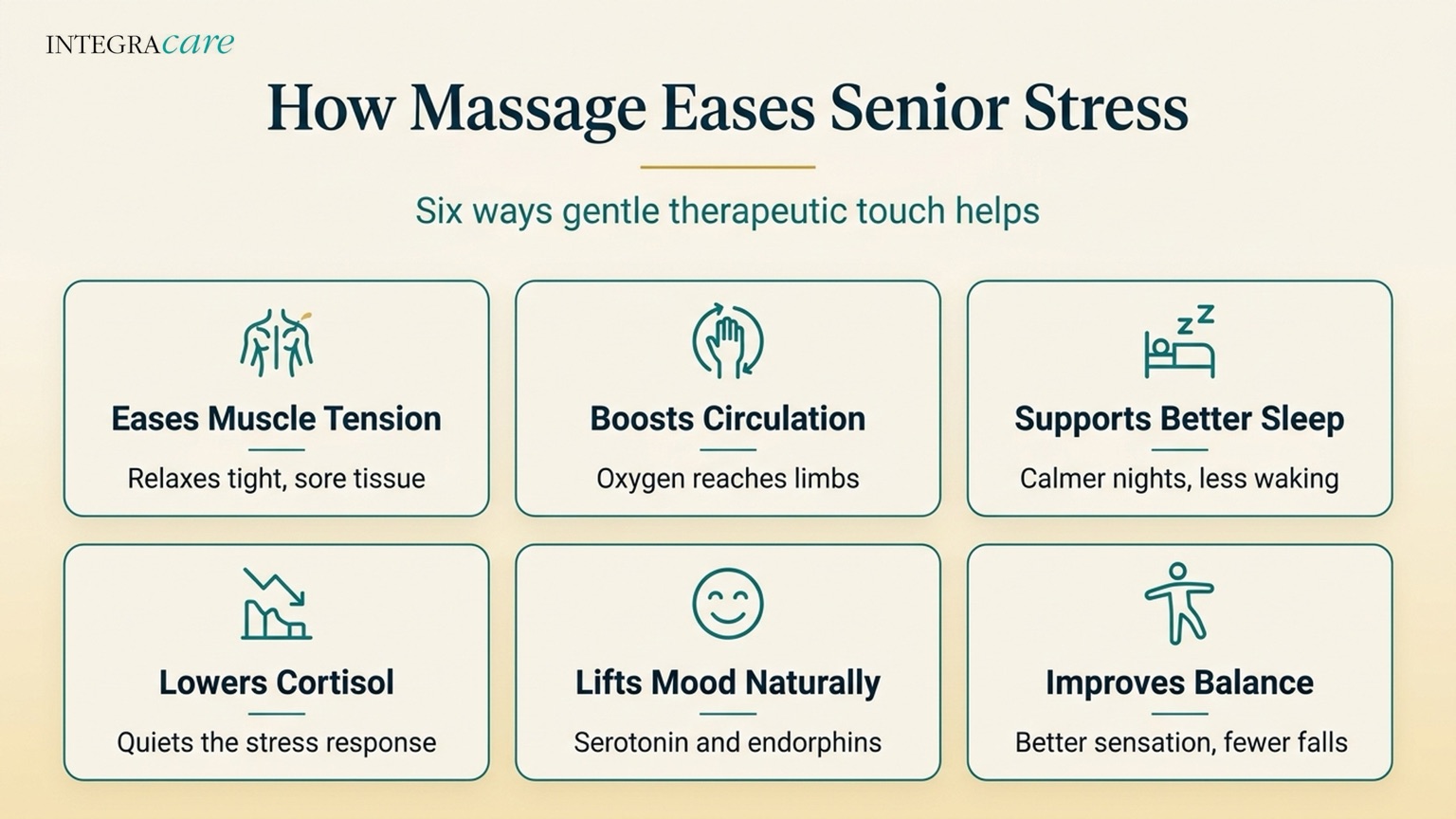
- Ease muscle tension by relaxing tight muscles and soft tissues that can contribute to stiffness, soreness, and restricted movement.
- Encourage healthy blood circulation, helping deliver oxygen and nutrients throughout the body while supporting tissue health and recovery.
- Support the parasympathetic nervous system, allowing the body to shift into its natural "rest and recover" state after periods of prolonged stress.
- Help regulate the body's stress response by encouraging a reduction in cortisol, the primary stress hormone that can affect sleep, mood, and overall well-being when levels remain elevated.
- Promote the release of feel-good hormones, including serotonin, dopamine, and endorphins, which are associated with relaxation, improved mood, and a greater sense of well-being.
- Create an opportunity for the body to slow down, helping many seniors feel calmer, more comfortable, and better able to cope with the physical demands of daily life.
While every person's experience is different, many seniors find that regular massage therapy helps them move more comfortably, sleep more soundly, and feel less affected by the physical strain of everyday stress. Although massage is not a cure for underlying medical conditions, it can be a valuable, non-drug addition to a broader home health care plan that supports comfort, mobility, independence, and overall quality of life.
The Benefits of Massage for Seniors
Integracare provides home health care services in the Toronto area and the wider GTA, with person-centred care plans provided by Registered Massage Therapists (“RMTs”), Registered Physiotherapists, Registered Nurses, Registered Practical Nurses and Personal Support Workers. Below are some of the specific benefits of massage therapy provided by our RMTs in the privacy of your or your loved one’s home.
- Stimulation of the nervous system by triggering the release of endorphins, hormones like serotonin and dopamine, and neurotransmitters.
- Increased blood circulation, especially to the limbs and extremities, which can become numb and experience nerve pain as we age.
- Softening and working tight muscles and tissues with the help of increased blood flow and improved flexibility.
- Better balance and decreased risk of falling through an improvement in proprioception caused by the increased circulation and sensation in limbs.
- Increased sense of connection from much-needed human touch. Many seniors experience loneliness from a loss of a partner or other social connections, and touch increases that sense of caring that the body needs.
- Massage can also potentially help with stroke recovery, improve sleep, offer immune support, increase mobility and appetite, and relieve arthritic and other chronic pain. This also potentially decreases the need for pain medication.
Which Massage Techniques Work Best for Older Adults?
At Integracare, our registered massage therapists draw from a range of therapeutic techniques, customizing each session to address specific senior health concerns. The right approach depends on individual needs, but several methods consistently benefit older adults:
- Swedish massage: With its long, flowing strokes and gentle kneading, this technique promotes relaxation and improved circulation
- Myofascial release: This gentle, sustained pressure helps release tension in the connective tissues that can become restricted with age
- Lymphatic massage: A light, rhythmic technique that can help reduce swelling and improve immune function
- Adapted deep tissue massage: When appropriate, our therapists use modified deep tissue techniques to address chronic pain while ensuring comfort
Our therapists may use a combination of these techniques in a single session, focusing on areas of concern while maintaining an overall approach that supports relaxation and well-being.
What You Need to Know About Senior Massage Therapy
Massage therapy can help people of all ages when they’re experiencing aches and pains, recovering from an injury or a surgery, seeking pain management solutions that don’t rely on medication, or looking for a way to reduce stress.
Senior massage can be a core component of care as a way to enhance the quality of life and well-being of older adults who are receiving home care.
RMTs who provide Senior massage have adapted their practice to meet the needs of Seniors. They begin by asking about the individual’s overall health and inquiring about issues like limited movement, pain, and activity level.
They also adjust their treatment to issues such as skin conditions and pain thresholds. Massages for seniors should be adapted to make sure the treatment remains comfortable and relaxing for the individual.
How Massage for Seniors Adapts to Health Conditions
Massage therapy for seniors is an effective therapy for seniors with Dementia. For your loved one to get the most out of massage therapy, they need to feel comfortable with the treatment, and this can be a challenge with Dementia.
RMTs who practice massages for seniors will use best practices, such as protocols that build trust and get ongoing consent throughout the treatment. This approach empowers the individual receiving massage therapy and makes them feel comfortable throughout the treatment.
What the Research Says About Massage, Stress, and Senior Health
Research suggests massage therapy may help older adults feel calmer, sleep better, and cope more comfortably with pain. In one randomized study, community-dwelling seniors who received massage showed improvements in perceived stress, anxiety, depression, vitality, general health, and overall well-being. Other research in older adults with persistent pain found massage was linked to better emotional health, less physical and emotional limitation, and improved social functioning.
How Therapeutic Touch Calms the Nervous System
Broader massage research suggests that therapeutic touch may help calm the body’s stress response, including possible changes in cortisol, serotonin, and dopamine levels, which can help explain why many people feel more relaxed after a session. In Canada, evidence-based guidance from the Ottawa Panel reports that massage therapy can help provide short-term relief for subacute and chronic low back pain, especially when it is paired with exercise and education. For older adults, this makes massage a supportive option that may ease discomfort, improve relaxation, and fit well within a broader wellness plan.
Evidence Supporting Massage Therapy
Canadian health literature, including data from the Registered Massage Therapists' Association of Ontario (RMTAO), demonstrates a clear link between professional massage therapy and reduced physical anxiety, particularly in managing chronic pain and degenerative conditions. Research indicates that these therapeutic interventions, often used for fibromyalgia and stress management, contribute to lower cortisol levels and improved sleep.
At Integracare, massage can be part of personalized home care that supports comfort, mobility, and day-to-day quality of life.
How Massage Therapy Fits Into a Holistic Senior Care Plan
Massage therapy works best as part of an integrative approach to senior health. At Integracare, our registered massage therapists collaborate with other healthcare professionals, including registered nurses, registered physiotherapists, and primary care providers, to ensure comprehensive support.
This integration offers several advantages:
- Coordinated care: Our massage therapists communicate with other members of the care team to align treatment goals and approaches
- Enhanced effectiveness: When combined with physiotherapy or nursing care, massage can help reinforce other therapeutic interventions
- Convenient access: As part of our home health care services, massage therapy can be provided in the familiar environment of the client's home
- Person-centred approach: We develop care plans that recognize each senior's unique health needs, preferences, and goals
This integrative model ensures that massage therapy complements rather than replaces other essential health services, creating a comprehensive support system for seniors.
What Seniors Should Know Before Booking a Massage
Massage therapy is generally safe for many older adults, but every person's health needs are different. Before starting treatment, it's important to discuss any medical conditions, medications, mobility concerns, or chronic pain with both your healthcare provider and Registered Massage Therapist (RMT). This helps ensure the treatment is appropriate and tailored to your individual needs.
An experienced RMT will adjust techniques, pressure, and positioning to accommodate age-related changes, sensitive skin, cognitive conditions such as dementia, or other health concerns. The goal is always to provide a safe, comfortable experience that supports well-being while working within your broader care plan.
Massage Therapy for Complex Care Needs
As health needs become more complex, massage therapy can still play a supportive role when delivered by experienced Registered Massage Therapists who understand the unique needs of older adults.
Supporting Seniors Living With Dementia
Seniors living with dementia may experience pain, anxiety, or muscle tension but have difficulty expressing what they're feeling. Integracare's Registered Massage Therapists use calm communication, gentle touch, and familiar routines to help each person feel comfortable throughout treatment, adapting every session to the individual's responses and comfort level.
Adapting Care for Heart Conditions
For seniors living with cardiovascular conditions, including congestive heart failure, massage therapy may need to be modified to avoid placing unnecessary strain on the body. Treatments are carefully adjusted using lighter pressure, slower techniques, and comfortable positioning based on the individual's health status and care plan.
Gentle Care for Fragile Skin and Bones
Conditions such as osteoporosis, reduced bone density, and thinning skin require a gentler approach. Integracare's Registered Massage Therapists adapt pressure, positioning, and techniques to help reduce discomfort while supporting relaxation, circulation, and overall comfort. For seniors living with complex or life-limiting conditions, massage therapy can also complement a personalized palliative care plan by helping ease pain, reduce stress, and promote relaxation.
Choosing Massage Therapy With Confidence
Massage therapy for older adults requires a thoughtful, personalized approach. When choosing a provider, look for a Registered Massage Therapist (RMT) who is licensed in Ontario and has experience supporting seniors, especially those living with chronic pain, reduced mobility, or complex health conditions. At Integracare, massage therapy can be coordinated within a broader care plan so treatment is tailored to the client’s health, comfort, and goals. This collaborative approach helps support safe, effective care that fits each person’s changing needs while complementing nursing and other in-home services.
Helping Every Day Feel a Little More Comfortable
Integracare is committed to providing high-quality, individualized, private home healthcare in Toronto in whatever location you or your loved one calls home. We aim to vastly improve the quality of life and promote joy in the lives of Seniors who wish to live independently. Our Caregivers are registered or certified professionals who are highly screened, trained, and supervised 24/7 by Nursing Coordinators. We offer compassionate, trustworthy, knowledgeable, and dependable care based on the needs and beliefs of our Clients and their families. Contact us to find out how our Registered Massage Therapists can help you or your loved one.
Frequently Asked Questions
How does massage therapy help seniors relieve stress?
Massage therapy may help seniors relieve stress by reducing muscle tension, supporting relaxation, and encouraging the body’s natural rest-and-recovery response. Gentle therapeutic touch can calm the nervous system, improve circulation, and help lower the physical effects of stress that often show up as stiffness, fatigue, or poor sleep. For many older adults, regular massage also creates a sense of comfort and human connection, which can support emotional well-being.
Is geriatric massage different from regular massage therapy?
Yes, geriatric massage is adapted specifically for older adults. A therapist may use gentler pressure, slower movements, and techniques that suit limited mobility, sensitive skin, chronic pain, or other age-related health concerns. The goal is to provide comfort and relaxation without overwhelming the body. Because older adults often have more complex health needs, geriatric treatments should always be personalized rather than using a one-size-fits-all approach.
What should I look for in a qualified massage therapist for seniors?
Look for a licensed massage therapist with proper certifications, experience in geriatric massage, and strong communication skills. It helps if the therapist understands best practices for older adults and knows how to adjust treatment for medical issues, pain sensitivity, or mobility limitations. Recommendations from doctors, local health centres, or long-term residential health facilities can also be useful when searching for a qualified provider.
Can massage therapy help with chronic pain in older adults?
Massage therapy may help some older adults manage chronic pain by easing muscle tension, improving blood circulation, and supporting relaxation. It is not a cure, but it can be a helpful non-drug option for pain management when used appropriately. Seniors with significant pain, low back pain, or other medical concerns should speak with a healthcare professional first so treatment can be matched to their condition and comfort level.
Which massage techniques are often used for seniors?
Common techniques for seniors may include Swedish massage, myofascial release, lymphatic massage, and adapted deep tissue massage. A licensed massage therapist may also use soft tissue manipulation, light stretching, or a combination of techniques depending on the person’s individual health needs. The best approach is usually gentle, flexible, and tailored to support comfort, circulation, mobility, and relaxation.
Is massage therapy safe for seniors with dementia?
Massage therapy can be safe for seniors with dementia when it is delivered carefully, patiently, and with ongoing consent. A calm environment, clear communication, and familiar routines can help the person feel more comfortable and secure. Therapists with experience in geriatric massage should adapt pressure, pace, and technique to the individual’s needs. Because dementia can affect communication and comfort, caregivers should stay involved when appropriate.
How does massage fit into integrative healthcare for seniors?
Massage can be part of integrative healthcare, where different professionals work together to support overall well-being. For seniors, that may include registered massage therapists, registered nurses, registered physiotherapists, and primary care support working within person-centred care plans. This kind of coordinated approach helps massage complement other services, whether the goal is pain relief, stress reduction, better sleep, or improved mobility at home.
Should seniors talk to a healthcare professional before getting massage therapy?
Yes, seniors should speak with a healthcare professional before starting massage therapy if they have medical issues, chronic pain, circulation concerns, or other complex conditions. This is especially important when someone is managing low back pain, heart-related concerns, or mental health challenges. A healthcare professional can help determine whether massage is appropriate and whether any precautions or modifications are needed for safety.
Can massage therapy help seniors sleep better?
Massage therapy may support better sleep patterns by helping the body relax and reducing the tension that can keep someone awake. Many seniors find that a calming session in the evening or as part of a routine makes it easier to unwind. While results vary, massage may be especially helpful when stress, stiffness, or discomfort are interfering with rest and recovery.
What makes home massage therapy helpful for seniors?
Home massage therapy can be especially helpful for seniors who have difficulty travelling, limited mobility, or a preference for familiar surroundings. Receiving care at home may reduce stress, make treatment more convenient, and allow the session to be more comfortable and personalized. It also fits well within home health care services and person-centred care plans, especially when massage is coordinated with other in-home support.
Are there any precautions seniors should take before massage therapy?
Yes. Seniors should share any medical issues, medications, pain concerns, skin sensitivity, or mobility limitations before treatment starts. It is important to mention conditions such as chronic pain, dementia, high-impact pain, or low back pain so the therapist can adjust the session safely. Massage may need to be modified or delayed depending on the person’s health status, so open communication is key.
Does massage therapy really improve senior health?
Massage therapy may support senior health by reducing stress, easing muscle tension, improving comfort, and helping with sleep. Some older adults also notice emotional benefits, such as feeling calmer and more connected. It is best viewed as part of a broader wellness plan rather than a standalone solution. When provided thoughtfully, massage can be a meaningful support for quality of life and daily comfort.
Free In-Home Assessment
The Care Your Family Deserves Starts Here
Speak with our team about a personalized care plan. Book a free, no-obligation in-home assessment and we will help you find the right support for your loved one.
About the Author: Lee Grunberg

President & CEO, M.B.A.
Lee joined Integracare as President & CEO on August 2, 2016 after an approximately 20 year career in Private Equity and Investment Banking. Lee brings tremendous operational knowledge and governance experience along with an incredible passion and energy to Integracare.