
Blog
The Many People Personal Support Workers Can Support
Published
Updated
Written by Lee Grunberg, M.B.A. — President & CEO
Reviewed by Bethel McMaster, BScN, RN — Director of Business Development
On this page16 sections
Key Takeaways
- PSWs support daily care, but must stay within their training and care plan.
- They should not do wound care, change medications, or perform high-risk procedures.
- PSW duties can vary in home care, hospitals, and long-term care.
- Policies, supervision, reporting, and documentation keep care safe.
- Unsafe or out-of-scope tasks should be escalated to the right professional.
Personal Support Workers are people who wear many, many hats. At Integracare, our personal support workers can take on responsibilities such as cooking, cleaning, or helping Clients with medical and healthcare needs. However, they also develop relationships, exercise active listening, and provide compassionate home care to those who need it most.
What Does a PSW Do? Our Commitment to Excellence
Our professional PSWs, Caregivers, and Registered Nurses work directly with our Clients in their homes. We’re dedicated to offering Seniors the very best home care, providing a range of home healthcare services and compassionate care. None of what we do would be possible without our highly trained, educated, and qualified PSWs and Caregivers. They are the backbone of our organization.
Are you curious to know more about Caregivers and PSWs and how working with a team may help you or someone close to you live a safer, more comfortable life? In this guide, we answer questions like:
- What does a PSW do?
- What are the duties of a personal support worker?
- How can a PSW help you provide care for a loved one in their home?
PSW Meaning: Who Are Personal Support Workers?
A Personal Support Worker (PSW) or Caregiver helps care for people who are ageing and experiencing illness. PSWs are all professionally trained and educated in providing specialized healthcare to people who require assistance at home, from personal care to light housework to checking in and chatting over a cup of tea.
We take our hiring process extremely seriously. At Integracare, all of our Caregiving staff have been thoroughly screened for vulnerable sector police clearances, vaccinations, annual medicals, and photo identification.
We carefully conduct background checks and look for high professional expectations and experience when we hire PSWs. We also ensure that everyone at Integracare understands the significance of being human and that showing kindness truly goes a long way, particularly when it comes to healthcare.
During the interview process, we always look for qualities such as empathy, compassion, and tenderness. Fortunately, most PSWs already possess those qualities; if they didn’t, they’d quickly discover that personal support work might not be the right career for them. It takes a lot to be a PSW, and these individuals face new challenges daily. It requires a wide range of skills and a significant commitment to Clients’ welfare.
Let’s take a look at some of what home healthcare PSWs do regularly.
What Is a PSW in Canada?
The skills, job requirements, and job titles of different workers can vary from country to country. So, what is a PSW in Canada compared to other places around the world? In Canada, the PSW role is that of a healthcare professional who assists with daily activities for people who require it due to age, disability, or illness. Typically, PSWs in Canada must complete a PSW program offered by a recognized educational institution such as a college. PSWs tend to work in home care, LTCs (Long-Term Care Facilities), and hospitals.
What Do Personal Support Workers Do?
The real question is, what does a Personal Support Worker not do? As people age, mobility and other cognitive and physical health issues can make walking around and doing the things you once did quite challenging. You or someone you love may have developed Arthritis or a condition such as lupus, or may be suffering from a cognitive illness, which means that sometimes, just driving to the supermarket and back can feel nearly impossible to complete.
With Personal Support at home, you or a loved one could benefit from a compassionate PSW coming right to your home to offer the following services:
- Meal Preparation
- Light Housework
- Toileting
- Dressing
- Feeding
- Transferring
- Incontinence Care
- Personal Care
- Companionship and more
There are different types of Caregiving support available. For example, depending on your needs and urgency of care, a live-in personal support worker can help you or a loved one 24 hours a day. Live-In Care is for Clients who cannot live independently, perhaps living with a life-limiting disease such as Cancer, Alzheimer’s, or Kidney Disease. This type of care is also for ageing people who have severe mobility limitations and those who experience debilitating emotional or mental health issues.
No one ever said that ageing was easy, including the toll it can take on emotional well-being. Many Seniors experience depression and anxiety, and often, such conditions stem from loneliness. Detecting such illnesses can be hard to spot, as many people try to disguise their symptoms. Often, people don’t want to admit that they are living with depression because of the social stigma that continues to exist.
If there is someone you love that you’ve been concerned about, maybe because you’ve noticed a change in mood, appearance, or appetite, consider privately asking how they’re doing and let them know that it’s natural to feel blue or stressed. If they live alone or feel isolated, consider discussing how a Live-In Caregiver could help them out at home and provide friendly companionship.
Who Can Benefit from Personal Support Services?
The short answer to “who can benefit from Personal Support Services” is anyone who needs them! If you’re a Senior living at home or know someone in that type of situation, Personal Support can benefit you or your loved one tremendously. Even if you just need a hand with maintaining tidiness in the house and food preparation, your PSW can come by a couple of times a week to do just that. They can clean up your space and help prepare delicious, healthy meals and snacks.
Personal Support Worker Skills
Dementia Care
At Integracare, we also serve people living with Dementia in Toronto and the GTA because Dementia Care is something we’re proud to specialize in.
Dementia and Alzheimer’s disease are life-limiting illnesses affecting memory, problem-solving skills, decision-making, and overall cognitive behaviour. Both conditions progress in various stages, and symptoms worsen and become much more severe with time. As symptoms develop, people with Dementia or Alzheimer’s disease may experience hallucinations, space and time confusion, and drastic personality changes. One of the most severe challenges of watching a loved one with dementia is seeing their behaviour change.
For example, someone who was primarily calm throughout their lifetime may exhibit outbursts of aggression and even sporadic violent temper outbursts. Or, someone who has always been extroverted and lively may become withdrawn, quiet, or introverted. It would be extremely challenging to take care of someone like this independently, and you will need professional assistance.
Our specialized Dementia Caregivers and PSWs are trained and educated to work with people living with Alzheimer’s and Dementia. We have an exclusive partnership with the Alzheimer’s Society of Toronto, which provides helpful strategies for personal support workers to manage escalating situations in a professional, compassionate manner.
It’s often necessary to provide 24-hour care to care for people living with these diseases, so Live-In Care is also a beneficial option to consider. Integracare PSWs will help your loved one with feeding, dressing, bathing, and anything in between. Furthermore, our Caregivers include professional Registered Massage Therapists (RMTs) and Physiotherapists.
Massage Therapy and Physiotherapy
Did you know that some PSWs and Caregivers are trained RMTs or Physiotherapists? At Integracare, we’re lucky to work with some of Toronto’s best Massage Therapists and Physiotherapists who specialize in working with Seniors.
Massage Therapy has been around for centuries. It’s the practice of gently rubbing the body’s soft tissues, such as muscles, to help reduce pain and tension felt throughout the joints and limbs in the body. It’s particularly therapeutic and beneficial for Seniors because of the many aches and pains that Seniors can develop with age.
Many Seniors live with a wide variety of health conditions that cause bodily pain, such as Arthritis or Parkinson’s Disease. Living with an illness and the daily challenges that age brings to most people can be stressful. And stress can be incredibly damaging to a person’s physical and emotional well-being.
Physiotherapy
Physiotherapy is a rehabilitation approach to treating joint and other bodily pain caused by health conditions, such as arthritis or poor posture, and accidents or falls. It helps Seniors build the physical stability and strength necessary to live life independently and on their terms. Depending on your loved one’s goals and health condition, their Physiotherapist will create a stretch and exercise program to help reach their long-term goals and achieve optimal well-being.
If someone you love has recently had an accident or surgery, or is experiencing debilitating pain from an illness, we genuinely believe that home is the best place to recover, and that’s why we bring Physiotherapy straight to you. Injuries can cause long-lasting or permanent implications without proper care, and Physiotherapy provides professional, compassionate, and immersive care to help your loved ones feel their best. Home care after an injury will also alleviate the stress and struggle of dealing with transportation and getting to outside appointments.
Duties of a Personal Support Worker
Personal Support Workers can do anything from cooking and cleaning to offering companionship to personal care to providing specialized services, such as Dementia Care, all from the comfort of your loved one’s place of residence.
The objective of PSWs is to help others, creating better and more comfortable lives for their Clients. If you have or want to cultivate personal support worker skills, check out our regional personal support worker jobs page. You might find that by helping someone else, you’ll experience incredible and rewarding amounts of joy and fulfillment.
The 6 Core Responsibilities of a PSW
While the above is an extensive list of what a PSW might do throughout their shift, there are 6 core responsibilities that any PSW should be able to perform:
- Assisting with ADLs (Activities of Daily Living), including grooming, dressing, bathing, and toileting.
- Mobility support, including transferring (i.e. from bed to a wheelchair) and helping with exercises that improve flexibility or strength.
- Medication management, including administering medications as prescribed by healthcare professionals.
- Meal preparation, including preparing and serving meals.
- Health monitoring, including observing and reporting changes in the Client’s health to healthcare professionals, such as the supervising Nurse.
- Emotional support, including companionship, games, and conversation.
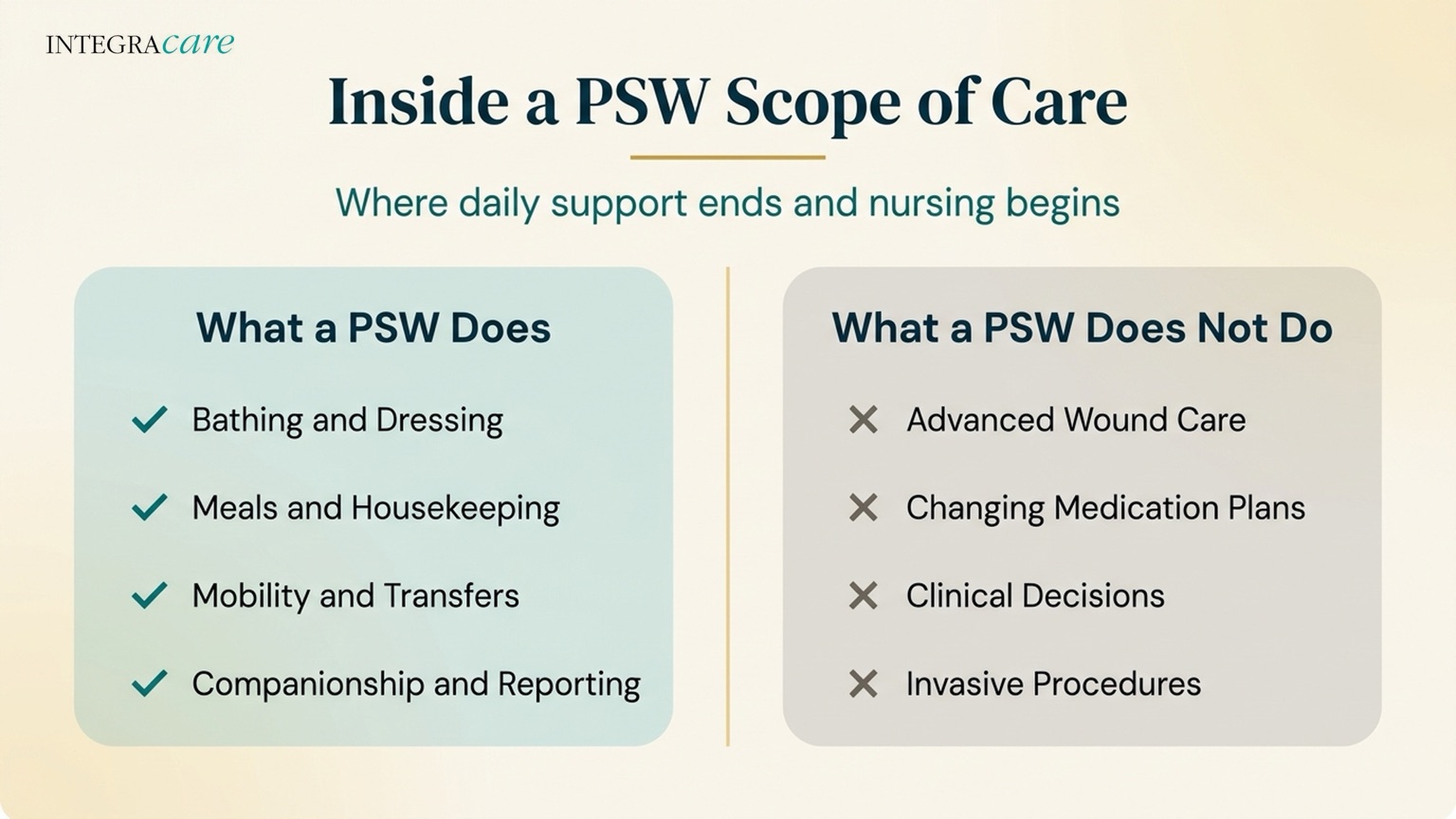
What PSWs Should Not Do
Personal Support Workers play an important role in helping clients feel safe, comfortable, and supported at home. Their work often makes daily life easier for both clients and families.
At the same time, PSWs must stay within their training, workplace policies, and the client’s care plan. If a task involves clinical judgment, invasive treatment, medication changes, or regulated healthcare decisions, it should be handled by the appropriate healthcare professional.
A PSW’s role is to support daily living, notice changes, and report concerns early so the client receives the right care from the right person.
Perform Wound Care or Medical Treatments
Advanced wound care and medical treatments usually belong to nurses or other regulated clinicians because these tasks require assessment, training, and professional judgment.
A PSW may notice a skin concern, document what they see, and report it promptly, but they should not take over treatment that falls outside their role.
Administer Medications Without Proper Direction
PSWs may provide medication reminders or assist with pre-prepared medications when the care plan and workplace policy allow it.
They should not independently administer medications or make decisions about how medications are taken. When medication support is needed, it should follow a clear care plan with the right supervision in place.
Change Medication Plans or Make Clinical Decisions
Medication changes should always be managed by regulated healthcare professionals.
If a client seems confused about their medications, misses a dose, or reports side effects, the PSW should report the concern rather than trying to adjust the plan themselves.
Carry Out Invasive or High-Risk Procedures
PSWs are not expected to perform tasks that require advanced clinical training, mental health expertise, or independent rehabilitation planning.
Their role is to help with daily living, observe changes, and refer concerns so the client receives safe, appropriate care in line with Ontario’s PSW responsibilities.
Why These Boundaries Matter
These limits do not make the PSW role less important. They help keep care safe, respectful, and properly supervised.
At Integracare, clear boundaries, timely reporting, and strong communication with the wider care team help ensure every client receives the right level of care at the right time.
How the Care Setting Shapes a PSW's Role
A Personal Support Worker's responsibilities can vary depending on where care is provided. At home, care is often more personalized and centred around each client's routines and preferences. Hospitals and long-term care homes typically follow more structured processes, documentation requirements, and clinical oversight.
Understanding these differences helps families know what to expect. A PSW's responsibilities are guided by the client's care plan, employer policies, and Ontario's home care regulations, ensuring care is delivered safely and appropriately in every setting.
Comparing PSW Duties by Setting
| Setting | Typical PSW Focus | Supervision and Rules | Common Boundaries |
| Home care / private home | Personal care, companionship, light housekeeping, mobility support, routine assistance | Usually guided by the care plan, employer policy, and family/client preferences within scope | No clinical judgment, no invasive treatment, no tasks outside the approved plan |
| Hospital | Support with daily living, observation, communication, and reporting changes to the care team | More structured reporting, documentation, and direct supervision from regulated staff | Stronger limits around procedures, medication support, and delegated tasks |
| Long-term care | Personal care, routine support, observation, and resident comfort | Clearly defined workflows, recordkeeping, and chain-of-command expectations | Clinical tasks remain with regulated professionals unless specifically delegated |
Policies and Professional Standards That Protect Clients
Professional standards help ensure every client receives safe, respectful, and consistent care. While Personal Support Workers provide essential day-to-day support, their responsibilities are guided by training, employer policies, and clearly defined care plans that help everyone work together safely.
Every Care Setting Has Its Own Standards
Whether care is provided at home, in a hospital, or in a long-term care home, PSWs follow workplace policies and professional standards that define their responsibilities. These expectations help ensure care is delivered consistently while keeping clients safe.
Small Changes Can Make a Big Difference
Because PSWs spend so much time with clients, they are often the first to notice changes in mobility, appetite, mood, skin condition, or overall well-being. Reporting these observations promptly helps the healthcare team respond early and adjust care when needed.
Working Together Supports Better Care
PSWs are an important part of the healthcare team, but they are never expected to manage complex clinical situations on their own. When a client's needs change or additional medical care is required, they communicate with nurses, supervisors, or other healthcare professionals so the right support is provided at the right time.
Professional Standards in Practice
Follow the client's care plan while working within their education, training, and workplace policies.
- Observe and report changes in health, mobility, mood, appetite, or skin condition.
- Document important information to help keep the care team informed.
- Communicate with nurses and supervisors whenever concerns arise or care needs change.
- Work as part of the healthcare team to help provide safe, coordinated, client-centred care.
Strong professional standards aren't about adding rules; they're about ensuring every client receives thoughtful, well-coordinated care. When everyone understands their role and works together, families can feel confident knowing their loved one is supported by a team committed to their safety, comfort, and well-being.
Take the Stress Out of Daily Care
Give your loved one the independence they want and the safety oversight they need. From nutritious meal preparation to specialized memory care, our dedicated Toronto and Mississauga PSWs are ready to step in. Connect with us today to book a free in-home assessment. Our nursing coordinator will build a flexible, customized plan to fit your loved one's needs.
Frequently Asked Questions About Personal Support Worker Duties
What Do PSWs Do?
A PSW’s daily responsibilities could include a number of tasks around the home or directly assisting a Client. To provide a detailed list, they do things like:
- Standard cleaning tasks such as sweeping or vacuuming, washing dishes, doing laundry, and changing sheets that a Client would ordinarily have done on their own before they become ill. (For deeper cleaning and bigger tasks, consider talking to a professional cleaner.)
- Providing medication reminders to Clients at appropriate times.
- Lifting and transferring Clients who struggle with personal mobility.
- Accompanying Clients on walks or doing essential shopping like groceries or picking up prescriptions.
- Assisting Clients with prescribed exercises.
- Meal preparation and planning.
- Helping with personal tasks, including things like dressing, eating, toileting, bathing, brushing teeth, etc.
What Are a PSW’s Strengths?
There are some qualities that every good PSW has to possess. Beyond their training and responsibilities, a great PSW has to have:
- Compassion and empathy.
- Motivation and professionalism.
- Honesty and respect.
- Great problem-solving skills to tackle problems in the moment.
- Capable communication skills.
If you’re interested in learning more about receiving services from our stellar team of PSWs and Caregivers, give us a call to inquire about our free in-home assessment or check out our website anytime.
Can a PSW Administer Medications?
PSWs can often remind clients to take medications and may assist with pre-prepared doses when the workplace has a clear policy, training, and supervision in place. However, independent medication administration is usually reserved for regulated professionals unless a formal delegation process applies. A strong SOP should spell out exactly what support is allowed, how it is documented, and when the PSW must escalate a concern.
What Should a PSW Document During a Shift?
PSWs should document the care they provided, any changes in the client’s condition, concerns they observed, refusals of care, and any incidents that occurred during the shift. SOPs work best when they clearly explain what must be recorded, when it must be completed, and who needs to be notified if something seems unusual. That keeps records consistent and helps the care team respond quickly.
When Should a PSW Escalate a Concern?
A PSW should escalate a concern whenever a client’s condition changes, a task seems unsafe, or a request falls outside their scope of practice. SOPs should identify who to contact first, how quickly to report the issue, and which details to document. This is especially important when the concern involves pain, medication issues, skin changes, falls, or confusion.
Can a PSW Do Wound Care?
In most cases, no, not as a routine PSW duty. Basic observation and reporting are appropriate, but wound treatment normally belongs to nurses or other regulated clinicians. Some workplaces may allow limited assistance only when there is documented delegation, training, and supervision, so SOPs should be very specific about what is allowed and what must be referred immediately.
What if a Task Feels Unsafe?
If a task feels unsafe, the PSW should pause, report the concern, and follow the workplace chain of command rather than pushing through it. A good SOP should make refusal pathways clear so workers know they will be supported when they identify a risk. That protects the client, the PSW, and the organization by preventing avoidable harm.
Do Private-care PSWs Have More Freedom?
Private care can sometimes feel more flexible because schedules, visits, and support hours may be arranged differently, but the PSW’s scope does not automatically expand. They still must follow training, employer policy, and provincial expectations. SOPs should make that boundary clear so clients understand that private arrangements do not make a PSW a nurse or therapist.
Why is Documentation so Important?
Documentation matters because PSWs are often the first to notice small but important changes in a client’s condition. Clear notes help the team make informed decisions, maintain continuity of care, and respond quickly when something changes. Integracare’s privacy-focused approach also supports careful handling of client information, which is a key part of professional PSW practice.
Free In-Home Assessment
The Care Your Family Deserves Starts Here
Speak with our team about a personalized care plan. Book a free, no-obligation in-home assessment and we will help you find the right support for your loved one.
About the Author: Lee Grunberg

President & CEO, M.B.A.
Lee joined Integracare as President & CEO on August 2, 2016 after an approximately 20 year career in Private Equity and Investment Banking. Lee brings tremendous operational knowledge and governance experience along with an incredible passion and energy to Integracare.