
Blog
7 Ways to Make Your Home a Dementia Friendly Environment
Published
Updated
Written by Lee Grunberg, M.B.A. — President & CEO
Reviewed by Bethel McMaster, BScN, RN — Director of Business Development
On this page5 sections
Whether you’re welcoming a loved one into your home who has received a Dementia diagnosis or if you’re helping a friend, neighbour, or family member prepare and reorganize their house if they are living with a type of illness, making your home Dementia friendly will help ensure their optimal safety and comfort.
For many, the ability to age in place following a Dementia diagnosis means that quality of life is retained and prolonged. Staying in the familiar and comfortable surroundings of a family home offers Seniors a wealth of benefits: it honours their dignity, offers extended independence, and instills a sense of familiarity and security. Some will cherish the ability to stay connected to their neighbourhood and neighbours. For Seniors with pets, being able to keep their furry or feathered companion will offer true comfort.
Aging in place also reduces the stress and sadness that can come with being moved from familiar surroundings into a care facility. Further, aging in place gives Seniors and their family members the option to secure one-on-one private home care services in Toronto, like those offered by Integracare Home Care.
Unlike long-term care facilities or hospitals, which are often at capacity with overstretched team members, we offer highly personalized at-home care that’s tailored to a Client’s preferences, abilities and needs, guaranteeing their well-being and fulfillment.
There are profound and diverse benefits of staying at home following a Dementia diagnosis. That said, individuals who are living with Dementia will need to take some time to rearrange and restructure their living spaces for both their safety and their comfort and often with the help of a loved one or an educated at-home healthcare provider. This is because some of the mental and physical symptoms that are attributed to Dementia can make the home as it’s currently laid out dangerous or confusing.
To help you create Dementia friendly bedrooms, bathrooms, and other living spaces (the fundamentals of Dementia friendly design), we’re providing you with a Dementia friendly environment checklist to help you with the process. That said, we can gladly provide assistance and advice on making home renovations for accessibility, so if you have any further questions, please don’t hesitate to connect with us.
Mobility Symptoms Following a Dementia Diagnosis
How a person’s mobility is altered varies between individuals and as the illness progresses. Some physical symptoms that persons with Dementia may experience include tremors in the joints, muscle rigidity, faltering motor skills, trouble with balance, and a reduced ability to stand up from a chair or from a bed on their own. These symptoms can compound, making individuals more prone to trips or falls.
Some people with Dementia may also experience wandering: the person living with the illness may forget where they are, becoming stressed or anxious and making them a flight risk. They may try to leave their house or venture outside, thinking they’re in the wrong place and not already home. They may also leave the safe surroundings of home as they attempt to find an old friend or loved one.
Mental Symptoms Following a Dementia Diagnosis
In addition to physical symptoms, Dementia also causes disruptions to a person’s cognitive abilities, how people think, and how they regularly process information. The most common mental symptom of Dementia is advancing and persistent memory loss. This can oscillate between forgetting names, events, knowledge and everyday skills or abilities, like forgetting how to operate household appliances.
Individuals may also experience delirium and hallucinations, which may cause them to panic and experience feelings of stress, anxiety, fear, and suspicion.
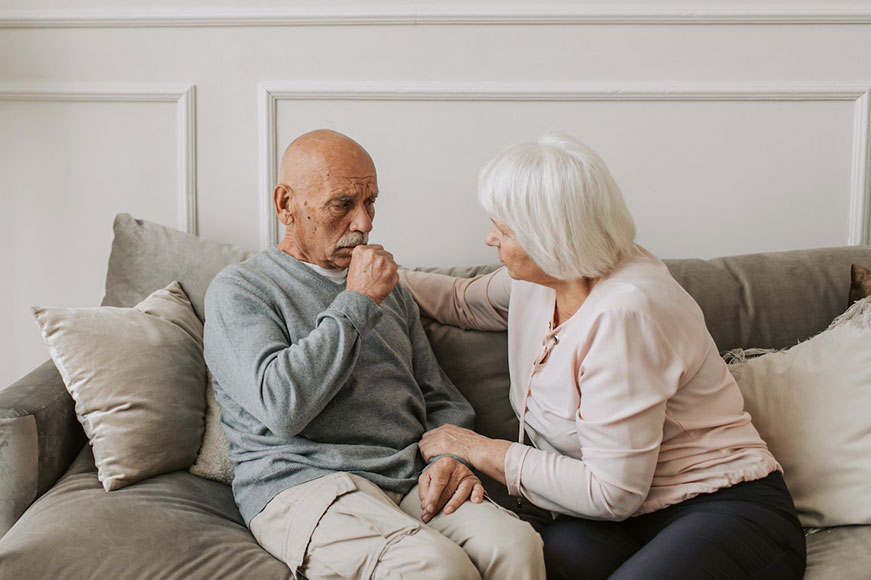
These are just a few of the mental and physical symptoms that present following a Dementia diagnosis. Each highlights the need for measures to be taken to maintain safety at home. It’s why making your home Dementia friendly is so important.
What Is the Best Environment for Dementia Patients?
Adapting the home to meet the needs of a loved one with Dementia is the best way for them to age in place safely and securely. A loved one going through Dementia and a change in environment can experience more stress than if they were able to stay in the comfort of their own home. However, there are changes you can make to create a better environment that is more conducive to their care. A Dementia friendly environment includes:
- Quiet space
- Good lighting
- Flooring that is not reflective or slippery
- Contrasting colours in the bathroom and toilet seat
- Open doors/concepts
- Labels on everyday items
What Is a Dementia Friendly Environment: Changes You Can Make at Home
There are multiple impactful ways to create a safe environment for Dementia patients, ranging from accessible, low-cost changes to some Dementia friendly design adjustments that involve a little more forethought. In partnership with procuring live-in care, taking the time to implement these household modifications will make aging in place possible for your loved one. Here are seven Dementia friendly home ideas that will significantly improve your living space.
1. Consider the Flooring
One of the first ways to craft a Dementia friendly home involves addressing the floors. Mats, rugs, and wrinkled carpets are all tripping hazards — and this is especially true if an individual uses a walking aid, like a walker or a walking stick. Roll up and remove these floor accessories.
People living with Dementia can experience perceptual challenges, which may lead to distortions of reality. This means shiny, heavily textured, or patterned floors can cause distress. For example, a speck on a tile could be misconstrued as something to pick up, and fluctuations in colour on a carpet can be misunderstood as different levels or steps. If you plan to refit flooring in living areas, opt for Dementia friendly designs, like matt neutral wooden style flooring or carpeting or tile of one solid colour — doing so will greatly reduce the potential for a trip or fall.
Another important consideration when you’re tackling the flooring is to pay close attention to loose cables from floor lamps, routers and other electronics. Make sure to tac them out of the way and off the flooring.
2. Make Changes in the Washroom
If a loved one is planning to age in place, some adjustments should be made in the washroom to create a Dementia friendly environment. These changes include installing grab bars in the shower and next to the toilet and procuring a shower bench or bath seat. It’s also advised that locks be removed from the door to prevent the individual from accidentally locking themselves inside.
If possible, set the water heater to a moderate temperature to avoid scalding temperatures and any related burns.
For their safety, it’s not advised for those living with Dementia to be left alone in the washroom during the advanced stages of the illness. As Dementia advances, the need for 24-hour, round-the-clock supervision will be necessary — often from professional live-in care services — to keep your loved one safe and comfortable and meet their ever-changing and multifaceted needs.
3. Remove or Restrict Safety Hazards
Due to the staggering memory loss that those living with Dementia may experience, and the confusion and hallucinations which can present themselves in the later stages of the illness, the third tip on our Dementia friendly environment checklist is to proactively move toxic cleaning supplies, matches, lighters, and medications to a locked cabinet if they’re still in use. Move them off the premises entirely if you don’t foresee needing them.
Further, disconnect potentially dangerous appliances (like the garbage disposal or space heaters), place covers over electrical outlets, and remove tools and sharp implements that may cause harm. Some companies can install locks on driers and ovens, meaning these major appliances can only be accessed and used when supervision is at hand.
While this may seem overwhelming, most of these measures won’t be necessary in the early stages of the illness. As time goes by, you’ll find that potential hazards will become apparent as you spend more time looking around the home, and you’ll know when to implement Dementia friendly home ideas when needed.
4. Re-evaluate Lighting
It’s said that people aged 65 and older need twice as much light as someone who is 20 years of age. This is because your pupils decrease to around one-third of their size at the age of 20. Age, partnered with Dementia (the majority of people who are affected by Dementia are aged 65 and older), means that effective, bright lighting is crucial.
For those with Dementia, bright rooms and spaces are easier to navigate and understand. They also make seeing faces and facial expressions easier, which can alleviate stress and confusion.
With that, changes to the level of lighting can be disorienting. To minimize confusion, one of our Dementia friendly home ideas is to optimize natural light in living spaces by opening curtains and blinds during the daytime and adding extra lighting when the sun goes down. For rooms other than the sleeping area, consider installing dusk-to-dawn light bulbs that switch on automatically as the sun sets and switch off as the sun rises, offering a seamless transition.
Last, another easy way to make your home Dementia friendly and safe is to place nightlights in outlets in every room to give a consistent level of ambient light.
5. Declutter
Clear bedrooms, bathrooms, kitchens and living rooms of unnecessary clutter. Not only will this remove potential tripping hazards, but it also creates a clearer, less confusing, and less distressing environment for your loved one. It will also make it easier to navigate the home and to find items on days when their cognitive abilities are foggier.
A Dementia friendly bedroom is especially important. For many, the bedroom is a sanctuary, so creating a tidy and organized space will make the room as soothing and as comfortable as possible.
6. Label Rooms and Everyday Items
One easy and cost-effective way to make your home a Dementia friendly environment is by placing labels on doors, cupboards, and everyday items. On doors, write the name of the room and a symbol or an icon that describes its purpose. This can be a proactive approach to wandering prevention as it may stop your loved one from trying to leave the home in search of the kitchen or bathroom.
Take a similar approach to kitchen and bathroom cupboards by drawing simple illustrations of the cupboard’s contents.
Similarly, label items like glasses cases or the TV remote, and label a light switch with ‘on’ and ‘off’ stickers — doing so will make it easier for your loved one to understand the purpose of these items.
7. Reorganize Locks
We briefly touched on the importance of locks in creating a Dementia friendly environment above. To elaborate further, remove any locks on interior doors — like the bathroom, basement, attic, or bedroom. Doing so will prevent your loved one from erroneously locking themselves inside a room, which could cause them distress and make them inaccessible should they trip or fall.
Turning our attention to external doors and windows, keep keys for these openings hidden. For doors, consider installing a deadbolt that’s high and away from eye level, and explore installing an alarm on these external doors so that you’ll be alerted if your loved one has ventured outside alone.
As an extra precaution, keep a set of keys for the external doors hidden in a safe location outside the home. This is an additional precaution in case your loved one accidentally locks themselves in. We also advise keeping car keys on your person or out of sight.
While these measures may seem extreme initially, keeping keys safe and removing certain interior locks will be instrumental in keeping your loved one safe.
Connect with Us for More Ways to Make Your Home a Safe Dementia Environment
Making your home a Dementia friendly environment can seem overwhelming, especially as you navigate the emotional toll and the medical hurdles that a Dementia diagnosis brings. We can help you work through these challenges, allowing your loved one to age safely in place.
We proudly offer the best Dementia Care service in Toronto and Mississauga. As an exclusive partner of the Alzheimer Society of Toronto, our compassionate health care team receives consistent training and access to the most up-to-date tools and resources. This ongoing affiliation ensures that we are well-equipped to help improve our Clients’ quality of life — physically, mentally and socially — while easing the pressure from their loved ones.
We can also help you secure assistive devices that can help make Activities of Daily Living easier for Seniors and their family members and to help foster safer Dementia friendly bedrooms, bathrooms, and kitchens. We both sell and rent bath seats and commodes, walkers and wheelchairs, electric hospital beds and more.
If you would like to learn more about our services, connect with us today: we offer home safety assessments and counselling. We can also provide a free in-home evaluation where we work with you to partner your loved one with a highly trained and experienced Personal Support Worker or a live-in Caregiver that suits your loved one’s personal needs.
Free In-Home Assessment
The Care Your Family Deserves Starts Here
Speak with our team about a personalized care plan. Book a free, no-obligation in-home assessment and we will help you find the right support for your loved one.
About the Author: Lee Grunberg

President & CEO, M.B.A.
Lee joined Integracare as President & CEO on August 2, 2016 after an approximately 20 year career in Private Equity and Investment Banking. Lee brings tremendous operational knowledge and governance experience along with an incredible passion and energy to Integracare.