
Blog
Wandering Detection: What is Wandering and How to Prevent It?
Published
Updated
Written by Lee Grunberg, M.B.A. — President & CEO
Reviewed by Bethel McMaster, BScN, RN — Director of Business Development

On this page10 sections
Key Takeaways
- Wandering is a common dementia symptom and can happen at any stage.
- Signs of wandering risk include confusion, restlessness, and wanting to “go home.”
- Dementia wandering prevention starts with routines, activities, and home safety measures.
- A wandering response plan helps families act quickly if a loved one goes missing.
- Canadian families can look for local dementia support, emergency contacts, and care guidance.
To some, wandering might sound like something pleasant you do while on vacation as you aimlessly roam up and down an unfamiliar city street. But to those people living with Dementia and their family members, wandering is a much more dangerous activity.
Wandering for those living with Dementia is a response to stress, anxiety, and confusion. People living with Dementia may wander when they get lost or can’t recognize familiar surroundings. They can wind up taking the wrong turn while coming home one day, or they can walk out the door wanting to “go home” even when they’re already there.
Here at Integracare Home Care in Toronto, we understand how stressful wandering can be. That’s why we’re sharing our guide on wandering detection and prevention below.
Learn why people wander, who’s at greater risk, and how to reduce the risk of your loved one dangerously wandering.
Is Wandering a Sign of Dementia?
Alzheimer’s disease and Dementia cause disruptions to the way people think, making it easier to wander or get lost.
Why these disruptions happen depends on the type of Dementia you or your loved one has:
- Vascular Dementia suppresses blood flow to the brain and causes oxygen deprivation, killing brain cells.
- Lewy Body Dementia causes abnormal amounts of the protein alpha-synuclein to build up in the brain, which interferes with concentration and movement.
- Meanwhile, Alzheimer’s, the most common type of Dementia, causes brain cells to degenerate and die.
While their pathologies may differ, every kind of Dementia results in staggering damage to the brain and its ability to function. As a result, they share many of the same physical and emotional symptoms.
Here are some of the most common identifying signs of Dementia:
- Difficulty with problem-solving and reasoning
- Confusion and disorientation
- Memory loss
- Visual processing issues
- Personality and mood changes
- Social withdrawal
- Trouble communicating and expressing feelings
With the above symptoms at play, it becomes incredibly easy for people living with Dementia to forget where they are, become restless or anxious, and want to go home even when they’re already there.
At first, these symptoms can lead to unintentional wandering if someone attempts to return from an outing and forgets their way home.
However, someone with Dementia may also deliberately leave safe and familiar surroundings in the later stages. One of the most common triggers for wandering in Dementia is the individual not recognizing where they are and wanting to go home. People living with Dementia may try to escape these stressful and strange places, or they may be searching for someone, like an old friend or a long-passed family member. This is one of the reasons that aging in place and getting Dementia Care at home is the best option for someone with Dementia, but in the later stages, they may not even recognize familiar places.
Here at Integracare, we’re known in the GTA as offering the best Dementia Care Mississauga and Toronto has to offer. That’s because we tailor our care to suit the symptoms as they progress. We have a broad selection of health care professionals to ensure we pivot quickly and meet your loved one’s evolving needs at every stage of the disease.
Regardless of your needs, compassion is one of our Dementia Care fundamentals, as we believe aging with dignity is possible for everyone, including Seniors living with Dementia.
Who Is at Risk of Dementia Wandering?
When it comes to Seniors living with Dementia, wandering is more likely as the disease progresses, so someone in the middle or late stages of Dementia is at a higher risk of wandering. However, anyone living with Alzheimer’s or Dementia may wander, even if your loved one is in the early stages of the disease or they have just received their diagnosis.
Although today’s focus is on Seniors with Alzheimer’s and Dementia, wandering isn’t exclusive to this demographic. People with other conditions and disabilities may also be at risk, including those with Autism, cognitive impairments, and Down syndrome.
6 Tips: How to Stop Dementia Patients from Wandering
Taking care of someone who poses a flight risk demands your time, energy, and emotions, and that can seem overwhelming. If you’re constantly worrying about your loved one’s safety, you can take steps to reduce their risk of wandering.
Get the Right Help
Caring for a loved one with dementia is one of life’s biggest challenges that can place a heavy burden on your shoulders. If a loved one has wandered off before, it can feel like the only safe option left is to move them into a long-term care facility.
While this may be the right choice for some families, it may interfere with your loved one’s wish to age in place. Uprooting Seniors to move them into unfamiliar nursing homes can be frightening, making an already stressful situation worse.
Luckily, our at-home care services in Toronto and Mississauga offer an alternative that honours your loved one’s wishes. Our health care professionals are here to give you space to breathe without sacrificing your loved one’s safety or quality of life.
Our team consists of a wide variety of health care professionals to assist you and your loved one in any capacity at any stage of the disease.
In the early stage, you can hire a Personal Support Worker (PSW) to visit on an as-needed basis, showing up to keep your loved one company at home, assist them with chores, or accompany them on walks, medical appointments, and social engagements outside the home.
A PSW makes a great companion to people who can still get out and about but who may need some help in case they get turned around.
As the disease progresses and your loved one needs constant supervision, we can provide a compassionate Live-In Caregiver to provide 24/7 assistance. The best Live-In Care Toronto has to offer ensures someone will be with your loved one at all times to provide medical support and companionship. This extra set of eyes makes it harder for Seniors to wander off.
Create a Support Network
Another way you can share the Caregiver burden is by talking to friends, family, and neighbours. Reach out to other loved ones to see if they’re willing to help out; they may be able to run errands for you while you’re caregiving.
They may even be willing to take over so that you can relax or look after your own health. You can share a calendar and set specific times when someone should check in so your loved one never goes too long without contact.
Talking to your loved one’s neighbours is also a great way to reduce the risk of danger should your loved one wander. Let them know that your loved one is dealing with this diagnosis so they can keep an eye out when your loved one is outside.
Depending on the progression of the disease, Seniors can speak with their neighbours directly about this plan. Having this conversation lets them know who they can call on for help if they ever get turned around. Meanwhile, a neighbour will know to help your loved one get their bearings should they look confused.
However, when disorientation and confusion are at their worst in the late stage of the disease, neighbours can stop your loved one from getting any farther than they’ve already wandered. They can sound the alarm before things get too scary.
Fill Out an Identification Kit
In the early stages of dementia, seniors may still lead a very independent and joyful life, carrying on many of the same activities and hobbies they had before their diagnosis. If this includes walking or driving by themselves, we here at Integracare recommend following the Alzheimer’s Society of Canada’s identification tips.
- Wear a generic identification bracelet.
- Carry a personal identification card in your wallet, pocket, or on a lanyard.
Fill out the identification kit and make sure loved ones can easily access it and share it with authorities in case you get lost.
Household Updates to Deter Wandering
When Seniors enter the mid- to late stage of Dementia, they may become lost or confused in their own home. Without constant supervision, they might walk out the door searching for another room, another home, or even loved ones.
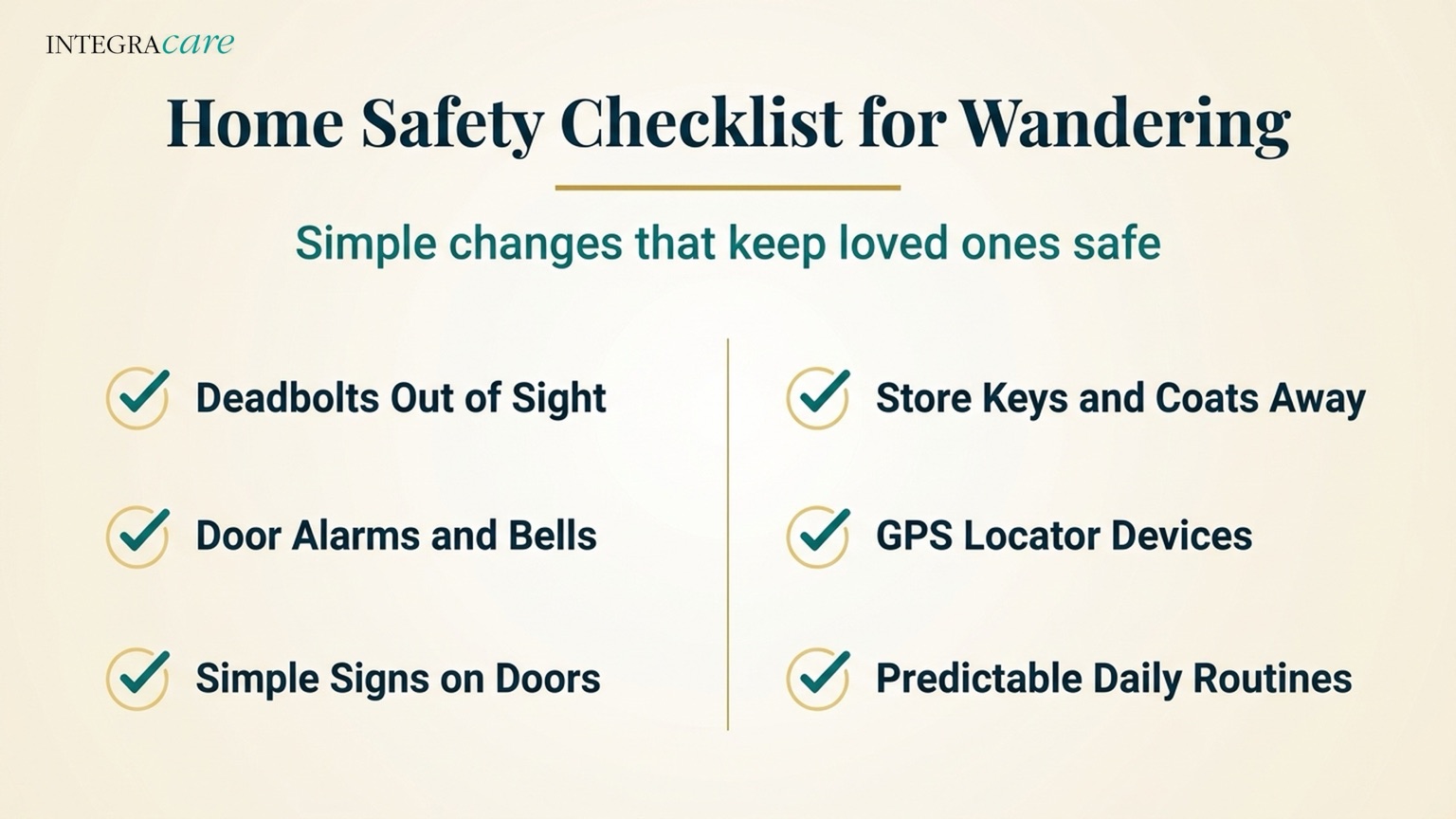
Simple and inexpensive renovations can help prepare your home, making it harder for a loved one to leave unsupervised. The Alzheimer’s Society suggests making the following changes to maintain safety at home for your loved one:
- Deadbolts on any external door, making sure they’re out of the usual line of sight
- Bells or other monitoring devices to alert you when a door opens
- Safety gates at stairs in and outside the home
- Hedges or a fence to enclose the outdoor property
- Labels on each door with simple signs or symbols to explain the purpose of each room so they don’t accidentally leave in search of a bathroom or kitchen
- Put away items that would encourage someone to leave, including shoes, coats, keys, and wallets.
- Cover doorknobs with safety covers
- Cover the entire door with curtains
While many of these household upgrades will help keep your loved one safely indoors, you should never lock someone living with Dementia inside alone.
If your loved one is living with middle- or late stage Dementia, then we recommend researching 24/7 hourly or Live-In Care, as these professionals will stay in the home with your loved one to ensure they’re safe and well taken care of.
Take Advantage of Technology
You can take several steps to reduce the risk of wandering, but there’s a chance your loved one can slip out unnoticed despite your best efforts. In these emergencies, it’s helpful to have tech on your side.
Before wearable tech and tracking technologies, families of missing loved ones had very few resources they could use to locate someone. Word-of-mouth sightings and surveillance footage were usually the only clues left behind. Now, you can follow their location by checking apps or devices.
The latest GPS, radio frequency, and Bluetooth technologies power tracking and health monitoring apps. These mobile apps or wearable devices allow you to keep digital tabs on your loved one with a tap of your screen or a click of your mouse.
While there are ethical questions about privacy that you have to consider, tracking technology can give you peace of mind. Take a look at the options from the Aging and Innovation Research Program (AIRP) for more information about this tech.
Provide a Supportive Atmosphere
As mentioned above, many seniors may wander because they’re confused about where they are. They may leave their house in search of home without realizing that’s their starting point, or they may believe they have to be somewhere else, like work or a family member’s home.
Finding out why they’re trying to leave helps you address these concerns and anxieties. Take the time to reassure them if they feel lost or abandoned.
Validating their feelings is only the first step to Dementia wandering prevention. Successfully distracting them from these worries or intentions is the other essential factor. Involve them in light chores and activities or give them a small task to do, like working on a puzzle or eating a favourite snack.
Keeping our Clients engaged throughout the day with structured, meaningful activities is one of our priorities here at Integracare. It improves their quality of life and helps prevent anxieties that may lead to wandering.
Planning and Preparedness
Planning can make a real difference when dementia wandering is a concern. A clear daily plan, scheduled activities and appointments, and a simple emergency plan help reduce confusion and support safer routines at home and in the community. Families can also map out indoor and outdoor common areas, identify places the person might wander to, and note any potentially dangerous areas or items that may trigger a person’s instinct to leave. Training and e-learning modules, along with useful resources, can give care partners more confidence and peace of mind.
More Information About Dementia and Wandering
The more you know about Dementia wandering prevention, the better prepared you’ll be to help a loved one who begins to wander.
Why Do People with Dementia Wander?
Researchers do not know the exact cause of wandering, but the potential causes include:
- Reduced topographical memory, meaning the individual struggles to recognize where they are.
- Visuospatial dysfunction, causing the individual to struggle with spatial awareness.
- Losing memories of a place and the individual believing that they are not home.
Prevention and Risk Reduction Strategies
The most helpful prevention and risk reduction strategies are usually proactive, person-centred, and easy to repeat every day. A home safety checklist can help families spot risk factors, while distraction or redirection, healthy lifestyle choices, and practical strategies may reduce the urge to wander. Early diagnosis gives families more time to plan and adapt routines before safety becomes urgent. In Canada, families may also benefit from support through local dementia programs, the first link® dementia helpline, or a wandering response service when extra guidance is needed.
How to Stop Dementia Patients from Wandering at Night?
Triggers for wandering in Dementia include stress and anxiety, agitation, delirium, the sudden introduction of a new routine, and looking for something related to their past. Minimizing triggering situations can help with Dementia wandering prevention.
What Stage of Dementia Is Wandering?
Wandering can happen at any stage of Dementia, but the risk of wandering increases as symptoms advance. Dementia wandering prevention can be much more important during the later stages of Dementia.
Should You Get a Wander Guard for Dementia?
A wander guard for Dementia can help reduce the risks of wandering. Safety products can include visual deterrents such as stop signs at doors or door alarms that can alert other people in the home if someone begins to wander out. High-tech solutions can use RFID technology to alert Caregivers and give patients more dignity while keeping them safe.
What to Do If Wandering Continues
If wandering happens, having a calm response plan can save valuable time. A GPS device, door alarms, motion sensors, and bed pressure mats can help alert the care team quickly. If the person cannot be found right away, call the police immediately. A person living with dementia who is missing is vulnerable, so do not wait to make that call. Neighbours, friends, and family can support the search. It is also important to review prescription medications, caregiver stress, coping strategies, and safety measures to understand what may have contributed. If needed, alternative transportation options can help reduce driving-related risk after an incident.
What Canadian Families Should Know About Wandering
For Canadian families, it helps to keep emergency contacts current, understand local support options, and connect with dementia services available in your province or community. Many families also find it useful to speak with health care providers early, especially if wandering, confusion, or nighttime restlessness becomes more frequent. A home care approach that supports aging in place can be especially valuable when safety, dignity, and familiar surroundings matter most.
Helping Loved Ones Stay Safe at Home
Wandering can happen at any stage of dementia, leaving families feeling like they always need to be on alert. Along with practical safety strategies, a personalized daily plan, meaningful activities and exercise, and a clear emergency plan can all help reduce the risk of wandering while creating more predictable routines.
Integracare's specialized dementia caregivers are supported by Registered Nurses and trained to recognize changes in behaviour, identify situations that may trigger a person to leave, and provide the consistent routines that help older adults remain safe and comfortable at home. Through our longstanding partnership with the Alzheimer Society of Toronto, our care teams receive ongoing dementia education, specialized training, and practical resources that strengthen their ability to respond to the changing needs of people living with dementia. We also help families develop personalized care plans, connect with useful resources, and prepare for the future with confidence. Contact us to learn how our specialized dementia care can support your family.

Frequently Asked Questions
Why do people with dementia wander?
People living with dementia may wander because of confusion, memory loss, disorientation, or emotional distress. Some people feel a strong desire to go home, even when they are already in a familiar place, while others react to boredom, restlessness, environmental stressors, hallucinations, or physical discomfort. Delusions and over-stimulation can also play a role. Understanding the cause helps caregivers respond with compassion and create safer routines.
How can families prepare for wandering?
Planning can make a big difference. A daily plan with scheduled activities and appointments helps reduce uncertainty, while an emergency plan gives family members clear steps to follow if wandering happens. It also helps to identify indoor and outdoor common areas, list places the person might wander to, and remove items that may trigger a person’s instinct to leave. Training and e-learning modules can also support care partners.
What are practical ways to reduce wandering risk?
Practical strategies often start with an early diagnosis, person-centred care, and a home safety checklist. Care partners can use distraction or redirection, keep routines predictable, and support healthy lifestyle choices such as regular movement and meaningful activities. It also helps to understand risk factors and take proactive steps before wandering becomes a pattern. In some cases, community supports like the first link® dementia helpline or a wandering response service may be helpful.
What should we do if a loved one wanders?
If wandering happens, stay calm and act quickly. Do a quick check of familiar rooms, outside areas, and any places the person usually goes, and call the police immediately if they cannot be found. A person living with dementia who is missing is vulnerable, so do not wait to make that call. The care team, neighbours, friends, and family can help with the search. Helpful safety measures can include a GPS device, door alarms, motion sensors, or bed pressure mats. It is also important to support caregivers' stress and use coping strategies afterward.
Who is most at risk of wandering?
Wandering risk is often higher for people living with dementia who have memory loss, repeated wandering, or signs a person may be at risk of wandering, such as confusion, restlessness, or getting lost in familiar places. Certain stages of Alzheimer’s disease may increase risk, and environmental changes can matter too. Moving to a new home or new neighbourhood can add stress, while stigma can prevent families from asking for help early.
How can travel be safer for someone with dementia?
Travelling with a person living with dementia takes preparation and extra attention to safety and security. Try to keep the person in a familiar environment as much as possible, and plan for traffic, dangerous weather conditions, and unfamiliar physical environment changes. Keep car keys secure, use night lights when staying away from home, and consider how long-term care or end-of-life care needs may affect travel plans. The goal is to reduce the risk of wandering while keeping the person comfortable.
Why does wandering happen more at night?
Night-time wandering is often linked to confusion between night and day, difficulty sleeping, and changes in sleep patterns. Sundowning can increase disorientation and restlessness, especially as daylight fades or when the environment becomes quieter. Triggers may include fatigue, poor lighting, or unfamiliar surroundings. A calm evening routine, familiar places, and gentle reassurance can help reduce distress and make nights feel more predictable for both the person and their care partners.
What should a wandering response plan include?
A strong response plan should outline who to call, what areas to check first, and how to respond if the person cannot be found quickly. It should include a list of places the person might wander to, indoor and outdoor common areas, and any potentially dangerous areas nearby. Families may also want to note useful resources, emergency contacts, scheduled activities and appointments, and clear steps for using a wandering response service if available.
What home safety changes can help?
A home safety checklist can identify small changes that make a big difference. Door alarms, motion sensors, and bed pressure mats can alert caregivers if someone is moving unexpectedly. It also helps to remove or secure items that may trigger a person’s instinct to leave, improve lighting with night lights, and keep walkways clear. These safety measures work best when paired with supervision, routine, and person-centred care that respects the person’s habits and preferences.
Can activities help prevent wandering?
Yes, activities and exercise can reduce boredom, restlessness, and emotional distress, which are common triggers for wandering. A daily plan that includes meaningful tasks, light movement, and social connection can give the person structure and comfort. Regular engagement also supports healthy lifestyle choices and can make transitions easier through the day. When activities feel familiar and enjoyable, they may lower the urge to leave in search of something more stimulating.
How can care partners lower stress around wandering?
Care partners often feel worried, exhausted, or overwhelmed when wandering is a possibility. Supportive coping strategies include asking for help, keeping routines realistic, and using a care team for guidance. It can also help to understand prescription medications, since some can affect alertness or behaviour, and to plan alternative transportation options if the person should no longer drive safely. Reducing caregiver stress supports better decision-making and calmer care.
When should families ask for professional dementia support?
Families should consider professional support when wandering becomes frequent, safety concerns increase, or the care situation feels too stressful to manage alone. Early diagnosis and ongoing guidance can help families use practical strategies before risks grow. Professional dementia care can also support person-centred care, routine building, and safety measures at home. For many families, having experienced care partners involved brings reassurance, structure, and a more responsive plan for changing needs.
Free In-Home Assessment
The Care Your Family Deserves Starts Here
Speak with our team about a personalized care plan. Book a free, no-obligation in-home assessment and we will help you find the right support for your loved one.
About the Author: Lee Grunberg

President & CEO, M.B.A.
Lee joined Integracare as President & CEO on August 2, 2016 after an approximately 20 year career in Private Equity and Investment Banking. Lee brings tremendous operational knowledge and governance experience along with an incredible passion and energy to Integracare.