
Blog
Stretches and Exercises Perfect for Seniors
Published
Updated
Written by Lee Grunberg, M.B.A. — President & CEO
Reviewed by Bethel McMaster, BScN, RN — Director of Business Development
On this page16 sections
Key Takeaways
- Gentle stretching and exercise help seniors stay comfortable and independent at home.
- Joint stiffness can result from cartilage thinning, arthritis, inactivity, and age-related changes in tendons and ligaments.
- To reduce injury risk, seniors should practice safe movement habits such as warming up, using a chair for balance, and avoiding overstretching.
- Incorporating regular stretching, strength training, and endurance exercises supports daily mobility and boosts confidence.
- Small, consistent movement routines are easier to maintain and more effective for long-term health.
Let’s be honest, getting older changes how our bodies feel. You might find that your joints feel a bit tighter in the morning or that walking down to the mailbox takes a little more effort than it used to. It's easy to feel frustrated by these changes, but they are simply a sign that our bodies need a bit of extra care and attention.
Why Regular Stretching and Exercise Matter
Regular stretching and exercise are two of the most powerful tools we have to fight back against stiffness and keep moving comfortably. Stretching and exercise, ranging from simple muscle elongations to light strength training, keep your muscles flexible, your bones strong, and your balance sharp. They support healthy aging by directly improving your range of motion and keeping your circulation active. For any senior who wants to stay independent at home, establishing these simple daily movement habits makes everyday life much safer and less physically demanding. Sticking to a routine helps make movements easier, easing soreness and stiffness.
The Value of Proper Warm-Ups and Cool Downs
Always start with a few dynamic stretch warm-up exercises to wake up your muscles before you move. You can use upper-body dynamic stretches to keep your arms and shoulders limber, and lower-body dynamic stretches to take pressure off your knees and lower back. Incorporating simple functional exercises, like standing from a chair with arms to build up your thighs or doing a double-leg ankle stretch to protect your balance, makes a massive difference. It is important to listen to your body and understand its limits, allowing for a relaxing cool-down to let your muscles rest and recover.
With the right physiotherapist backing you up, a supportive family cheering you on, and great healthy aging resources in your corner, staying active at home becomes an easy, rewarding part of your daily life.
How Stretching and Exercise Support Aging in Place
Staying active is one of the most important ways older adults can continue aging in place safely and comfortably. Regular stretching and exercise help maintain mobility, flexibility, strength, and balance, making it easier to continue enjoying familiar routines at home. Just as importantly, consistent movement helps improve blood flow to muscles and joints, supporting healthy movement while reducing stiffness and the risk of injury that can make everyday activities more challenging.
Preparing the Body to Move Comfortably
Before beginning any exercise routine, it's helpful to prepare the body with a gentle warm-up. Simple dynamic stretch warm-up exercises, including upper body dynamic stretches and lower body dynamic stretches, gradually increase blood flow, loosen muscles, and help joints move more freely. Finishing with a gentle cool-down allows the body to recover gradually while helping maintain flexibility and reducing muscle tightness afterward.
Building Strength for Everyday Activities
Movement isn't about strenuous workouts. It's about making everyday moments feel a little easier. Exercises such as standing up from a chair with arms, gentle sit-to-stands, walking, and a double-leg ankle stretch can help improve lower-body strength, flexibility, and balance. These simple exercises support the movements older adults rely on every day, whether that's climbing stairs, getting in and out of bed, or walking safely around the home.
Small Steps That Support Long-Term Independence
The most effective exercise routine is one that feels comfortable enough to become part of everyday life. A physiotherapist can recommend stretches and strengthening exercises that reflect each person's mobility, health conditions, and goals while helping ensure movements remain safe and appropriate.
Families don't have to navigate healthy aging alone. Guidance from healthcare professionals, encouragement from a strong support community, and trusted healthy aging resources can all play an important role in helping older adults stay active, reduce the risk of falls and injuries, have a safe recovery, and continue living safely and confidently at home.
Helping Recovery Feel More Comfortable
Recovering from surgery, an injury, or a change in mobility takes time, patience, and the right support. Receiving treatment at home allows physiotherapists to see how someone moves within their own environment and recommend practical strategies that make everyday activities safer and more comfortable.
At Integracare, our physiotherapists provide attentive, one-on-one care that fits naturally alongside the rest of each client's home healthcare plan, tailored to each person's goals, abilities, and home environment. Working alongside nurses, Personal Support Workers, and families, they create treatment plans that support recovery while helping clients remain comfortable, active, and safely at home.
Balance Exercises for Seniors
Heel-Toe Walk
The heel-toe walk is just as it sounds: with your shoulders in and abs tight, you take one foot and put it ahead of the other, moving your foot heel-to-toe. Then you repeat, walking in a straight line. Have your arms outstretched for balance as you do the heel-toe walk, and don’t hesitate to use a nearby wall for added stabilization if need be; safety should be prioritized above all. This is one of the better leg exercises for Seniors at home.
Flamingo Stand
No, you do not have to dress all in pink to pull this one off! The goal here is to simply stand on one leg, which will not only improve balance, but also give your glutes and core a gentle workout. Gentle stretches for Seniors can improve strength and balance while reducing your risk of injury. Resist the temptation to slouch while performing the flamingo stand: keep your shoulders and back straight, and your chin up. As with any standing exercise, especially one requiring tricky balance, have something nearby to support you, like a chair, counter or table. Ideally, you want supervision for this one.
Rock the Boat
Rock the Boat isn’t just a disco hit from the 70s – it’s also a valuable exercise to have in your repertoire. This one is fairly easy. Find a chair and stand behind it, feet shoulder-width apart, with your hands on the top of the chair to brace yourself. Next, rock side-to-side, lifting a foot a little each time you teeter, as though you are being rocked by a swaying boat. With time, you will be able to lift your foot a little more, and for a little longer.
Strength Exercises for Seniors
Wall Push-Up
Seniors are often searching for activities to help them stay healthy and strong, and these strength exercises are a natural place to start. Push-ups are great for strength, as they work the chest muscles, shoulders and triceps. The only issue is that conventional push-ups, which require you to work against gravity to hoist your own body weight, can be excessively difficult.
Enter the wall push-up, essentially a vertical version of the classic exercise. Facing a wall, outstretch your arms and lean against it, palms flat. Then, go through the motions of a regular push-up, breathing as you bend your elbows and move toward the wall. Be sure your footing is secure, with no loose rug underneath, or enlist the help of a professional in-home physiotherapist to guide you.
Hip Stretches
These hip stretches for Seniors come courtesy of the AARP (American Association of Retired Persons). In their write-up, they list two hip-healthy exercises, one for hip adduction and another for abduction, both working your legs and thighs. Hip exercises for Seniors are great for strengthening your hip joints, as well as stabilizing your posture and spine.
Let’s start with hip adduction. Using a resistance band, which you can buy online or at most large stores, loop one end of the band around a solid object, and the other around your ankle. Move your ankle away from the object, putting tension on the band, and therefore your muscles. For abduction, stand inside the resistance band, looping an end around each ankle, and raise one leg at a time out to the side.
Glute Bridge
Lie down on the floor, somewhere comfortable, with your knees bent, and your arms to your side flat on the ground. Gently lift your hips to form a straight line with your back, stabilizing yourself with your arms still on the ground. Let your hips sink gently back to the ground. This is one repetition of an exercise that is powerfully effective at strengthening your thighs and, as the name suggests, glutes. It can be a difficult exercise, so if you are unsure, or just beginning to exercise, it is wise to consult with a professional.
Stay Limber: Fun and Effective Stretches for Golden Years
Incorporating gentle stretches into your daily routine can significantly enhance your flexibility and mobility, making everyday activities easier and more enjoyable. Here are some fun and effective stretches specifically designed for seniors to help you stay limber and maintain an active lifestyle.
Neck Stretches
Sometimes the best form of activity is a good stretch. It helps keep us limber, improving function and mobility. When life is a pain in the neck, try this neck stretch.
Sitting in a comfortable chair (or even the bed) with your back straight and gaze straight ahead, gently tilt your head to the left side until you feel a slight stretch in the right side of your neck. Repeat with the other side. You can also stretch front to back by gently dipping your chin until a light stretch is felt in the back of the neck. As with any new stretching routine, you should do this under the supervision of a physiotherapist.
Shoulder Rolls
Stay seated for this next stretch, which works on your shoulders. Arms comfortably at your side, raise your shoulders up toward your ears, and then in a fluid motion bring them back and down, creating a rolling effect when repeated. You can then reverse the direction. The number of repetitions will depend on you, and, as always, it’s best to consult with a physiotherapist first.
Knee Exercises
For back pain relief, or to warm up stiff lower back and leg muscles in the morning, try the single knee to chest stretch. Lying on your back, with both knees bent and feet flat on the floor (or bed), clasp your left leg under the knee and gently bring it toward your chest. Try to relax as much as possible, and hold the leg in place for a second when you feel a stretch in your leg and lower back. Gently lower your left leg, and turn your attention to the right leg, repeating back and forth as necessary about three or four times, in general.
Awaken Your Body: Empowering Movement for Seniors
Regular stretching can help the body feel looser, steadier, and more prepared for the day ahead. These simple exercises are designed to reduce stiffness, improve flexibility, and support better balance, making it easier to move comfortably through the day while maintaining strength and mobility over time.
Morning Stretches
Doing some light morning stretches is a great way to start the day and set yourself up for success. Some simple stretches to do in the morning include hip flexor stretches for seniors, leg stretches for Seniors, and groin stretches for Seniors.
Chair Stretches
Chair stretches for Seniors allow Seniors with limited mobility or limited ability to stand to still stretch their bodies and improve their flexibility. These sitting exercises for seniors include neck stretches, side bends, leg lifts, chest stretches, arm raises, thigh squeezes, and more.
Posture Exercises
Posture exercises for Seniors help correct slouching and back pain, and even reduce fall risks. Posture exercises include chin tucks and juts, wall arm circles, wall tilts, and scapular retractions.
Bedtime Stretches
Just as starting the day with some stretches can set you up for success, doing some light exercising before bed can help prevent back pain, improve mindfulness, and give you better sleep. Try stretches like the bear hug and neck stretches.
Why Joint Stiffness Becomes More Noticeable With Age
Joint stiffness is one of the most common movement concerns for older adults. It can make everyday tasks feel harder, especially getting out of bed, standing after sitting for a while, bending down, or turning to look behind you. For seniors aging in place, understanding why stiffness happens can make it easier to choose stretches and movements that feel realistic and safe.
Body Changes That Affect Flexibility
A few natural changes can affect joint mobility and flexibility over time. One important factor is cartilage thinning. Cartilage helps cushion the joints, so when it becomes thinner with age, movement may feel less smooth and more uncomfortable.
Arthritis is another common cause. It can lead to inflammation in the joints, which may cause pain, swelling, and stiffness that is worse in the morning or after long periods of rest. Gentle movement can help keep joints flexible and reduce stiffness.
When Sitting Too Long Makes Stiffness Worse
Stiffness is not only about the joints themselves. The surrounding tissues change too. Ligaments may become less elastic over time, and tendons can also stiffen, which affects how well the muscles and joints work together. These changes can reduce spine flexibility and make bending, twisting, and reaching feel more difficult.
Too much sitting can also make the body feel tighter. Prolonged sitting often leaves the hips, back, and legs feeling stiff, which is why some seniors notice discomfort after watching television, riding in a car, or spending a long time in one chair. Regular movement from physical activity is an important part of healthy aging and functional independence.
The Lasting Impact of Old Injuries
Old injuries can also play a role in ongoing stiffness. Even if an injury happened years ago, the joint may still feel tight or restricted, especially if mobility never fully returned. That can make certain motions feel uneven or uncomfortable, particularly when a person is trying to stay active at home.
This is one reason gentle, consistent movement is so important. The goal is not to force the body, but to keep joints as mobile as possible in a way that feels safe and sustainable.
Why Stiff Joints Can Affect Balance
When joints do not move as freely, balance can be affected too. The body may feel less stable when walking, standing, or changing direction, especially if weakness or reduced mobility is also part of the picture. That is why stiffness should never be dismissed as “just getting older” if it is starting to interfere with daily life.
A little stiffness in the morning may be normal, but persistent joint tightness that affects walking, stairs, or everyday activities deserves attention. Strength, balance, and safe movement can help reduce the risk of injury.
Gentle Movement That Helps
Regular stretching and exercise may help improve flexibility, support healthier joint mobility, and make everyday movement feel more comfortable. Gentle activity can also support balance, confidence, and independence at home. Moderate movement can help ease pain and keep joints working better, helping to reduce inflammation and arthritis pain.
Safety and Best Practices for Stretches and Exercises for Seniors Aging in Place
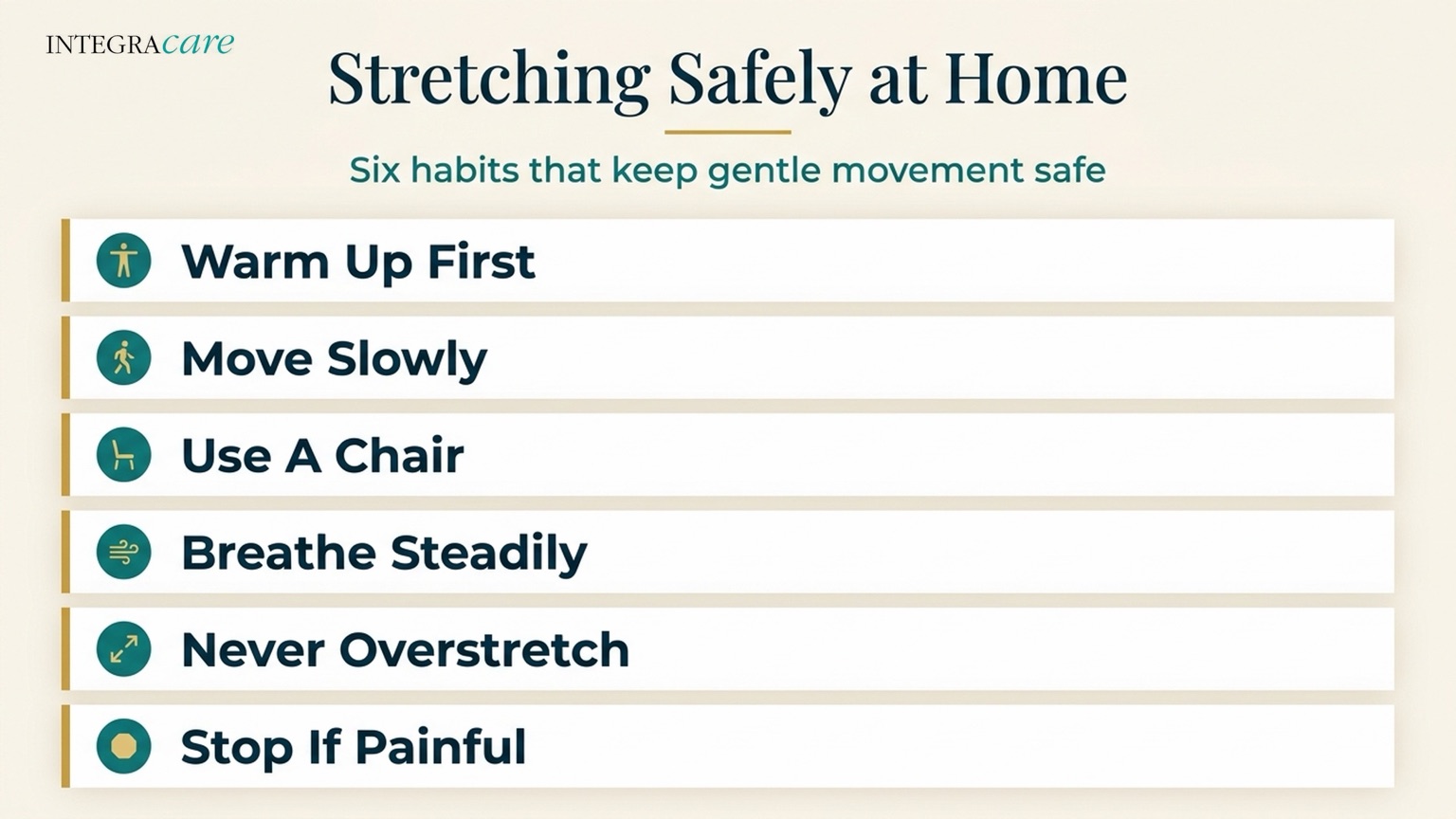
When it comes to stretches and exercises for seniors aging in place, safety should always come first. The goal is to feel better, move more easily, and stay independent at home, not to push the body too hard. Gentle movement should feel controlled, comfortable, and realistic for your current ability level.
A few minutes of warming up can help prepare the body before stretching. Light walking around the house, easy marching in place, or simple arm and leg movements can make gentle stretches feel easier and more natural. This is especially helpful for seniors who want to keep moving without adding unnecessary strain.
Listen Closely to Your Body
Stretching should never cause sharp pain. A mild pull is normal, but if a movement feels uncomfortable, stop or ease back. Avoid overstretching, especially when muscles feel tight or joints feel stiff. For seniors aging in place, the safest routine is usually the one that feels steady, gentle, and repeatable.
Use Support for Balance
If standing stretches feel unsteady, use a sturdy chair or counter for balance. Having something solid nearby can make the move feel safer and help you relax into the stretch. That extra support can be especially reassuring for older adults who want to stay active at home while reducing the risk of a misstep.
Breathe Throughout the Movement
It is easy to hold your breath when focusing on a stretch, but steady breathing helps the body stay relaxed. Slow breathing can also make the movement feel smoother and less tense. For many seniors aging in place, this small habit can make stretches more comfortable and easier to keep doing regularly.
Check With a Doctor When Needed
If you have a health condition, have had recent surgery, or are unsure whether a movement is appropriate, it is smart to talk with a doctor before starting. This is especially important if you are managing pain, stiffness, or limited mobility. A doctor can help you choose stretches and exercises that support your needs safely.
Build a Balanced Routine
Stretching is only one part of staying mobile at home. Pairing it with strength exercises and endurance exercises can help support balance, mobility, and daily independence. Even simple movement can make everyday tasks feel easier and help seniors aging in place stay more confident in their homes.
After Stretching
After you finish, stand up slowly and give your body a moment to adjust. Notice how you feel and make small changes if needed the next time you stretch. If something feels sore afterward, that is usually a sign to reduce the intensity. The best stretches and exercises for seniors aging in place are the ones that feel safe, gentle, and sustainable.
Staying active is just one part of supporting healthy aging at home. For older adults recovering from surgery, living with dementia, managing a chronic condition, or receiving palliative care, movement is often most effective when it's part of a personalized care plan. Integracare's coordinated approach combines in-home physiotherapy with private home care, dementia care, and palliative care whenever additional support is needed, helping clients continue moving safely and comfortably at home.
Supporting Better Movement for the Years Ahead
Mobility, confidence, and independence are built over time through thoughtful care and consistent support. Whether it's recovering from an injury, managing a health condition, or staying active as needs change, Integracare's personalized home care plans and physiotherapy services help recovery feel more achievable one visit at a time.
Frequently Asked Questions
Why is movement so important for seniors aging in place?
Movement helps seniors maintain the strength, flexibility, and balance they need for everyday life at home. Simple tasks like standing up, walking through the house, reaching overhead, or turning to look behind them can become harder with age if the body becomes less active. Gentle stretching and exercise can help support independence, reduce stiffness, and make daily routines feel safer and more manageable.
What causes joint stiffness in older adults?
Joint stiffness in older adults can happen for several reasons, including cartilage thinning, arthritis, inflammation in the joints, tendon changes, and reduced ligament elasticity. Prolonged sitting can also make stiffness feel worse, especially in the hips, back, and legs. Old injuries may continue to affect how a joint moves, even years later. These changes can reduce joint mobility and make movement feel slower, tighter, or less comfortable.
How do stretches and exercises help seniors aging in place?
Stretches and exercises can help seniors aging in place improve flexibility, support balance, and make everyday movement feel easier. They may also reduce the strain of common tasks like bending, reaching, or getting up from a chair. Over time, regular movement can support confidence and comfort at home. The best results usually come from simple routines that are done consistently and matched to the person’s ability.
What is the safest way for seniors to start stretching?
The safest way to start is with gentle movement and a short warm-up first. Light walking, easy arm circles, or marching in place can help prepare the body. Seniors should stretch slowly, avoid pain, and use a chair or counter for balance if needed. If there is a health condition, recent surgery, or uncertainty about a movement, it is a good idea to speak with a doctor or healthcare professional first.
Should seniors stretch if they feel stiff in the morning?
Yes, gentle stretching can help seniors who feel stiff in the morning, as long as it is done slowly and comfortably. Morning stiffness is common when joints have not moved for several hours. A short warm-up followed by easy stretches may help the body feel looser and more ready for the day. If stiffness is severe, lasts a long time, or comes with swelling or pain, it should be discussed with a healthcare professional.
What should seniors avoid when stretching?
Seniors should avoid overstretching, holding their breath, and pushing through pain. A stretch should feel like a mild pull, not strain or sharp discomfort. It is also important not to move too quickly or use jerky motions, since that can increase the risk of injury. If standing stretches feel unsteady, using a sturdy chair or counter for support can help make the movement safer and more comfortable.
How often should seniors do stretches and exercises?
Consistency matters more than intensity. Many seniors benefit from regular movement, even if it is only a few minutes at a time. A simple routine that includes stretching, strength exercises, and endurance exercises can help support flexibility, mobility, and day-to-day function. The best schedule is one that feels realistic, safe, and easy to maintain, because a routine is more effective when it becomes part of everyday life.
Can stretching help with balance?
Stretching can support balance by helping the body move more freely and comfortably. When muscles and joints are less stiff, it may be easier to walk, turn, and shift weight safely. That said, balance is usually best supported by combining stretching with strength exercises and other gentle activities. Together, these movement habits can help older adults feel steadier and more confident at home.
What if a stretch causes pain?
If a stretch causes pain, it should be stopped right away. Pain is a sign that the body may be going too far or that the movement is not the right fit. Seniors should ease back and try a smaller range of motion instead. If pain keeps happening or does not improve, it is a good idea to speak with a doctor or physiotherapist to rule out a bigger issue.
Why is warming up before stretching important?
Warming up helps prepare the muscles and joints for movement. It can make stretching feel easier and may reduce the chance of strain. Even a few minutes of light walking around the house can help. For seniors aging in place, this simple step can make a home routine feel safer, gentler, and more effective, especially when joints feel stiff first thing in the morning or after sitting for a while.
Do seniors need a doctor’s approval before starting exercise?
Not always, but it is a good idea if the senior has a health condition, recent surgery, ongoing pain, or concerns about whether a movement is safe. A doctor or healthcare professional can help guide exercise choices and reduce the risk of injury. This is especially helpful for older adults who are starting a new routine at home or returning to movement after a setback.
How can seniors make exercise easier to stick with?
The easiest routines are usually the most sustainable. Seniors are more likely to keep going when exercises feel simple, safe, and realistic. Choosing a regular time, using support like a chair or counter, and focusing on small daily wins can help make movement part of everyday life. It also helps to choose activities that feel familiar and comfortable, so the routine feels supportive instead of overwhelming.
Free In-Home Assessment
The Care Your Family Deserves Starts Here
Speak with our team about a personalized care plan. Book a free, no-obligation in-home assessment and we will help you find the right support for your loved one.
About the Author: Lee Grunberg

President & CEO, M.B.A.
Lee joined Integracare as President & CEO on August 2, 2016 after an approximately 20 year career in Private Equity and Investment Banking. Lee brings tremendous operational knowledge and governance experience along with an incredible passion and energy to Integracare.