
Blog
Aging in Place: How Registered Practical Nurses Help Seniors Stay Independent at Home
Published
Updated
Written by Lee Grunberg, M.B.A. — President & CEO
Reviewed by Bethel McMaster, BScN, RN — Director of Business Development
On this page7 sections
Key Takeaways
- Registered Practical Nurses provide essential care and monitoring for seniors aging in place.
- Home care is often the best choice for older adults wanting to remain in their familiar environment.
- Families caring for loved ones with dementia benefit from help with routines, medications, and day-to-day coordination.
- Integracare offers tailored care plans, trained caregivers, and 24/7 nursing coordination.
- The right support helps seniors maintain independence while easing the concerns of their families.
There’s something special about the comfort of home, especially as we grow older. Aging in place means your loved one can stay in the familiar surroundings they cherish while getting exactly the right support to remain safe, healthy, and independent. Research shows that seniors who are able to live in their own homes often report higher levels of happiness and overall satisfaction with their lives compared to those in assisted living facilities or nursing homes.
While aging in place doesn’t mean doing everything alone, it does mean having the right support when it’s needed. Services such as companionship, personal care, and nursing support, including options like Integracare’s in-home care service s , can help seniors continue living safely at home while receiving the assistance they need. Whether that support comes from family members, community resources, or professional caregivers, the goal is the same: helping seniors stay safe, comfortable, and connected to the life they’ve built.
Embracing Aging in Place
Aging in place allows seniors to continue living in the comfort of their own homes while receiving the support they need as circumstances change. Caring for an aging parent can bring new challenges that families aren’t always prepared for. Aging at home is entirely possible when you have the right circle of support around you. Home care offers flexible support, from companionship and personal care to assistance from Registered Practical Nurses , helping families feel more confident that their loved one is receiving the care they need.
How Do Registered Practical Nurses Support Aging in Place?
Registered Practical Nurses (RPNs) play an important clinical role in helping seniors remain safely at home. At Integracare Home Care, RPNs provide hands-on nursing care and care coordination that provides direct care and practical support, allowing our loved ones to feel comfortable, safe, and dignified. Their role is not to replace personal support, but to strengthen it, while giving families much-needed confidence and peace of mind.
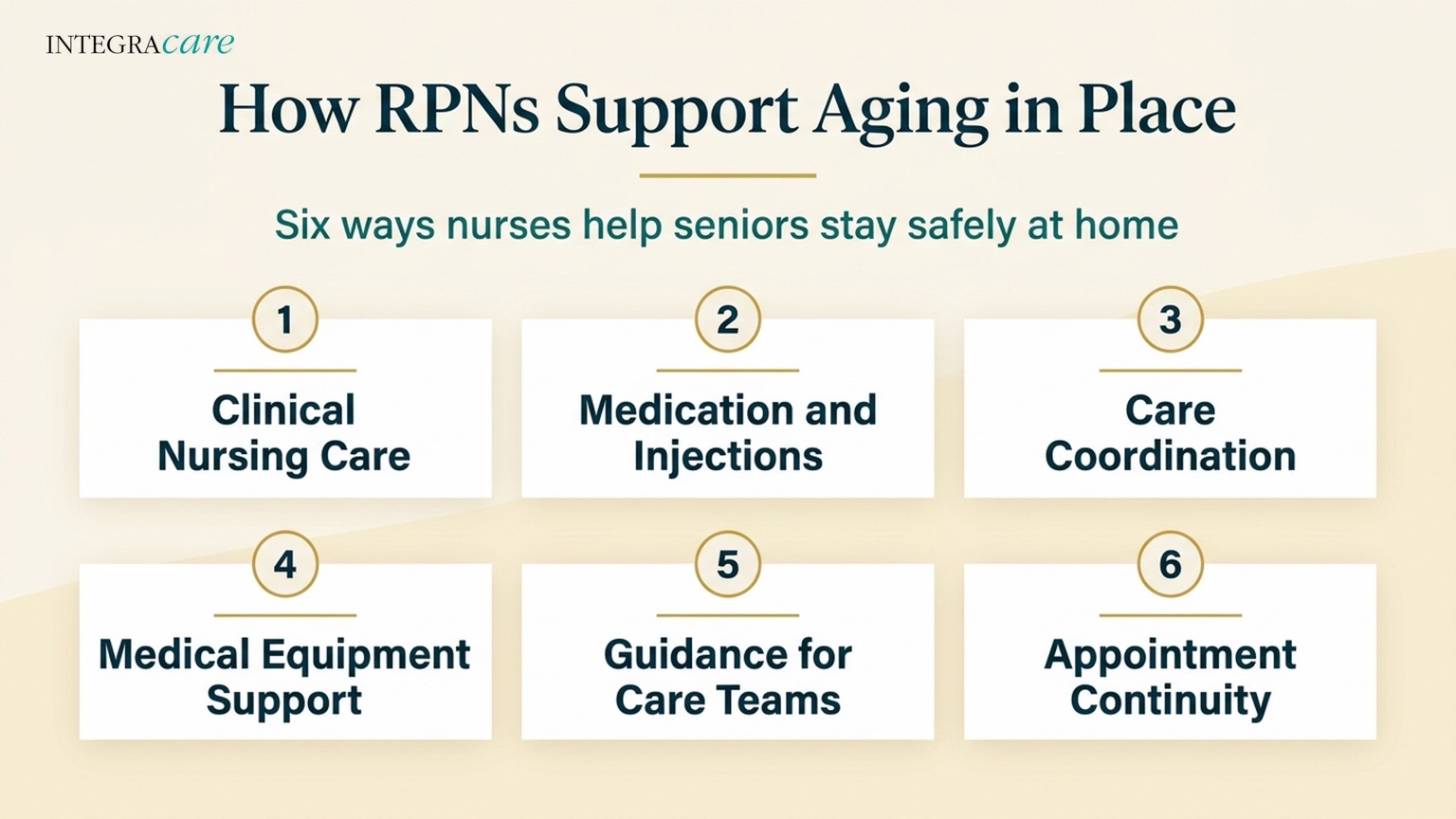
Here are the key ways RPNs support aging in place:
- Clinical Care and Nursing Support: RPNs deliver direct nursing care based on individualized care plans. This includes managing health conditions, supporting recovery, and providing treatments that require clinical training.
- Medication Administration and Injections: RPNs ensure medications are administered safely and correctly, including injections when required. This reduces the risk of errors and helps maintain stable health outcomes.
- Care Coordination and Communication: RPNs work closely with families, physicians, and other healthcare providers to keep care aligned. They help ensure everyone involved understands the care plan and any changes in condition.
- Support with Medical Equipment: RPNs assist clients in safely using medical equipment and devices at home, helping reduce risk and improve confidence in day-to-day care.
- Guidance and Oversight for Care Teams: In a home care setting, RPNs often provide clinical oversight and guidance to personal support workers, helping maintain consistency and quality across the care team.
Appointment Support and Continuity of Care: RPNs may assist with care continuity by supporting transitions between home and medical appointments, helping ensure follow-through on treatment plans.
While RPNs may assist with certain daily activities when needed, personal support workers typically provide the majority of hands-on help with bathing, dressing, and meals. This team-based approach ensures seniors receive both the clinical care and daily support required to remain safely at home.
What Makes Our RPNs Special in Aging-in-Place Care
Have you ever wondered what makes the difference between good care and truly exceptional care for seniors aging at home? At Integracare, we’ve discovered it’s not just about clinical expertise, it’s about heart, connection, and understanding the unique journey each family is on.
You are looking for a partner who understands the “quiet language” of your loved one: someone who notices a change in a smile or a slight shift in energy just as quickly as a change in blood pressure. Many of these skills reflect compassionate nursing care , helping families feel supported, understood, and confident in the care their loved one receives. Our RPNs become a trusted member of support to your family’s circle.
The Skills That Make Our RPNs Exceptional
All our RPNs work within the College of Nurses of Ontario’s guidelines, ensuring care stays safe and accountable. But we go beyond these standards by fostering a culture of relationship-centred care that puts your family’s needs first. Our RPNs notice the little things, subtle changes in mood or mobility that might signal bigger health concerns, helping prevent hospital visits and complications down the road.
- Clinical Expertise With Compassion: Our RPNs have strong knowledge of medical procedures and medications, but what sets them apart is how they deliver this expertise with genuine kindness, especially when working with seniors feeling vulnerable about their changing health needs.
- Clear Communication: They know how to adapt their communication style to each senior’s unique needs, taking extra time to listen and make sure your loved one feels heard and understood.
- Genuine Empathy: This is where our RPNs truly shine. They bring heartfelt compassion to every interaction, understanding that seniors often feel most comfortable when care feels kind and respectful.
- Balanced Prioritization: Home care visits often involve balancing several needs. Our RPNs have an intuitive sense of what matters most in each moment, whether addressing immediate comfort needs or simply sitting with your loved one for a few extra minutes when they seem anxious.
- Collaborative Teamwork: Our RPNs work seamlessly with families, coordinators, and other healthcare professionals, ensuring everyone is working toward the same goals for your loved one’s care.
How Does Integracare Support Aging in Place at Home?
At Integracare Home Care, we’re dedicated to helping our clients enjoy their golden years with dignity, comfort, health, and independence right at home. For families seeking reliable support during this important journey, our commitment truly makes a difference. We focus on client-centred care plans, developed in collaboration with clients, their families, and other healthcare professionals to ensure that our support is personal and responsive to the evolving needs of each Client.
In addition to nursing care, Integracare offers a wide range of home health care services to further enhance quality of life:
- Dementia Care: Specialized support aimed at promoting comfort and familiarity for those experiencing cognitive challenges.
- Palliative Care: Compassionate care designed to improve the quality of life for individuals facing serious illnesses.
- Wound Care: Expert management of wounds to promote healing and prevent complications.
- Physiotherapy and Massage Therapy: Tailored interventions to improve mobility and overall well-being.
- Live-In Care: Consistent, round-the-clock support for those who need it.
- Personal Support Services: Assistance with daily activities to ensure clients feel comfortable and empowered.
This broad array of services helps families adjust as needs change over time, ensuring that every senior can continue to thrive at home.
How Home Care Can Transform Your Loved One’s Quality of Life
Watching a parent or spouse struggle with daily tasks while you juggle appointments, medications, and conflicting advice from different professionals can feel overwhelming. This is especially true when they are living with dementia , coping with post-surgery recovery, or managing chronic conditions like heart disease or diabetes. You want to help, but you’re not sure where to turn or how to coordinate everything effectively.
While assisted living facilities and nursing homes serve important roles, home care uniquely combines flexibility and comfort. Understanding the benefits of home care can help families make more confident decisions about supporting a loved one at home, especially when balancing independence with safety and daily support needs.
Here’s how our Registered Practical Nurses (RPNs) can make a difference:
- Creating Stability in Familiar Surroundings: Our RPNs help maintain structured daily routines in the comfort of home, which is crucial for reducing confusion and anxiety, especially for those living with dementia or facing other cognitive challenges.
- Seamless Care Coordination: They act as the central point of contact, working with families to understand personal needs, joining care team meetings, and sharing updates to keep everyone aligned, whether managing complex medication schedules or post-hospital recovery.
- Connecting You to Essential Resources: Beyond just managing health, our RPNs help families navigate both home care and community resources, ensuring you have access to all the support available for conditions ranging from mobility issues to respiratory concerns.
For seniors with chronic conditions or dementia, this compassionate support makes daily life more manageable and fulfilling. Together, we can ensure that your loved ones receive the comprehensive support they need, allowing them to thrive in the place they cherish most.
Looking Ahead: The Heart and Future of Home Care
As more Canadians choose to age at home, the role of Registered Practical Nurses (RPNs) is evolving. New technology, improved communication, and stronger collaboration between care providers are helping make home care more connected and responsive than ever before.
Some of the trends shaping the future of home care include:
- Greater use of virtual care and telehealth services.
- Improved access to electronic health records.
- More leadership and mentorship opportunities for RPNs.
- Stronger collaboration between families and care teams.
- Continued investment in community-based care.
For seniors and their loved ones, these advancements can mean better communication, more coordinated support, and greater peace of mind. As home care continues to evolve, RPNs will remain an important part of helping people receive quality care at home.
The future of at-home nursing care is all about making things easier, smoother, and more deeply connected for your family. If you’re considering how home care can best support your loved one’s needs, contact us to learn more about our services and how we can help.
Frequently Asked Questions
What exactly does a Registered Practical Nurse do in home care?
Think of an RPN as your personal, in-home clinical advocate. They handle the vital medical details, such as safe medication management, complex wound care, and tracking vital signs. They also provide direct patient care that keeps your loved one safe, stable, and completely comfortable at home.
Can an RPN help a senior with dementia stay at home longer?
Absolutely, yes. With a thoughtful, structured routine, our nurses can observe subtle changes in condition early and handle complex medications safely. This expert care coordinates beautifully with family caregivers and health professionals, making dementia care feel much more manageable and peaceful for the whole family.
What is the core difference between at-home care and moving to long-term care?
The biggest difference between at-home care and moving to long-term care is where life happens. Home care brings specialized nurses and support staff directly into your loved one’s treasured home, preserving their personal independence. Long-term care involves moving permanently into an institutional facility with a set, pre-determined schedule.
How does Integracare support our family with aging in place?
We wrap your family in a complete circle of support. Integracare provides dedicated registered practical nursing care, highly personalized care plans built around your routines, and ongoing training for our staff. Plus, with our 24/7 nursing coordination, you always have a dependable, professional partner to lean on around the clock.
What specialized services can RPNs provide besides basic care?
Our nurses bring a wealth of specialized care techniques straight to your living room. Beyond daily check-ins, they provide clinical expertise in chronic conditions, complete case management, professional injections, and help manage complex medical equipment. They can even escort your loved one to medical appointments to ensure seamless continuity of care.
Free In-Home Assessment
The Care Your Family Deserves Starts Here
Speak with our team about a personalized care plan. Book a free, no-obligation in-home assessment and we will help you find the right support for your loved one.
About the Author: Lee Grunberg

President & CEO, M.B.A.
Lee joined Integracare as President & CEO on August 2, 2016 after an approximately 20 year career in Private Equity and Investment Banking. Lee brings tremendous operational knowledge and governance experience along with an incredible passion and energy to Integracare.