
Blog
The Best Things About Being a Nurse
Published
Updated
Written by Lee Grunberg, M.B.A. — President & CEO
Reviewed by Bethel McMaster, BScN, RN — Director of Business Development
On this page10 sections
Key Takeaways
- Home care nursing can offer better pay, flexibility, and work–life balance.
- Nurses can build deeper relationships with patients in their own homes.
- Home care can support specialization, autonomy, and professional growth.
- A one-to-one setting often reduces stress and improves job satisfaction.
Choosing a career is one of life's biggest decisions. Most people hope to find work that feels meaningful, offers opportunities to grow, and gives them the confidence that they'll always be making a valuable contribution. Nursing continues to stand out because it brings all of those things together.
A Career That Makes a Difference Every Day
Every nurse has a different reason for entering the profession. Some are inspired by a desire to care for others, while others are drawn to the relationships they build with clients and families during life's most important moments. Whatever the motivation, nursing offers the opportunity to improve someone's comfort, health, and quality of life in ways that can have a lasting impact.
There are countless reasons nurses find their work rewarding. It's the conversations that brighten someone's day, the trust that grows over time, the encouragement shared with colleagues, and the quiet satisfaction of knowing your care helped someone feel a little stronger, safer, or more comfortable. Combined with strong career opportunities and ongoing demand, nursing continues to be a fulfilling path for people who want their work to truly matter.
Reconnecting With What Inspired You
Remember why you became a nurse? That feeling of making a real difference in someone's life? If you're feeling stretched thin, overwhelmed, or wondering if there's more to nursing than rushing between patients and paperwork, you're not alone. Many nurses today are searching for a way to reconnect with the heart of healthcare, the meaningful connections that drew them to this profession in the first place.
The truth is, the current healthcare system often leaves little room for nurses to make meaningful connections that drew them to this profession in the first place. Home care nursing represents an opportunity to realign with those original intentions, providing care that feels both personally fulfilling and professionally rewarding.
A Profession Built on Compassion
Every nurse has moments they'll never forget. It's the smile after a difficult day, the gratitude of a family member, the quiet conversations that build trust, and the comfort of knowing your presence made someone feel a little less alone.
What Makes Every Shift Worthwhile
Nursing is a profession built on compassion, trust, and human connection. While every day brings new challenges, it's often the small moments that remind nurses why they chose this profession in the first place: a comforting conversation, a grateful smile, or helping someone through a difficult day.
Nursing gives you the opportunity to:
- Build relationships that grow over time.
- Support people through life's most meaningful moments.
- Continue learning while making a difference every day.
- Work alongside people who share a passion for compassionate care.
- Build a career that's both personally meaningful and professionally rewarding.
Years from now, it's unlikely you'll remember every task you completed or every chart you filled out. You'll remember the conversations, the trust you built, and the people whose lives you helped make a little brighter. Knowing you helped someone feel more comfortable, more confident, or simply less alone is what continues to make nursing one of the most rewarding professions there is.
Why So Many Nurses Choose Home Care
Home care allows nurses to build lasting relationships, provide thoughtful, personalized care, and spend more time focusing on what matters most: the person behind the care.
For many nurses, it's a chance to reconnect with the reason they entered the profession: helping people live with greater comfort, dignity, and independence while making a meaningful difference every single day.
Focused Care, Meaningful Outcomes
Many nurses entered the profession because they wanted to care for people, not constantly divide their attention between competing priorities.
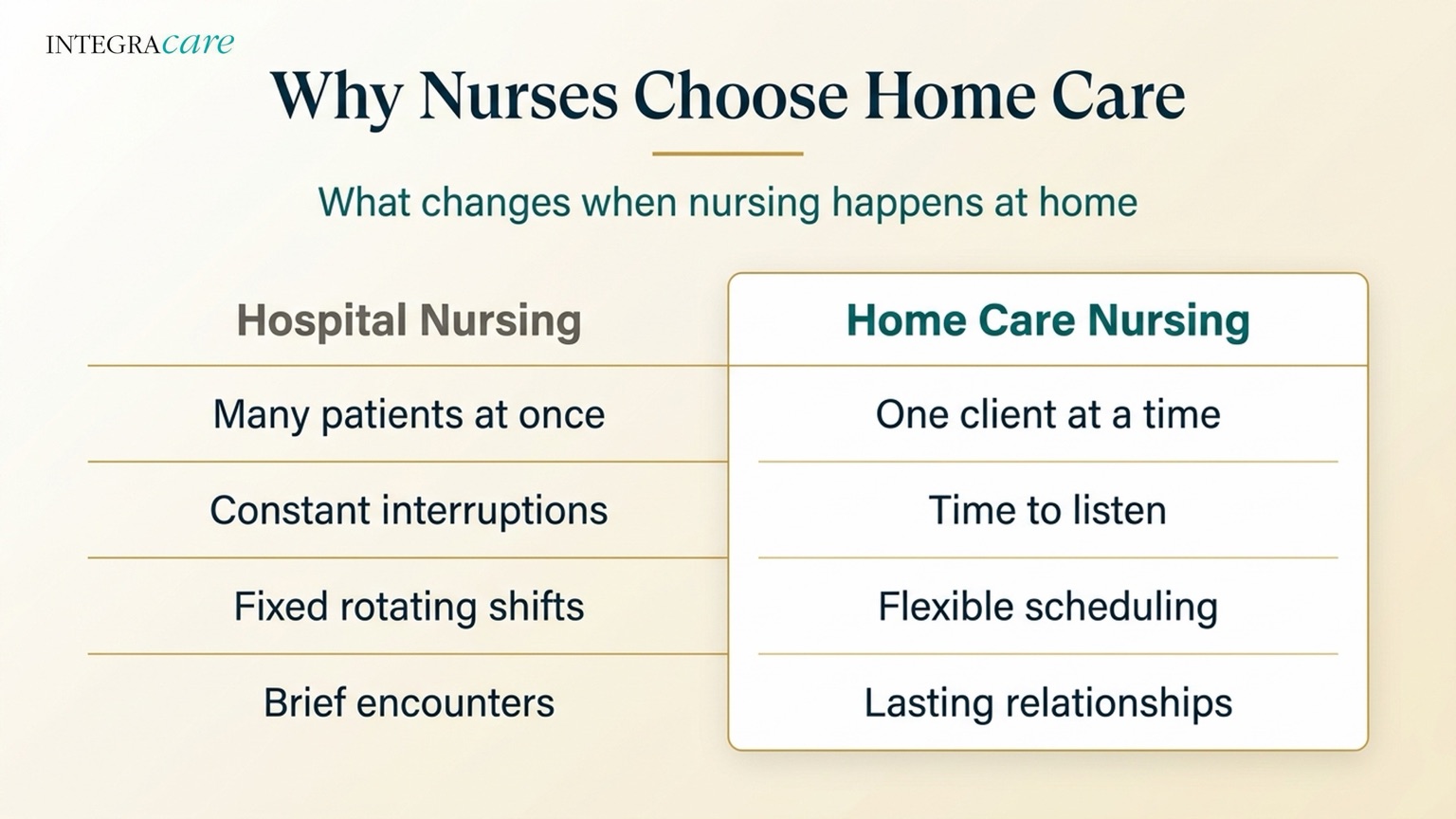
Home care allows you to focus on the person in front of you. With fewer interruptions, there's more time to listen, answer questions, notice subtle changes, and provide care that reflects each client's individual needs. Those moments often lead to stronger relationships, greater confidence for families, and a deeper sense of fulfillment in your work.
Flexibility With a Team Behind You
Finding a schedule that works for your life can make a meaningful difference to your overall well-being. Home care offers greater flexibility while allowing you to continue doing the work you love and maintain a healthier balance between your professional and personal life.
Although nurses work independently during visits, they are never on their own. At Integracare, every nurse is supported by an experienced clinical team that values collaboration, open communication, and delivering exceptional care together.
Keep Growing With Every Visit
Every client brings a different story, different goals, and different care needs. That variety creates opportunities to continue building your knowledge while expanding your clinical skills in meaningful ways.
Whether you're interested in dementia care, wound care, palliative care, chronic disease management, or supporting recovery after surgery, home care allows you to deepen your experience while making a lasting difference in someone's daily life.
Every Day Brings Something New
Every home tells a different story. You may be helping someone regain their strength after a hospital stay, or supporting a senior who wants to remain independent. Other times, you're supporting a person living with dementia, managing a chronic illness, or helping someone remain comfortable during the final stages of life.
No matter the situation, families are placing an incredible amount of trust in you during one of the most vulnerable times in their lives. That level of trust is something many nurses find deeply rewarding and one of the reasons home care creates such meaningful relationships.
The Moments That Stay With You
One of the things many nurses value most about home care is having the time to simply be present. Those extra moments create space to answer questions, offer reassurance, celebrate progress, or sit quietly with someone who needs a listening ear. It's often these small interactions that leave the greatest impression on clients, families, and nurses alike.
For many older adults, those regular visits also provide an important source of connection. Research from the National Institute on Ageing has found that social isolation continues to affect many older Canadians, making compassionate, consistent relationships an important part of healthy aging.
The Kind of Nursing That Feels Personal Again
Home care creates opportunities for nurses to practise in a way that feels more intentional and relationship-focused. Instead of feeling pulled in several directions at once, nurses can be fully present, helping clients navigate recovery, chronic illness, or the natural changes that come with aging.
That time allows nurses to notice the little things that make a meaningful difference while giving clients and families the confidence that they're receiving thoughtful, personalized care. It's an approach that leaves many nurses feeling less overwhelmed and more connected to the reason they chose this profession.
Go Home Knowing You Made a Difference
Some of the most meaningful moments in nursing aren't dramatic. They're often the quiet ones. Helping someone regain confidence after a fall, easing a family's worries, or seeing a client smile because they feel safe and supported are the moments that stay with you long after your shift ends.
At Integracare, those moments are supported by a culture that values attentiveness, compassion, and meaningful relationships. Every visit is an opportunity to improve someone's comfort, independence, and quality of life while knowing your work truly matters.
The Rewards of Choosing a Career in Registered Nursing
Registered nursing is a career filled with moments that stay with you. Every shift brings opportunities to comfort, encourage, problem-solve, and help someone feel safer during a time when they need it most. Those everyday interactions are what continue to draw compassionate people to nursing and inspire them to build a career caring for others.
Be the Person Someone Remembers
People may not remember every procedure or every appointment, but they often remember how a nurse made them feel. A calm conversation, a reassuring smile, or taking an extra moment to listen can leave a lasting impression on clients and their families. It has been noted that many people today are looking for careers with greater purpose, and nursing continues to offer that opportunity every day.
Gain Confidence With Every Experience
Every client, every family, and every situation helps shape the nurse you become. Over time, you develop the confidence to think critically, adapt to changing circumstances, and approach new challenges with greater knowledge and reassurance. Those experiences stay with you throughout your career, no matter where your nursing journey leads.
Keep Growing Throughout Your Career
Every stage of your nursing career offers opportunities to build new skills and discover areas you're passionate about. Developing specialized skills in areas such as palliative care, dementia care, or wound care allows nurses to provide comfort, guidance, and reassurance during some of life's most challenging moments, helping clients and families feel supported every step of the way. If you'd like to learn more about our learning opportunities, get in touch with our team.
Feel Supported by the People Around You
The strongest care teams are built on trust, respect, and helping one another succeed. At Integracare, nurses work alongside experienced healthcare professionals who value collaboration and are always willing to share knowledge, guidance, and encouragement. If you're exploring RPN jobs in Toronto, you'll find a team that genuinely enjoys working together while delivering exceptional care.
See the Difference Your Care Makes
One of the most rewarding parts of nursing is seeing the impact of your care over time. Whether it's watching someone regain their confidence, helping a family feel more at ease, or supporting a client through an important milestone, those moments remind you that even small acts of kindness can have a lasting impact.
The People You Remember Most
Nursing care has a way of bringing you into people’s lives in a very real and personal way. You meet clients and families during moments that can feel uncertain, emotional, or overwhelming, and your calm presence can help make those moments feel a little easier.
Those are often the memories that stay with nurses: the conversations, the smiles, the progress, and the people who made the work feel meaningful.
Expand Your Expertise With Ongoing Education
Learning doesn't stop after nursing school, and neither should your opportunities to build new skills. At Integracare, we invest in ongoing education that helps nurses stay confident, informed, and prepared to provide exceptional care across a wide range of client needs.
We're especially proud of our long-standing partnership with the Alzheimer Society of Toronto, which provides specialized dementia education for our care team. Through continued learning and hands-on experience, our nurses are equipped to support clients living with dementia and other complex health conditions with confidence, compassion, and the latest evidence-informed approaches.
Be Part of Something Bigger
Nursing is built on teamwork. Every day, nurses work alongside physicians, therapists, Personal Support Workers, and fellow nurses to help people receive the care they need. Being part of a team that shares knowledge, supports one another, and celebrates successes together creates a strong sense of belonging that many nurses value throughout their careers. Healthcare continues to evolve, but the need for skilled nurses remains strong. Canada's positive job outlook for Registered Nurses (RNs) and Registered Practical Nurses (RPNs) reflects the growing demand for compassionate professionals.
Find the Career That Fits Why You Became a Nurse
The moments that inspire people to become nurses are still here. If you're looking for a career where you can build meaningful relationships, provide one-on-one care, and be part of a team that values compassion, collaboration, and clinical excellence, home care may be exactly what you've been looking for. At Integracare, we're proud to support nurses who want to make every visit count for their clients, their families, and themselves.
Frequently Asked Questions About Nursing Care
What is the best thing about being a Nurse in home care?
Many Nurses say the best part is seeing how much of a difference they make in one person’s daily life. In home care, you’re supporting Clients in the place they know best, which makes your care feel more personal and less clinical. You also get time to build trust, hear their stories, and see small improvements add up over time.
How does home care nursing support work‑life balance?
Home care can make it easier to fit work around the rest of your life. Depending on the role, you may have more input into your schedule, including the number of shifts and preferred times of day. This flexibility helps Nurses manage family responsibilities, rest, and other commitments, while still maintaining a stable, meaningful career.
Is home care nursing less stressful than hospital nursing?
It often feels different rather than simply “less stressful.” In home care, you’re usually focused on fewer Clients at once, in a calmer environment without constant alarms or interruptions. That pace allows for more thoughtful care and fewer competing demands, which many Nurses find easier to manage emotionally, especially over the long term.
Do home care Nurses get to work independently?
Yes, home care Nurses generally work with a high degree of independence during visits. You assess, plan and deliver care based on the Client’s needs and the care plan in place. At the same time, you’re connected to a broader team for support, supervision and collaboration, so you can ask questions and share information when needed.
Can home care nursing help with career growth?
Home care offers strong opportunities to grow your skills and career. You gain experience across different conditions, age groups and family situations, which can lead to more specialized roles later on. Many Nurses use home care to build expertise in areas such as dementia care, palliative care or chronic illness management, and to prepare for leadership or advanced practice positions.
Is home care a good option for entry‑level LPNs?
Home care can be a good fit for entry‑level LPNs, provided there is strong orientation and ongoing support. New Nurses can build confidence by working closely with Clients and seeing the impact of their care in real time. The one‑to‑one environment encourages good communication, documentation and practical skills, which are valuable early in a nursing career.
What kinds of Clients do home care Nurses work with?
Home care Nurses support a wide range of Clients, from Seniors living with chronic conditions to people recovering from surgery, new parents, and individuals with disabilities. Some Clients need ongoing complex nursing support, while others require short‑term help during recovery or transition. This mix keeps the role varied and offers broad clinical exposure.
How does home care help Nurses build better Client relationships?
Because visits happen in the Client’s home, interactions often feel more relaxed and natural. Nurses can observe routines, surroundings and family dynamics, which helps them understand the person behind the diagnosis. Over time, that insight builds stronger trust and more open communication, making it easier to tailor care in ways that feel respectful and supportive.
Why do Nurses value one‑to‑one care?
Nurses value one‑to‑one care because it lets them focus fully on one Client instead of juggling several competing needs at once. This level of attention improves assessment, follow‑up and overall care quality. Many Nurses also find it easier to stay calm, present and satisfied in their work when they’re not rushed between multiple rooms or tasks.
Does home care nursing offer competitive pay?
Home care nursing can offer competitive compensation that reflects the responsibility of providing in‑home care. Exact pay depends on experience, qualifications and the type of role, but many Nurses appreciate the balance of fair income, more flexible scheduling and a calmer environment. For some, that mix is worth more than a higher‑stress position elsewhere.
What skills help nurses succeed in home care?
Strong communication, empathy, adaptability and sound clinical judgment are key in home care. You’ll often be working independently, so being organized and comfortable making decisions is important. Nurses who listen well, respect boundaries, and can build rapport in the home setting tend to thrive, especially when combined with a steady, professional approach.
Why do Nurses find home care work so rewarding?
Home care feels rewarding because you can clearly see how your care changes someone’s everyday life. You’re helping Clients stay safe and comfortable at home, giving families peace of mind, and building real connections over time. That mix of impact, relationship and autonomy often creates a strong sense of purpose that stays with you long after each shift ends.
Free In-Home Assessment
The Care Your Family Deserves Starts Here
Speak with our team about a personalized care plan. Book a free, no-obligation in-home assessment and we will help you find the right support for your loved one.
About the Author: Lee Grunberg

President & CEO, M.B.A.
Lee joined Integracare as President & CEO on August 2, 2016 after an approximately 20 year career in Private Equity and Investment Banking. Lee brings tremendous operational knowledge and governance experience along with an incredible passion and energy to Integracare.