
Blog
Why More Canadian Families Are Choosing Home Health Care for Loved Ones
Published
Updated
Written by Lee Grunberg, M.B.A. — President & CEO
Reviewed by Bethel McMaster, BScN, RN — Director of Business Development

On this page11 sections
Key Takeaways
- More Canadian families are choosing home care because it feels personal and comforting.
- Home care can ease caregiver stress by sharing daily, medical, and emotional responsibilities.
- Canada’s aging population is increasing demand for support at home.
- Planning care early can reduce crisis-driven decisions and family burnout.
- Good home care supports both the person receiving care and the people caring for them.
Home is more than a place. It's where favourite routines continue, where family gathers around the kitchen table, and where people feel most like themselves. When someone you love begins needing extra support, it's natural to hope they can continue enjoying those familiar comforts for as long as possible.
Across Canada, more families are choosing home health care because it offers something institutional settings often cannot: the ability to receive personalized care without leaving behind the people, places, and routines that bring comfort and confidence each day. As healthcare continues to evolve, aging in place has become more than a preference for many older adults; it's an important part of maintaining independence, dignity, and quality of life.
At Integracare, we've seen firsthand how thoughtful, relationship-focused home care can help clients remain safe and comfortable at home while giving families greater peace of mind through every stage of the journey.
The Comfort of Home Makes a Difference
When health needs begin to change, familiar surroundings often become even more important. The favourite chair by the window, morning coffee in the same kitchen, family photos on the walls, and neighbours who stop to say hello all contribute to a sense of comfort that cannot easily be recreated elsewhere.
Research continues to show that remaining at home, when appropriate, can support emotional well-being, preserve independence, and improve quality of life for many older adults, particularly those living with dementia, chronic illness, or reduced mobility. Familiar routines can also help reduce stress and confusion while encouraging people to stay connected with the activities and relationships they value most.
Receiving care at home means professional support fits around the person's life instead of asking them to adapt to an unfamiliar environment. That simple difference often helps people feel more confident, comfortable, and in control of their daily lives.
What Aging in Place Looks Like
For many older adults, remaining at home is about much more than staying in familiar surroundings. Aging in place means having the right support to continue living safely, independently, and comfortably as needs change over time. With thoughtful planning, practical home modifications, family involvement, and professional home health care, many seniors can continue enjoying the routines, relationships, and sense of belonging that make home such an important part of everyday life.
Aging With Dignity Starts at Home
Growing older doesn't change what matters most. People still want to make their own decisions, enjoy familiar routines, spend time with loved ones, and continue doing the things that bring purpose to each day.
For many families, helping someone age with dignity means finding the right balance between independence and support. Professional home care helps to preserve independence by providing assistance where it's needed while encouraging clients to continue doing as much as they comfortably can themselves. This thoughtful approach allows care to evolve alongside changing health needs while helping people remain active participants in their own lives for as long as possible.
Planning Creates Better Choices
Many families begin looking into home care after a fall, a hospital stay, or an unexpected change in health. While those situations often necessitate additional support, planning can give everyone more time to consider options and make decisions without the pressure of an immediate crisis.
Starting conversations early allows families to understand available services, identify potential safety concerns, and gradually introduce support before everyday tasks become overwhelming. It also creates opportunities to adjust care as needs change, making transitions feel more natural for everyone involved.
A professional in-home assessment can help identify practical ways to improve safety, maintain independence, and create a personalized care plan that reflects both current needs and future goals.
Small Changes Can Help People Stay Home Longer
Preparing for the future doesn't always require major renovations. Often, small changes make the biggest difference.
Simple improvements may include:
- Installing grab bars in bathrooms.
- Improving lighting throughout the home.
- Removing loose rugs and clutter that increase fall risks.
- Adding mobility aids where appropriate.
- Rearranging furniture to create safer walking paths.
- Planning for a main-floor bedroom or bathroom if mobility changes.
These practical adjustments, combined with professional home care, can help older adults remain comfortable and confident in their homes for longer while reducing the likelihood of preventable injuries.
Home Care Works Best When Everyone Works Together
Professional home care is only one part of helping someone live well at home. Family members, healthcare providers, community organizations, and local support programs each play an important role in creating a care plan that supports the whole person.
Community services such as transportation programs, friendly visiting, meal delivery, wellness activities, and caregiver support groups can complement professional home care by helping older adults remain socially connected and engaged in their communities. Together, these services help reduce isolation while supporting emotional, physical, and cognitive well-being.
At Integracare, we believe the strongest care plans are built through collaboration. By working alongside families, physicians, therapists, and community resources, we help ensure clients receive thoughtful, coordinated care that continues to adapt as their needs change.
What Home Health Care Can Include
Many people are surprised to learn how much care can now be provided in the comfort of home. Today's home health care extends well beyond help with household tasks, bringing together a coordinated team of professionals who can adapt support as health needs change.
Depending on the individual, a personalized care plan may include:
- Personal Support Workers (PSWs) for assistance with bathing, dressing, mobility, meal preparation, and daily routines.
- Registered Nurses (RNs) and Registered Practical Nurses (RPNs) who provide medication management, chronic disease monitoring, injections, and post-hospital care.
- Dementia care delivered by caregivers with specialized education and person-centred approaches.
- Palliative care focused on comfort, dignity, and supporting both clients and families.
- Companionship and transportation to encourage social connection and reduce isolation.
As needs change, care can increase gradually rather than requiring a major disruption to daily life. That flexibility often allows people to remain safely at home longer while continuing the routines that matter most.
Empowering Independence Through Holistic Home Support
The best home care looks beyond a diagnosis. While managing medications or assisting with mobility is important, emotional well-being, meaningful relationships, proper nutrition, cognitive stimulation, and physical activity all play a role in helping someone age well.
A walk around the neighbourhood, preparing a favourite meal together, enjoying conversation over a cup of tea, or encouraging participation in hobbies can be just as valuable as clinical care. These everyday moments help people maintain confidence, purpose, and a sense of normalcy while remaining connected to family and community.
Research continues to support evidence-informed, whole-person approaches that recognize health is influenced by far more than medical treatment alone.
Supporting Cognitive Health at Home
For individuals living with Alzheimer's disease or other forms of dementia, familiar surroundings often provide comfort and reassurance. Remaining at home can help preserve routines while reducing unnecessary confusion and anxiety.
Specialized dementia care combines structured daily routines, cognitive engagement, thoughtful communication techniques, and personalized support to help clients continue participating in everyday life as safely and comfortably as possible. Equally important, families receive guidance and reassurance as care needs evolve.
Family Caregivers Need Care Too
Most family caregivers don't think of themselves as caregivers at first. They're simply helping someone they love. Over time, those small acts of support can gradually become managing medications, coordinating appointments, preparing meals, providing transportation, and being available around the clock.
While deeply rewarding, caregiving can also be physically and emotionally demanding. Canadian research has consistently shown that many unpaid caregivers experience increased stress while balancing work, family responsibilities, and their own health.
Professional home care isn't about replacing family. It's about sharing the responsibility. Even a few hours of support each week can give caregivers time to rest, focus on their own well-being, and spend more meaningful time simply being a spouse, daughter, son, or friend again.
When Care Needs Become More Complex
Health needs rarely stay the same forever. Recovery after surgery, progressive illnesses, reduced mobility, or changing cognitive health often require different levels of support over time.
One of the greatest advantages of personalized home care is its ability to adapt. Care plans can gradually evolve from companionship and occasional assistance to nursing care, rehabilitation, dementia support, live-in care, or palliative care without requiring a sudden move away from home.
Planning for those possibilities early often creates smoother transitions and greater confidence for everyone involved.
Recognizing Changes Early
Health changes don't always happen suddenly. For many older adults, they appear gradually through frailty or functional decline, making everyday activities such as preparing meals, climbing stairs, getting dressed, or moving around the home more challenging. Recognizing these early changes allows families to introduce support sooner, helping reduce the risk of falls, avoid crisis-driven decisions, and give loved ones more confidence to continue living safely at home.
When Is It Time to Consider Professional Home Care?
Every family reaches this decision differently, but there are often early signs that additional support could improve safety and quality of life.
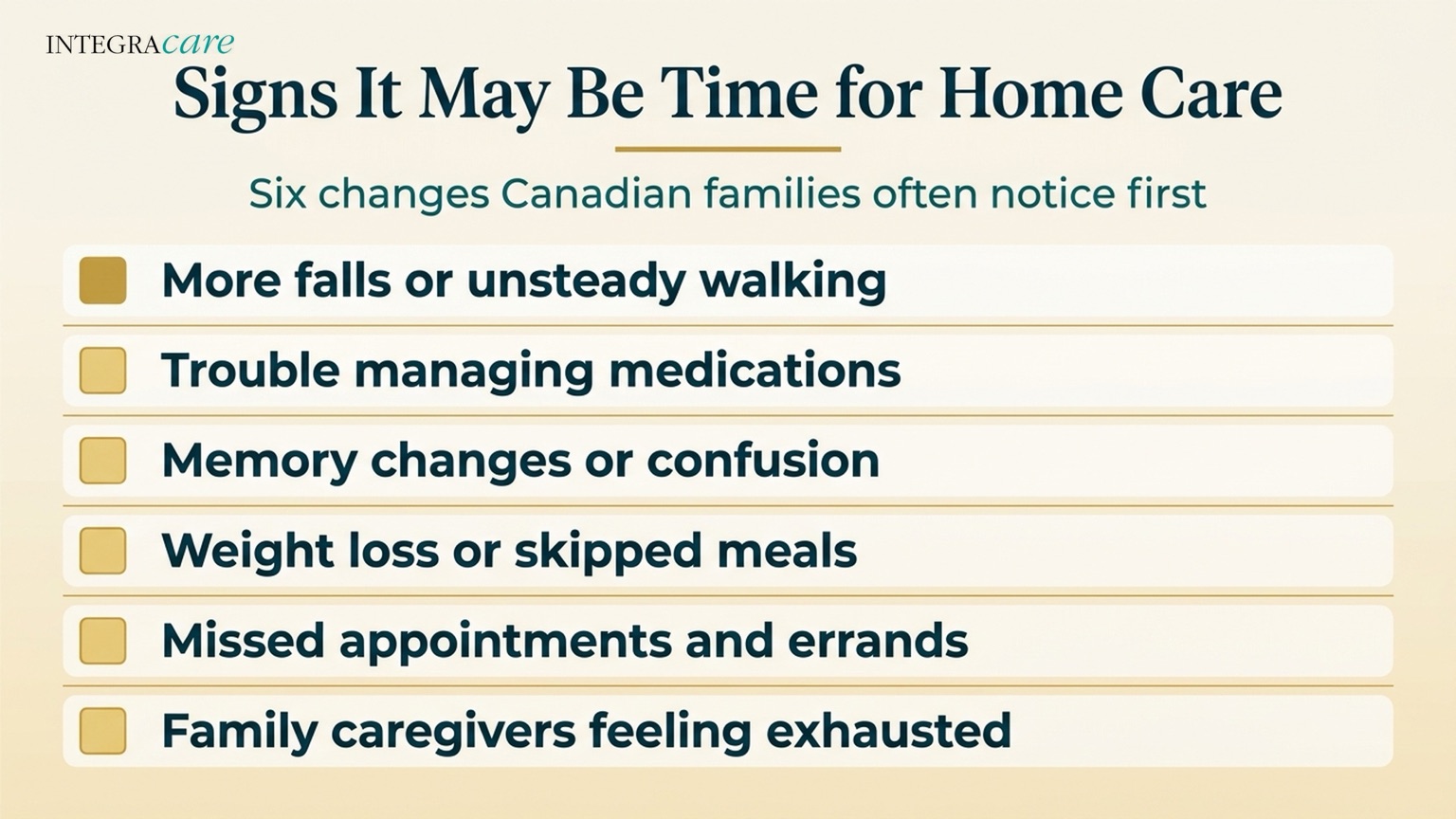
You may want to explore home care if you notice:
- Increased falls or concerns about mobility.
- Difficulty managing medications.
- Changes in memory or confusion.
- Weight loss or difficulty preparing meals.
- Missed appointments or neglected household tasks.
- Family caregivers feeling exhausted or overwhelmed.
- A recent hospital stay or new medical diagnosis.
Seeking support early often allows people to remain independent longer while avoiding crisis-driven decisions.
Quality Care Begins With the Right Team
Exceptional home care requires experienced professionals, ongoing education, thoughtful communication, and care plans that continue evolving alongside each client's needs.
At Integracare, our caregivers, nurses, and clinical leaders work closely together to ensure every client receives attentive, personalized care. Ongoing education, regular assessments, and collaboration with families and healthcare providers help us recognize changing needs early while maintaining consistency throughout the care journey.
It's this commitment to continuous learning and relationship-focused care that helps families feel confident knowing their loved one is receiving thoughtful support every step of the way.
Choosing Home Care Should Feel Like a Positive Step Forward
Choosing home care isn't about giving up independence. It's about creating the right support so someone can continue living safely, comfortably, and confidently in the place they know best.
Whether you're planning, recovering from a hospital stay, supporting someone living with dementia, or simply beginning to explore your options, taking that first step early often makes future decisions feel much easier.
Every family's journey is different, but having the right people beside you can make all the difference.
Helping Your Loved One Live Well at Home
The goal of home health care has never been simply helping someone remain at home. It's about helping them continue enjoying the routines, relationships, and everyday moments that make life meaningful.
With thoughtful planning, personalized support, and compassionate professionals working alongside families, aging at home can remain a safe, comfortable, and fulfilling choice for many Canadians. Taking time to explore your options today can help you feel more confident about tomorrow, and ensure your loved one continues receiving the care, dignity, and quality of life they deserve.

Frequently Asked Questions
Why are more Canadian families choosing home care for loved ones?
More Canadian families are choosing home care because it offers comfort, flexibility, and a stronger sense of dignity. Loved ones can stay in familiar surroundings while receiving practical help, emotional support, and medical care. For many families, home care also reduces stress and makes caregiving feel more manageable.
What does family caregiving usually include?
Family caregiving can include helping with bathing, dressing, meals, medication, appointments, emotional support, and household tasks. Some caregivers also handle legal or financial arrangements when care needs become more complex. In many households, caregiving grows gradually until it becomes a major part of daily life.
How does home care help family caregivers?
Home care can reduce pressure by sharing responsibilities with trained professionals. It can provide respite, support complex medical needs, and give family caregivers more time to rest or focus on work and family life. That support can lower burnout and help caregiving feel more sustainable.
What kinds of services can home care provide?
Home care can include personal support, nursing, dementia care, palliative care, wound care, rehabilitation support, and companionship. Some families only need a few hours of help each week, while others need more advanced daily care. The right plan depends on the person’s needs and goals.
How does population aging affect the need for home care in Canada?
As Canada’s population ages, more people need support for chronic illness, mobility issues, recovery, or dementia. At the same time, families are often smaller and more geographically spread out. That creates a growing care gap and increases the need for home care services.
What is the care gap?
The care gap is the difference between the amount of care people need and the amount of care families can realistically provide on their own. As more Canadians age and more caregivers juggle work and family, that gap continues to grow. Home care can help reduce the pressure.
How can home care support someone with dementia?
Home care can support someone with dementia by creating routine, reducing confusion, and keeping the person in a familiar environment. Caregivers can also help with safety, meals, medication, and reassurance. That stability often helps both the individual and the family feel more at ease.
Why is advance care planning important?
Advance care planning helps families make decisions before a crisis happens. It gives loved ones time to discuss preferences, values, and care goals while everyone is calm enough to think clearly. That can reduce stress later and make it easier to honour the person’s wishes.
What support is available for caregivers in Canada?
Support can include the Canada caregiver credit, workplace accommodations, respite services, community programs, and professional home care. Some families also benefit from advocacy resources and better access to financial supports for care recipients. The right combination of support can make caregiving much more manageable.
How do workplace flexibility and caregiving connect?
Many caregivers are also employees, so work schedules and care responsibilities often collide. Flexible work arrangements, leave policies, and human rights accommodation can help families keep their jobs while still caring for loved ones. Supportive workplaces can make a big difference.
What should families look for in a home care provider?
Families should look for clear communication, consistent care, flexibility, and a care plan that can change as needs change. It also helps when the provider listens carefully, respects family input, and treats the person receiving care with dignity. Good home care should feel steady and reassuring.
Can home care help after a hospital stay?
Yes. Home care can help with recovery after surgery, illness, or a hospital discharge by supporting mobility, medication, meals, and follow-up care. It can also help reduce the chance of readmission by giving families the extra support they need during recovery.
Free In-Home Assessment
The Care Your Family Deserves Starts Here
Speak with our team about a personalized care plan. Book a free, no-obligation in-home assessment and we will help you find the right support for your loved one.
About the Author: Lee Grunberg

President & CEO, M.B.A.
Lee joined Integracare as President & CEO on August 2, 2016 after an approximately 20 year career in Private Equity and Investment Banking. Lee brings tremendous operational knowledge and governance experience along with an incredible passion and energy to Integracare.