
Blog
Home Health Care in Canada: What It Is, Who It’s For, and Why It’s Growing
Published
Updated
Written by Lee Grunberg, M.B.A. — President & CEO
Reviewed by Bethel McMaster, BScN, RN — Director of Business Development
On this page28 sections
Key Takeaways
- In Canada, home healthcare offers customized care in the comfort of your own home.
- Best suited for the elderly, individuals with chronic illnesses, and patients recovering from surgeries.
- Increasing need for quality care aimed at promoting comfort and independence.
- Customized care can go a long way to aid in recovery as well as emotional stability.
- Care services are adjusted according to the clients' requirements.
Dealing with health issues is never easy, especially considering how to go about getting proper care. At Integracare Home Care, we provide individualized, compassionate, and comprehensive home health care services to suit the unique needs of your loved ones.
Home health care includes a range of medical and personal support services delivered directly in an individual’s home. In Canada, this can include everything from professional nursing and physiotherapy to personal support for bathing, grooming, meal preparation, and medication reminders.
Home care helps you age with dignity in the comfort of your home. Our home health care services are customized to meet physical, emotional, and cognitive needs, making it an ideal option for individuals with chronic illness, mobility limitations, or age-related conditions like dementia.
In short, home health care isn’t one-size-fits-all. It’s adaptable and personal. When done well, it is life-enhancing.
Who Is Home Health Care Designed For?
It’s not just for “old people.” Let’s clear that up right now.
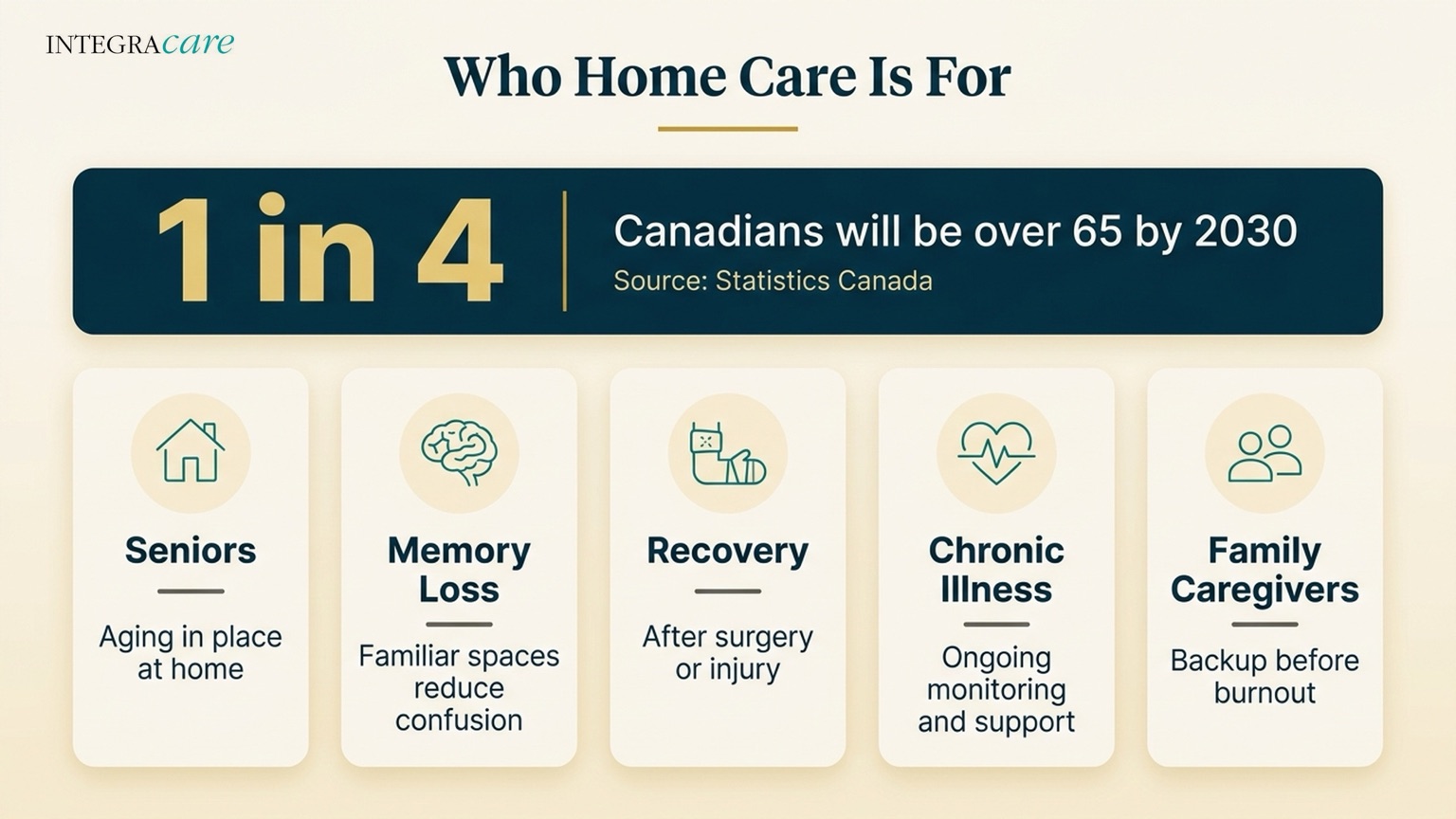
Home health care is for anyone who needs professional support with day-to-day tasks or medical care, without uprooting their life. This includes:
- Seniors aging in place: People who want to remain in their homes instead of moving into long-term care.
- Individuals with Alzheimer’s or dementia: Who benefit from a familiar environment and one-on-one, specialized attention.
- Patients recovering from surgery or injury: Post-operative support that includes mobility assistance, wound care, and medication management.
- People with chronic illnesses, such as Parkinson’s, COPD, diabetes, or arthritis, who require consistent monitoring.
- Family caregivers: Who are overwhelmed, burnt out, or simply need backup.
If you’re asking, “Do we really need help?”…you probably do. And speaking of clarifying misunderstandings, don’t fall victim to common misconceptions about home healthcare.
Government and Organizational Roles in Home Healthcare
In Canada, responsibility for home health care is shared between the federal and provincial governments. Knowing the network of governments and organizations that fund, coordinate, and support the care you receive at home will empower families to access appropriate services and to advocate for themselves.
The Federal Role
The federal government is responsible for establishing standards of quality through the Canada Health Act and for ensuring that all Canadians have equal access to medical services.
The Federal government funds some specific home health care initiatives through Health Canada. The role of the Federal Government includes: funding programs such as the Palliative Care Initiatives and training programs, and developing national policies to guide the delivery of services in partnership with provinces.
Provincial home and community care is generally funded through the Aging with Dignity bilateral agreements with the provincial governments. These bilateral agreements clearly outline both federal and provincial commitments, shared priorities, and desired results for the provision of home and community care.
Provincial Responsibilities
The delivery of home health care in Canada, however, lies within the responsibility of the provincial governments. Each provincial health department determines its own services and how home health care is funded and managed.
While provincial services may vary, there are typical categories included. The Provincial Government usually coordinates the following:
- Assessment and coordination of home health care clients.
- Regulation and licensing of agencies and home health care workers.
- Integration of municipal involvement in service provision.
Organizations That Support Home Care
Home palliative care is made possible in Ontario by the active involvement of the provincial, federal, and municipal governments. Ontario works closely with local health organizations such as Ontario Health, Home Care Ontario, and the Ontario Community Support Association to help provide coordinated home care services and community support.
Getting the Care You Need
It's important to remember that while government regulations create a frame for home healthcare, obtaining the right daily assistance is key to ensuring that the loved ones are supported safely at home. Stay comfortable in your own home while you age with dignity and grace with the help of the personalized nursing support and home care services from Integracare Home Care.
Why Home Health Care Is on the Rise Across Canada
Canada is getting older. Fast.
According to Stats Canada, nearly one in four Canadians will be over 65 by 2030. Combine that with a strained health care system, a cultural shift toward aging in place, and a pandemic that exposed institutional care weaknesses, and the demand for home-based services is exploding.
Key reasons driving the boom:
- Hospital overcrowding: Many patients are discharged faster than ever, needing support at home.
- Aging population: Seniors want to live on their own terms, not in institutions.
- Family caregivers are stretched thin: Home care steps in where the family cannot.
- Personalized attention: Home care offers 1:1 care, unlike facility settings.
- Comfort and dignity: Familiar surroundings promote emotional and mental well-being.
The Most Common Types of Home Care Services
There’s a surprising range of services available under the home health care umbrella. Depending on need, it might include:
- Personal Support Services: Help with bathing, dressing, toileting, grooming, and mobility.
- Nursing Care: Medication administration, catheter care, chronic condition monitoring, and injections.
- Dementia and Alzheimer’s Care: Specialized training to reduce confusion, agitation, and promote dignity.
- Palliative and End-of-Life Care: Comfort-focused, in-home support for those in their final stages.
- Physiotherapy & Occupational Therapy: Rehabilitation from injury, illness, or surgery.
- Post-Operative Care: Wound care, pain management, and recovery support after hospital discharge.
- Respite Care: Temporary relief for family caregivers.
- Companion Care: Social visits, meal prep, light housekeeping, and emotional support.
The beauty of home health care? You choose what you need, and the plan evolves with you.
Levels and Spectrum of Care
| Care Level | Typical Responsibilities | Training / Background | Common Patient Needs | When It's Needed |
| PSW / Caregiver | Assists with bathing, grooming, eating, simple household tasks, providing company, and keeping the patient safe while moving. | Typically goes through a personal support training and works with guidance from the care team. | Help with the daily routines and activities, fall prevention, feeding and keeping the patient comfortable at home. | Ideal for people who just need some support with everyday living, not medical care. |
| Nurse | Deals with medications, wound care, injections, observation of symptoms, and general health checkups. | Licensed practical or registered nurse qualification, depending on required care level. | Post-operative recovery, managing long-term illnesses, complicated medication regimes, and post-hospital check-ups. | Necessary if care is beyond basic assistance and is more medical. |
| Therapist | Works to assist the patient in improving mobility, strength, swallowing, speech or daily function. | Specialized qualification in a certain area of care (e.g., physiotherapy, occupational therapy, speech therapy). | Post-illness or surgery recovery, regaining mobility and functional strength, and overcoming communication or swallowing difficulties. | Necessary to regain independent function or recover movement, etc. |
| Specialist Provider | Can provide specialist care, like care with end of life, dementia or difficult medical needs. | Works in a specialized field requiring a significant amount of experience and knowledge of care provision. | End-of-life care, advanced cognitive decline, severe or highly specialized care requirements. | Recommended when a client is no longer benefiting from general care, or their care has become complex. |
The Benefits of Receiving Care at Home
Home is where your slippers are. And your independence. And your dog. And, most importantly, your dignity.
Home care is more than just practical; it’s powerful.
Key benefits include:
- Independence: Even with care, clients retain control over their routines and environment.
- Personalized Attention: One-on-one care leads to better outcomes and fewer medical errors.
- Emotional Well-Being: Familiar settings help reduce depression, anxiety, and cognitive decline.
- Faster Recovery: Patients often recover more quickly at home than in hospital settings.
- Family Involvement: Loved ones stay involved, informed, and supported.
- Consistency: Home caregivers provide continuous and consistent care, not shift work.
For many, home care isn’t just the better option; it’s the only one that feels right.
How Caregiver Qualifications Impact Quality of Care
You wouldn’t hire a random person off Craigslist to run your finances. So why do it with your health?
The quality of home health care hinges on the caregivers and their qualifications.
Look for these credentials and standards:
- Registered Nurses (RNs) or Registered Practical Nurses (RPNs): For any medical support.
- Personal Support Workers (PSWs): Trained in daily living assistance and safety.
- Registered Nursing Supervision: Ensures ongoing care planning and oversight.
- Care Coordinators: Act as a central point for updates, scheduling, and monitoring.
- Ongoing Training: Staff who are CPR/First Aid certified, dementia-trained, and culturally competent.
- Insured and Vetted: Background checks and professional liability coverage are non-negotiable.
With Integracare, you get all this and more. Our team is built on a multidisciplinary approach, with nurse supervisors, certified caregivers, and an unshakable standard of excellence.
Private vs. Public Home Care: What Canadians Should Know
In Ontario, public home care is provided through Home and Community Care Support Services (formerly LHINs). While it’s a great starting point, it’s not always comprehensive.
Public Care:
- Free or subsidized
- Limited hours and rigid scheduling
- Long waitlists for specialized services
- Often task-based, not relationship-based
Private Care:
- Flexible hours, including overnight and 24/7
- Customized care plans with continuity
- Choice in caregivers and services
- Faster access and better consistency
Most families use a hybrid approach, taking advantage of public services where possible, and filling the gaps with private care from trusted providers like Integracare. For a deeper dive on this topic, read our guide comparing home healthcare vs long-term care.
Why Personalized Care Plans Matter More Than Ever
Cookie-cutter care doesn’t cut it. Especially when you’re navigating complex health issues.
A personalized care plan means:
- Goals are set based on your needs, not the agency’s convenience.
- Cultural preferences, personal routines, and family involvement are respected.
- Caregivers are matched to the client, not randomly assigned.
- Plans are adjusted in real-time as needs evolve.
Integracare builds individualized plans through collaborative input from nurses, families, and caregivers. A coordinator conducts an assessment to ensure that the right services and care provider is matched with the client’s medical needs and preferences.
What Makes Integracare Different?
Toronto and Mississauga families have trusted Integracare Home Care for over 30 years, and with good reason.
We’re not just a care provider. We’re a care partner.
Why Integracare stands out:
- Dementia-Inclusive Expertise: Specialized programs and compassionate training.
- Nursing-Led Teams: Every care plan is nurse-supervised for quality assurance.
- 24/7 Availability: Support when you need it, not just when it’s convenient.
- Continuity of Care: You see the same trusted faces, not a rotating cast.
- Relationship-Based Model: They take the time to truly know each client.
Integracare has a compassionate caregiving team ready to provide personalized support that meets you where you are.
How to Get Started with Home Health Care Services
If you’re unsure where to begin, start with a question: “What kind of help would make life easier?”
From there:
1. Request a complimentary in-home care consultation. 2. Meet with a care coordinator to assess needs and preferences. 3. Develop a customized care plan that can evolve as life does. 4. Begin care with a matched caregiver or nursing team.
You’re not signing your independence away. You’re getting it back, with support that works around your life.
Understanding Dementia Care at Home
Dementia doesn’t just affect memory. It reshapes an entire family’s rhythm. Home care offers a calm, familiar setting that helps reduce confusion, wandering, and agitation.
But it’s not just about being at home, it’s about being understood at home. Trained caregivers can manage challenging behaviours, follow routines that reduce cognitive stress, and ensure safety without stripping away dignity. Whether it’s early-stage memory lapses or advanced Alzheimer’s, specialized in-home care can slow decline and ease daily living for both the person living with dementia and their loved ones.
What Personal Support Workers Actually Do
PSWs are often the unsung heroes of home health care. While nurses handle medical needs, PSWs are the hands-on support that keeps daily life moving: bathing, dressing, toileting, meal prep, transfers, and emotional companionship.
Their role is intimate, consistent, and critical to client well-being. A good PSW doesn’t just help someone get dressed. They help them feel like themselves again. And when there’s consistency in who shows up at your door each day, that bond becomes a pillar of stability in an otherwise changing health journey.
Is Live-In Care Right for Your Family?
For families juggling complex needs or round-the-clock care demands, live-in care can be life-changing. It ensures that someone is always present, day or night, to assist with medication, mobility, cognitive challenges, or simply offer reassurance.
This option works well for clients with dementia, high fall risk, or those recovering from serious surgery or illness. It also provides much-needed relief to spouses and adult children acting as primary caregivers. Live-in care isn’t just full-time help, it’s full-time peace of mind.
Therapies That Come to You: Massage, Physio & More
Healing doesn’t have to happen in a sterile clinic. Services like in-home massage therapy and physiotherapy at home offer convenience and continuity, especially for seniors with mobility issues. Physiotherapists can help clients regain balance, strength, and coordination after injury or surgery.
Massage therapy, on the other hand, relieves chronic pain, supports circulation, and reduces anxiety. When therapy happens in the comfort of your living room, clients are more likely to stick to treatment, and actually enjoy it.
Keeping the Mind Active: Cognitive Health at Home
Mental stimulation is just as important as physical care. Daily activities like word puzzles, art projects, music therapy, and guided conversation help keep the brain engaged, especially in older adults with mild cognitive impairment.
Caregivers trained in cognitive health can tailor activities to the individual’s abilities and interests, avoiding frustration and maximizing participation. Supporting brain health at home doesn’t require high-tech tools, just intention, creativity, and consistency.
Recognizing the Early Signs of Dementia
Forgetfulness happens. But when memory issues start disrupting everyday life, it’s time to pay closer attention. Early signs of dementia may include repeating questions, getting lost in familiar places, difficulty following instructions, or unusual mood swings.
Recognizing these symptoms early allows families to intervene, plan ahead, and introduce support gradually. It also opens the door to assessments, diagnoses, and treatments that can slow progression and protect quality of life.
Customized Support for Different Types of Dementia
Dementia is not a single disease; it is an umbrella term used to describe when patients have cognitive deficits that can be from diseases, injuries, and physical changes of the brain that can lead to a range of symptoms, including memory loss, difficulty speaking and problems with reasoning. Alzheimer’s, vascular dementia, Lewy body dementia, and frontotemporal dementia each have distinct symptoms and challenges.
For example, vascular dementia may cause more confusion than memory loss in the early stages, while Lewy body dementia can come with vivid hallucinations. That’s why a one-size-fits-all approach to care doesn’t work. Personalized support ensures that the right techniques, therapies, and safety precautions are in place for each client’s unique needs.
Wound Care at Home: Healing Without the Hospital
Chronic wounds, surgical incisions, and pressure sores require more than a quick bandage. Left untreated, they can lead to infection and hospitalization.
Home health nurses offer wound care services that include cleaning, dressing changes, infection prevention, and progress tracking, all without leaving the house. This is especially important for clients with diabetes, compromised immunity, or reduced mobility. Professional wound care at home is safer, faster, and far more comfortable.
Palliative Care That Honours Comfort and Choice
When treatment is no longer the goal, comfort becomes everything. Palliative care at home focuses on pain management, emotional support, and quality of life for clients and their families. It’s holistic, compassionate, and deeply personal. Whether someone is facing end-of-life, a complex chronic illness, or simply declining health, having a trusted team come to the home makes this final chapter gentler and more meaningful. It’s about dignity, not diagnosis.
Why Families Choose Integracare Again and Again
When it comes to choosing a home care provider, trust isn’t optional. It’s everything. Integracare has been a go-to choice for families in Toronto and Mississauga for over 30 years because of our consistent, relationship-driven approach.
They don’t just assign caregivers; they match them thoughtfully. They don’t just offer services, they build care teams around real human needs. From dementia support to wound care, live-in services to wellness therapies, families return to Integracare because the care is personal, professional, and always one step ahead.
Final Thoughts: Aging Well Starts with Staying Home
The rise of home health care in Canada isn’t a fluke…it’s a long-overdue correction. People want to age in place, recover in peace, and live with dignity. With the overwhelming crowding in hospitals combined with health care cuts or labour shortage, it is apparent why so many people are opting to age safely in the comfort of their home with compassionate home care services.
Integracare is leading that charge with expertise, compassion, and a commitment to care that truly meets people where they are.
Ready to Talk About Home Care? Let’s Start with a Conversation.
Whether you’re planning ahead or facing an urgent need, support is just a conversation away. Connect with Integracare’s team to book a complimentary in-home consultation and discover how personalized care can make all the difference. Reach out today and take the first step toward care that truly fits.
Frequently Asked Questions About Professional Healthcare at Home
What is home health care in Canada?
Home health care in Canada refers to a range of medical and personal support services delivered directly in a person’s home. It can include nursing care, therapy, and assistance with daily activities to help individuals live safely and comfortably without moving to a facility.
Who qualifies for home health care services?
Home health care is available to seniors, individuals with chronic illnesses, people recovering from surgery or injury, and those needing support with daily living. It’s also commonly used by families who need additional help caring for a loved one at home.
What services are included in home health care?
Home health care services can include personal support like bathing and meal preparation, skilled nursing care, physiotherapy, dementia care, and palliative care. The exact services are tailored to the individual’s health needs and lifestyle preferences.
Is home health care better than long-term care?
Home health care is often preferred by those who want to remain in a familiar environment with personalized, one-on-one support. Long-term care may be more suitable for individuals who require constant medical supervision or cannot be safely supported at home.
Is home health care covered in Ontario?
In Ontario, some home health care services are publicly funded through government programs, but coverage is typically limited in hours and scope. Many families choose to supplement with private care to access more flexible scheduling, specialized services, and consistent caregivers.
Free In-Home Assessment
The Care Your Family Deserves Starts Here
Speak with our team about a personalized care plan. Book a free, no-obligation in-home assessment and we will help you find the right support for your loved one.
About the Author: Lee Grunberg

President & CEO, M.B.A.
Lee joined Integracare as President & CEO on August 2, 2016 after an approximately 20 year career in Private Equity and Investment Banking. Lee brings tremendous operational knowledge and governance experience along with an incredible passion and energy to Integracare.