
Blog
8 Common Misconceptions About Home Healthcare Debunked
Published
Updated
Written by Lee Grunberg, M.B.A. — President & CEO
Reviewed by Bethel McMaster, BScN, RN — Director of Business Development
On this page5 sections
Key Takeaways
- Home Healthcare gives seniors independence and mobility safely at home.
- Homecare reduces stress on family caregivers through professional and specialized support.
- Custom Homecare plans are designed to improve the lifestyle with supports for medical, emotional and daily activities.
- Flexible support is available from full time, 24/7 care to live-in care or short visits.
Needing extra care as you age is normal, and everyone’s needs are different. Choosing care isn't just about providing physical support for loved ones – it's about nurturing emotional health, preserving social connections and making sure life continues to feel joyful and purposeful.
For over 30 years, Integracare has provided compassionate, award-winning Senior home care in Toronto, Mississauga and the Greater Toronto Area (GTA). Our dedicated team of Nurses (RNs and RPNs) and Personal Support Workers (PSWs) are dedicated to providing the highest quality and most compassionate home care that allows our Clients to age at home comfortably for as long as possible.
Many families are concerned that aging at home will be isolating, but with the right support systems in place, seniors can feel more connected and emotionally fulfilled than ever. With so many options available, choosing the right support can feel overwhelming. To help you make an informed choice, here are some of the most common misconceptions about home healthcare, and the facts behind them.
Home Care Myths and the Truths That Might Surprise You
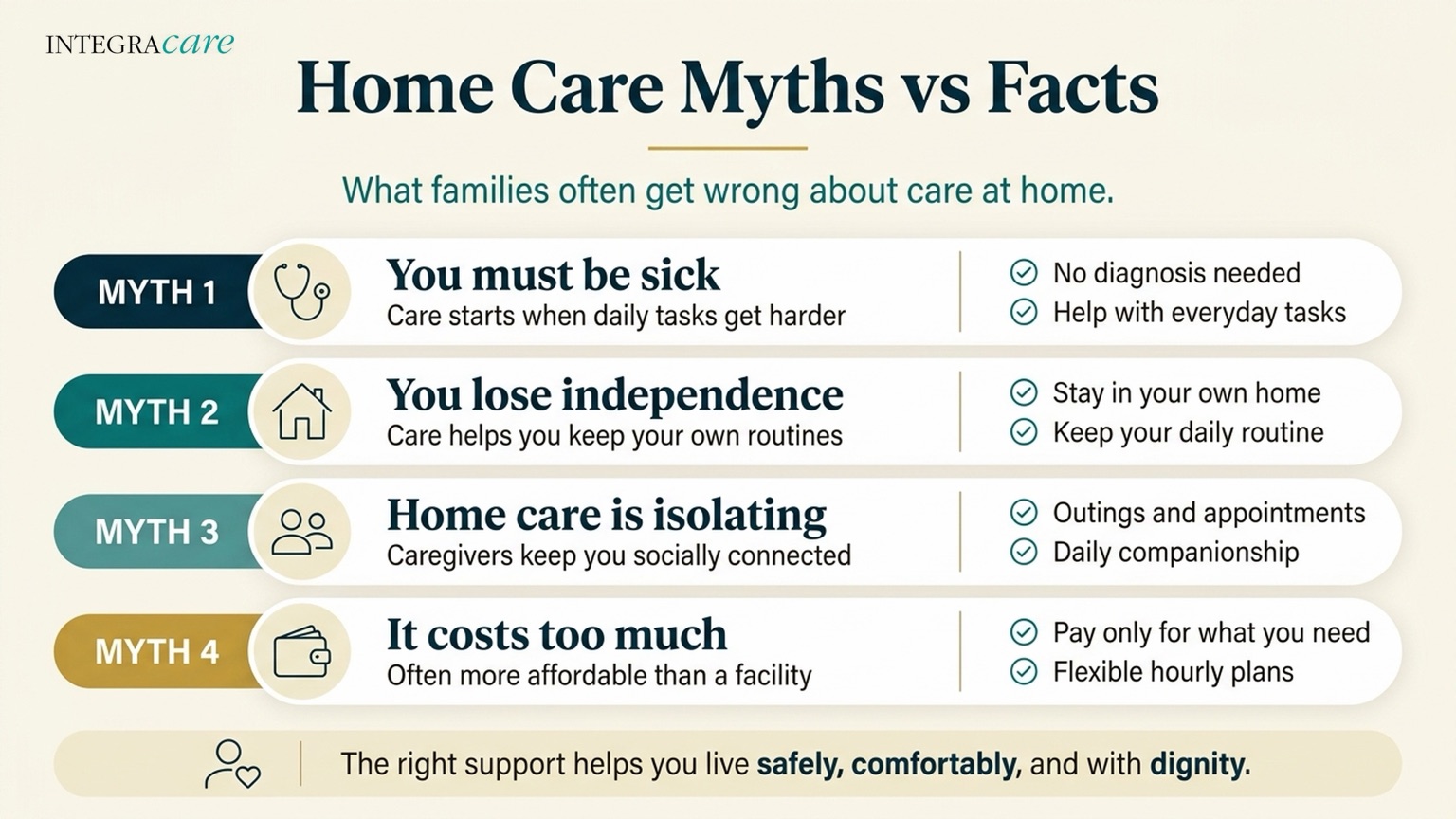
Myth #1: You Have to Be Sick to Receive Home Care
As we age, certain things naturally become more difficult. Falls, memory lapses, and disorientation can all increase with age and can also make it difficult to continue living entirely independently. When these signs of ageing start to arise, having someone around for a bit of added help can be highly beneficial for Seniors. You certainly don’t have to be diagnosed with any illness or disease to benefit from or receive at-home care.
Not only can home healthcare help seniors with their daily tasks, but it will also give their loved ones the peace of mind that they’re being taken care of. At Integracare, we offer many services that help make ageing joyfully at home possible. Some of those services include:
- Light housework
- Meal preparation
- Dressing
- Bathing
- Cleaning
- Toileting
- Feeding
- Massage therapy
- Physiotherapy
Choosing Home healthcare is about managing physical needs, protecting emotional health, maintaining social bonds, and continuing to lead joyful, purposeful lives. At Integracare, we also offer at-home palliative care in Mississauga and Toronto and Nursing Services for individuals who have been diagnosed with a life-limiting illness, are recovering from surgery or have just been discharged from the hospital. Palliative care can be provided for anyone diagnosed with the following:
- Cancer
- Heart failure
- Liver Disease
- Alzheimer’s or Dementia
- Parkinson’s Disease
- Stroke
- Coma
- Chronic Obstructive Pulmonary Disease (COPD)
- Any other life-limiting illness
Learn more about who home healthcare is for and why it’s growing.
Myth #2: Starting Home Care Means Saying Goodbye to Your Independence
It can be extremely difficult to accept that you may need extra help doing things that you’re used to being able to do independently. Needing someone to help you get dressed, prepare your meals, and arrange transportation can make it feel like you’re losing a sense of yourself. However, receiving home health care in no way means giving up your independence. In fact, it can help you maintain your independence for as long as possible by allowing you to live in your home and keep up your regular daily routines.
If you or your loved one is experiencing confusion, disorientation, balance issues, or extreme memory lapses, certain things can become extremely dangerous. For example, driving yourself around when you are confused and disoriented can make it much easier for you to make wrong turns, get lost, or, in extreme cases, even get into an accident. Having a home health care professional can help you go about your regular daily routine, but in a much safer way. By continuing to live at home with the help of an Integracare care provider, you or your loved one can maintain as much independence as possible for as long as possible.
Myth #3: You Don’t Need Home Care if You Have Family to Take Care of You
When a loved one becomes ill or starts to require more assistance, the task of caring for them can often fall on friends or family. However, it’s not realistic for family members to be able to drop their lives to take care of their loved one, as with time, caring for a loved one can become a 24/7 job. Additionally, as family members may not be professional care providers, they may not be the best person for the job or be able to provide all the services that are necessary. Still, family members can experience extreme guilt for not being able to become the primary care provider.
As a family member of a loved one who needs care, you should not feel guilty or that you are disrespecting your loved one by seeking home healthcare. Getting adequate care for your loved one shows just how much you love and care for them, as you can recognize what they need to live the highest quality of life possible.
Additionally, your home care provider can act as a health advocate for you or your loved one. It’s extremely helpful to work with someone who is well-versed in navigating the healthcare system to help explain medical jargon and care options so that nothing is misunderstood. This role usually falls on family members; however, they may not know the ins and outs of the system the same way a trained member of the Integracare team does.
A health advocate can make the care process much smoother and will alleviate any worry or stress you may have about your loved one’s care. Our team of Caregivers, Personal Support Workers (PSWs), and Registered Nurses (RNs) are thoroughly screened, supervised, and educated to ensure the highest quality care. You’ll receive the highest care possible with flexible plans that are coordinated to suit your changing medical needs and preferences.
Myth #4: Home Healthcare Is Isolating
Most people worry that taking home care is stepping back from life - that you will be confined to the house while your friends move on, or will become lonely with only a 'paid friend' as your company. This is an understandable concern. No one wants to be housebound, and have to leave behind their friends and the life they have built.
Home care is bringing families closer. When someone else takes over the daily burdens of daily life, you and your family can just be family again - share Sunday meals, chat and laugh with your grandchildren, spend quiet time together, rather than focus on medications and chores. No visiting hours or institutionalized routines - only your home and family, with a supportive presence making it possible.
Embracing Connection at Home: How Caregivers Help
- Transportation: They will take you to your book club, religious services, beauty salon or out to lunch with a friend.
- Technology Assistance: Caregivers can help you video call your grandchildren, send emails, or use social media to communicate with your loved ones.
- Visit Facilitation: They can help you plan visits with your family, so that you feel refreshed and ready, with assistance to help with hosting responsibilities-like serving refreshments or tidying the house, making hosting seamless and stress-free.
- Community Access: Companion care is also about getting out and about. The caregiver can escort you to events, appointments, or simply on a walk around your neighbourhood.
- Hobby Support: Your caregiver can participate in activities you enjoy, such as gardening, crafts, and other projects that connect you to your interests and community.
Because so many seniors have fewer people to visit them than they may have had at the peak of their lives, having an extra person in their lives who is genuinely concerned with their well-being is often invaluable. Many families are relieved knowing a loved one has regular companionship, which helps build their confidence, reduce isolation and improves their social connections.
Home healthcare offers the care you need for your evolving needs so that you can maintain your independence and mobility in the comfort of your home. With Homecare you don’t have to worry about leaving the place full of all your cherished memories. You can age in place feeling safe and comfortable while receiving the best care possible for your physical, mental, and emotional needs.
Here at Integracare we meticulously match our clients with caregivers based on compatibility, interests, personality and communication styles, creating positive bonds that enrich your life. One of our clients shared: “*The care and coordination of care has been top notch. Everyone so far no complaints and very professional my Dad had also mentioned.*
*It really brought me to tears today talking about it to my cousin that your company and all of the employees this far have made my life and this distressing time so much better and have offered a level of comfort and support that really made a hard time easier to deal with…*”
- Susan
Myth #5: Home Healthcare is Extremely Expensive
Cost can be a significant determining factor in the type of care that someone may opt for, for themselves or their loved ones. It is often assumed that home healthcare is an extremely expensive option; however, when compared to long-term care facilities, it is often much more affordable. Depending on the type of care needed, home healthcare services can be an affordable option.
While cost is undoubtedly an important factor to consider, we believe the comforts of home care will make it worth every penny. Give us a call at (416)421-4243 to set up a free at-home assessment to discuss your or your loved one’s needs. You should also look into what may be covered by your or your loved one’s healthcare plan to help determine whether home healthcare is a feasible option for your family.
Myth #6: You Can’t Receive Adequate Care at Home
Our mission at Integracare is to increase the quality of life of our Clients. With one-on-one healthcare, we can provide high-quality and compassionate care that puts the Client at the centre. The level of care needed will differ for each individual, which is why we create custom Care Plans with Clients and their loved ones to ensure their personal needs are being met. Because of the one-on-one nature of home healthcare, we can provide high-quality care that is less rushed and more comfortable than the care you would receive in a long-term care home or assisted living facility.
Home healthcare involves professional healthcare workers, including Personal Support Workers (PSWs), Registered Practical Nurses (RPNs), Registered Nurses (RNs), massage therapists, and physiotherapists. Each member of the Integracare team is thoroughly screened before being hired, and they all receive updated education annually.
Integracare was awarded #1 Workplace in Toronto and Ontario and #1 Workplace in Healthcare in Canada by Great Place to Work®. These recognitions allow us to have the best Caregivers on our team and provide the highest quality of care possible. We can assure you that you can certainly receive adequate treatment at home.
Myth #7: Home Healthcare Isn’t as Safe as Moving into an Assisted Living Facility
Some people may worry that having someone they don’t know coming into their home could pose a safety hazard. Unfortunately, there is a common misconception that caregivers steal from clients, abuse them, and/or take advantage of them. At Integracare, each member of our team is thoroughly screened to ensure only the best people are hired. We take the care and safety of our Clients extremely seriously and only tolerate compassionate, joyful, Client-focused care.
At first, some people may find it hard to have someone they don’t know coming into their home, but in no time, a trusting relationship will be built, and the care provider will feel almost like family. At Integracare, our care providers develop close relationships with our Clients and become trusted companions and valued people in their daily lives. When creating your personalized care plan, we will work hard to match the Client with a care provider that is properly suited to them.
The relationship between our professional caregivers and clients blossoms into something special; caregivers learn the things their clients love to talk about, their sense of humour, the little things that make their day special, and will share in milestone events and stories, offering emotional support as well.
Myth #8: If You Need 24/7 Care, Home Healthcare Is Not an Option
At Integracare, we work with our Clients and their loved ones to set up a personalized care plan that delivers exactly what the Client needs. These plans are dynamic, Client-centred, and created in tandem with any other medical professionals the Client may be seeing and may include a Nurse coming to help administer medications, or a PSW visiting to prepare meals, and do some light housework. They may not even come every day, and instead do a few visits a week.
Alternatively, we also provide 24-hour, Live-In Care for Clients who need it. On top of offering care for ageing Clients, we also offer at-home Dementia Care in Toronto, Mississauga and the GTA. Depending on the stage of the disease Clients are at, they may need full-time care. Because our Care Plans are dynamic and flexible, scheduling may shift over time as the health of the Client changes. For example, a Client may start out with visits three times a week for the first few months of their care. If their situation changes and they need more care, they could then switch to daily visits.
More Than Just a Home Healthcare Provider
When COVID-19 was declared a global pandemic in March 2020, we wanted to expand our care services to help as many people as possible in Toronto, Mississauga, and the GTA. That’s why we started providing concierge COVID-19 testing. We believe that frequent testing is essential for slowing down the spread of this virus, as it is the only way to know with certainty whether you have been infected.
It’s now becoming more common for people to do an at-home COVID test. However, not everyone can access tests, is comfortable administering a test for themselves, and they may require Medical oversight for travel documentation. That’s why we offer concierge testing, where a member of our Nursing team will come right to your home or workplace to administer the COVID test and send it off for results. On top of getting vaccinated, wearing a mask, observing social distancing, and avoiding large gatherings, getting tested is an essential component of staying safe amidst the pandemic.
Get the Care You Need
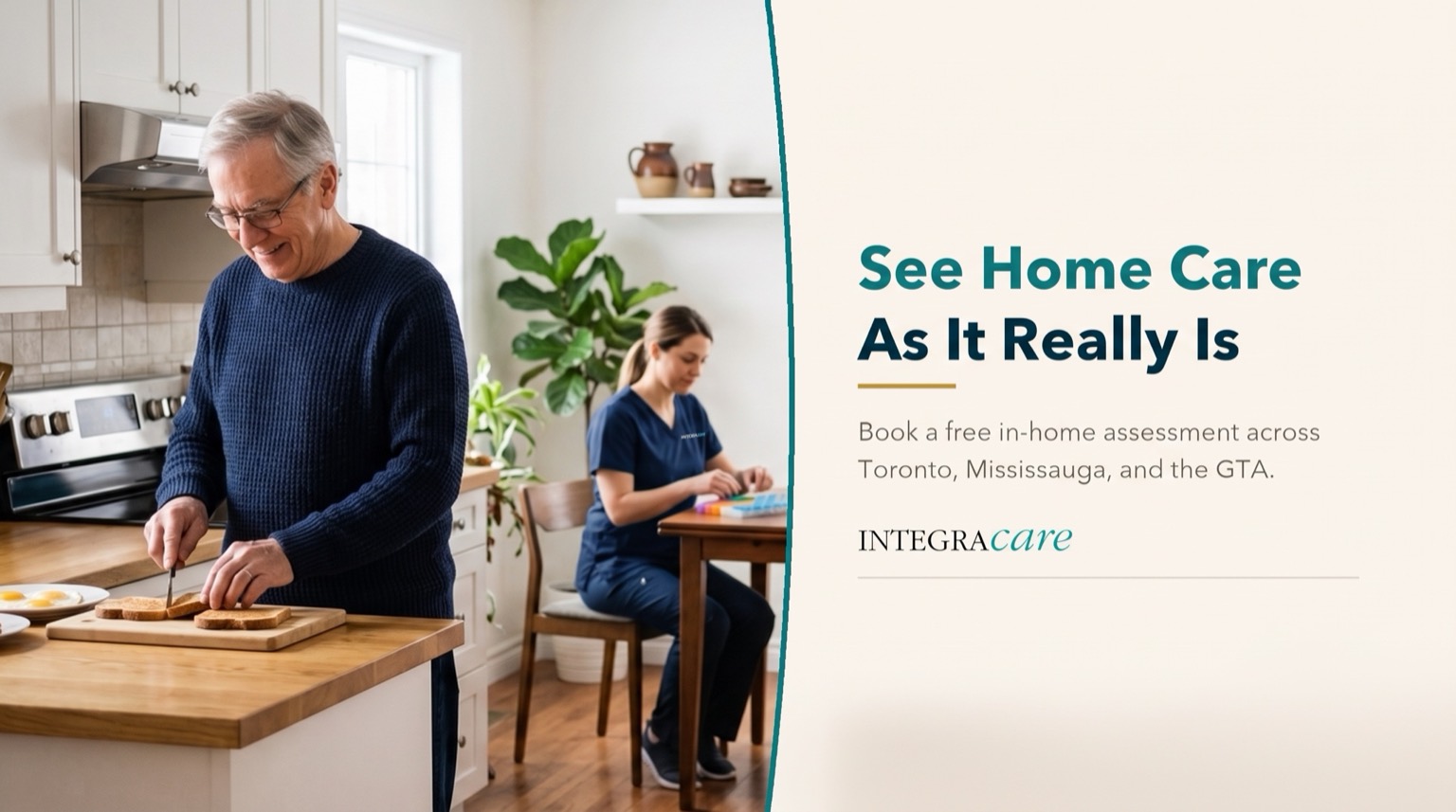
When you're aging in your own home, health care is a vital part of it but it is about staying connected to the people and places you love, maintaining the independence you've built over a lifetime. It's about being there for birthday parties and special occasions or visiting on a Sunday afternoon.
Home health care allows you to stay connected to the people you love while embracing your independence. Home care creates opportunities to find joy in the little things once again. It also reduces the burden on family members while giving them the peace of mind that their loved one is receiving the highest quality of care.
With home care support, Integracare removes any obstacles that may keep you or your loved one from the things you care about with the highest quality support, allowing family members to bond and helping both of you to find peace of mind and discover what truly matters to you, right at home.
The right time to start planning for home healthcare is different for everyone. However, we believe that it’s better to start early and have a plan ready, so you don’t have to rush into something if the health of your loved one suddenly starts to decline. This way, the individual receiving care can also be included in determining their care. If you’re considering home health care as an option for yourself or a loved one, reach out to us. We would love to answer any questions you may have.
Frequently Asked Questions About In-home Healthcare and Its Misconceptions
What is the biggest misconception about home healthcare?
One of the most common misconceptions is that home health care is intended for individuals who are severely ill or bedridden. The reality is that there are a number of health care needs that can be met within the realm of home care, from basic housekeeping to highly skilled medical care.
How does home health care support emotional well-being?
Emotional well-being is central to the home health care approach; caregiver and client relationships are central, family can gain peace of mind, and a client thrives in an environment familiar with loved ones and memories, and therefore increases his sense of well-being and joy.
Can home healthcare replace the need for long-term care facilities?
In many cases, yes. Home healthcare can provide personalized, one-on-one support that allows individuals to remain safely at home, often making it a practical alternative to institutional care depending on their needs.
Is home healthcare affordable for most families?
Home healthcare is often more flexible and cost-effective than people assume, especially compared to full-time facility care. Costs vary based on the level of support required, but services can be customized to fit different budgets and care plans.
How do I know if my loved one needs home healthcare?
Signs may include difficulty with daily tasks, mobility issues, memory lapses, or increased safety risks at home. Even early support can improve quality of life and prevent more serious health or safety concerns down the line.
Is it safe to have a caregiver come into the home?
Home health care agencies invest heavily in background checks and regular screenings to provide safety to clients. To match clients with caregivers, agencies thoroughly assess compatibility, so before you know it, that stranger will be considered an extended family member.
Will my loved one feel lonely or isolated with home health care?
Home health care encourages socialization by empowering caregivers to help clients stay in contact, attend events, utilize technologies, and provide companionship. Family and friends are able to visit freely, and clients often form the kind of caregiver relationship that many of their relatives and friends can't provide.
Free In-Home Assessment
The Care Your Family Deserves Starts Here
Speak with our team about a personalized care plan. Book a free, no-obligation in-home assessment and we will help you find the right support for your loved one.
About the Author: Lee Grunberg

President & CEO, M.B.A.
Lee joined Integracare as President & CEO on August 2, 2016 after an approximately 20 year career in Private Equity and Investment Banking. Lee brings tremendous operational knowledge and governance experience along with an incredible passion and energy to Integracare.