
Blog
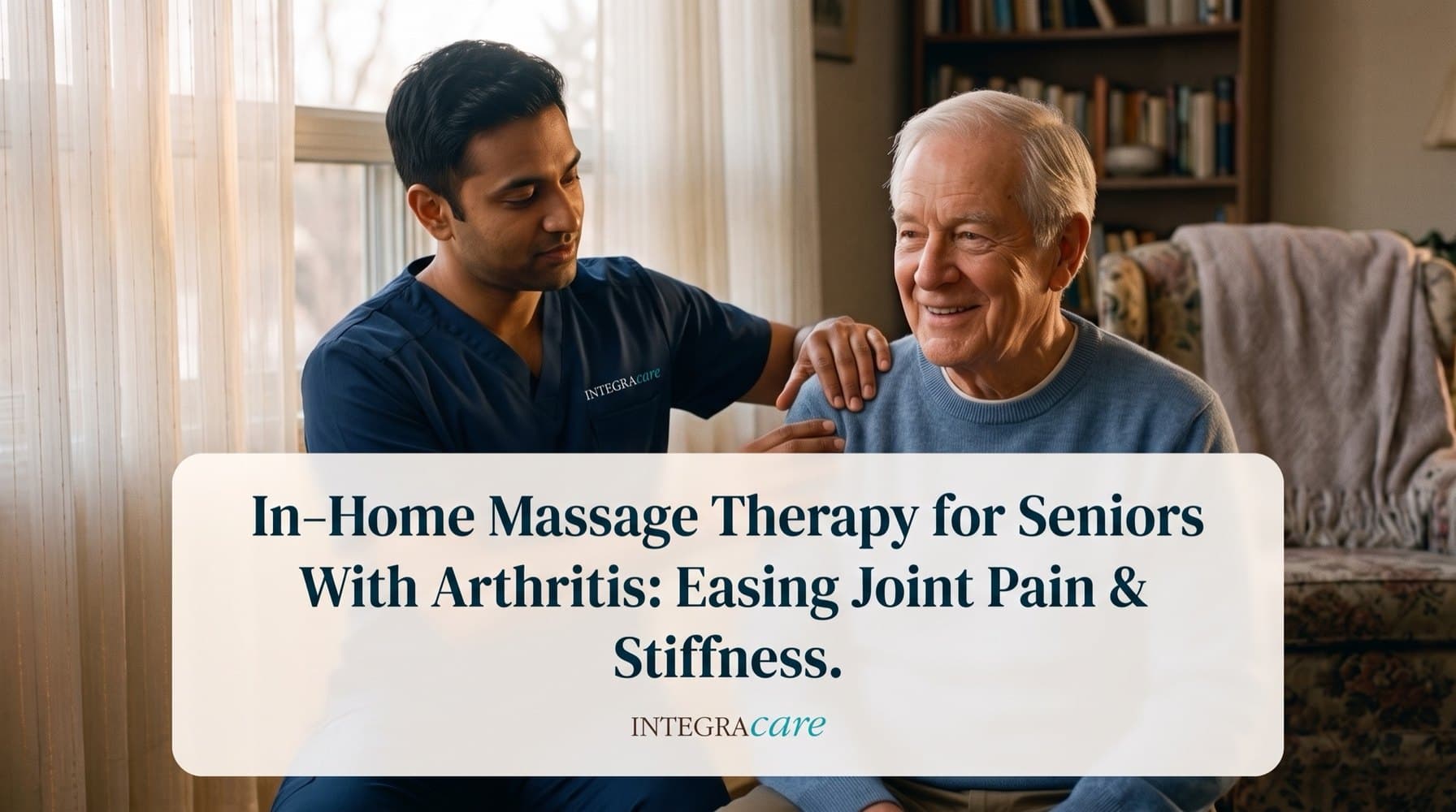
In-Home Massage Therapy for Seniors With Arthritis: Easing Joint Pain & Stiffness
Published
Updated
Written by Lee Grunberg, M.B.A. — President & CEO
Reviewed by Bethel McMaster, BScN, RN — Director of Business Development
On this page12 sections
Key Takeaways
- In-home massage therapy should feel gentle, private, and tailored to the senior’s comfort.
- The session usually begins with a short consultation about health history, pain points, and preferences.
- During the massage, pressure, positioning, and pacing can be adjusted at any time.
- After the session, many seniors feel looser, calmer, and more comfortable moving.
- Clear communication with the therapist is the most important part of a good session.
Morning stiffness often makes the first few steps of the day the hardest. As joints warm up and muscles begin to move, discomfort may gradually ease, but routine tasks like holding a coffee mug, fastening buttons, opening a jar, or standing up after sitting for a while can take more effort. When arthritis affects daily routines, finding ways to maintain comfort and mobility becomes a priority.
Ongoing joint pain has a way of spreading past the joints themselves. Sleep gets lighter and more broken up. Patience wears thinner by evening. Activities that depend on steady hands or comfortable movement- cooking, hobbies, time outdoors- start needing more thought than they used to. Many of these changes are linked to common arthritis symptoms , which can affect joints, surrounding muscles, and overall mobility over time.
Does Massage Help Arthritis?
Massage therapy is one option that can support arthritis management. Research on massage therapy benefits for treating arthritis suggests that gentle soft tissue work can support circulation, reduce muscle tension, and help improve physical comfort in people managing chronic conditions. It works by addressing the compensatory muscle tightness that develops when a person changes how they move a painful joint. Light manipulation of soft tissues can encourage endorphin release, the body’s natural management response to discomfort, and promote better circulation. This increased blood flow helps deliver oxygen to tight muscles and can assist in easing stiff joints and managing morning stiffness.
To ensure safety, a licensed Canadian massage therapist develops an individualized treatment plan tailored to the senior’s specific tolerance. RMTs are trained to modify their approach based on the type of arthritis present, taking care to avoid massage on or near an arthritic joint during a flare. The focus remains on helping seniors navigate daily movements with greater ease.
The Massage Therapy Assessment
Before the session begins, there is usually a short conversation to understand what day-to-day movement currently looks like.
A therapist may ask:
- Where stiffness or discomfort is most noticeable
- How mornings feel compared to later in the day
- Whether there have been recent flare-ups or changes
- What medications or treatments are already in place
This step helps shape a treatment plan that reflects current needs rather than a fixed routine.
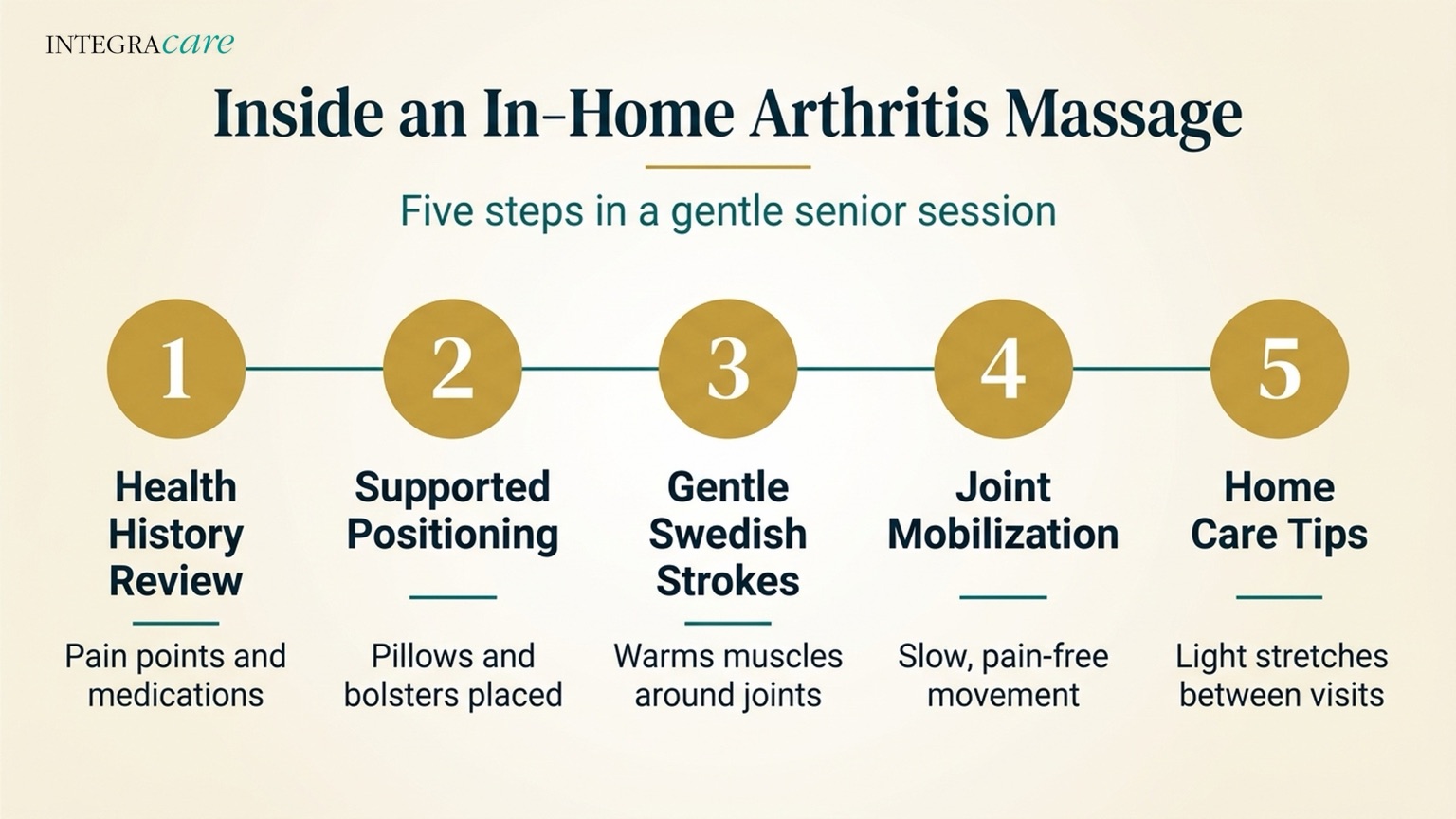
Our Registered Massage Therapists from Integracare will also review your health history, including any arthritis diagnoses, medications, and previous treatments. This information allows our Registered Massage Therapist to adapt the session to your specific situation, avoiding techniques that might not be appropriate during certain stages of arthritis or with particular medications.
Positioning is discussed in advance. Some people are most comfortable lying down, while others prefer a seated position. Pillows or bolsters can be arranged to support joints and reduce strain before the session begins.
What to Expect During the Session
During the massage, small adjustments tend to make the biggest difference.
The therapist checks in regularly about pressure and comfort. If a shoulder feels sensitive or a knee does not tolerate certain positions, the approach is adjusted without interrupting the flow of the session.
Most treatments for arthritis use gentle Swedish massage, light pressure techniques, or myofascial release. These approaches focus on surrounding muscles rather than pressing directly into sensitive joints.
Supportive positioning is maintained throughout. Bolsters may be placed under the knees, behind the back, or beneath the arms to reduce tension and allow the body to relax more fully.
The pace is steady. There is no need to rush. The goal is to support comfort while encouraging gradual movement in the tissues.
What Seniors May Notice After the Session
After the massage ends, many seniors notice that they feel a little looser or more at ease. Some may feel less stiff when standing up or walking. Others may simply feel calmer, more relaxed, or ready to rest.
To help maintain these benefits, resting quietly, staying hydrated, and engaging in light, gentle movement for the remainder of the day can be helpful. The therapist may suggest simple home care instructions, such as basic self-care habits or light at-home stretches, to help maintain joint flexibility between professional visits.
A feeling of mild fatigue or sleepiness can sometimes occur after a session as the body rests and recovers; this is a natural response that typically resolves within 24 hours. Keeping note of how the body feels over the following days provides helpful information that allows the care team to adjust and refine future sessions to better support long-term physical comfort.
Restoring Movement: Appropriate Massage Techniques for Seniors
When managing arthritis, a primary goal is keeping daily routines comfortable and independent. While massage therapy cannot reverse structural joint changes, it provides meaningful support by addressing the surrounding muscles, helping to reduce stress and tension. When a joint hurts, the body naturally tightens nearby muscles to protect it. Over time, this constant bracing causes secondary stiffness and makes routine actions, like turning a doorknob or stepping down from a curb, feel more difficult than they need to be.
Delivered in the comfort of home by a Registered Massage Therapist (RMT), geriatric massage bypasses heavy pressure entirely. Instead, treatments use gentle, anatomy-informed techniques specifically adapted to protect aging joints, delicate skin, and changing bone density:
- Gentle Swedish Massage: By utilizing long, smooth strokes, a Swedish massage warms muscle tissue and supports circulation improvement. This increases local blood flow, helping to relax the larger muscle groups, such as the quadriceps above an arthritic knee or the muscles across the upper back, that overwork to compensate for stiff joints.
- Joint Mobilization: The therapist carefully moves limbs through a slow, pain-free range of motion. This gentle, passive movement encourages the production and flow of synovial fluid, which acts as the body’s natural joint lubricant, helping to ease the friction that causes morning stiffness.
- Myofascial Release: Rather than applying direct pressure to sensitive bones, the therapist uses sustained, light stretching of the soft connective tissues (myofascial release). This helps reduce the structural pulling on adjacent joints, creating a sense of physical space and ease around restricted areas.
- Friction and Gliding for Hand and Finger Joints: For arthritic hands, an RMT applies detailed, circular friction around the small joints of the fingers and the base of the thumb. This targeted technique helps break down local tightness in the tendons, making it more comfortable to grip a coffee mug, turn a key, or fasten buttons.
- Compressive Broad-Stroke Work for the Knees: To support a stable gait and stability, therapists use broad compression on the hamstring and calf muscles. Relieving the tension in these anchoring muscle groups reduces the constant compression on the knee capsule, which can make climbing stairs or standing up from a sofa feel less restrictive.
- Gentle Traction and Passive Rotation for Hip Mobility: For individuals experiencing deep hip discomfort, the therapist can apply highly controlled, gentle manual traction, a slight, straight elongation of the leg, combined with minor passive rotation. This subtle technique helps temporarily reduce the pressure within the hip socket, making it more comfortable to get out of bed or walk around the neighbourhood.
When Massage Therapy Is Not Appropriate
A vital part of professional care is knowing when to withhold treatment. In-home massage therapy is highly adaptive, but there are distinct clinical situations where it is unsafe and must be paused:
- Active Inflammatory Flares: Massage is never performed directly on or near an arthritic joint during an acute flare. If a joint is visibly swollen, red, or hot to the touch, common during rheumatoid arthritis flares, any manual pressure will increase inflammation and aggravate the tissue. Care is either redirected to unaffected areas or postponed.
- Deep Vein Thrombosis (DVT) Suspected: If an individual experiences sudden, unilateral swelling, warmth, or deep pain in a calf or thigh, massage is strictly contraindicated until a physician rules out a blood clot.
- Unhealed Fractures or Advanced Skin Fragility: Areas with recent fractures, open wounds, severe bruising, or paper-thin skin are bypassed to prevent tissue damage or infection.
- Severe, Unmanaged Cardiovascular Conditions: Conditions like unstable hypertension or advanced congestive heart failure require written clearance from a physician, as systemic massage alters fluid circulation and vascular load.
Recognizing these clinical limitations ensures that massage therapy is introduced safely. Within Integracare’s specialized coordinated care model, registered massage therapists work in direct alignment with Personal Support Workers , Registered Nurses , and external medical teams. This collaborative approach ensures that every treatment remains a safe, fully integrated part of a comprehensive, personalized care plan.
Where Massage May Help the Most
Arthritis doesn’t affect every joint in the same way. It often becomes most noticeable during the routines that help us stay independent, opening a jar, reaching into a cupboard, getting up from a favourite chair, carrying groceries, or taking those first few steps in the morning. Because everyone’s symptoms, mobility, and health history are different, our Registered Massage Therapist in Toronto and Mississauga tailors each session to the areas causing the greatest discomfort, using gentle techniques to the areas causing the greatest discomfort, helping support more comfortable movement throughout the day.
Helping Arthritic Hands Stay More Comfortable
The hands are often one of the first areas affected by arthritis, making everyday tasks like turning a key, preparing meals, or holding a mug more difficult. Gentle massage therapy may help reduce muscle tension, encourage circulation improvement, and support better range of motion in the hands, wrists, and forearms.
Rather than applying firm pressure directly to painful joints, a Registered Massage Therapist adapts treatment to the individual’s comfort level and may combine massage with gentle stretching or hand exercises recommended by a healthcare provider or physiotherapist. Simple hand exercises may help keep the fingers and wrists moving more comfortably between sessions.
Easing Stiffness Around the Knees
Arthritis in the knees can make walking, climbing stairs, and getting out of a chair feel more challenging. Massage often focuses on the muscles surrounding the knee, including the thighs, calves, and hips. The goal is to reduce tension, improve joint mobility, and encourage more comfortable movement. When combined with physiotherapy, regular exercise, or heat therapy, gentle massage can complement an overall arthritis treatment plan and help seniors stay active at home.
Special Considerations for Rheumatoid Arthritis
Massage can be beneficial for people living with rheumatoid arthritis, but treatment should always be adapted to the stage of the condition. During an active flare, when joints are swollen, warm, or highly inflamed, massage directly over the affected joint is generally avoided. Once inflammation has settled, gentle massage may help ease muscle tension, promote relaxation, and improve comfort. An experienced Registered Massage Therapist will always consider the person’s health history, medications, and guidance from their healthcare provider before beginning treatment.
Comfort and Connection Through Gentle Movement
For seniors living with memory loss, gentle physical support can offer more than just joint relief. A calm, predictable routine or a soothing touch can create moments of profound comfort, reassurance, and mental clarity when verbal communication becomes challenging.
When gentle physical movement is paired with a steady, reassuring presence, it can feel deeply grounding for both the body and mind. Utilizing specialized dementia care techniques rooted in intentional, therapeutic touch allows care providers to ease the physical restlessness and situational anxiety that frequently accompany cognitive changes. These non-verbal moments of connection can help seniors feel secure, relaxed, and more physically comfortable in their surroundings.
When integrated into palliative care, the comforting touch of massage therapy can provide gentle, non-invasive pain management and essential emotional reassurance during advanced stages of illness.
How Massage May Support Easier Movement
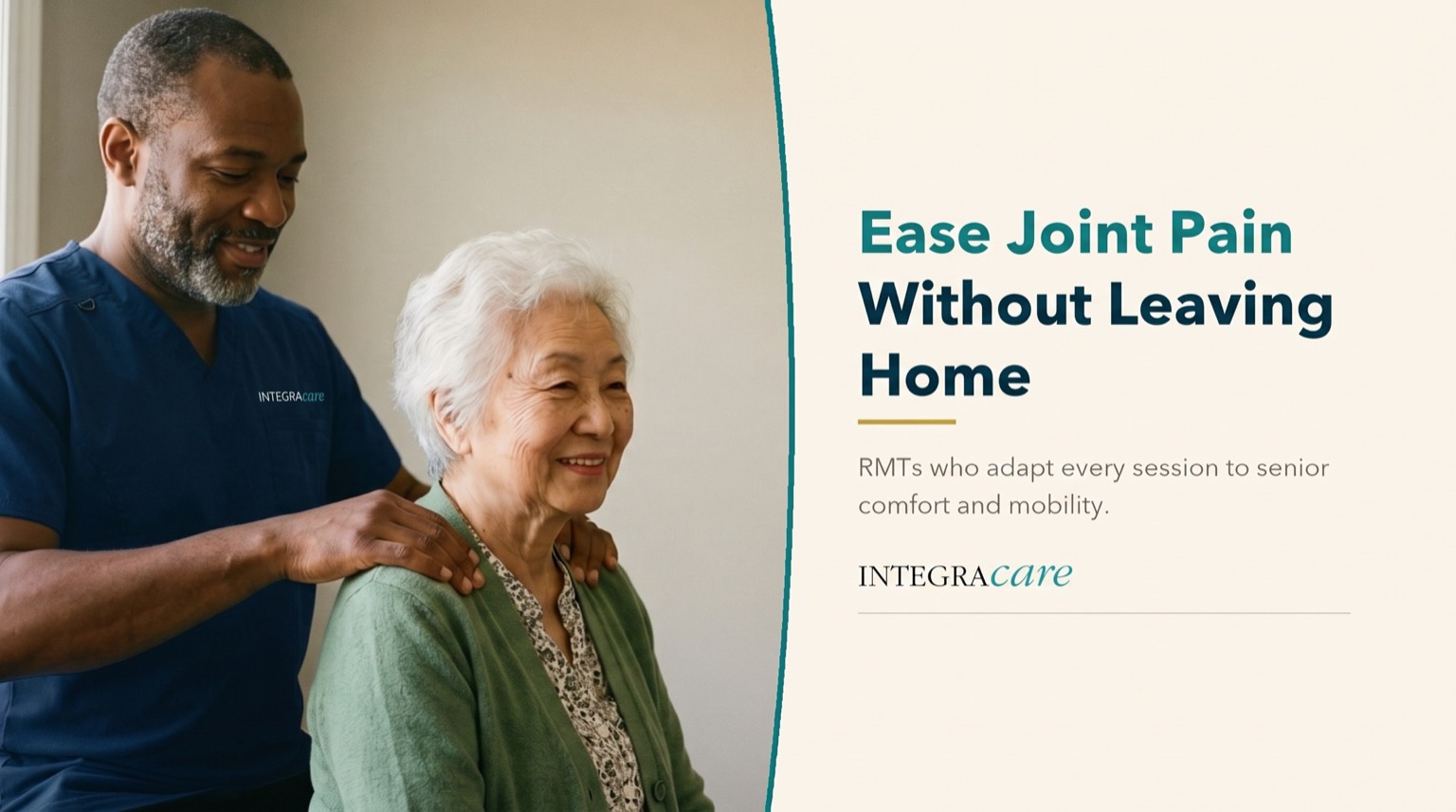
When arthritis causes constant discomfort, finding natural ways to encourage daily mobility becomes essential. Gentle, senior-focused massage therapy can help reduce the protective muscle bracing that often makes routine movements feel restrictive.
- Better Circulation and Less Stiffness: Gentle massage encourages circulation improvement, helping to deliver oxygen-rich blood to tight tissues while easing tension around sore joints. When the body stops guarding against pain, simple actions like standing up, reaching, or walking around the neighbourhood can feel smoother and more comfortable.
- More Comfortable Range of Motion: When muscles are chronically tight, they limit how a joint can move. Specialized soft tissue work helps these surrounding structures relax, gradually reducing resistance so it becomes easier to bend, rotate, or stretch.
- Helping Movement Feel Less Forced: Many seniors move carefully because they expect pain, which leads to structural stiffness. Easing this secondary muscle tension helps movement feel more natural and less effortful, which can support overall gait and stability.
Simple Ways to Maintain the Benefits Between Sessions
Extending the relief of a professional treatment involves simple, consistent habits that protect joint flexibility at home.
- At-Home Stretches and Gentle Movement: Performing light stretching exercises between appointments helps prevent muscles from tightening up again. Following a few simple, therapist-recommended at-home stretches slowly and consistently can help preserve your baseline flexibility.
- Pillow Setups and Resting Comfort: Using strategic pillows or bolsters to support the knees, wrists, or neck while resting reduces direct strain on sensitive joint capsules. This thoughtful positioning limits overnight tension, helping to manage dreaded morning stiffness.
- Self-Care and Tracking Changes: Paying attention to adjustments in flexibility and noting what triggers discomfort provides excellent feedback for your next session. Simple self-care for arthritis, combined with resting and drinking water, helps the body process the therapeutic benefits more efficiently.
Help Your Loved One Move Through Each Day More Comfortably
When arthritis begins to affect everyday routines, even simple tasks can take more time, energy, and effort. Thoughtful, in-home massage therapy can help ease stiffness, support more comfortable movement, and become part of a personalized care plan that helps seniors remain comfortable and independent at home. Integracare’s team of Registered Massage Therapists, nurses, and professional caregivers in Toronto and Mississauga work together to deliver personalized in-home care that supports comfort, mobility, and independence, always with the dignity and attentiveness every senior deserves.
Frequently Asked Questions
What happens during an in-home massage session for a senior with arthritis?
An in-home massage session usually begins with a short consultation about health history, medications, and how arthritis is affecting daily movement. The therapist may ask about stiffness, pain points, and comfort with positioning. During the session, gentle techniques are used while pressure, pacing, and positioning are adjusted as needed. Regular check-ins help ensure comfort throughout. The goal is to reduce muscle tension around joints and support easier movement in a familiar home environment.
Does massage help arthritis pain and stiffness?
Massage therapy can help reduce arthritis-related pain and stiffness by relaxing tight muscles around affected joints and encouraging better circulation. When surrounding tissues are less tense, movements such as walking, standing up, or using the hands may feel more manageable. While massage does not treat the underlying condition, it can support day-to-day comfort and mobility. Many seniors find that regular sessions help make routine activities feel more predictable and less physically demanding.
Is massage good for rheumatoid arthritis?
Massage can be helpful for rheumatoid arthritis during periods when symptoms are stable and inflammation is controlled. Gentle techniques may reduce muscle tension and support relaxation without placing stress on sensitive joints. However, during active flare-ups, when joints may be swollen, warm, or painful, massage is usually not recommended without medical guidance. Checking with a healthcare provider helps ensure that treatment is timed appropriately and adapted to current symptoms.
What should a senior tell a massage therapist before starting treatment?
Before treatment begins, it helps to share how arthritis is currently affecting daily routines. This may include where stiffness is most noticeable, what times of day are more difficult, and whether there have been recent changes in symptoms. Information about medications, past injuries, or other health conditions is also important. Preferences around pressure, positioning, and comfort should be discussed so the therapist can create a treatment plan that reflects individual needs.
Do seniors need to undress for massage therapy at home?
Seniors do not need to undress unless they feel comfortable doing so. Massage therapy can be adapted to work over light clothing, depending on the areas being treated and personal preferences. A professional therapist will explain options clearly before the session begins and ensure privacy is respected at all times. The focus is on maintaining comfort and dignity, rather than following a fixed approach to treatment.
What does massage feel like for someone with arthritis?
Massage for arthritis is typically gentle and steady, focusing on reducing tension without causing discomfort. The therapist often works on muscles surrounding the joints rather than applying direct pressure to sensitive areas. Pressure is adjusted throughout the session based on feedback. Most people experience a calm, supportive treatment that helps ease stiffness. The overall goal is to create a comfortable experience that encourages relaxation and more natural movement.
How often should seniors get massage therapy for arthritis?
The frequency of massage therapy depends on how arthritis symptoms affect daily life. Some seniors benefit from weekly sessions to maintain consistency, while others prefer bi-weekly or occasional visits. Regular sessions can help manage stiffness and support mobility more effectively than infrequent treatment. Over time, a consistent schedule allows the therapist to adjust the approach based on changes in symptoms and overall comfort.
Can massage therapy improve mobility in seniors with arthritis?
Massage therapy can support mobility by reducing muscle tightness and improving flexibility around affected joints. When surrounding tissues are more relaxed, movements like walking, bending, or reaching may feel easier. These changes are often gradual and become more noticeable with consistent care. Massage can also complement other approaches, such as gentle exercise or physiotherapy, to help maintain functional movement over time.
Is it normal to feel tired after a massage session?
It is common to feel relaxed or slightly tired after a massage session. As muscle tension decreases and the nervous system settles, the body may shift into a more restful state. Some seniors choose to rest afterward or take it easy for the remainder of the day. Drinking water and moving slowly when getting up can help. This response is usually temporary and part of the body adjusting after treatment.
Can a caregiver be present during an in-home massage session?
A caregiver can be present during the session if it helps the senior feel more comfortable or supported. This can be especially helpful for individuals with mobility challenges or those who prefer assistance with communication. The therapist will still involve the senior directly in decisions about pressure, positioning, and comfort. The goal is to create a setting where the senior feels at ease while maintaining their independence in the process.
What should a senior do after a massage session?
After a session, it is helpful to take a moment before getting up, especially if the body feels very relaxed. Drinking water and moving slowly can support a comfortable transition back into daily activities. A therapist may suggest simple stretches or positioning adjustments to maintain results. Noticing how the body feels later that day or the following morning can also provide useful feedback for future sessions.
When should massage therapy be avoided for arthritis?
Massage therapy should be delayed if there is sudden or unexplained pain, a recent injury, or increased inflammation in the joints. It is also important to avoid treatment during active rheumatoid arthritis flare-ups unless approved by a healthcare provider. In situations where symptoms have changed or feel different than usual, medical guidance can help determine whether massage is appropriate and how it should be adapted safely.
Free In-Home Assessment
The Care Your Family Deserves Starts Here
Speak with our team about a personalized care plan. Book a free, no-obligation in-home assessment and we will help you find the right support for your loved one.
About the Author: Lee Grunberg

President & CEO, M.B.A.
Lee joined Integracare as President & CEO on August 2, 2016 after an approximately 20 year career in Private Equity and Investment Banking. Lee brings tremendous operational knowledge and governance experience along with an incredible passion and energy to Integracare.