
Blog
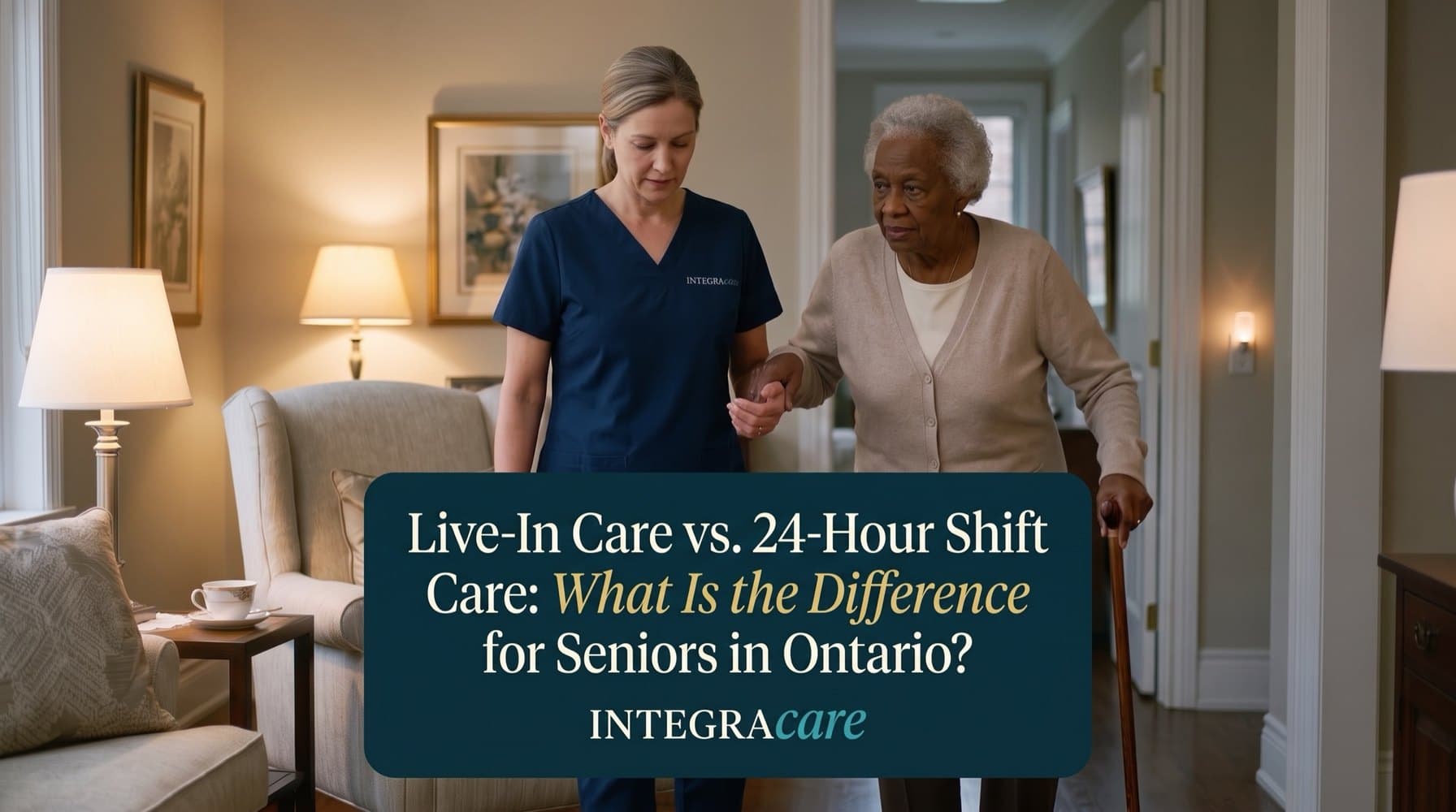
Live-In Care vs. 24-Hour Shift Care: What Is the Difference for Seniors in Ontario?
Published
Written by Lee Grunberg, M.B.A. — President & CEO
Reviewed by Bethel McMaster, BScN, RN — Director of Business Development
On this page11 sections
Key Takeaways
- Live-in care provides extensive daytime support and a consistent Caregiver presence, with dedicated sleep time overnight.
- 24-hour shift care uses rotating Caregivers so someone remains awake and available throughout the day and night.
- A Senior's nighttime routine often reveals which model is appropriate, particularly when toileting, transfers, wandering, or falls are concerns.
- Caregiver consistency matters in both models and can be especially valuable when dementia makes familiar routines important.
- The care plan should reflect the Senior's full 24-hour routine and be able to change as mobility, cognition, or health needs change.
Caring for a parent or spouse around the clock can leave even the most devoted family feeling stretched thin. When a loved one starts experiencing sudden changes in their balance, missed medications, or the early confusion of memory loss, the worry doesn’t stop when the sun goes down. You want more than just a set of hands to help with daily tasks; you want complete peace of mind that they are safe and respected throughout the day.
Many Seniors refuse the rigid schedules and shared spaces of a facility, wanting to keep complete control over their favourite habits and routines. Choosing to age in place is a beautiful gift, but it often leaves families wondering how to safely cover the nights, especially when balancing their own careers and families.
As you look into full-time support, you will likely come across two main pathways: live-in care and 24-hour shift care. While both bring premium private home care to your door, they work quite differently when it comes to schedules, sleep setups, and nighttime safety. Finding the right fit is all about looking at your loved one’s unique nighttime patterns and matching them to a routine that lets your whole family breathe a little easier.
How Each Care Model Works: Daily Life and Overnight Support
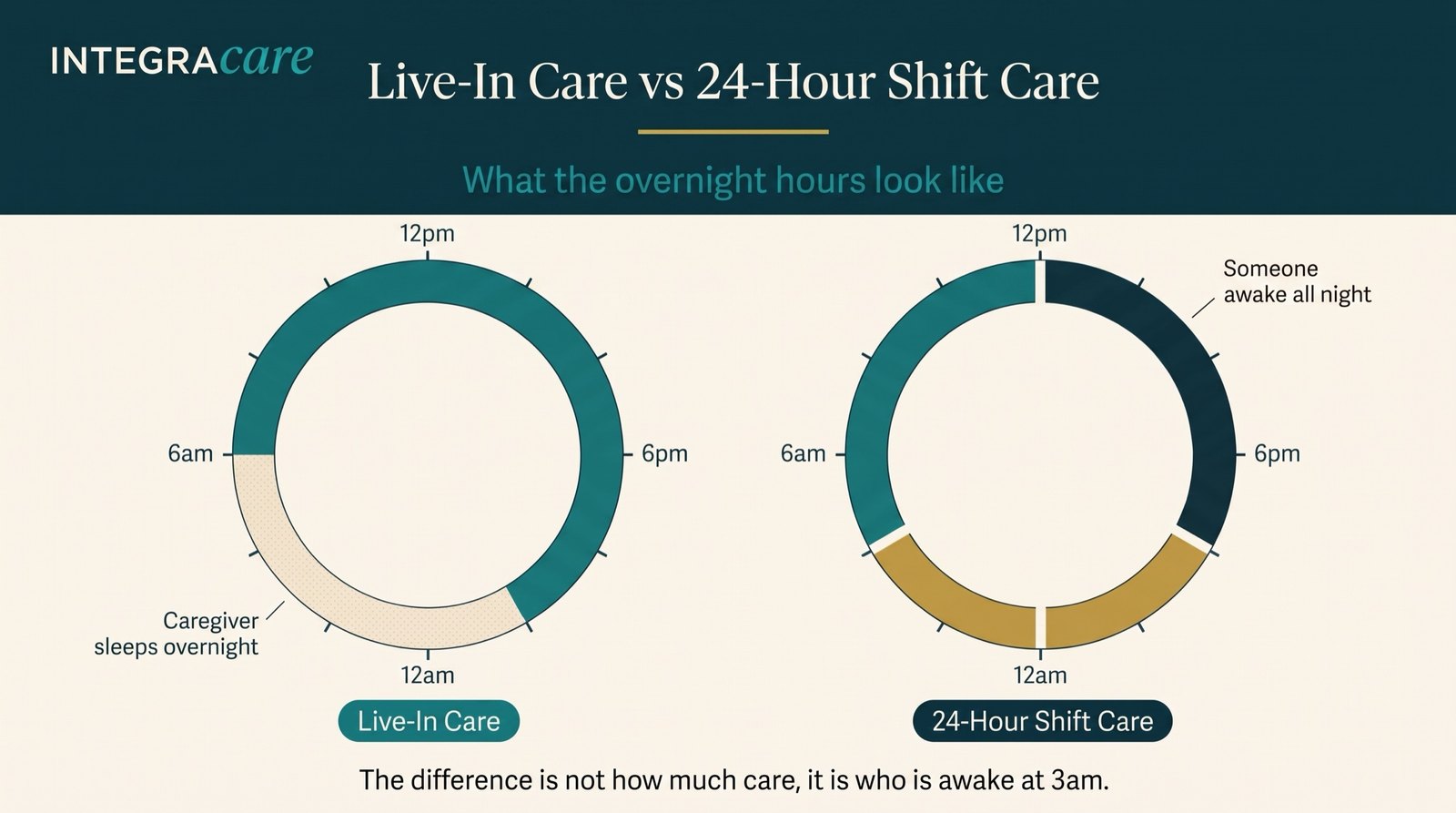
The clearest difference between live-in and 24-hour shift care often appears after the day is over: Can the Caregiver sleep overnight, or does your loved one need someone who remains awake and ready to help?
During the day, the two arrangements can look quite similar. A Caregiver may help your loved one get safely out of bed, bathe and dress, prepare meals, remember medications, move around the home, attend appointments, or enjoy a walk outside. Depending on the Client's care plan, personal support workers can also assist with toileting, transfers, incontinence care, light housekeeping, and companionship.
How that support is staffed, and what happens after bedtime, is where the two models begin to differ.
Live-In Care: Familiar Support Throughout the Day
With live-in care, a Caregiver lives in the Client's home and becomes part of the familiar rhythm of the day. This arrangement can work particularly well for Seniors who benefit from consistency and whose care needs are concentrated during waking hours.
The morning may begin with help getting out of bed, bathing and dressing. The Caregiver can prepare breakfast, provide medication reminders, help with mobility and personal care throughout the day, prepare dinner and help the Client settle comfortably for the evening.
The Value of Having a Familiar Caregiver
Consistency allows a Caregiver to learn much more than a list of tasks.
They may know that Dad likes to shave before breakfast, not after. They learn that Mom can still button her blouse herself when she is given enough time, even though she needs help with the rest of dressing. They may notice that getting up from the dining chair becomes harder later in the afternoon or that changing the usual evening routine causes confusion for a Client living with dementia.
These details help care remain personal while preserving the things a Senior can still do independently. Integracare's approach centres on one-on-one support, carefully matched Caregivers and personalized care plans that help Clients maintain independence and joyful living at home.
What Happens Overnight With Live-In Care?
A live-in Caregiver requires a private room and appropriate living accommodations because the care arrangement includes a dedicated period for sleep overnight.
This makes live-in care better suited to a Senior who needs substantial support throughout the day but does not routinely need someone awake throughout the night.
An occasional unexpected need is very different from requiring help out of bed three or four times every night. If toileting, transfers, wandering, or other active care needs repeatedly interrupt the Caregiver's sleep, the care arrangement may no longer reflect what the Client needs overnight.
24-Hour Shift Care: Continuous Awake Coverage
Twenty-four-hour shift care changes the staffing arrangement without changing the familiarity of home.
Your loved one can still wake in their own bedroom, have breakfast at their kitchen table, and follow the routines that matter to them. Instead of one Caregiver living in the home and sleeping overnight, a team of Caregivers works rotating, back-to-back shifts.
Responsibility passes from one rested Caregiver to the next, keeping someone awake and available throughout the full 24 hours.
What Does Awake Overnight Care Look Like?
The difference becomes particularly clear in the middle of the night.
If Mom wakes at 1:30 a.m. and needs hands-on help getting safely to the washroom, the overnight Caregiver is already awake. If she needs assistance again at 4 a.m., that support is part of the active shift. If Dad wakes confused and begins walking down the hallway because he believes it is morning, someone is there to notice and respond.
With 24-hour home care, rotating Caregiver shifts provide continuous awake coverage. This structure can be particularly important when nighttime wandering, frequent toileting, transfers, fall risk, or other safety concerns make regular overnight supervision necessary.
How Is Care Kept Consistent Across Rotating Shifts?
Having several Caregivers does not mean the Client's care should feel disconnected from one shift to the next.
Integracare's Registered Nursing Coordinators provide oversight of the care plan, helping maintain continuity when several Caregivers share responsibility. Changes in mobility, sleep, appetite, behaviour, or daily routines can be communicated and incorporated into the Client's ongoing care rather than remaining isolated to one Caregiver's shift.
This is particularly valuable when needs begin to change. A Senior who once slept comfortably through the night may begin getting up more frequently, while someone recovering after hospitalization may gradually require less hands-on assistance.
The Practical Difference Between the Two
Twenty-four-hour shift care is not simply a more intensive version of live-in care. They are two different ways of organizing extensive support at home.
Live-in care provides greater continuity with a Caregiver who lives in the home and can sleep overnight. Twenty-four-hour shift care uses a consistent rotating team so an alert Caregiver remains available when the Client's needs continue after bedtime.
For Families, an ordinary night at home can reveal a great deal. If your loved one generally settles comfortably and sleeps while the Caregiver does the same, live-in care may provide the consistency they need. If nighttime has become an active part of the care routine, rotating 24-hour shifts may better reflect the support those hours now require.
When Live-In Care May Fit Well
Live-in care often makes beautiful sense when a Senior needs a high level of support and companionship throughout the day while their nights remain reasonably settled. It preserves the natural rhythm of home life, ensuring care never feels like a series of clinical appointments. Instead, the day still centres around morning coffee, a favourite television program, a walk when the weather is pleasant, or time spent looking through old photographs.
This model blends support with independence and joyful living, protecting a senior's safety without losing the familiar relationships that make home feel like home. It is an excellent match for a loved one who:
- Daily grooming routines: Needs active assistance with bathing, dressing, and grooming.
- Meal preparation assistance: Requires help preparing nutritious meals and maintaining hydration.
- Medication reminder assistance: Benefits from gentle, consistent medication prompts.
- Daytime mobility needs: Needs physical support with walking or daytime transfers.
- Safety monitoring oversight: Should not spend long periods of time completely alone.
- Stable evening patterns: Has dementia but generally settles down comfortably overnight.
- Post-hospital home care: Needs extensive support while recovering from a recent hospital stay.
- Consistent caregiver bonds: Values building a deep relationship with one familiar face.
- Predictable overnight hours: Can safely manage overnight with a sleeping caregiver nearby.
When 24-Hour Shift Care May Be the Better Fit
Twenty-four-hour shift care becomes the more appropriate choice when a loved one regularly needs someone actively available, rather than simply present, during the night.
A shift care model is typically recommended when:
- Frequent washroom trips: Bathroom assistance is required multiple times each night.
- Hands-on transfers: Bed, chair, or toilet transfers need full physical support.
- Active nighttime wandering: Cognitive changes cause frequent pacing or wandering.
- Severe evening disorientation: Dementia leads to heightened confusion during late hours.
- Elopement safety risks: The Senior attempts to leave the secure home environment.
- Overnight injury risks: Falls or near-falls are actively occurring after dark.
- Scheduled physical care: Medical or personal care routines must happen at set overnight intervals.
- Unassisted movement hazards: The Client cannot reliably call for help before standing up.
- Closer clinical observation: Evolving health changes require a watchful eye around the clock.
- Caregiver rest interruptions: A live-in caregiver's sleep would be routinely disrupted.
This intensive model can also serve as a temporary comfort. A Senior returning home from the hospital might need close supervision during the initial weeks of recovery before transitioning back to an independent routine. Choosing 24-hour care simply means deciding what level of support is appropriate right now.
What About Publicly Funded Home Care in Ontario?
When charting the path forward, private options are not the only avenues Families should explore. It is deeply reassuring to know that Ontario has foundational systems designed to support older adults within their communities, and navigating these public programs is a smart first step for any caregiver.
Ontario residents holding a valid OHIP card can request a professional assessment through Ontario Health atHome to determine their eligibility for government-funded services. Depending on what the assessment reveals, public programs may provide a baseline of support, including visiting nurses, personal support, physiotherapy, occupational therapy, and social work.
One of the most empowering aspects of the public system is its accessibility: anyone can initiate a referral. Whether you are the Senior yourself, a family member, a friend, or a family physician, you can reach out directly to start the evaluation.
Taking the time to review provincial resources helps you understand exactly how private home support can fit alongside public services. For most Families, the care journey doesn't have to be an all-or-nothing choice between "public" and "private." Instead, private home care can be woven around public visits, filling the gaps between appointments so someone is there at the exact times of day or night when your parent needs it most.
Balance, Strength, and Preventing Nighttime Falls
Watching a parent struggle to rise from a favourite chair or notice that they hesitate at doorways can be incredibly difficult. These subtle shifts in physical stability often point to underlying health conditions that require extra care, especially during the darker hours of the night. When unmonitored during the night, minor balance issues can suddenly turn into dangerous fall hazards.
Families looking for practical ways to secure the home layout can review a helpful home safety guide to evaluate indoor risks room by room. While modifying your layout is a wonderful step, seniors facing significant weakness and instability need real-time support.
If a parent needs regular, physical assistance with transfers or trips to the bathroom overnight, relying on a sleeping live-in caregiver can lead to severe caregiver fatigue. This exhaustion directly impacts safety for everyone involved. Choosing a rotating shift model ensures a fully awake caregiver is always on duty, providing the continuous safety monitoring and active support needed to prevent falls and protect your loved one’s physical independence.
Dementia and Sundowning: Creating Calm in the Evening Hours
It is deeply painful to watch a vibrant relative experience the confusion and memory loss that comes with progressive cognitive decline. For many families, these challenges become much more pronounced in the late afternoon and evening, a pattern often associated with sundowning. A parent may wake up in the middle of the night completely disoriented, believing it is daytime, which can lead to nighttime wandering or unsafe kitchen activities.
Establishing a calm, predictable, routine-based in-home support system can significantly reduce evening anxiety. Families navigating these emotional behavioural changes can find gentle, evidence-informed guidance through dementia support resources designed to help families recognize changing cognitive needs.
When dementia-related safety needs require constant alertness, a live-in care model leaves a vulnerable gap during the caregiver's required sleep hours. Awake 24-hour shift care provides a dedicated professional who is always there to respond instantly to confusion, guide your parent with gentle redirection, and protect them from elopement. This specialized, attentive care allows your parent to feel secure in their home and your family knows they are never alone overnight.
Care That Continues to Fit Their Life at Home
The right care today may look different as your loved one's health, mobility, or memory changes. Whether that means adjusting live-in support, moving to awake 24-hour care or taking time to find dementia support, the care plan can evolve while keeping familiar routines, independence, and the comfort of home at the centre.
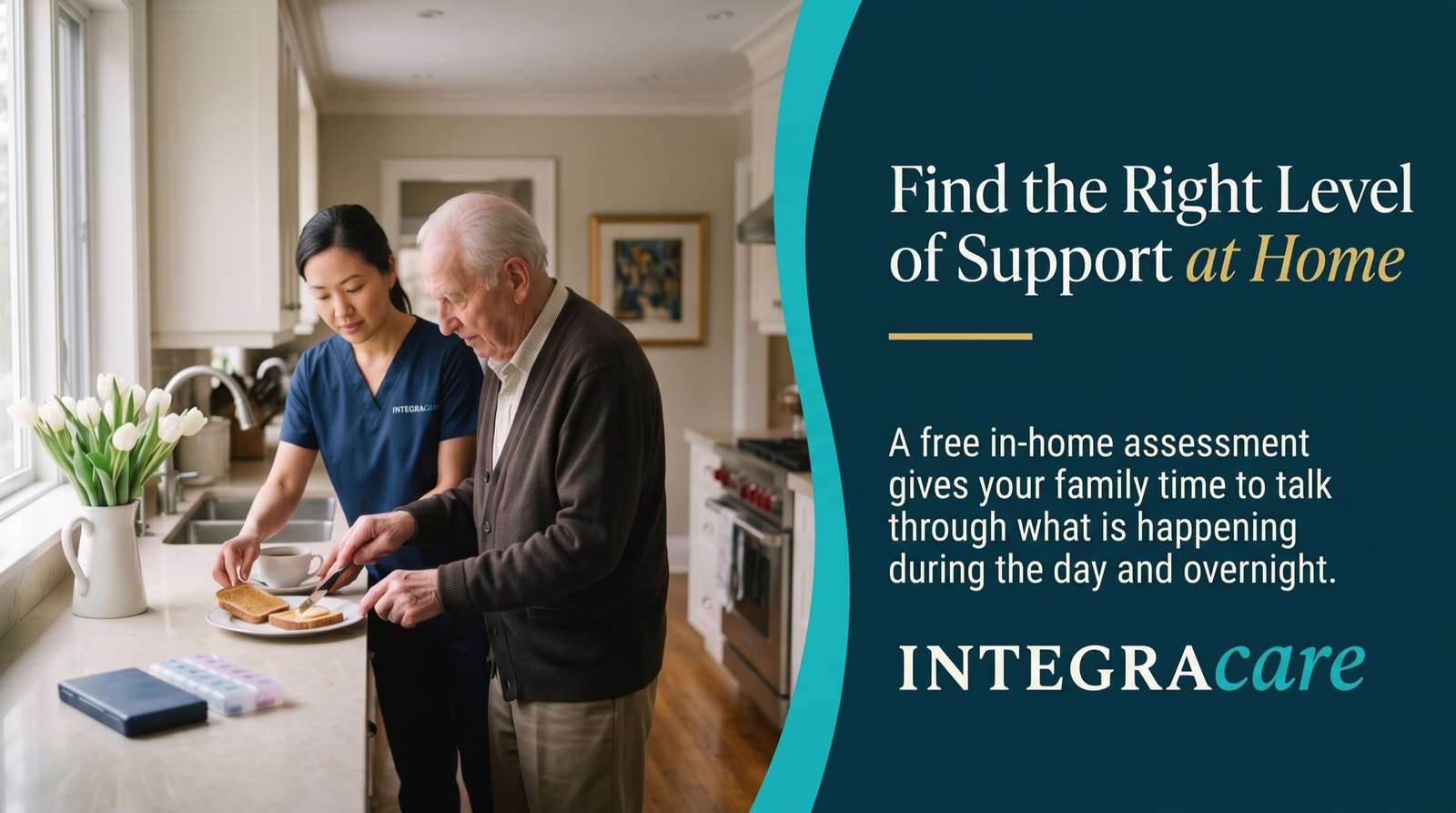
Find the Right Level of Support at Home
You do not have to determine the care schedule before asking for help. Integracare's free in-home assessment gives your Family time to talk through what is happening during the day and overnight, ask questions, and understand which care arrangement best reflects your loved one's needs.
FAQs
How does each model support caregiver consistency and continuity?
Live-in care provides a matched primary caregiver who lives in the home and follows a structured daily schedule, supporting routines, alertness, and a strong relationship with one caregiver. This familiarity can reduce caregiver fatigue and burnout for Family members while supporting daily living support. In 24-hour shift care, a rotating team of caregivers shares responsibility, but Integracare’s Registered Nursing Coordinators oversee the care plan to maintain consistency across shifts. Both models aim to provide consistent supervision with a familiar person whenever possible.
Which care model is better for a parent living with dementia?
For Seniors with dementia, the choice often depends on nighttime needs and cognitive risks. Live-in care can work well when the Senior has a consistent caregiver, benefits from routine-based in-home support, and does not wander or require active supervision overnight. When nighttime wandering, agitation, fall risk, or memory loss lead to frequent overnight needs, 24-hour shift care with continuous awake coverage is usually safer. A professional assessment can help determine whether dementia-related safety needs are better met with live-in or 24-hour care.
How do Families decide between live-in care and 24-hour shift care?
Families often start by reviewing nighttime patterns, specific care needs, and the home’s layout. Ask whether your loved one needs active support during the night, such as hands-on transfers, toileting, or supervision for wandering. A free home care consultation or professional assessment can clarify which care model fits best. Care coordinators can explain private home care options alongside public care options and help you weigh emergencies, overnight questions, and long-term sustainability. The goal is to match the care model to your parent’s specific care needs and safety risks.
What is the difference in overnight supervision and sleep expectations?
In live-in care, the caregiver has a private room and scheduled rest periods, including uninterrupted sleep time overnight. This model assumes the Senior can manage with a sleeping caregiver nearby and does not require continuous safety monitoring. In 24-hour shift care, rotating caregiver shifts ensure an awake caregiver is always available for immediate response to emergencies, nighttime falls, confusion, or wandering. If your parent needs overnight supervision several times each night, 24-hour shift care provides continuous monitoring while live-in care does not.
When is 24-hour care recommended over live-in care?
Twenty-four-hour shift care is recommended when a Senior needs continuous, uninterrupted coverage due to safety concerns, frequent nighttime bathroom trips, or regular hands-on transfers. This includes situations with nighttime wandering, high fall risk, severe mobility issues, or health conditions requiring physical care overnight. Live-in care may be appropriate when the Senior needs full-time daytime support but has predictable overnight hours and minimal overnight risks. A Registered Nursing Coordinator can assess whether continuous monitoring and rotating shifts are necessary to protect your loved one overnight.
Free In-Home Assessment
The Care Your Family Deserves Starts Here
Speak with our team about a personalized care plan. Book a free, no-obligation in-home assessment and we will help you find the right support for your loved one.
About the Author: Lee Grunberg

President & CEO, M.B.A.
Lee joined Integracare as President & CEO on August 2, 2016 after an approximately 20 year career in Private Equity and Investment Banking. Lee brings tremendous operational knowledge and governance experience along with an incredible passion and energy to Integracare.