
Blog
The Benefits of Palliative Care
Published
Updated
Written by Lee Grunberg, M.B.A. — President & CEO
Reviewed by Bethel McMaster, BScN, RN — Director of Business Development
On this page10 sections
Key Takeaways
- Palliative care at home supports comfort, dignity, and quality of life.
- Personalized support helps clients stay in a familiar, caring environment.
- Social workers, support groups, and community resources provide social support.
- Chaplains and spiritual advisors can offer spiritual support when needed.
- Home palliative care helps families feel more connected and reassured.
This is not an easy time for you and your family. It’s difficult to navigate through life when someone you love has been diagnosed with a life-threatening illness. You want to be there for them, and all you want for them is to feel comfortable, protected and to know that they’re not alone.
However, it’s difficult to devote all of your time to them because of the obligations related to work and family. You shouldn’t feel guilty about that. Give your loved one the gift of live-in Palliative care so that they’ll always have someone around to provide care and any required health services.
Integracare is a leading Home Care provider that specializes in Palliative care in Toronto and Mississauga. We offer in-home care for individuals who choose to stay within the comforts of their own home and who want to live the rest of their days in a familiar and safe space.
What Is Palliative Care in Home Care?
Palliative care in home care is specialized support for people living with a serious or life-limiting illness, delivered in the comfort of home. It focuses on symptom relief, comfort care, emotional support, and preserving quality of life while respecting values, goals, and preferences. In Ontario, this care may connect with a health care professional referral, the local home and community care office, and public subsidies. Integracare can complement these services with personalized home care services and one-on-one support.
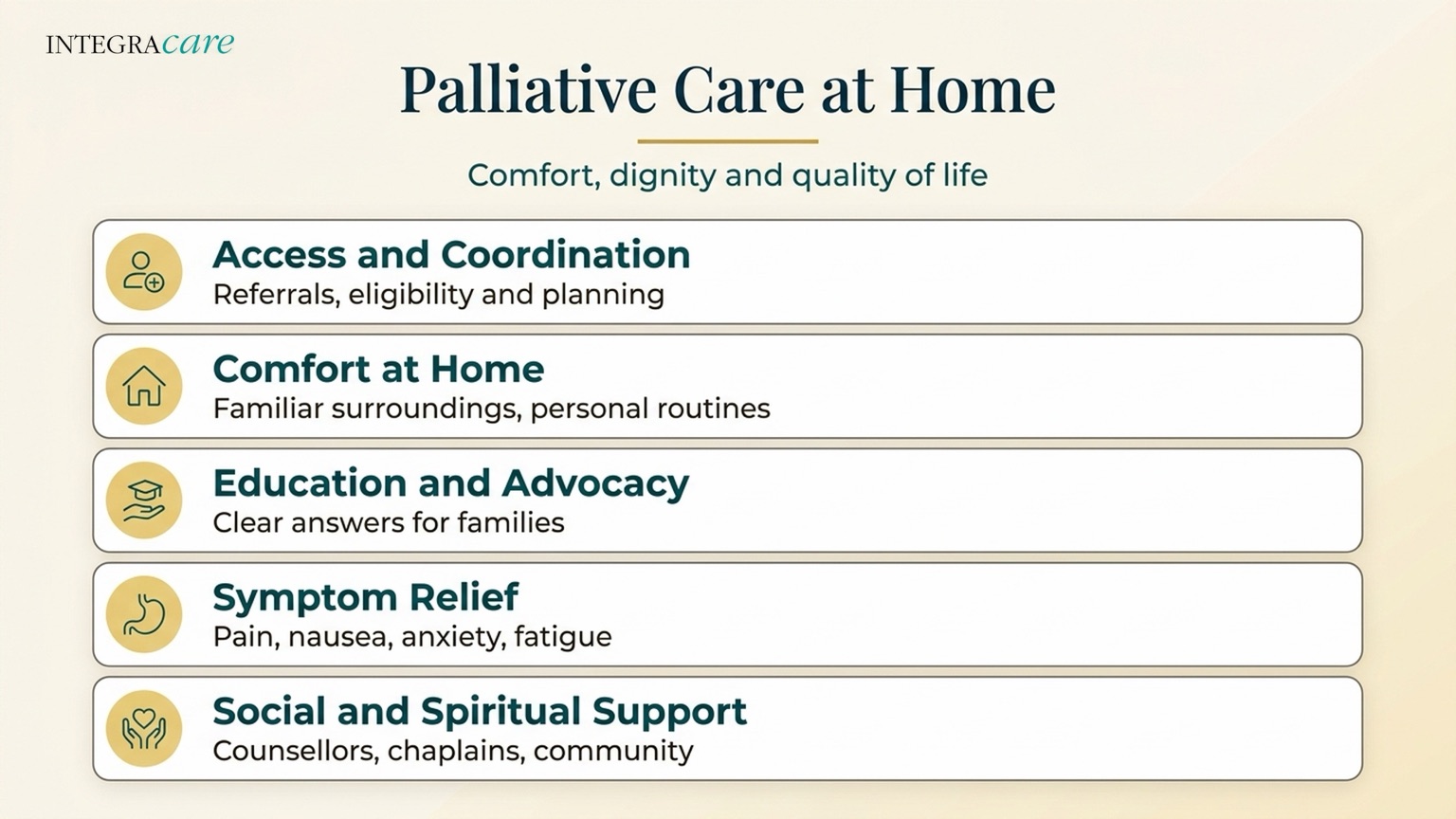
Access and Coordination of Services
Access usually starts with eligibility requirements being reviewed through a home and community care office, often after a health care professional referral. From there, care coordination helps align approved medications, community nursing services, and other supports such as short-stay services or long-term care services when needed. A clear transitional care plan is especially helpful when needs change. Integracare supports families by offering care co-ordination and consultation that helps make the system feel more manageable and responsive.
Comfort and Personalized Support
One of the biggest benefits of home palliative care is staying in a familiar environment while still receiving holistic care. This can support independence, reduce stress, and improve quality of life for both the person receiving care and their family. By focusing on comprehensive physical comfort and emotional reassurance, this dedicated support ensures a higher daily quality of life directly in your own home. Integracare builds personalized treatment plans around unique care goals, personal choices, and values, with personalized support that adapts as needs change. That kind of one-on-one support can create a stronger sense of control during a very difficult time.
Education, Advocacy, and Communication
Palliative care works best when families have clear communication with providers and understand the care decisions being made. Advance care planning helps guide health care treatment in a way that reflects values, goals, and preferences, and it can improve healthcare-related outcomes. Integracare supports education and advocacy by helping families ask questions, find trusted national resources, and stay connected to the palliative care team. This can be especially helpful when families are finalizing their long-term clinical layout.
Families, Caregivers, and Symptom Relief
Families often need practical help too, including respite for the caregiver, home support, information and resources about grief, and guidance from primary health care providers. Good palliative care also includes symptom management, access to specialized prescription medication, and support with the administration of medications and medical supplies and equipment. Integracare can help coordinate these services with community rehabilitation services, community nursing services, and specialists when needed. This kind of steady support can make day-to-day care safer, calmer, and more sustainable.
What Are The Benefits of Palliative Care At Home?
When an individual has been diagnosed with a serious condition, they need to be treated with the utmost respect and dignity. If the idea of leaving a beloved home is too daunting for them, at-home Palliative care could be a welcoming solution.
Often, nursing and assisted living facilities create fear and anxiety in Seniors. It is hard to get used to a new home at any age, but it is particularly difficult for someone who may experience debilitating pain, Dementia, or other physical challenges.
Our at-home Palliative care program is designed to promote comfort, dignity, and quality of life among our Clients. We believe that health care at home gives individuals one-on-one, personalized support that can’t be replicated anywhere else.
We hire experienced health professionals who are fully certified and registered, and above all else, exhibit compassion in everything that they do.
If someone close to you has been diagnosed with a serious illness or a life-threatening disease, consider the benefits of live-in care and Palliative services.
Improving Quality of Life for Clients, Family Members and Friends
Palliative care is designed to provide relief from symptoms, pain, and stresses that are the inevitable by-product of both the critical disease and the medical interventions that are part of the process, such as chemotherapy.
Palliative care is recommended for individuals who have been diagnosed with:
- Cancer
- Kidney failure
- Alzheimer’s disease and other Dementia-related illnesses
- Parkinson’s disease
- ALS and Lou Gehrig’s disease
- Other life-threatening illnesses
Integracare’s Palliative health care team is comprised of Registered Practical Nurses (RPNs), Personal Support Workers (PSWs), and specialists who all have one ultimate goal in mind: to make your loved one’s life better.
Social and Spiritual Support at Home
Palliative care at home can help patients stay connected to the people, routines, and beliefs that matter most. It also provides support that respects personal values and helps maintain dignity during a difficult time.
- Connects patients with social workers, support groups, and community resources
- Helps families and loved ones stay involved in a meaningful way
- Includes chaplaincy or spiritual advisor support when requested
- Respects cultural beliefs, faith practices, and personal values
This kind of support can make home feel more comforting, familiar, and meaningful for both patients and families.
Massage Therapy
As a platform of many disciplines, we believe our Clients benefit from several services. Our number one priority is to provide compassion to all Clients and demonstrate empathy as healthcare practitioners.
Part of Integracare’s approach to Palliative care can be to provide massage therapy to those who can receive it. We have outstanding Registered Massage Therapists (RMTs) on staff who are well-trained and well-versed in working with Seniors living with life-threatening illnesses.
Massage therapy is all about the power of touch. It increases the quality of life for Clients in several ways, but inherently, it’s a way for Clients with a critical illness to connect with another human being.
Massage therapy has been a means of healing for thousands of years. Our professional RMTs use gentle techniques with Palliative Care Clients, addressing specific symptom issues, the side effects of various treatments, and the physical, psychological, social, and emotional consequences of living with a life-threatening illness.
Gentle massage can promote a greater sense of connection between the mind and body structures. It relaxes muscle tissue and stimulates circulation, reducing stress and pain. Integracare Clients look forward to visits from their RMT. We ensure that all of our staff, including RMTs, exhibit kindness in everything they do.
We understand how sensitive this time is for Clients, family members, and friends. We consider this under all circumstances, and we make sure that your loved ones feel appreciated and safe in all situations so that you can, too.
Palliative Care Benefits: Relieves Suffering from Stress and Symptoms
The ultimate goal of Palliative care is to relieve suffering from the side effects of illness and treatments and to provide the best possible quality of life for Clients and their families.
Symptoms may include:
- Pain;
- Depression;
- Anxiety;
- Shortness of breath;
- Fatigue;
- Nausea;
- Constipation;
- Loss of appetite; and
- Sleep issues
Integracare’s team of Caregivers will help your loved one gain the strength to carry on with their daily life while in the comfort of their own home. Our Caregivers improve the quality of our Clients’ lives.
The Integracare team provides the essentials of Palliative care and will assist with daily chores such as cooking, cleaning, and bathing; will help your loved one to get around the house if mobility is an issue; and will tend to any wound care that is needed. Most importantly, our Caregivers provide compassion.
We offer 24-hour live-in caregiving so you won’t have to worry about your friend or family member being alone or missing medication ever again. They develop a bond with our Clients that is extraordinary.
Integracare provides familiar, personalized, compassionate home care; your loved one is our sole focus.
Home health care should always be compassionate, attentive, and detailed. Our Caregivers are carefully selected and offer all these qualities. We ensure that our Clients are provided with the daily support they need to live healthy, safe, and fulfilling lives.
Everyone’s health plan is different, and we create customized plans to suit every Client’s individual needs. We partner Clients with a Caregiver whom we feel would benefit them the most.
With Integracare services, you’ll be able to rest a little easier knowing that your loved one is in good hands up to 24 hours a day.
Integracare Works With Doctors and Health Teams
Our Palliative Care teams are specialists who work together with Clients, family members, friends, and Doctors. As leading providers of private home health care services in Toronto and Mississauga, we offer an extra layer of support when your loved one needs it most.
In addition to treating symptoms and stress and supporting you and your family in any way possible, our Palliative Care team communicates with all your loved one’s doctors so that everyone is on the same page.
Often, the best home to be in is your own. At Integracare, we understand the difficulties of coming to terms with a life-threatening illness and how hard it is on families and friends. We want to be there for you every step of the way.
Helping Families Through Life's Most Difficult Moments
When someone you love is living with a life-limiting illness, every day can bring new questions, changing care needs, and difficult decisions. Having compassionate care in the comfort of a familiar environment can help preserve routines, dignity, and a greater sense of control while making each day as comfortable as possible.
Through personalized home care services, one-on-one support, and thoughtful care coordination, Integracare helps families focus less on managing care and more on spending meaningful time together. Contact us to learn how our experienced team can create a care plan that reflects your loved one's values, personal choices, and unique care goals.
Frequently Asked Questions
What Are the Benefits of Palliative Care?
Exploring the benefits of a palliative care approach for a loved one can help dispel some of the myths about this type of care and help your loved one accept it. The primary benefit of palliative care is that it reduces and manages pain that comes with recovery and treatment and reduces anxiety and depression; in some studies of certain patient groups, earlier palliative care has also been associated with longer survival, though that cannot be promised.
Who Benefits from Palliative Care?
Anyone going through primary treatment for a life-limiting illness or someone recovering from a surgery or illness can benefit from palliative care. Palliative care is not limited to patients who have ended primary treatment (treatment aimed at curing an illness). Palliative care can take place at the same time as primary treatment.
How do you access home and community palliative care services in Ontario?
Access typically begins with a healthcare professional referral or by contacting your local Ontario Health atHome office. Anyone can self-refer; a doctor's order is not strictly mandatory to begin the intake process. Eligibility requirements are determined by an assessment of medical needs and functional ability, granting access to publicly subsidized home nursing, personal support, and specialized symptom relief. Integracare enhances this process with private care coordination — a callback within 24 hours of contact, and care that can often begin within days — delivering nurse-supervised personal care that integrates with public services or transitional discharge plans.
What is care coordination and why is it important in palliative care at home?
Care coordination ensures seamless communication between primary healthcare providers, specialists, community teams, and family members. It supports consistent medical decisions, secures timely access to medical equipment, and oversees accurate medication management, such as provincial Symptom Response Kits. Integracare emphasizes 24/7 nurse-led care management to help families navigate Ontario's complex healthcare landscape. This integrated approach reduces family caregiver burnout, ensures continuity of care, and preserves the patient's individual values, comfort, and choices.
How does home palliative care improve comfort and quality of life?
Home palliative care allows individuals to remain in a familiar environment, supporting independence, dignity, and personal control. Integracare delivers holistic care through certified Personal Support Workers (PSWs) and Registered Nurses who build customized schedules around a client's existing routines. This approach combines critical medical oversight with specialized comforting therapies, including at-home Registered Massage Therapy (RMT) and physiotherapy, ensuring a higher quality of life tailored specifically to evolving end-of-life needs.
What does a personalized palliative care plan include?
A personalized palliative care plan includes comprehensive pain and symptom management, emotional support, and assistance with daily living activities (ADLs). Guided by Ontario Health atHome frameworks or private partners like Integracare, it details medication schedules, wound care, psychological or spiritual support, and clear directives regarding the client's end-of-life preferences. It also outlines essential relief services for family members, such as overnight or live-in caregiver respite, to maintain a safe, stress-free household environment.
How does palliative care support advance care planning and decision-making?
Palliative care supports advance care planning by helping individuals define their values, goals and preferences for future health care treatment. Integracare facilitates communication with providers and families, ensuring care decisions are informed and respected. Drawing on resources from organizations like the Canadian Hospice Palliative Care Association, their team provides education and advocacy, helping families navigate complex choices while maintaining focus on quality of life and patient-centred outcomes.
What emotional and psychological support is available during palliative care?
Emotional and psychological support includes counselling, stress management, and access to community resources such as support groups. Integracare provides compassionate caregiver support and respite that ease day-to-day emotional strain, and can help families connect with community counselling, psychological care, and grief resources for anxiety, depression, and loss. This approach encourages family involvement, so both patients and loved ones feel supported throughout every stage of care.
Are spiritual and cultural needs addressed in home palliative care?
Yes, holistic care includes attention to spiritual concerns, cultural values, and personal beliefs. Integracare can help families connect with community social workers, spiritual advisors, or chaplains who provide psychological and spiritual support alongside its caregiving team. With a compassionate presence, care is tailored to respect dignity, values, wishes, and cultural concerns. This approach ensures patients and families receive meaningful support that aligns with their identity and enhances overall quality of life.
What support services are available for family caregivers?
Family caregivers can access respite for the caregiver, home support, and guidance from community nursing services and social workers. Integracare offers care co-ordination and consultation, helping families manage responsibilities while maintaining balance. Services include information and resources about grief, psychological care, and ongoing caregiver support, ensuring families are not overwhelmed and can continue providing compassionate support with confidence.
How are pain and symptoms managed in home palliative care?
Pain and symptom management involves coordinated interventions by the palliative care team, primary health care providers, and specialists. Integracare supports the administration of medications, access to approved medications, and use of medical supplies and equipment. Symptoms such as nausea, anxiety, depression, and difficulty breathing are carefully monitored and treated through individualized comfort care strategies that prioritize symptom relief and overall well-being.
Can palliative care at home include medical treatments and specialized services?
Yes, home-based care can include community rehabilitation services, medication management, and specialized clinical support. Integracare works with primary health care providers to deliver advanced services, including access to specialized prescription medication and ongoing monitoring. This coordinated approach ensures patients receive appropriate health care treatment at home, reducing hospital visits while maintaining safety, comfort, and continuity of care.
What government benefits or supports are available for palliative care in Canada?
Patients may qualify for caregiving benefits and leave, as well as publicly subsidized home and community care services. While programs vary by province, including B.C. palliative care benefits, Ontario residents can access support through local care offices and government-funded services. Integracare helps families understand eligibility requirements, navigate available resources, and supplement public services with personalized home care services that ensure consistent, high-quality support.
How do you choose a reliable home palliative care provider?
When evaluating providers, consider care coordination, staff experience, communication practices, and reviews. Look for providers who offer personalized support, transparent care plans, and strong collaboration with primary health care providers. Integracare is recognized for delivering tailored services, consistent staffing, and compassionate care grounded in dignity and respect. Their focus on quality of life, combined with positive client feedback, makes them a trusted choice for families seeking dependable home palliative care.
Free In-Home Assessment
The Care Your Family Deserves Starts Here
Speak with our team about a personalized care plan. Book a free, no-obligation in-home assessment and we will help you find the right support for your loved one.
About the Author: Lee Grunberg

President & CEO, M.B.A.
Lee joined Integracare as President & CEO on August 2, 2016 after an approximately 20 year career in Private Equity and Investment Banking. Lee brings tremendous operational knowledge and governance experience along with an incredible passion and energy to Integracare.