
Blog
Outlining the Basics for Caregiving at Home
Published
Updated
Written by Lee Grunberg, M.B.A. — President & CEO
Reviewed by Bethel McMaster, BScN, RN — Director of Business Development

On this page14 sections
Key Takeaways
- Caregiving means helping a loved one stay safe, comfortable, and independent at home.
- A clear routine helps balance care tasks and self-care.
- Emotional support matters because caregiving can be stressful.
- Safety, communication, and planning make home care easier.
- Support is available through family, respite care, and professional caregivers.
As we grow older, many of us are faced with the responsibility of taking care of older family members or loved ones. Caring for someone you love at home often begins with a simple promise: "I'll help however I can." Over time, those responsibilities can grow to include appointments, medications, meals, and everyday routines that become increasingly important as care needs change.
Providing care is a meaningful way to support a loved one, but it doesn't have to become a responsibility one person carries alone. Having the right support in place can make caring at home more manageable while helping your loved one continue living with comfort, dignity, and independence.
Why More Seniors Are Choosing to Age in Place
For many seniors, there's no place quite like home. It's where routines feel familiar, independence can be maintained, and everyday moments continue in a space filled with comfort and memories. As care needs change, many families begin exploring ways to help a loved one remain safely at home for as long as possible. Supporting aging in place in Canada often begins with thoughtful planning, personalized care, and creating a safe home environment that can adapt as needs change.
While retirement residences and long-term care homes are the right choice for some, they aren't the best fit for every family. Home care services offer the benefit of private healthcare, providing personalized, one-on-one support that adapts to each person's unique needs while allowing them to continue living where they feel most comfortable.
What Home Caregiving Really Involves
Home caregiving often begins with a few small tasks, but as a loved one's needs change, those responsibilities can gradually become part of everyday life. What starts with grocery shopping or driving to appointments may eventually include helping with personal care, preparing meals, managing medications, preventing falls, and keeping track of changing health needs.
At its heart, caregiving is about much more than completing daily tasks. It's about helping someone continue living safely and comfortably in familiar surroundings while preserving the routines, independence, and dignity that make home feel like home.
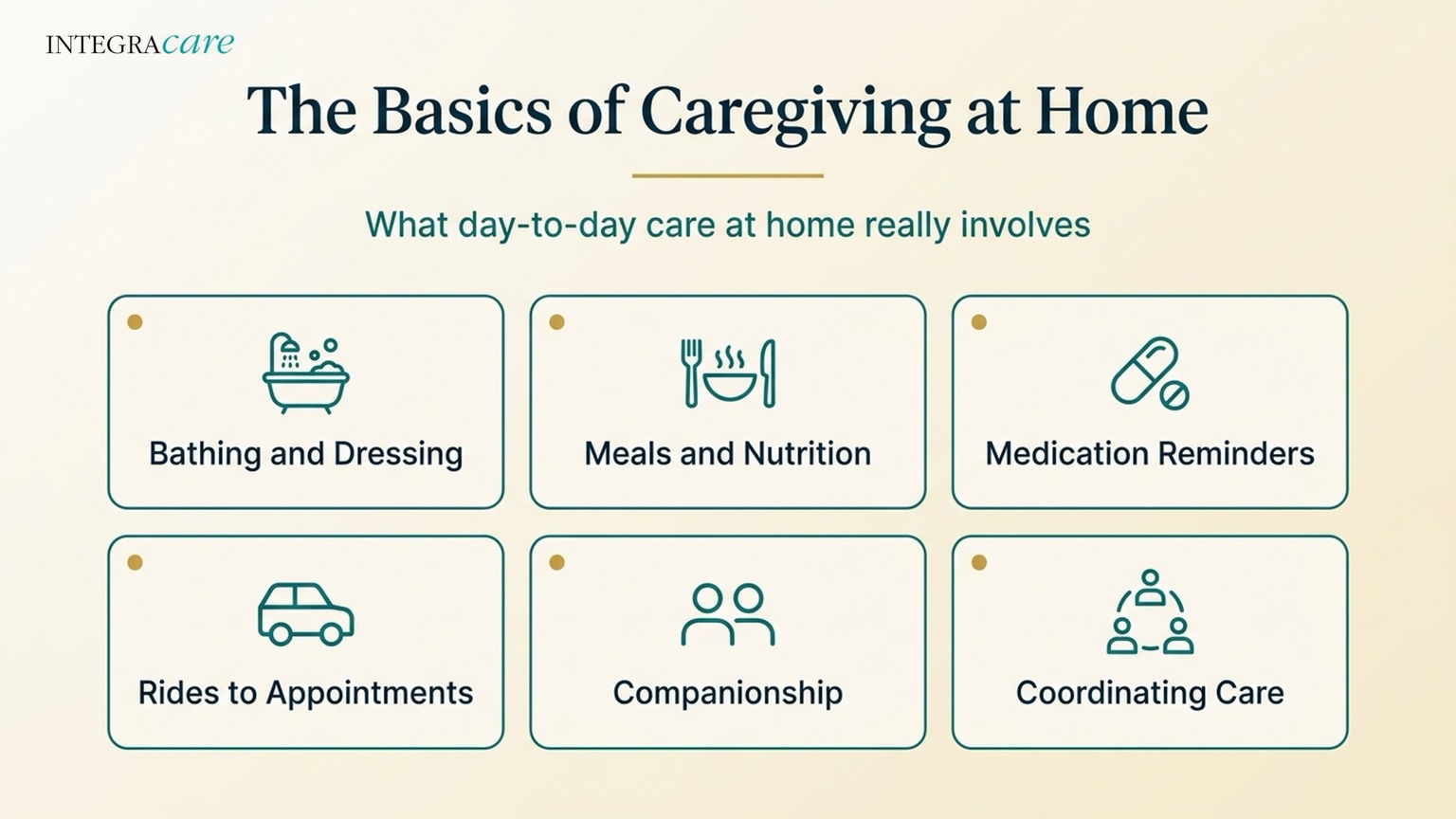
Depending on your loved one's needs, caregiving may include:
- Personal care, including bathing, dressing, grooming, and toileting.
- Meal planning, grocery shopping, and nutrition support.
- Medication reminders and monitoring overall well-being.
- Transportation to appointments and community activities.
- Meaningful companionship that supports emotional well-being.
- Communicating with healthcare professionals and coordinating care.
Some days follow a familiar routine, while others require quick adjustments. Having a flexible plan and knowing when additional support may be helpful can make caring at home feel more manageable for everyone involved.
When Care Needs Become More Involved
Supporting a loved one at home often begins with helping here and there, but responsibilities can gradually become more involved over time. Appointments, medications, meal preparation, mobility assistance, and personal care all become part of helping someone remain safe, healthy, and independent.
As these responsibilities grow, many families discover that providing excellent care doesn't mean doing everything on their own. Having experienced professionals alongside you can make caregiving more manageable while ensuring your loved one continues to receive the attention they deserve.
Personalized Home Care That Works Alongside Your Family
Professional care should strengthen the support you're already providing, not replace it. At Integracare, our experienced Caregivers, Registered Practical Nurses (RPNs), Registered Nurses (RNs), and Personal Support Workers (PSWs) become an extension of your family, providing thoughtful, personalized care directly in your loved one's home. Whether assistance is needed with daily activities, specialized nursing care, companionship, or ongoing health management, every care plan is carefully tailored to medical needs, routines, preferences, and goals.
For over 30 years, families throughout the Greater Toronto Area have trusted Integracare for our private home care services because of our unwavering commitment to attentive, relationship-focused care. We believe the smallest details often make the biggest difference, helping every client feel safe, respected, and genuinely cared for.
Balancing Caregiving and Self-Care
When someone you love depends on you, it's natural for their needs to take priority. Over time, however, caregiving can become difficult to balance alongside work, family responsibilities, and the everyday demands of life.
Taking time to rest, stay organized, and ask for help when needed helps make caregiving more sustainable over the long term. Understanding the impact of caregiving reminds families that caring for themselves is an important part of caring for someone else.
Creating a realistic daily routine can reduce some of the mental load that often comes with coordinating care. Scheduling meals, appointments, medications, and personal time creates structure while making it easier to adapt when plans change.
A few simple habits can also help:
- Build routines that include regular breaks.
- Keep medications, important documents, and emergency contacts organized.
- Use calendars or reminders to stay on top of appointments and daily tasks.
- Accept support before responsibilities become too difficult to manage alone.
Research from the Canadian Institute for Health Information has found that caregivers who establish routines and access support experience lower levels of stress and caregiver burnout.
Daily Caregiving Practices That Make a Difference
The everyday moments often have the greatest impact on a person's comfort, confidence, and quality of life. Helping someone get dressed without feeling rushed, preparing a favourite meal, encouraging gentle movement, or simply spending time together can all help someone feel respected, valued, and connected.
Thoughtful caregiving also means encouraging independence whenever it's safe to do so. Supporting a loved one in the tasks they can still manage helps maintain confidence while preserving dignity and familiar routines.
As care needs become more involved, many families find reassurance in having experienced professionals as part of their care team. At Integracare, our caregivers, nurses, and personal support workers provide attentive, personalized care that evolves alongside each client's needs. Every care plan is carefully tailored so families can feel confident their loved one receives compassionate support delivered with exceptional attention to detail.
Supporting Health, Independence, and Peace of Mind
Growing older often brings changes that extend beyond physical health. Everyday routines may take a little longer, new health conditions may require additional support, and families naturally want reassurance that their loved one is receiving the right care.
Personalized home care helps seniors remain independent while creating consistency and stability in their daily lives. Just as importantly, it provides families with confidence that someone is there to notice small changes, respond thoughtfully, and help their loved one remain comfortable, engaged, and emotionally stable in the place they know best.
Every Care Journey Is Different
Every caregiving journey is unique, and the right care plan should grow alongside your loved one's changing needs. Thoughtful, personalized support helps preserve independence while providing families with confidence that every detail is being carefully looked after.
At Integracare, we become an extension of your family, providing attentive home care that adapts as needs change, so your loved one can continue living safely and comfortably at home, while giving families peace of mind that every aspect of their loved one's care is being delivered with exceptional care and respect.
Get Everything in Order
Before you contact a home health service provider such as Integracare, be sure to know exactly what type of care your loved one needs.
Always ask for their opinion and keep communication open so that you and your family can assess their needs and how you can help increase their quality of life.
Integracare is committed to bringing joy into the lives of all Seniors. We want to be able to maintain open dialogue with you and your family so that our Caregivers and staff can be at their absolute best and deliver the highest quality in care and support.
There are some items, such as financial and legal matters, that are difficult to discuss among family members. However, the reality is that in the long run, the more open you are and the sooner you address these issues, the easier it is on everyone involved.
There are critical things you can do to achieve optimal care for your family member or friend. Some of these include:
- Speaking with their doctors and specialists. You need to clearly understand the nature and the extent of care that your loved one will need. Conduct some research online or contact a support organization in your city. Understand how their condition may change and progress over time, so you’ll know what kind of medical support you’ll need.
- Establish a safe environment for providing care in your loved one’s home.
- Measures commonly recommended for fall prevention for older adults, such as improving lighting, removing tripping hazards, and installing grab bars, can help reduce the risk of injury while supporting greater independence.
- Engage regularly with any family members or friends in the well-being of your loved one, and what everyone’s concerns and availability to provide assistance are.
- Investigate what is available in the community regarding assistance programs as well as extracurricular activities your family member could join.
- Ensure that medical records, bank, insurance, wills and power of attorney, and other investment information are all up to date. Make it clear how these will be updated on an ongoing basis.
- Keep the contact information for doctors, specialists, dentists, legal advisors, and religious/spiritual advisors clear and out in the open for your family as well as the Caregiver to see.
The main thing is to listen to your loved one so that you give them the best possible care available.
Support Networks and Community Resources
Caregiving is strongest when it's supported by a trusted circle of care. Family members, friends, healthcare providers, community organizations, and professional caregivers can all play an important role in helping someone remain safe and comfortable at home.
Respite services, caregiver support groups, and local community programs can provide valuable guidance while creating opportunities for family caregivers to rest and recharge. Even occasional support can make caregiving more sustainable over time.
For many families, professional home care becomes a natural extension of the care they're already providing. It isn't about replacing family involvement; it's about adding experienced support that helps everyone feel more confident.
At Integracare, we work alongside families as trusted partners. Through attentive, relationship-focused care, we help loved ones remain safe, respected, and comfortable at home while allowing family members to spend more meaningful time together and focus on simply being family again.
How Integracare Supports Families Living with Critical Illnesses
When someone you love is living with dementia or another serious illness, daily life can change in ways you never expected. Along with managing appointments and changing care needs, many families find themselves balancing growing responsibilities while simply trying to make each day a little easier for the person they love.
Personalized Support You Can Count On
At Integracare, we provide compassionate, personalized home care that helps clients continue living safely and comfortably in familiar surroundings. Our caregivers receive ongoing education throughout the year, giving them the knowledge and confidence to respond thoughtfully as needs change.
Care Backed by Ongoing Education
Our caregivers work closely with Registered Practical Nurses (RPNs) to deliver coordinated, person-centred care that evolves alongside each client's needs. We are proud to be the only home care provider in the Greater Toronto Area committed to educating 100% of our caregivers in all four facets of dementia care through the Alzheimer Society of Toronto.
Supporting Families Every Step of the Way
Whether your loved one needs ongoing support for memory changes or another serious health condition, our team provides personalized care that adapts as needs change, including:
- Alzheimer's and memory support
- Personal support and companionship
- Registered nursing care
- Palliative and end-of-life care
- Support for clients living with cancer, arthritis, Parkinson's disease, and other complex health conditions
Our goal is to help your loved one remain safe, comfortable, and treated with dignity while giving your family greater confidence and peace of mind.
Caregiver Mental Health and Emotional Well-Being
Providing care for someone you love can be deeply rewarding, but it also comes with responsibilities that naturally change over time. Making decisions, coordinating appointments, and adapting to changing care needs can place significant demands on caregivers.
Taking care of your own emotional well-being is just as important as supporting your loved one. Whether that means speaking with a trusted friend, joining a caregiver support group, connecting with a mental health professional, or simply making time to recharge, these moments help build resilience throughout the caregiving journey.
Even small habits, such as taking a walk, enjoying a quiet cup of coffee, spending time outdoors, or asking someone to step in for a short period, can help create the balance needed to continue providing thoughtful, compassionate care.
Remember, asking for support isn't a sign that you're stepping back from caregiving. It's often one of the best ways to continue showing up for the person who depends on you.
Why Communication Changes Everything
One of the greatest benefits of aging at home is the ability to stay actively involved in your loved one's care. Regular communication between families and caregivers helps everyone work toward the same goal, providing thoughtful, personalized support that evolves alongside your loved one's changing needs.
Keeping Everyone Connected
The best conversations go beyond appointments and daily tasks. Sharing observations, asking questions, and discussing small changes in routines or health helps create a more complete picture of your loved one's well-being. Strong communication is just one of many PSW strategies that help caregivers provide safe, compassionate, and personalized support at home.
Helping Families Feel More Confident
Sometimes, even a small amount of support can make caregiving feel more manageable. Personalized home care helps ease day-to-day responsibilities. Having the right support in place early can help your loved one continue living safely and comfortably at home.
Frequently Asked Questions
What are the basics of caregiving at home?
The basics include supporting daily activities like bathing, dressing, meals, and mobility, while also maintaining safety and dignity. Caregivers coordinate with healthcare providers, manage appointments, and monitor changes in health. Just as important is maintaining the caregiver’s own well-being, as sustainable care depends on both physical support and emotional balance.
How can caregivers balance caregiving responsibilities and self-care?
Balancing caregiving and self-care starts with a realistic schedule that includes rest, meals, and personal time. Using tools like calendars or reminders can reduce mental load. Accessing respite care or asking for help from family or professionals is also important. Even short, regular breaks can improve resilience and help prevent long-term burnout.
Why is emotional support important for caregivers?
Emotional support helps caregivers manage stress, prevent burnout, and cope with changing responsibilities. Without support, caregiving can feel isolating and overwhelming. Accessing therapy, peer groups, or community programs provides a safe space to process emotions and gain practical coping strategies, improving both caregiver well-being and the quality of care provided.
What should be included in a caregiver schedule?
A caregiver schedule should include daily care tasks, medication timing, meals, appointments, and personal responsibilities. It should also reflect the care recipient’s preferences and routines to maintain comfort and familiarity. Including buffer time for unexpected changes helps reduce stress and keeps the schedule flexible and realistic.
How do caregivers keep communication clear with family members?
Clear communication involves regular updates, shared responsibilities, and open discussions about expectations. Using a shared document or app can help track tasks and changes. It is also important to involve healthcare providers when needed, ensuring that care decisions are informed and consistent across everyone involved.
What are the most important home safety features for caregiving?
Key safety features include grab bars, non-slip mats, proper lighting, smoke detectors, and mobility aids like bed rails or walkers. Reducing clutter and improving accessibility are equally important. A safe home environment lowers the risk of falls and injuries, which are a leading cause of hospitalization among older adults in Canada.
What supplies should caregivers keep at home?
Essential supplies include a thermometer, blood pressure monitor, hygiene products, and basic wound care items. Keeping medications organized and having important documents readily accessible is also critical. Some families also benefit from adaptive tools like easy-grip utensils to support independence during meals.
How can caregivers reduce stress and avoid burnout?
Caregivers can reduce stress by taking regular breaks, accessing respite care, and using stress management techniques such as mindfulness or breathing exercises. Staying connected with others and seeking professional support when needed can also help. Recognizing early signs of burnout allows caregivers to take action before stress becomes overwhelming.
When should a family hire a professional caregiver?
Families should consider professional care when daily tasks become too demanding, when medical or personal care needs increase, or when the primary caregiver feels overwhelmed. Professional caregivers provide consistent, trained support that enhances safety, comfort, and quality of life, while also giving family members much-needed relief.
How can caregivers support a loved one’s independence?
Supporting independence means encouraging the person to participate in daily tasks where safe, offering choices, and respecting routines. This approach maintains dignity and confidence. Care should be adjusted to provide help where needed while still allowing the individual to remain as active and involved as possible.
What support networks can caregivers turn to?
Caregivers can access support through family, community organizations, healthcare providers, and local or online support groups. Programs offered by Canadian organizations, as well as respite care services, can provide both emotional and practical assistance. Building a support network helps reduce isolation and makes caregiving more sustainable over time.
Free In-Home Assessment
The Care Your Family Deserves Starts Here
Speak with our team about a personalized care plan. Book a free, no-obligation in-home assessment and we will help you find the right support for your loved one.
About the Author: Lee Grunberg

President & CEO, M.B.A.
Lee joined Integracare as President & CEO on August 2, 2016 after an approximately 20 year career in Private Equity and Investment Banking. Lee brings tremendous operational knowledge and governance experience along with an incredible passion and energy to Integracare.