
Blog
Retirement Home, Long-Term Care, or Home Care in Ottawa: How to Choose
Published
Written by Lee Grunberg, M.B.A. — President & CEO
Reviewed by Kristine McGinn, BScN — Director of Integracare East
On this page9 sections
Key takeaways
- Retirement homes, long-term care, and home care serve different levels of need.
- Costs vary not just by care type, but also by services, location, and future support requirements.
- Long-term care often involves Ontario Health atHome, eligibility review, and wait times.
- Home care can help people stay safe and supported at home for longer.
The right choice depends on health, independence, budget, and family involvement.
The first sign that extra support is needed is often found in the family calendar. One specialist appointment becomes two. Medication refills, physiotherapy, and follow-up visits begin filling the week, while family members quietly organize rides, pick up groceries, and fit regular check-ins around their own schedules. What started as an occasional favour gradually becomes part of everyday life.
Looking ahead becomes just as important as managing today. As routines change, so do the questions. Would a little support at home help someone continue living independently? Would the community and services offered in a retirement home be a better fit? Or have care needs become complex enough to consider long-term care? Understanding the different care options and when each may be the right fit can make planning for the future feel less overwhelming, and help families in Ottawa make informed decisions with greater confidence.
Choosing a care path for a senior in Ottawa involves looking at three distinct service models, each designed for a different level of independence and clinical need. Families often look for ways to balance professional support with staying close to familiar neighbourhoods, whether that means remaining near the historic green spaces along the Rideau Canal, maintaining connections in vibrant hubs like Westboro and the Glebe, or staying close to family in Kanata, Nepean, and Orléans.
Understanding Your Senior Care Options in Ottawa
- Retirement Homes: Ideal for older adults who want an independent living lifestyle but appreciate having optional support services on standby. In these settings, the lifestyle focus is on community and convenience, featuring private accommodations, shared dining rooms, organized social calendars, and light hospitality services. Many properties include an assisted living track where individuals can opt into packages that provide help with daily activities, medication management, and minor physical assistance as their personal needs evolve.
- Long-Term Care Homes: Designed specifically for individuals with high-acuity medical care needs or advanced cognitive and physical vulnerabilities that require a secure environment. These facilities provide 24/7 nursing and medical support, comprehensive health monitoring, on-site pharmacy services, and continuous clinical oversight. Because these homes provide intensive, round-the-clock medical levels of assistance, placement and eligibility are managed entirely through the public system by Ontario Health atHome.
- Home Care: This flexible, personalized service brings professional caregivers directly to your loved one’s current residence. It includes hands-on assistance with bathing and dressing, companionship, meal preparation, and professional health monitoring. Because hours can scale from brief weekly visits to around-the-clock nursing care, it serves as a highly adaptable option for families.
These pathways often connect as your family’s needs evolve. Many local seniors prefer to start with compassionate home care to comfortably age in place, utilizing professional visits to maintain their independence until a change in their health requires a transition to a dedicated residential setting or a move into a long-term care facility if their medical stability requires full-time, institutional clinical intervention.
How Support Levels Differ
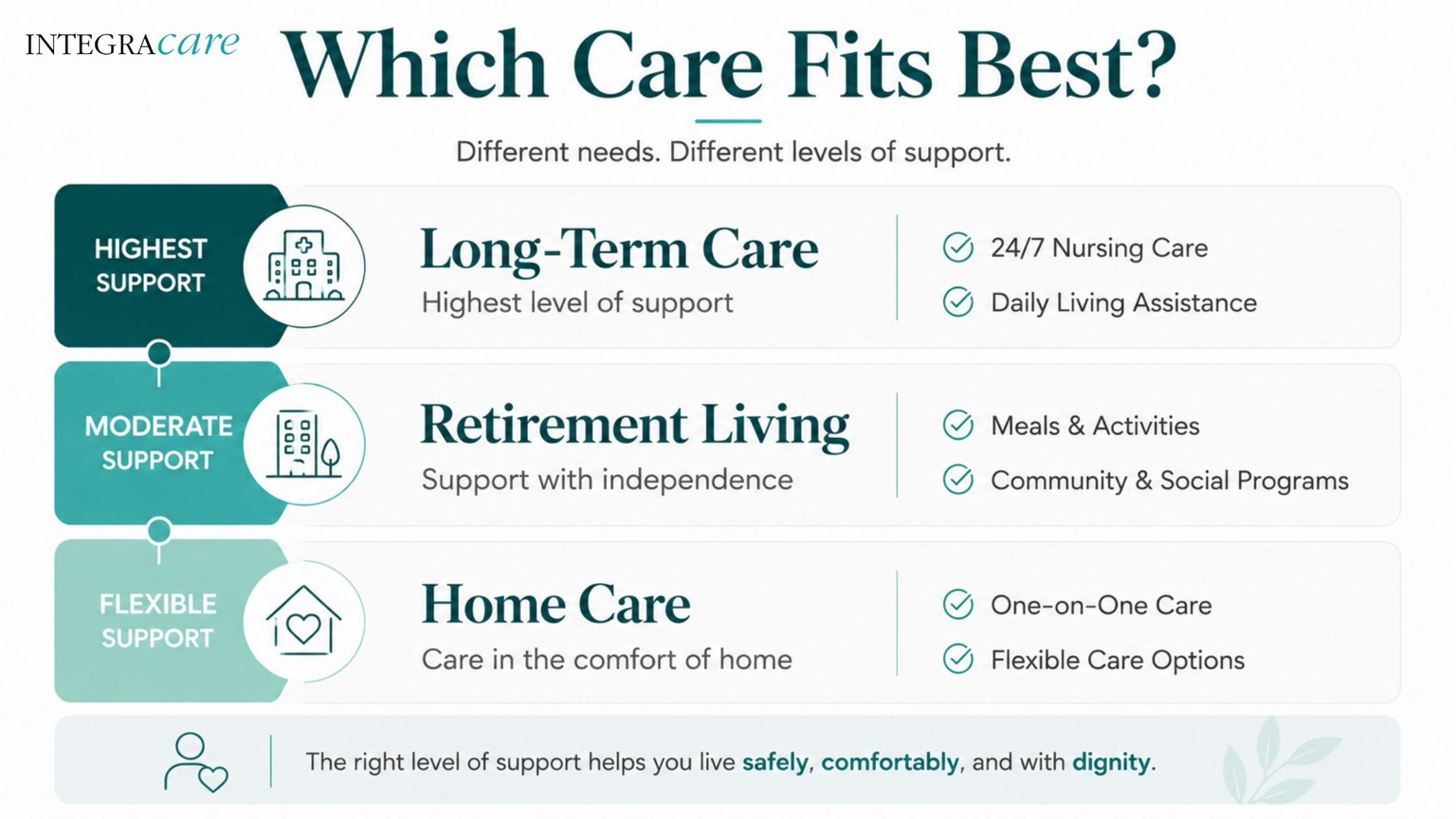
The amount of support someone needs each day is often the clearest indicator of which care option may be the best fit.
Long-Term Care Homes
Long-term care homes provide the highest level of medical and personal support. Residents receive 24/7 nursing care, medication management, assistance with bathing, dressing, mobility, and other daily activities, along with comprehensive health monitoring and emergency response systems. Many homes also offer therapeutic and recreational programs, with some providing on-site pharmacy services and specialized dementia care.
Retirement Homes
Retirement homes focus on supporting independence while offering additional services as needs change. Depending on the residence, residents may have access to help with daily activities, medication management, suite call bell systems, emergency response, accessible living spaces, housekeeping, meals, and social programming. This option is often well suited to older adults who are largely independent but would benefit from a more supportive living environment.
Home Care
Personalized home care provides one-on-one support that is tailored to an individual’s health, routines, and preferences while allowing them to continue living in the comfort of home. Services may include personal care such as bathing and dressing, meal preparation, medication reminders, companionship , light housekeeping, transportation to appointments, specialized dementia care , 24/7 caregiving support , and nursing care when needed. Because care plans can be adjusted over time, home care offers the flexibility to meet changing needs while helping older adults maintain their independence, familiar routines, and connections to the people and community that matter most.
Costs and Financial Planning
Cost is often one of the first questions families ask, and for good reason. While monthly expenses are important, it’s equally helpful to consider how costs may change over time as care needs evolve. Looking beyond the initial price can make it easier to choose an option that remains practical in the years ahead.
| Care Option | What to Consider |
| Retirement Homes | Monthly rent typically includes accommodation, meals, housekeeping, and select amenities. Additional fees may apply for higher levels of personal care, medication assistance, or upgraded accommodations. |
| Long-Term Care | Resident fees generally cover room and board, while nursing and personal care are publicly funded for eligible residents. Costs vary depending on room type, and some optional services may involve additional charges. |
| Personalized Home Care | Costs depend on the type of services provided and the number of care hours required. Because care plans are flexible, support can increase or decrease as needs change, allowing families to tailor care to their circumstances. |
Questions to Ask Before Comparing Costs
Looking at the monthly price alone doesn’t always provide the full picture. Consider asking:
- What services are included in the monthly cost?
- Which services or supports cost extra?
- How could costs change if care needs increase?
- Are subsidies or public funding available?
- How will retirement income, pensions, or savings help cover ongoing expenses?
Planning can also help families understand how future care may fit into their financial picture. Depending on individual circumstances, this may include retirement savings, pensions, government benefits, support from family members, or the future sale of a home.
Remember: The lowest-cost option today isn’t always the most cost-effective over time. Choosing care that can adapt to changing needs may provide greater value, stability, and peace of mind in the years ahead.
How to Decide Which Care Option Fits Best
Beyond costs and services , several personal factors should influence your decision. Taking the time to consider these elements will help ensure the chosen option truly meets your loved one’s needs and preferences.
Medical care needs are perhaps the most critical factor. Consider both current requirements and potential future needs. Does the person have a progressive condition that will likely require more intensive care over time? Do they need regular monitoring by medical professionals, or is their care primarily focused on assistance with daily activities? Matching the medical level of care to the setting is essential for safety and well-being .
Activity levels and social preferences also play a significant role. Is the person socially active and likely to benefit from the community environment of a retirement home? Or do they prefer a quieter routine with fewer people around? Some retirement homes offer extensive recreational programs and outings, while others provide a more relaxed atmosphere. Long-term care homes also provide activities, but these are typically more therapeutic in nature and adapted to residents’ physical and cognitive abilities.
Family involvement is another important consideration. How much can and does the family want to be involved in daily care? Home care often requires more coordination and hands-on involvement from family members, while residential settings provide more comprehensive support. For families living at a distance or with demanding work schedules, a retirement home or long-term care might offer peace of mind that their loved one’s needs are being met consistently.
Ethno-cultural preference can significantly impact comfort and well-being. Does the person prefer to be in an environment where their language, cultural traditions, and dietary preferences are respected and reflected? Ottawa has retirement homes that cater to specific cultural communities, and this factor can be especially important for maintaining identity and quality of life.
Wait times are a practical consideration, especially for long-term care. The waitlist for long-term care homes in Ottawa can be lengthy, sometimes extending to years, depending on the level of care needed and accommodation preferences. If immediate care is needed, home care or a retirement home might be more viable options. It’s important to apply for long-term care well before it’s needed if this is the preferred long-term solution.
Coordinating Senior Care in Ottawa
Ottawa families have a few local factors to keep in mind that can affect both convenience and care access.
Care Coordination
Ontario Health atHome plays a major role in long-term care access and care coordination. If a long-term care home is being considered, this is usually the place to start. Ottawa Public Health and City of Ottawa resources for seniors may also offer helpful support for aging in place and community well-being.
Transportation
Transportation matters, especially if a senior still wants to get out for appointments or social visits. OC Transpo and ParaTranspo can be important parts of the care plan, particularly when family members live farther away or cannot drive regularly.
Local Availability
Costs of retirement homes in Ottawa, as well as access to independent living, assisted living, memory care, and end-of-life care, may vary by neighbourhood and type of residence. That is why local research matters just as much as national information.
Researching and Choosing the Right Care Option
Once you understand the different care options, the next step is finding the one that feels right for your loved one. Looking beyond brochures and monthly fees can help you make a decision that’s based not only on today’s needs, but also on how those needs may change over time.
Compare More Than Costs
Whether you’re exploring personalized home care, retirement homes, or long-term care, taking a structured approach can make the decision feel much more manageable. As you compare providers, consider:
- Services included and any additional fees
- How care can adapt if needs change
- Staff experience and continuity of care
- Resident or client experiences and family feedback
- Inspection reports and quality standards, where available
Whenever possible, visit a retirement home in person and ask how it supports residents as their needs change over time. If you’re exploring nursing care from private home care, ask how care plans are developed, whether you’ll have a consistent team of caregivers, and how support can be adjusted as needs evolve. For long-term care, Ontario Health atHome can explain eligibility, the application process, and placement. Taking time to ask these questions can help you choose a care option that supports your loved one’s needs today while remaining flexible for the future.

Planning for the Transition
Whether you’re welcoming a caregiver into the home or moving into a retirement or long-term care residence, adjusting to a new routine takes time. Understanding what to expect can make the transition feel less stressful for everyone involved.
If you’re moving into a retirement home, ask what support is available during the move-in period, how new residents are introduced to the community, and what services can be added over time. For long-term care, it’s helpful to understand the assessment process, placement timelines, and what happens once a space becomes available.
Planning ahead often gives families more opportunities to explore their options, ask questions, and make thoughtful decisions before care becomes urgent.
Looking Beyond Amenities
Comfortable suites, attractive amenities, and social programs all contribute to quality of life, but they’re only part of the picture. Understanding how a residence is regulated can provide added confidence that it meets established standards for care and safety.
In Ontario, retirement homes are regulated by the Retirement Homes Regulatory Authority (RHRA) under the Retirement Homes Act, 2010 , while the Ministry of Long-Term Care oversees long-term care homes. Regular inspections, licensing requirements, publicly available inspection reports, and ongoing oversight help ensure homes remain accountable for the care they provide.
While these details may not be the first things families think to ask about, they can offer valuable reassurance when choosing a place where a loved one will receive ongoing support.
Personalized Home Care Support From Integracare
Balancing work, family, and the growing care needs of an aging parent isn’t easy. Our experienced team of Registered Nurses (RNs), Registered Practical Nurses (RPNs), and Personal Support Workers (PSWs) provides personalized care that fits your loved one’s routines, needs, and goals, from mobility support and stroke recovery to dementia and cognitive care.
Contact our Ottawa care team to learn how our flexible home care services, including 24/7 support, can help your loved one continue living safely and independently at home.
FAQs
What is the main difference between retirement homes, long-term care, and home care?
Retirement homes, long-term care, and home care each serve different needs. Retirement homes are usually best for older adults who want a social setting with optional support. Long-term care is designed for people with more complex medical or personal care needs and offers 24/7 support. Home care allows someone to stay in their own home while receiving help with daily tasks, personal care, or health-related support.
How do I know if home care is enough?
Home care may be enough if the person is still safe at home and only needs part-time or scheduled help. It can support bathing, meals, medication reminders, companionship, and light household tasks. If the person’s needs are becoming more complex, or if there are safety concerns, frequent falls, or signs of memory decline, it may be time to consider a more structured care setting.
What costs should families expect with each option?
Costs vary depending on the type of care and the level of support needed. Retirement homes usually charge monthly rent, which may include meals and basic services, with extra fees for additional care. Long-term care is generally subsidized, but residents still pay for room and board. Home care may be billed hourly or through care packages, and costs can rise as needs increase over time.
What should I consider besides price?
Price is important, but it should not be the only factor. Families should also think about medical needs, activity level, safety, family involvement, and how much independence the person wants to keep. It also helps to consider whether the option can adapt if care needs increase later. A choice that feels affordable today may not work well if support needs grow over time.
What is Ontario Health atHome and why does it matter?
Ontario Health atHome helps coordinate access to long-term care and other support services. A care coordinator can assess needs, explain eligibility, and guide families through the application process. This matters because long-term care placement is not usually handled directly by the home itself. It also helps families better understand wait times, available options, and what level of care is most appropriate.
How long are wait times for long-term care in Ottawa?
Wait times for long-term care in Ottawa can vary depending on the home, level of care needed, and the type of accommodation requested. Some people wait longer if they need a private room or have specific care requirements. Because wait times can change, it is best to speak with a care coordinator early. That can help families plan ahead and avoid rushing decisions during a crisis.
What questions should I ask during a retirement community tour?
When touring a retirement community, ask about care services, meals, staffing, safety systems, activities, and extra costs. It is also helpful to ask how the home supports changing needs over time and whether residents can age in place. If possible, speak with current residents or staff to get a sense of the daily environment. A tour is a chance to see whether the residence truly feels like a good fit.
How do I compare retirement homes and long-term care homes?
The easiest way to compare retirement homes and long-term care homes is to look at care level, cost structure, eligibility, and flexibility. Retirement homes usually offer more independence and lifestyle choice, while long-term care is meant for people with higher medical needs. Families should also compare what is included in the monthly fee, whether wait times apply, and how well each option can adapt if needs change.
What Ottawa-specific resources can help families?
Ottawa families can look to Ontario Health atHome, Ottawa Public Health, City of Ottawa resources for seniors, OC Transpo, and ParaTranspo for support. These services can help with care planning, transportation, and day-to-day independence. Local resources are especially useful when families are balancing appointments, home care, or planning for a future move into retirement living or long-term care.
Can someone move from home care to a retirement home later?
Yes, many families start with home care and later move to a retirement home if the person’s needs increase. This can be a good option when someone wants to remain at home as long as safely possible. The key is watching for changes in mobility, memory, medication needs, or loneliness. Planning ahead makes the next step easier and helps avoid making a rushed decision during a health decline.
How important are regulations and inspections?
Regulations and inspections are very important because they help protect resident safety and care quality. In Ontario, retirement homes and long-term care homes are overseen by different regulatory bodies, and each must meet specific standards. Families should review inspection reports, ask about licensing, and look at how a home handles staffing and safety. These details can help build confidence and reduce uncertainty when choosing care.
How can families prepare financially for long-term senior care?
The best approach is to plan early and look at the full financial picture. That includes income, savings, pensions, government benefits, and possible help from family members. Some families may also consider the sale of the family home as part of the plan. Using a retirement calculator or budgeting tool can help compare costs more clearly. Early planning can reduce stress and make later decisions much easier.
Free In-Home Assessment
The Care Your Family Deserves Starts Here
Speak with our team about a personalized care plan. Book a free, no-obligation in-home assessment and we will help you find the right support for your loved one.
About the Author: Lee Grunberg

President & CEO, M.B.A.
Lee joined Integracare as President & CEO on August 2, 2016 after an approximately 20 year career in Private Equity and Investment Banking. Lee brings tremendous operational knowledge and governance experience along with an incredible passion and energy to Integracare.