
Blog
When Nights Are the Hardest: Arranging Overnight Dementia Care at Home in Ottawa
Published
Written by Kristine McGinn, BScN — Director of Integracare East
Reviewed by Bethel McMaster, BScN, RN — Director of Business Development

On this page9 sections
Key Takeaways
- Sundowning is confusion, restlessness, or agitation that builds in the late afternoon and evening, and it often carries on into broken nights for the whole household.
- Night wandering, falls on the way to the bathroom, and a spouse who hasn't slept properly in weeks are common signs that nights at home need more help.
- An overnight Caregiver stays awake through the night, helps with bathroom trips, settles your loved one when they wake, and stays alert to safety around the home until morning.
- With 24-hour care, Caregivers work in shifts so someone is awake at every hour. Live-in care suits nights that are mostly calm, because the live-in Caregiver has a set sleep period.
By evening, the day has often been long for everyone. Your loved one may start pacing near the front door around dinnertime, ask to go home while sitting in their own living room, or wake at two in the morning, sure it's time to get ready for work. If you are the one getting up each time, or your loved one's husband or wife is, the nights start to blur together, and it gets hard to know how much longer you can keep going this way.
Nights are often when Families first realise they need more help. Dementia changes sleep and the sense of time, so evenings and nights often become the hardest part of the day, and a spouse or adult child can't keep going for long without proper sleep. Overnight Caregivers in Ottawa stay awake through the night, so your loved one has someone with them and the rest of the household can sleep.
At Integracare, our Ottawa Caregivers learn dementia care through our partnership with the Dementia Society of Ottawa and Renfrew County, announced in June 2026. That training covers the moments that tend to come up at night: a loved one who wakes frightened and doesn't recognise the room, wants to leave the house, or needs help getting to the bathroom in the dark. A Registered Nursing Coordinator oversees each care plan, and a nurse is available 24/7 if something changes overnight.
For a week or two, write down what happens each night: when your loved one gets up, what seems to wake them, and how long it takes them to settle. That record helps the doctor look for causes such as pain or a medicine side effect, and it shows your Family which hours need the most support.
What Is Overnight Care for Someone With Dementia?
Overnight care means a Caregiver arrives in the evening and is awake and nearby until morning. They help with the bedtime routine, bathroom trips, waking and settling, and keeping an eye on safety around the house. It is different from live-in care, where the Caregiver sleeps in the home during a set rest period, and from 24-hour care, where Caregivers work in shifts around the clock.
For someone with dementia, the person awake in the house matters as much as the tasks. A Caregiver trained in dementia care knows not to argue about the time or the place, and how to calm someone who is frightened without rushing them.
Why Nights Can Unravel With Dementia
As the afternoon wears on, your loved one may grow more confused, worried, or restless. This is called sundowning, which the Alzheimer Society describes as confusion, anxiety, agitation, or restlessness later in the day. Tiredness, fading light that casts shadows, a body clock thrown off by dementia, and things like hunger, pain, or too much caffeine can all add to it. If evenings are getting harder, easing sundowning often starts earlier in the day, with a morning walk, a short nap, and lamps on before dusk.
Dementia can also change sleep itself. Some people wake often and stay awake for long stretches, while others doze through the day and are wide awake at night. The Alzheimer Society notes that sleep medicines are seldom effective and can lead to falls and more confusion, so talk with the doctor before trying one.
When Is It Time to Get Help at Night?
There is rarely one big moment. More often it is a run of nights where the same worries keep coming back. These are the signs Families most often describe:
- Wandering: your loved one has tried to leave the house at night, or you've found the front door unlocked in the morning.
- Falls: a fall or near fall on the way to the bathroom, often after getting up quickly in the dark.
- An exhausted spouse: the person sharing the house hasn't slept through the night in weeks and is starting to feel unwell or short-tempered.
- Distress that won't settle: your loved one is frightened, agitated, or calling out for long stretches, and nothing you try seems to help.
Caring for someone with dementia is often a full day's work before the nights begin. The Canadian Centre for Caregiving Excellence's 2026 Caring in Canada report found that 59% of Family Caregivers are also working, and those working Family Caregivers give an average of 5.1 hours of care a day.
If wandering is a concern, keep a recent photo of your loved one ready, let a trusted neighbour know, and consider registering them with MedicAlert's Safe & Found Program for people living with Alzheimer's and other dementias. Your loved one wears a blue MedicAlert ID, and first responders can call the 24/7 hotline number on it for their health information, wandering history, and your contact details. If your loved one does go missing, call 9-1-1 right away.
Questions Families Ask About the Nights
When nights get harder, the questions are practical ones. Is your loved one safe on their own if their spouse sleeps in another room for a few nights? What happens if they open the front door at 3 a.m.? How many more nights can your Family manage this way?
With an overnight Caregiver, someone is awake, close to the bedroom, and listening for the doors all night, so a spouse can sleep in another room without lying awake. For the longer question of how many nights your Family can manage, a care plan built around your loved one's nights, overseen by our nursing team, lets you share the load while your loved one stays at home.
What an Overnight Caregiver Does Between 7 p.m. and 7 a.m.
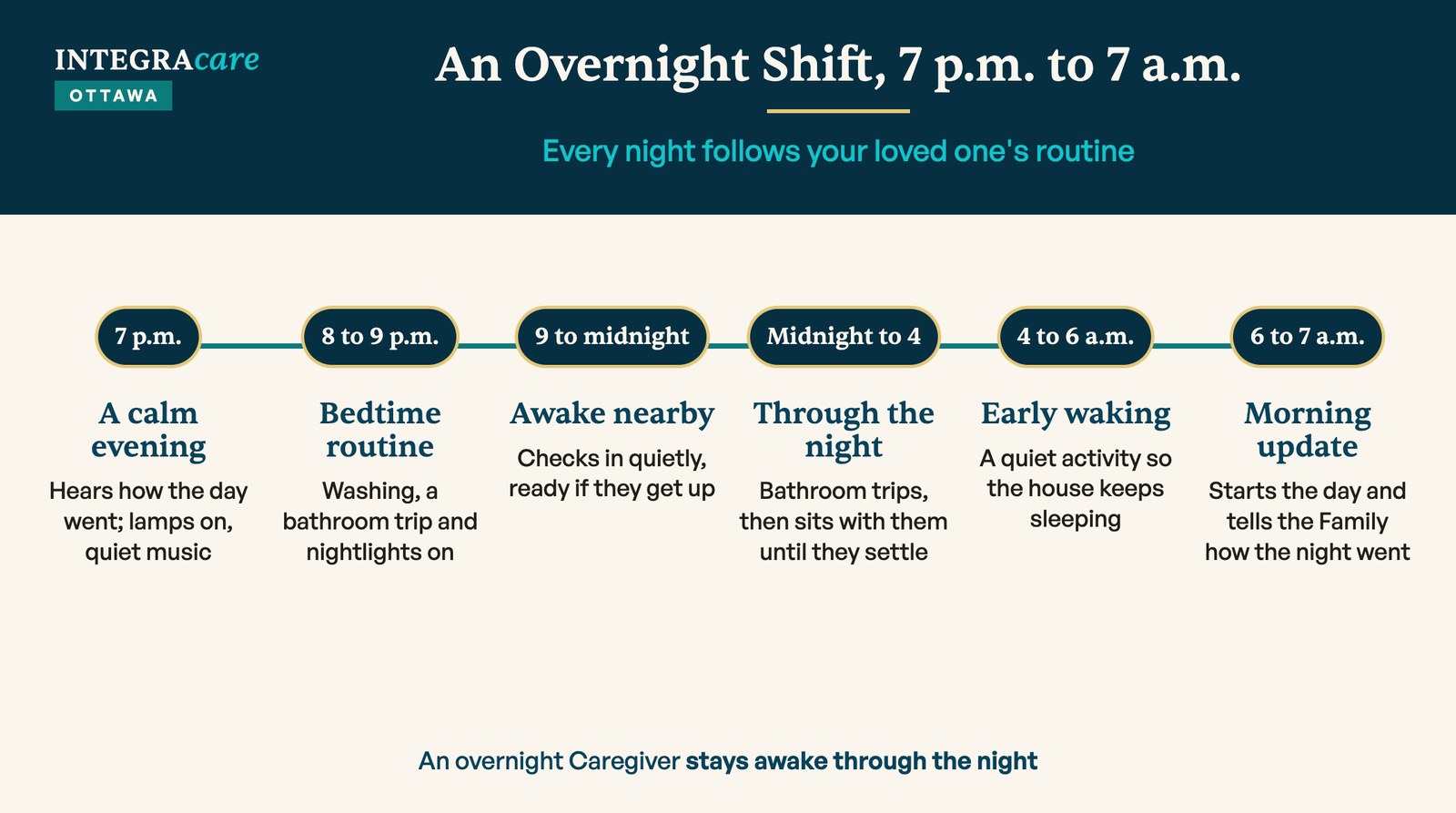
Every night is different, and the plan follows your loved one's routine, but a typical overnight shift looks something like this:
| Time | What the Caregiver does |
|---|---|
| 7 p.m. | Arrives, hears from the Family how the day went, and keeps the evening calm with lamps on, quiet music, or a photo album. |
| 8 to 9 p.m. | Helps with the bedtime routine: washing, changing, a bathroom trip, medication reminders as set out in the care plan, and nightlights in the bedroom, hall, and bathroom. |
| 9 p.m. to midnight | Stays awake and nearby, checks in quietly, and is ready if your loved one gets up. |
| Midnight to 4 a.m. | Walks with your loved one to the bathroom, gently lets them know it's still night, offers a drink or a light snack if they're hungry, and sits with them until they settle. If they head for the door, the Caregiver redirects them calmly. |
| 4 to 6 a.m. | If your loved one wakes early, offers a quiet activity in another room so the rest of the household can keep sleeping. |
| 6 to 7 a.m. | Starts the morning routine and tells the Family how the night went. Anything new, such as a fall or a much more restless night, goes to the nursing team. |
Over a few weeks, those morning updates show patterns your Family may not have seen, such as a harder night after a long day out or a late cup of tea. The Registered Nursing Coordinator can use that pattern to adjust the plan.
Overnight Care, 24-Hour Care or Live-In Care?
The right choice depends on what the nights look like and how much help your loved one needs during the day.
| Option | How it works | Often suits |
|---|---|---|
| Overnight care | A Caregiver stays awake from evening to morning | Families who manage the days but need nights covered |
| 24-hour care | Caregivers work in rotating shifts, with someone awake overnight | Help needed day and night, or nights that are often unsettled |
| Live-in care | One Caregiver lives in, with a set sleep period overnight | Nights that are mostly calm, with occasional wake-ups |
If your loved one is up most nights or wanders, a Caregiver who is awake all night is usually the safer choice. Understanding the difference between live-in care and 24-hour shift care helps your Family choose, and a nurse can assess whether your loved one's nighttime needs call for someone awake around the clock.
What Changes for Your Family When Someone Else Takes the Night
When a Caregiver is awake in the house, a spouse can sleep in their own bed again, and adult children no longer need to sleep with the phone beside the bed in case it rings. Mornings can start differently too, with time for breakfast together instead of everyone running on a few hours of sleep.
There is also support outside the home. Ontario Health atHome (1-833-515-1234) can assess your loved one for publicly funded home care, and when those hours don't stretch to the nights, there are private care options when Ontario home care hours aren't enough. The Dementia Society of Ottawa and Renfrew County offers free coaching and support groups for Families at 613-523-4004, and the Ontario Caregiver Helpline is free and available 24/7 at 1-833-416-2273. Your own sleep and health matter too, so try to keep a little time each week that is just for you.

How Integracare Supports Ottawa Families Through the Night
A Caregiver who knows your loved one learns how they like the room, which lamp to leave on, and what helps them settle after a bad dream. Each Caregiver is carefully matched to your loved one, and we aim to keep familiar faces on the night shifts. That matters most at night, when someone your loved one doesn't recognise can be frightening.
Overnight support can be one part of dementia care in Ottawa, alongside daytime visits as needs grow. If your loved one also needs help with medications, nursing care services in Ottawa fit into the same plan. The plan changes as your loved one's needs do, whether that means adding a few evenings or moving to care around the clock.
During a free in-home assessment, our care team talks with you about what the nights look like, what has helped so far, and what matters most to your loved one, then puts together a care plan with your Family.
Frequently Asked Questions
How can I keep someone with dementia safe if they wander at night?
Fit outside doors with an alarm or chime, use nightlights between the bedroom and bathroom, and keep a recent photo ready. Never lock someone with dementia in the home on their own. MedicAlert's Safe & Found Program helps first responders identify someone who goes missing. If wandering happens often, an overnight Caregiver who stays awake can watch the doors and walk with your loved one when they get up.
Why is sundowning getting worse?
Late-day confusion can increase as dementia progresses, but a sudden change can also point to pain, an infection, hunger, poor sleep, or a new medicine. Tell your loved one's doctor about any change. A steady daytime routine, morning activity, and a calm, well-lit evening often help.
What does an overnight Caregiver do for someone with dementia?
An overnight Caregiver stays awake from evening to morning. They help with the bedtime routine, bathroom trips, and medication reminders; settle your loved one if they wake, redirect them calmly if they try to leave, and share how the night went with your Family and the nursing team.
Can I get overnight Caregivers for my mom or dad in Ottawa?
Yes. Integracare arranges overnight Caregivers in Ottawa for people living with dementia. The Caregiver stays awake through the night, helps with bathroom trips, settles your loved one if they wake, and watches the doors if wandering is a concern. Overnight care can be combined with daytime visits or grow into 24-hour care, with a nurse available 24/7 and a Registered Nursing Coordinator overseeing the plan.
Is overnight care or 24-hour care better for dementia?
Overnight care suits Families who are managing well during the day but need someone awake at night. 24-hour care uses rotating shifts so someone is awake day and night, which helps when your loved one needs support around the clock. Live-in care can work when nights are mostly calm.
Can someone with dementia get 24/7 care at home in Ottawa?
Yes. Integracare provides 24-hour care in Ottawa with Caregivers on rotating shifts, so someone is awake at every hour. Care can start with overnight shifts and grow to around-the-clock support, with a nurse available 24/7 and a Registered Nursing Coordinator overseeing the plan.
Free In-Home Assessment
The Care Your Family Deserves Starts Here
Speak with our team about a personalized care plan. Book a free, no-obligation in-home assessment and we will help you find the right support for your loved one.
About the Author: Kristine McGinn

Director of Integracare East, BScN
Kristine brings over 25 years of dedicated healthcare experience to her role. She holds a Bachelor of Science in Nursing and has progressed through frontline nursing, team leadership, and strategic management, all focused on enhancing client outcomes. Kristine is committed to continuous quality improvement and healthcare innovation, and has developed a thorough understanding of the complexities of the healthcare industry.